
Trondheim timeline
- 11th century
Nidaros Cathedral alone merits two to three hours
Nidaros Cathedral alone merits two to three hours — the west facade's stone carvings alone contain hundreds of figures representing saints, kings, and biblical scenes.
-
Cathedral completed
The cathedral was built over his grave starting around 1070 CE and developed over the following centuries into Scandinavia's largest Gothic structure, incorporating.
- 13th century
Trondheim
— was Norway's capital from the Viking Age through the 13th century, and the country's ecclesiastical heart for centuries beyond that.
-
Trondheim completed
First built in 1681 and rebuilt in its current form in 1861, the bridge's gateway towers were designed to serve as customs checkpoints where merchants paid tolls on.
-
Trondheim completed
Built between 1774 and 1778 and painted in its distinctive yellow ochre, the Stiftsgården contains 140 rooms and serves as the Norwegian royal family's official.
-
Trondheim completed
Built between 1774 and 1778 and painted in its distinctive yellow ochre, the Stiftsgården contains 140 rooms and serves as the Norwegian royal family's official.
-
Cathedral begins
Building began around 1070 CE under King Olav Kyrre and continued through the Gothic period, with major restoration work from 1869 that is still technically ongoing
Cited city facts
Key facts for visiting Trondheim
Nidaros Cathedral is Scandinavia's largest medieval church, with construction spanning over 400 years
Building began around 1070 CE under King Olav Kyrre and continued through the Gothic period, with major restoration work from 1869 that is still technically ongoing — making Nidaros Cathedral the longest continuously active restoration project in Norway. The west facade's intricate stone sculpture programme was not completed in its medieval form and has been progressively reconstructed by modern craftsmen
Over 30,000 pilgrims walk to Nidaros Cathedral each year on designated St. Olav pilgrim routes
The Pilegrimsleden network of historic walking routes converges on Trondheim from Oslo in the south, from Sweden via the Jämtland highlands, and from Denmark through the Kjølen mountains — the same paths walked by medieval pilgrims seeking miracles at Saint Olav's tomb since the 11th century
Trondheim's Stiftsgården royal residence is the largest wooden palace in Scandinavia
Built between 1774 and 1778 and painted in its distinctive yellow ochre, the Stiftsgården contains 140 rooms and serves as the Norwegian royal family's official residence when visiting Trondheim — a reminder that the city retains constitutional significance as Norway's former medieval capital
The Old Town Bridge (Gamle Bybro) was the only crossing of the Nidelva river for over 600 years
First built in 1681 and rebuilt in its current form in 1861, the bridge's gateway towers were designed to serve as customs checkpoints where merchants paid tolls on goods entering the medieval town — the same trade that made Trondheim the wealthiest city in Norway for centuries before Bergen eclipsed it
Source: tour-guide.com — Free to cite with attribution
Things to see
What are the top attractions in Trondheim?
- Nidaros Cathedral — Scandinavia's largest Gothic medieval church, Norway's coronation site, and the goal of pilgrim routes stretching to Rome
- Bakklandet quarter — 18th-century wooden houses lining the Nidelva, now Trondheim's most characterful neighbourhood for cafés and independent shops
- Old Town Bridge (Gamle Bybro) — Red-gated 17th-century bridge and the city's most photographed view across the river warehouses
- Archbishop's Palace — Scandinavia's oldest secular stone building, housing Norway's richest medieval artefact collection
- Sverresborg Trøndelag Folk Museum — 80 historic buildings from across the region relocated to a hilltop with 12th-century castle ruins
- Stiftsgården — Scandinavia's largest wooden palace, the royal family's official Trondheim residence, open for guided tours in summer
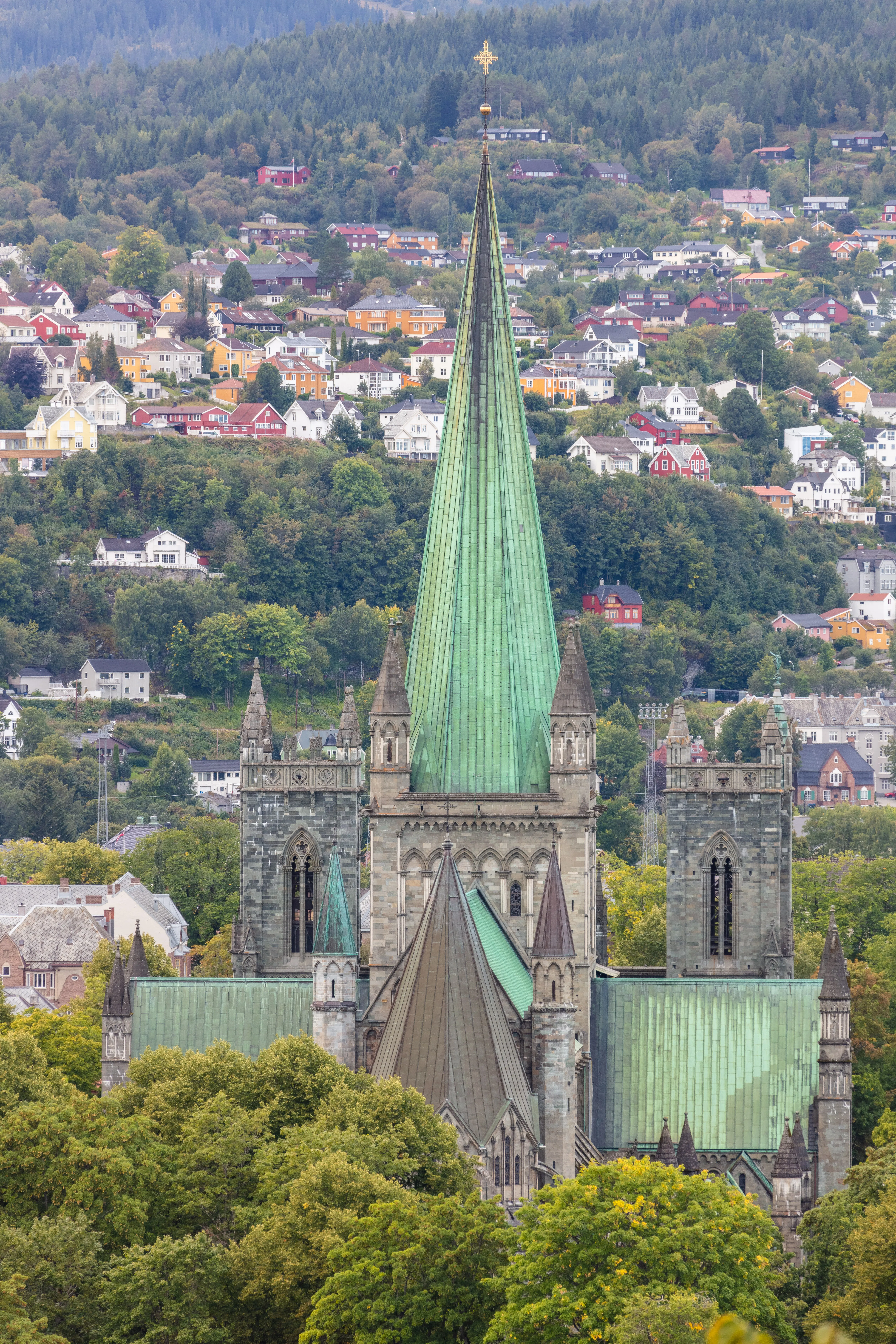
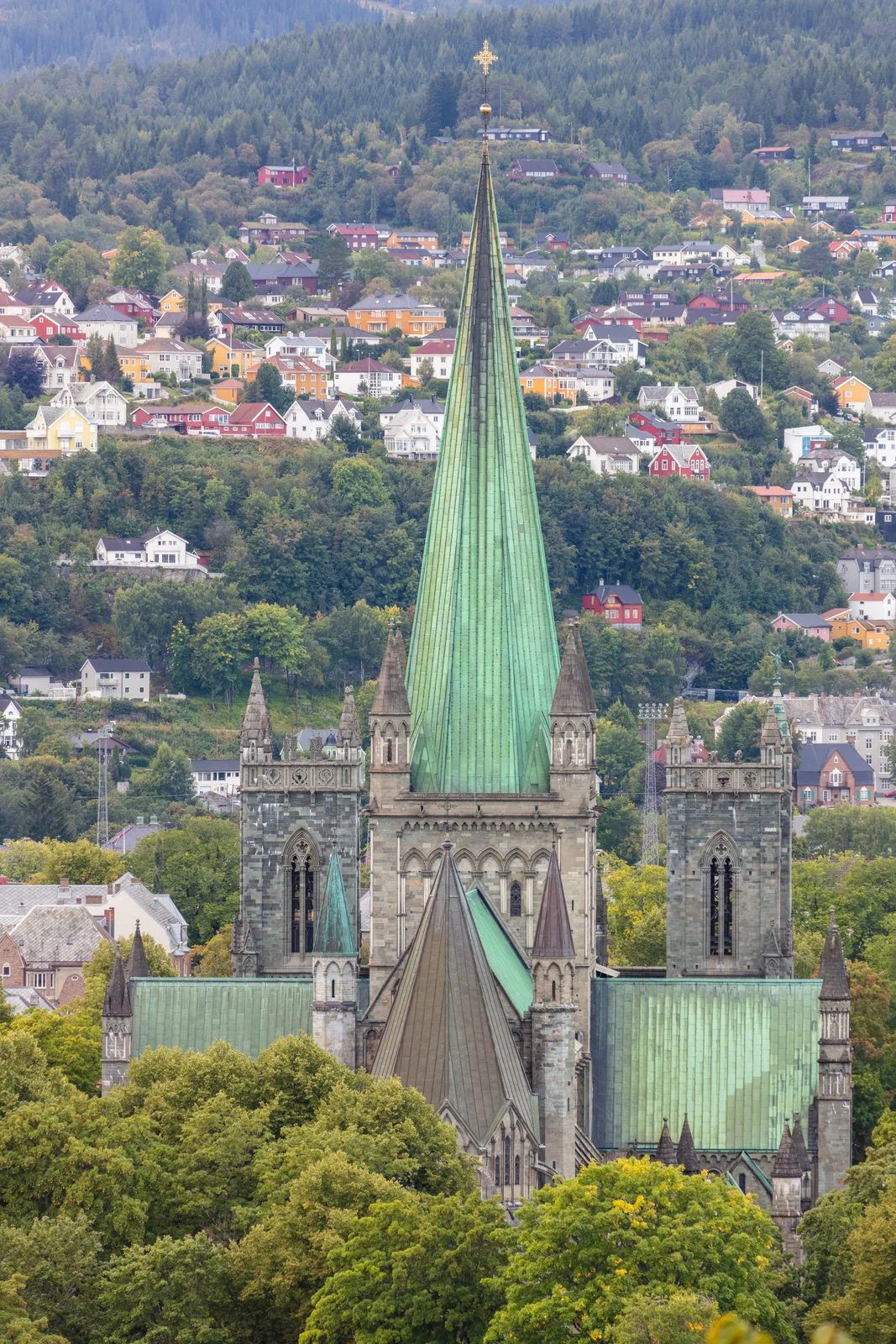
Nidaros Cathedral
The world's northernmost medieval cathedral, raised over the tomb of Norway's patron saint
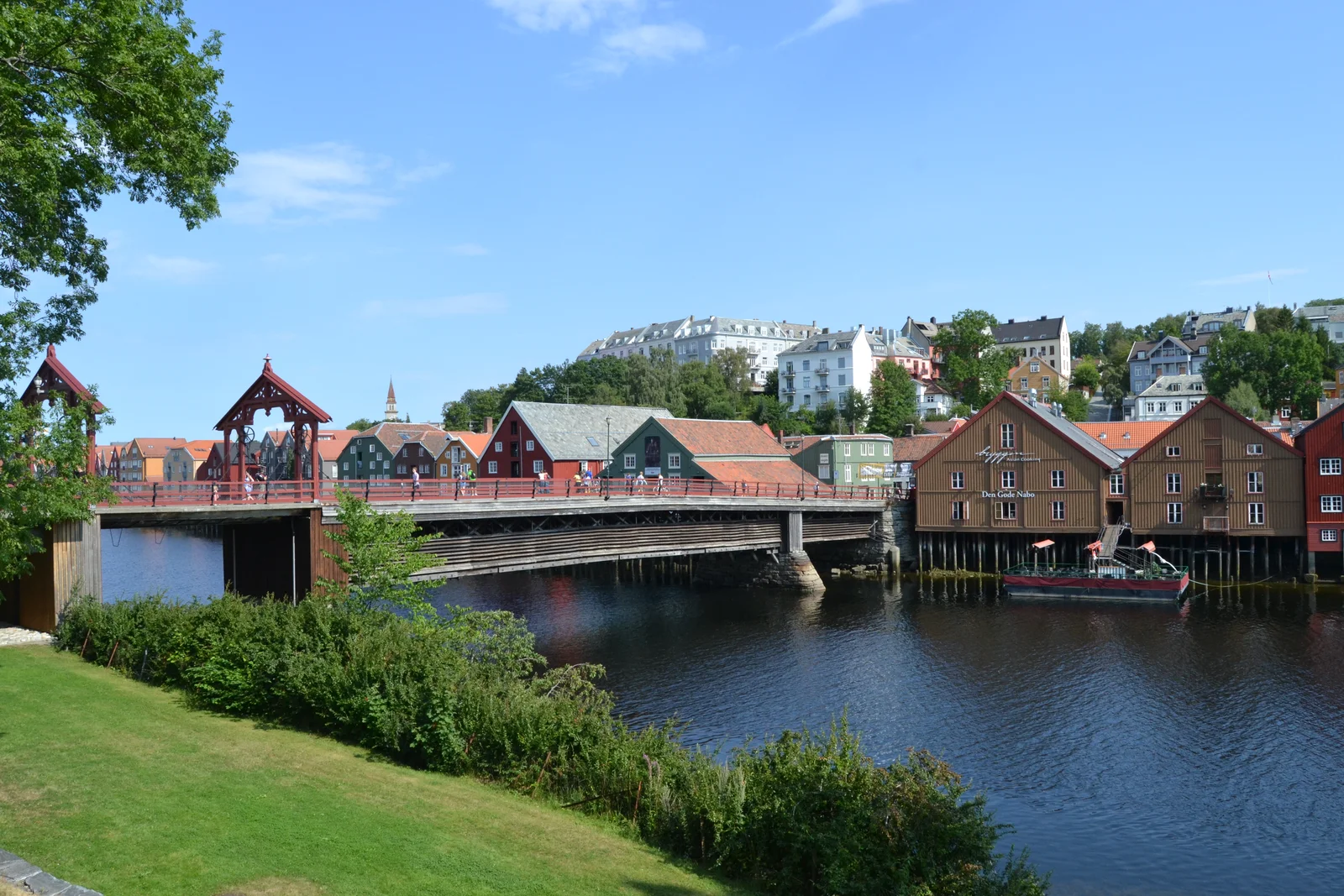
Bakklandet & the Old Town Bridge
Colourful timber wharves along the Nidelva, reached over the red gate of the Old Town Bridge
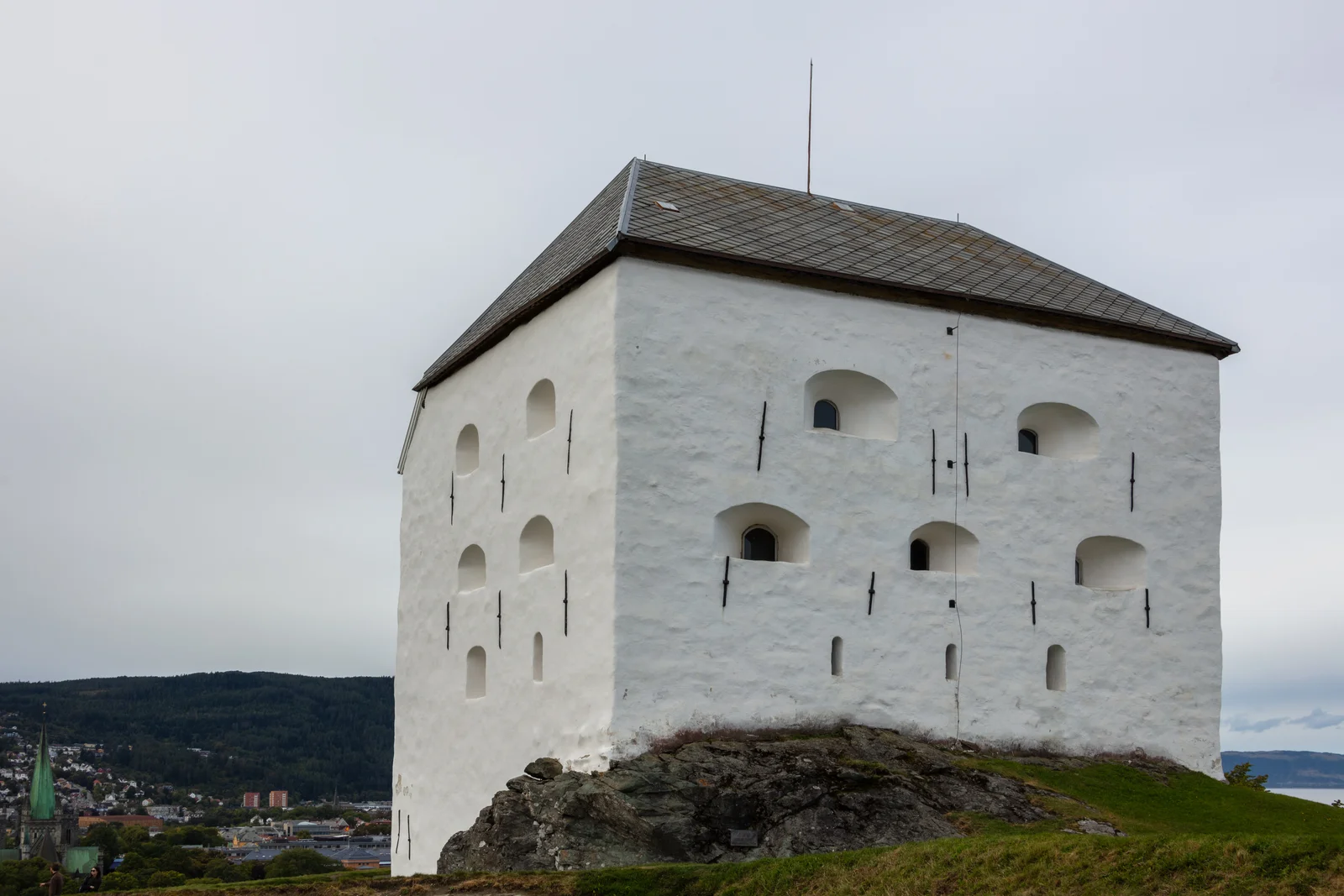
Kristiansten Fortress
A whitewashed hilltop citadel that turned back a Swedish army and now surveys all Trondheim
Guide planning
How much does a tour guide cost in Trondheim?
| Tour Type | Price | Details |
|---|---|---|
| Nidaros Cathedral group tour | NOK 150–200 per person | Cathedral entry included |
| Bakklandet & old town walking tour (2 hrs) | NOK 250–400 per person | Licensed city guide |
| Private half-day Trondheim | NOK 2,000–3,500 | Cathedral, Bakklandet, Archbishop's Palace |
| Private pilgrimage history tour | NOK 2,500–4,000 | St. Olav routes, medieval Norway context |
| Sverresborg open-air museum | NOK 160 entry | Self-guided or with audio guide |
Book a Local Guide
The guides below are independent local businesses we recommend purely on editorial merit. We don't sell placement and we earn no commission when you book with them — see our booking and affiliate disclosure.
Season planner
When is the best time to visit Trondheim?
- June–August — Best weather, cathedral open for full tours including tower climb, outdoor café culture in Bakklandet at its peak
- 29 July (St. Olav's Day) — Pilgrim arrivals from across Scandinavia, outdoor concerts, special cathedral services — the most atmospheric day of the year
- May — Syttende Mai (17 May) Norwegian constitution day celebrated with particular civic pride in the former capital
- December — Advent concerts in Nidaros Cathedral are world-class events; the city's Christmas market in Torvet square is excellent
- Early morning — The cathedral's west facade in morning light is extraordinary; arrive before the tour groups at 10 AM
Spring
Mar-May
Summer
Jun-Aug
Autumn
Sep-Nov
Winter
Dec-Feb
Each score averages that season’s monthly ratings out of 5. The top-rated window is usually the peak season too, so read the guidance above for its trade-offs before you book.
On the ground
How do you get around Trondheim?
- Walking — Trondheim's historic centre is compact; Nidaros Cathedral, Bakklandet, and the Archbishop's Palace are all within 10 minutes of each other on foot
- Tram (Gråkallbanen) — Norway's only remaining city tram outside Oslo; runs from the centre to Lian lakeside recreation area
- Bus — AtB city buses serve all neighbourhoods and connect the city centre to Sverresborg in 15 minutes
- Cycle paths — Trondheim has an extensive cycling network; the city operates a bike-share scheme from April to October
- Airport express — Flybussen connects Trondheim Værnes Airport to the city centre in 35–40 minutes; trains also serve the station
Frequently Asked Questions
Why is Nidaros Cathedral so significant to Norway?
Nidaros Cathedral is Norway's national sanctuary — the burial site of King Olav Haraldsson (Saint Olav), who died at the Battle of Stiklestad in 1030 CE and was canonised within a year of his death, becoming Norway's patron saint. The cathedral was built over his grave starting around 1070 CE and developed over the following centuries into Scandinavia's largest Gothic structure, incorporating Romanesque, Gothic, and neo-Gothic elements from nine centuries of construction and restoration. Every Norwegian monarch since the medieval period has been crowned (and since 1814, consecrated) here. The building is also the northern terminus of the St. Olav pilgrim routes that cross all of Scandinavia, with walkers arriving at the west portal on 29 July — the feast of Saint Olav — from as far as Rome.
What is the Bakklandet quarter and why should I visit?
Bakklandet — literally "the back land" — is Trondheim's most charming neighbourhood, a cluster of 18th and 19th-century wooden houses lining the east bank of the Nidelva river, connected to the old town by the iconic Old Town Bridge (Gamle Bybro). What was once a working-class district of craftsmen and fishermen is now a relaxed enclave of independent cafés, second-hand bookshops, and small galleries, with the rickety wooden buildings painted in mustard, terracotta, and blue. The neighbourhood is best explored slowly, on foot, ideally with a guide who can point out which buildings served as fishing warehouses and explain the hydraulic mechanism of the old town's water mill.
Is Trondheim worth visiting for a full day or just as a stopover?
Trondheim rewards at least two full days. Nidaros Cathedral alone merits two to three hours — the west facade's stone carvings alone contain hundreds of figures representing saints, kings, and biblical scenes that take a guide to decode, and the cathedral's crypt descends through construction layers from the 11th century. Sverresborg Trøndelag Folk Museum outside the city adds another half-day with 80 historic buildings relocated from across the region. The city's food scene — centred on the Ravnkloa fish market and a growing cluster of New Nordic restaurants — easily fills an evening. Tech-savvy visitors also note that Trondheim is home to NTNU (Norwegian University of Science and Technology), the country's leading engineering institution, giving the city a young, innovative energy unusual in a medieval heritage town.