
Northern Norway: When to Chase the Northern Lights
When and how to see the northern lights from Tromsø — the aurora season month by month, why darkness and weather matter more than the forecast.
Read the full guideUpdated · 9 min read
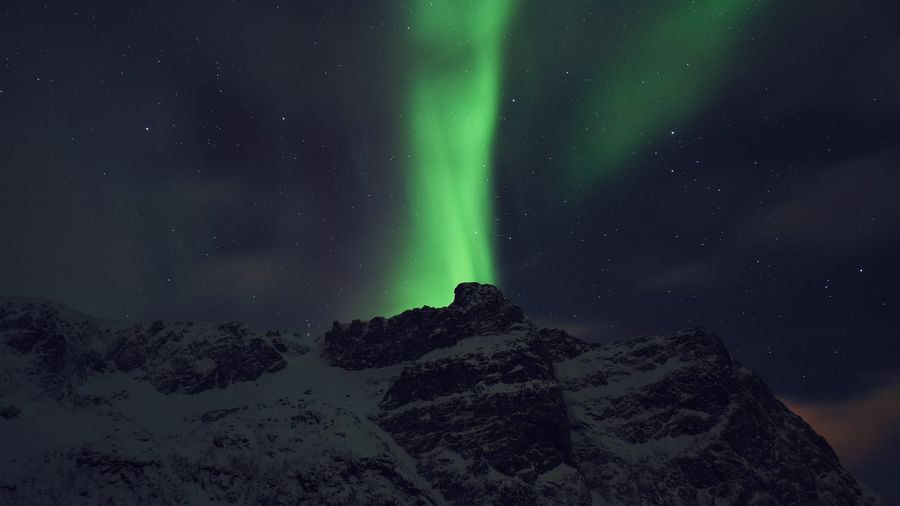
The northern lights are visible from Tromsø roughly late September to late March, when the Arctic nights are dark enough to reveal them. The equinoxes near late September and late March often heighten activity, while November to January brings the darkest polar-night skies. Clear weather, not the month, is the decisive variable.
There is no more reliable place on earth to pursue the aurora borealis than Tromsø, the lively university city that sits 350 kilometres inside the Arctic Circle. It lies directly beneath the auroral oval — the ring around the magnetic pole where the northern lights are most active — which means that on a clear, dark night the sky above the surrounding fjords can erupt in curtains of green, and sometimes pink and violet, with little warning. But "clear" and "dark" are the operative words, and getting both at once is the whole game. This seasonal guide explains when the aurora is visible from northern Norway, why the month matters less than the weather, and how to give yourself the best chance of the sight you came for.
What Is the Aurora Season Month by Month?
Late September to October opens the season with lengthening nights, settled weather, and equinox activity. November to January is the polar night, when the sun stays below the horizon for weeks and delivers the longest, coldest dark hours. February to late March offers crisp clear skies, deep snow, and easier daytime activities.
The northern lights are present year-round; what changes is whether the sky is dark enough to reveal them. The viewing season runs from roughly late September to late March, bracketed by the long Arctic nights.
- Late September to October: the season opens. Nights lengthen quickly, the autumn weather can be relatively settled, and the equinox period is statistically a good time for geomagnetic activity. The landscape still has some colour and the temperatures are mild by Arctic standards.
- November to January: the polar night. From late November the sun stays below the horizon for weeks, bathing the days in a blue twilight and giving the longest possible dark hours for aurora hunting. This is the most atmospheric, and coldest, time to come.
- February to late March: many regulars' favourite. The returning daylight makes daytime activities easier, the cold often brings crisp, clear skies, and the late-March equinox can again boost activity. Snow cover is at its deepest and most photogenic.
What you will notice missing from this list is any promise about a particular night. Aurora forecasts predict geomagnetic activity a few hours to a day ahead, but they cannot tell you whether clouds will roll in — and in coastal Tromsø, cloud is the constant adversary.
Why Does Weather Beat the Aurora Forecast?
Because clear sky matters more than a high reading. A modest geomagnetic display under cloudless skies shows beautifully; a strong one behind thick cloud shows nothing. That is why experienced visitors stay at least three or four nights, so a couple of cloudy evenings don't sink the whole trip.
The single most useful thing to understand is that clear sky matters more than a high aurora forecast. A modest geomagnetic reading under a cloudless sky shows beautifully; a strong reading under thick cloud shows nothing at all. This is why experienced visitors do two things. First, they stay several nights — three to four is a sensible minimum — so a couple of cloudy nights don't sink the whole trip. Second, they let someone else chase the weather for them.
Is a Northern-Lights Chasing Tour Worth It?
Yes — a chase is the regional specialty and genuinely raises your odds. Guides read the cloud maps and drive for two or three hours, sometimes crossing into Finland or Sweden, to reach the clearest sky. They know dark pull-offs, supply insulated suits and hot drinks, and photograph the aurora for you.
A northern-lights "chase" is the regional specialty, and it is genuinely worth it. Guides spend the evening reading the cloud maps and the aurora forecast and then drive — sometimes for two or three hours, occasionally across the border into Finland or Sweden — to wherever the sky is clearest that night. They know the dark pull-offs away from the city's light pollution, carry insulated suits, tripods, and hot drinks, and, crucially, photograph the lights for you, since capturing the aurora needs a long exposure and manual settings that are hard to manage with cold fingers in the dark. For most visitors a guided chase turns a hopeful evening at the hotel window into a mobile, weather-beating hunt with far better odds.
How Should You Dress for Aurora Viewing?
Aurora viewing means standing still for hours well below freezing, so dress in serious layers: thermal base layers, an insulating mid-layer, and a windproof, waterproof shell, plus a warm hat, insulated gloves, thick wool socks, and proper boots. Many operators lend thermal oversuits, and hand and toe warmers are cheap insurance.
Aurora viewing means standing still outdoors, often for hours, in temperatures that routinely drop well below freezing. Dress in serious layers: thermal base layers, an insulating mid-layer, a windproof and waterproof shell, plus a warm hat, insulated gloves, thick wool socks, and proper winter boots. Many tour operators lend full thermal oversuits and boots, which is one more reason to book one. Hand and toe warmers are cheap insurance, and a flask of something hot makes the long, still waits a pleasure rather than an ordeal.
What Else Can You Do During the Polar Night?
Plenty fills Tromsø's short blue days: husky and reindeer sledding with the Sámi, snowshoeing, and early-winter whale-watching cruises as orcas and humpbacks follow the herring into the fjords. The cable car up Mount Storsteinen frames the snowy archipelago, and the city's Arctic Cathedral, breweries, and food scene warm the nights.
A northern-lights trip is too long to spend entirely waiting for the dark, and Tromsø packs its short blue days. Husky sledding and reindeer-sledding excursions with the Sámi, snowshoeing, whale-watching cruises in the early winter when orcas and humpbacks follow the herring into the fjords, and the cable car up Mount Storsteinen for a view over the snow-covered archipelago all fill the daytime hours. The city itself — with the soaring Arctic Cathedral, the world's northernmost brewery, and a surprisingly cosmopolitan food and bar scene — is a warm counterpoint to the nights outside.
Can You See the Midnight Sun in Tromsø Too?
Yes — Tromsø runs the full Arctic gamut. From roughly late May to late July the sun never sets, giving 24-hour daylight made for fjord cruises, kayaking, and hiking. The aurora is invisible then because it needs darkness, but this endless light is the mirror image of the winter polar night.
It is worth knowing that Tromsø runs the full Arctic gamut. From roughly late May to late July the sun never sets at all, and the midnight sun turns the region into a place of 24-hour daylight made for fjord cruises, kayaking, and hiking under a sun that simply circles the sky. The aurora is invisible then — it needs darkness — but the summer is its own spectacular season. The two faces of the far north, the endless light and the endless dark, are mirror images half a year apart, and travellers continuing south to Bergen and the western fjords, or to the capital at Oslo, can string together both moods of the country in a single longer trip.
Why Should You Chase the Lights With a Guide?
Because no one can summon the aurora, but a guide who reads the weather in real time and drives for hours to find a gap in the cloud will out-perform a stationary traveller almost every time. They supply warmth, dark-sky locations, and camera skills, and judge when to wait and when to move.
The northern lights are the textbook case where a guide is not a luxury but a multiplier of your odds. No one can summon the aurora, but a guide who reads the weather in real time and is willing to drive for hours to find a hole in the cloud will out-perform a stationary traveller almost every time. They supply the warmth, the dark-sky locations, and the camera skills, and they read the trip's rhythm — when to wait, when to move, when to call it a night. Combined with staying several nights across the dark season, a guided chase is the most dependable way to turn the hope of the aurora into the memory of it.
Related Guides
- Best Time to Visit Iceland — the other great northern-lights destination, with its own seasonal rhythm
- European Christmas Markets: A City-by-City Guide — pairing the polar night with the festive season further south
- Best Time to Visit London — seasonal planning for the European leg of a northern trip
You cannot order the northern lights, but you can stack the odds. Come to Tromsø in the dark season, give yourself several nights, dress for the Arctic, and let a chasing guide drive you to the clear sky. Do that, and the long, cold wait under a black Arctic sky pays off in the one sight that lives up to every photograph — and a few days in the far north that are remarkable even when the aurora keeps you waiting.
Frequently Asked Questions
What is the best month to see the northern lights in Tromsø?
Any month in the dark season works, but the heart of it is roughly late September to late March, when nights are long enough for the aurora to show. The equinox periods around late September and late March often bring heightened geomagnetic activity, while December and January offer the darkest skies and the deepest polar-night atmosphere. The single biggest variable is clear weather, not the month.
Are the northern lights guaranteed in Tromsø?
No — the aurora is a natural phenomenon and never guaranteed on any given night. Tromsø sits inside the auroral oval, so the lights are frequently active overhead, but cloud can hide them entirely. The way to improve your odds is to stay several nights and to take a chasing tour that drives to wherever the sky is clear, rather than betting on one night from your hotel.
Do you need a tour to see the northern lights?
Not strictly, but a chasing tour dramatically raises your chances. Guides track the cloud and the aurora forecast in real time and drive, sometimes for hours, to find clear sky — even crossing into Finland or Sweden if needed. They also know dark spots away from town lights, carry warm suits and hot drinks, and photograph the lights for you, which is hard to do yourself.
Can you see the midnight sun in Tromsø too?
Yes — Tromsø has both extremes. From roughly late May to late July the sun never fully sets, giving 24-hour daylight ideal for hiking, fjord cruises, and kayaking. That summer midnight sun is the mirror image of the winter polar night, when the sun stays below the horizon for weeks. The aurora, however, needs darkness, so it cannot be seen during the bright summer months.