
Húsavík timeline
-
Norse settlement tradition
Húsavík is tied to one of Iceland's earliest Norse settlement stories.
-
Fishing town modernizes
Harbor and fishing growth shaped the small town before tourism expanded.
- 1990s
Whale watching grows
Wildlife tours turned Húsavík into Iceland's best-known whale-watching base.
Cited city facts
Key facts for visiting Húsavík
Húsavík whale watching boats achieve sighting rates above 98% during peak season
Skjálfandi Bay's shallow nutrient-rich waters concentrate the capelin and sand lance that humpback and minke whales rely on for their summer feeding, creating one of the most reliably productive whale watching locations in Europe; most operators track whale positions daily using local fisher intelligence and hydrophone monitoring
The Húsavíkurkirkja wooden church was built in 1907 from Norwegian timber
One of Iceland's best-preserved wooden churches, the Húsavíkurkirkja was designed by Rögnvaldur Ólafsson and built using timber imported from Norway — a reminder that Iceland's near-treeless landscape made all significant timber construction dependent on imports throughout its history
Neil Armstrong and Buzz Aldrin trained on Iceland's volcanic lava fields near Húsavík in 1965
NASA selected the volcanic basalt landscapes of northeast Iceland as the closest accessible geological analogue to the anticipated lunar surface; the astronauts spent several days in field training with Icelandic geologists, making Iceland the only European country where Apollo astronauts conducted pre-mission geological preparation
Dettifoss waterfall 80 km from Húsavík has the largest water flow of any waterfall in Europe
Fed by the Vatnajökull glacier through the Jökulsá á Fjöllum river, Dettifoss discharges an average of 193 cubic metres per second — a volume that exceeds Niagara Falls in flow intensity per unit width; the waterfall was featured in the opening sequence of Ridley Scott's 2012 film Prometheus
Source: tour-guide.com — Free to cite with attribution
Things to see
What are the top attractions in Húsavík?
- Whale watching in Skjálfandi Bay — Multiple operators offer traditional oak boat and zodiac tours; humpbacks nearly guaranteed May–September
- Whale Museum — Full-scale whale skeletons including a blue whale, whaling history, and conservation science
- Húsavíkurkirkja church — 1907 red-and-white wooden church above the harbour; one of Iceland's most photographed buildings
- Exploration Museum — Iceland's connection to the Apollo space programme; Neil Armstrong's 1965 geological training near Húsavík
- Ásbyrgi horseshoe canyon — 65 km northeast; 1.1 km wide, 65 metres deep, accessible by forest footpath
- Dettifoss waterfall — 90 km east; Europe's most powerful waterfall by flow rate, fed by the Vatnajökull glacier
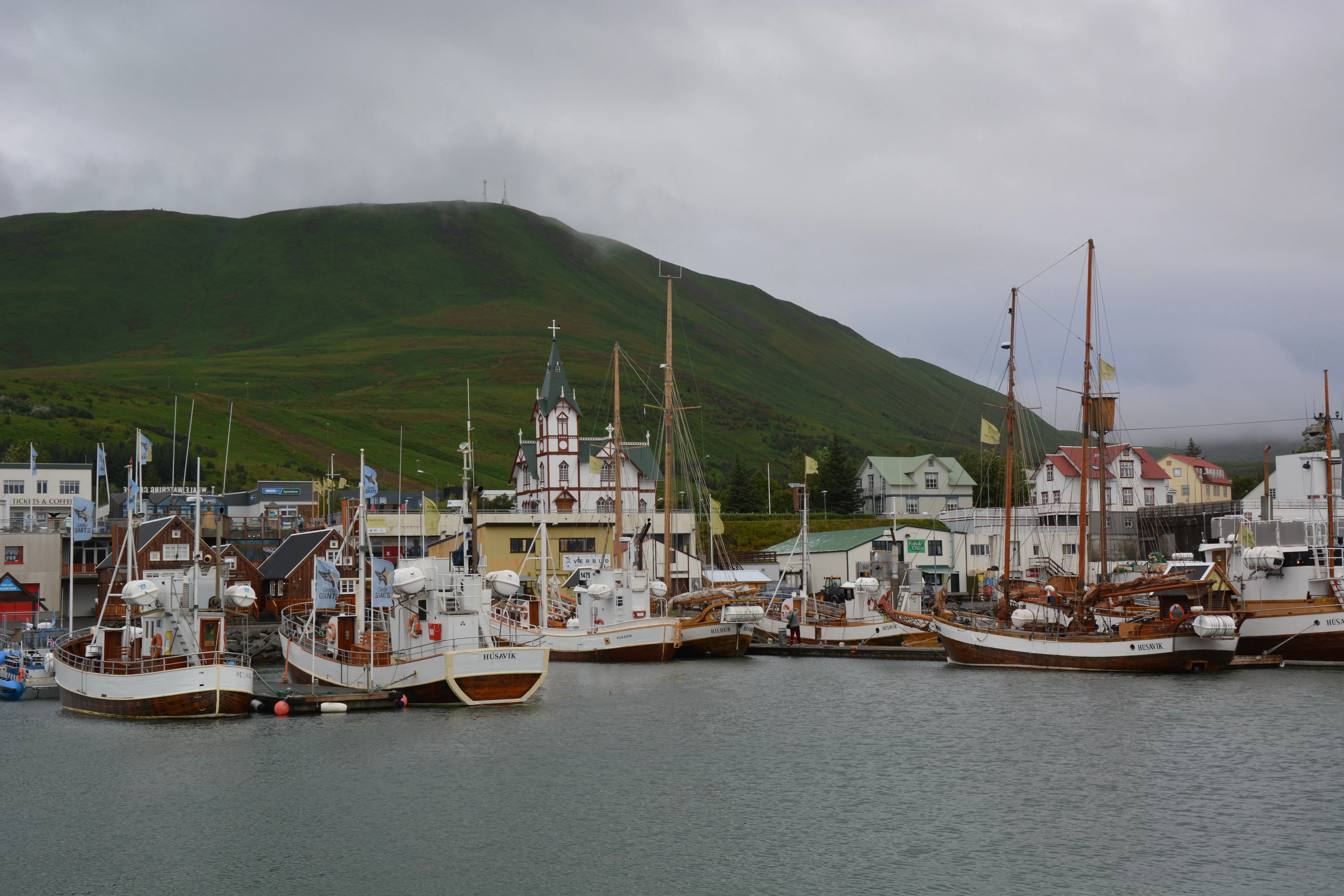
Húsavík Harbour
The pier on Skjálfandi Bay where Iceland's whale-watching boats set out
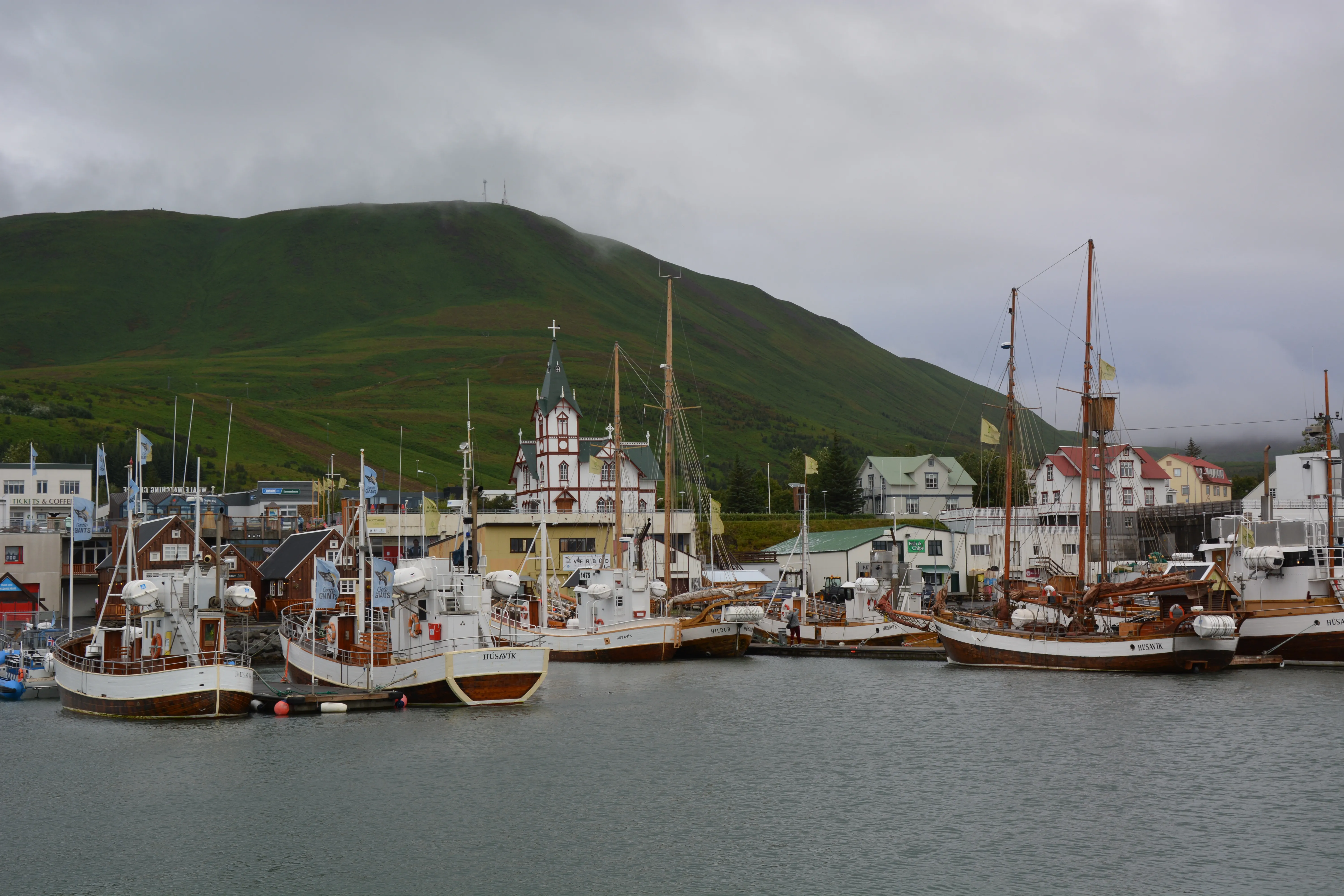
Húsavíkurkirkja
A Norwegian-timber church from 1907 watching over Iceland's whale-watching harbour
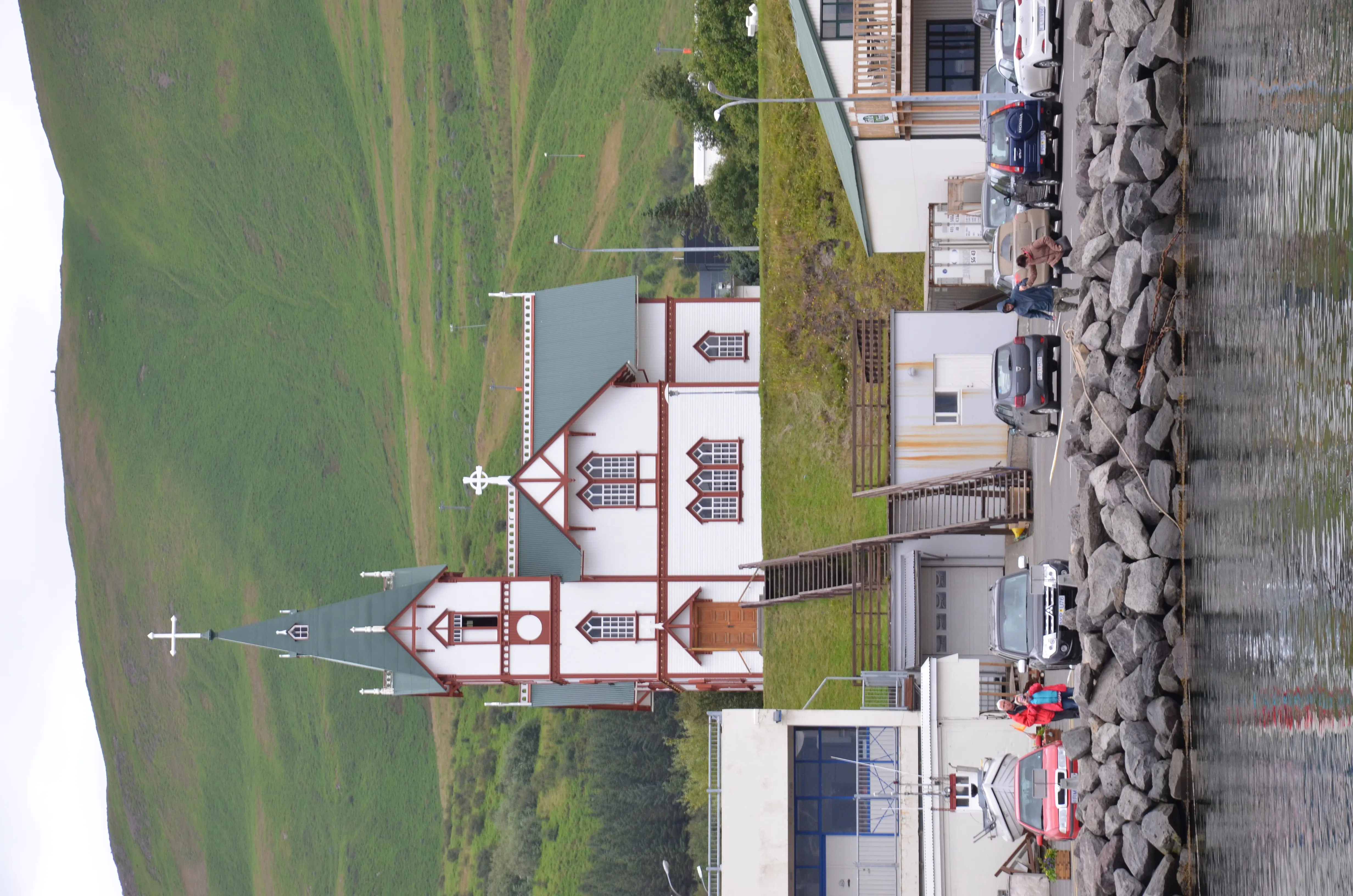
Whale Museum
Earth's largest animals in full scale — the world's most comprehensive whale museum on Iceland's whale watching coast
Guide planning
How much does a tour guide cost in Húsavík?
Húsavík's guided experiences focus on whale watching and the Diamond Circle:
| Tour Type | Price Range |
|---|---|
| Whale watching (traditional oak boat, 2–3 hrs) | ISK 12,000–18,000 per person |
| Whale watching (zodiac, 2 hrs) | ISK 14,000–20,000 per person |
| Diamond Circle day tour from Húsavík | ISK 20,000–28,000 per person |
| Ásbyrgi + Dettifoss guided half-day | ISK 15,000–22,000 per person |
| Private guide (half-day, up to 6) | ISK 45,000–65,000 |
Season planner
When is the best time to visit Húsavík?
- June–August — Peak whale season; humpback and blue whale sightings most probable; Diamond Circle roads fully open
- May and September — Shoulder season; whale watching still excellent, fewer boats, lower prices
- April and October — Whales present but fewer departures; sea conditions more variable; good for independent travellers
- January–March — Northern Lights viewing from the water if conditions allow; whale watching limited; Dettifoss access may require snowmobile
- Avoid November–December — Shortest window for whale watching, rough sea conditions, some attractions close
Spring
Mar-May
Summer
Jun-Aug
Autumn
Sep-Nov
Winter
Dec-Feb
Each score averages that season’s monthly ratings out of 5. The top-rated window is usually the peak season too, so read the guidance above for its trade-offs before you book.
On the ground
How do you get around Húsavík?
- Compact harbour — Whale watching operators, the Whale Museum, Húsavíkurkirkja, and the Exploration Museum are all within walking distance of each other
- Rental car — Essential for independent Diamond Circle exploration; the circuit is 300+ km and requires a full day
- Guided tours — Multiple operators run Diamond Circle day trips from Húsavík, removing the need for a car
- From Akureyri — 90 km southwest; most visitors combine Húsavík with an Akureyri base and a Diamond Circle day trip
- Bus connection — Strætó runs seasonal services between Akureyri and Húsavík; journey takes approximately 1.5 hours
Frequently Asked Questions
Which whale species can I see from Húsavík?
Skjálfandi Bay is one of the richest feeding grounds in the North Atlantic, and the species composition shifts through the season. Humpback whales are the most reliable sighting from May through October — the bay's shallow nutrient-rich waters attract them in numbers that make sightings near-certain during peak summer months. Minke whales are present year-round in smaller numbers. White-beaked dolphins travel in large groups and often approach boats. The rarest and most spectacular sighting is the blue whale — Earth's largest animal — which appears in Skjálfandi Bay with increasing frequency in June and July, drawn by the same capelin and herring concentrations that sustain the humpbacks. Many operators guarantee a whale sighting or offer a free return trip, reflecting genuine confidence in the bay's productivity.
When is the best time for whale watching in Húsavík?
May through September is the core whale watching season, with June and July offering the highest probability of humpback and blue whale sightings as feeding activity peaks in the warm, nutrient-dense bay waters. August remains excellent and slightly less crowded than the midsummer peak. Tours depart year-round but November through March brings rougher seas, fewer whale species, and the focus shifts to Northern Lights viewing from the water — a genuinely extraordinary experience if conditions align. Traditional oak boat (Húsavík Classic) tours move more slowly and lower to the water than rigid inflatable zodiacs, offering a different and arguably more atmospheric experience, though zodiacs reach whales faster in the fjord.
Is Húsavík connected to the Exploration Museum and NASA?
Iceland has an unexpected connection to the Apollo space programme, and Húsavík is at its centre. In 1965 and 1967, NASA sent astronauts including Neil Armstrong and Buzz Aldrin to Iceland for geological training, specifically to the volcanic lava fields of the northeast that most closely resembled the anticipated lunar surface. Húsavík was the regional base for these training expeditions, and the Exploration Museum in the town commemorates this connection with photographs, replica equipment, and first-hand accounts. The museum also covers Icelandic exploration history from the Norse settlement of Greenland through modern Arctic science.