
Engineering Facts
Húsavík Harbour is a constructed working port, sheltered by stone-and-concrete breakwater moles that tame the swell rolling in from Skjálfandi Bay and create the calm basin in which boats can berth safely. Like most Icelandic harbours it has been progressively enlarged and reinforced over the decades to serve first the fishing industry and later the tourism fleet, with quays deep enough for sizeable passenger schooners as well as small craft. The infrastructure that matters most to visitors is unglamorous but essential: fixed and floating pontoons for boarding, mooring bollards, and the lighting and markers that guide vessels in and out during the dark months. The harbour's resilience against North Atlantic weather — wind, spray, and winter ice — is the quiet engineering achievement that makes a dependable daily sailing schedule possible at this latitude.
Observation Points
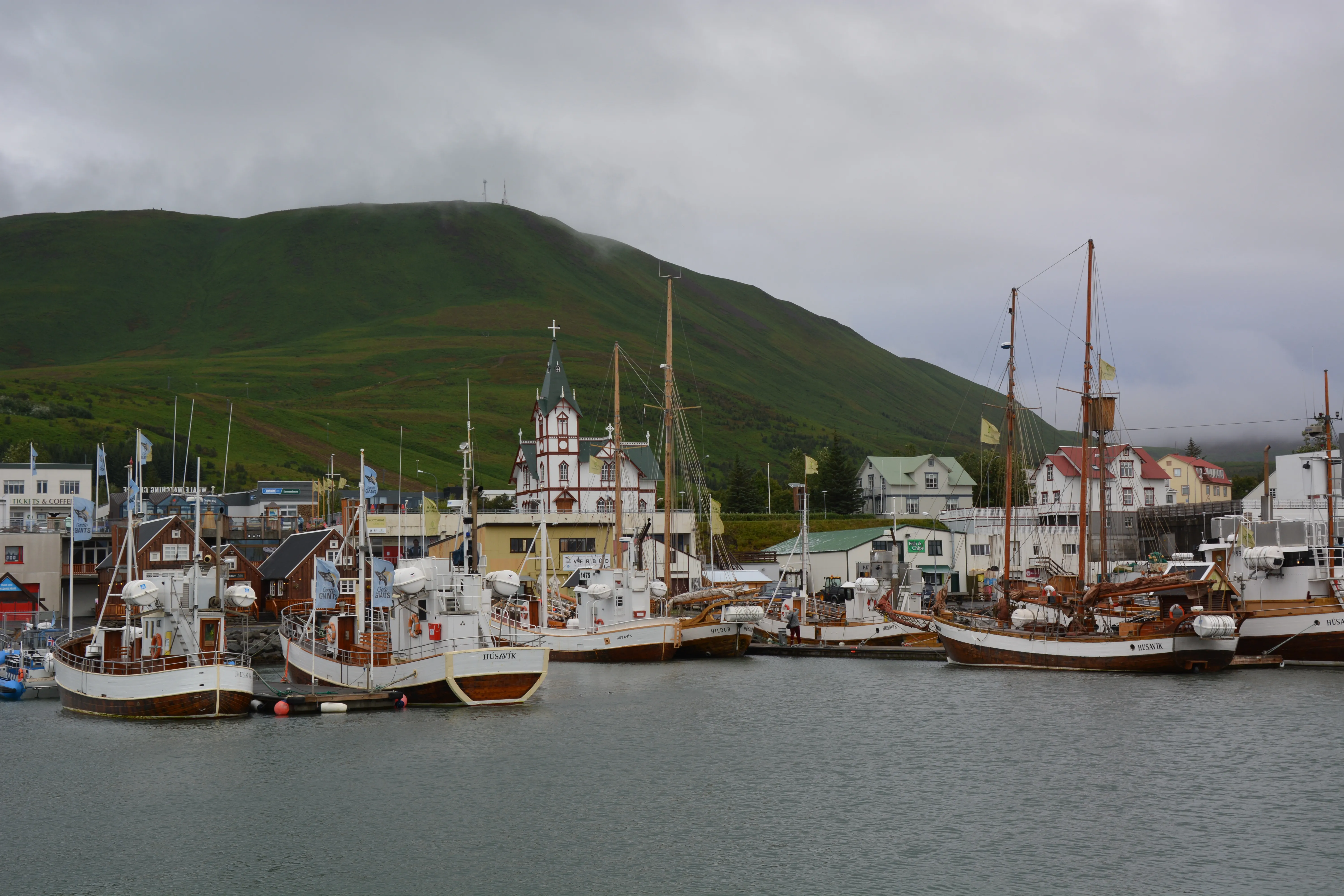
The harbour offers several good vantage points, each with a different view. From the main quay you stand among the moored boats, ideal for close-up photographs of the wooden hulls and masts with the town's church spire rising behind. Walking out along the breakwater gives an open prospect across Skjálfandi Bay toward the mountains on the far shore — the best place to gauge the scale of the water the boats cross. The slope above the harbour, around the church, provides an elevated overview of the whole port, the bay, and the layout of the town. On deck during a sailing, the bow is the prime position for spotting whales and feeling the rhythm of the sea, while the stern is steadier for those who prefer a calmer ride. On clear winter nights the breakwater also makes a fine dark-sky spot for watching the aurora over the bay.
When to Visit
The harbour itself is open and free at all hours. Whale-watching sailings run mainly from April to October, peaking in June, July and August when daylight is nearly endless and humpbacks are most numerous; the first morning departures are often the calmest on the water. Outside that window sailings thin out or stop, and the harbour becomes a quiet working pier. Allow 20–30 minutes to check in before any booked trip, around 3 hours for a standard whale-watching tour, and another 30–45 minutes simply to walk the quay and photograph the boats. Winter visitors come for the harbour atmosphere and possible Northern Lights over the bay rather than for sailings.
Admission and Costs
Walking the harbour and waterfront costs nothing. A standard whale-watching tour of about three hours typically runs ISK 11,000–14,000 (roughly USD 80–105) for adults, with reduced child fares and under-7s often free; warm overalls are lent free of charge by operators. Faster RIB speedboat trips cost more, commonly ISK 18,000–24,000 (about USD 130–175). Sea-angling or puffin-and-whale combination tours fall in a similar range. Booking ahead in peak summer is wise. Parking around the harbour is free, and combined tickets pairing a sailing with the Whale Museum are offered by several operators at a small saving.
The Case for a Guide
A knowledgeable skipper or guide is what separates a memorable sailing from a frustrating one, and their value begins before you even leave the pier.
- Finding the whales: Experienced crews read currents, bird activity, and recent sightings to head straight for feeding grounds rather than wandering the bay, dramatically improving the odds of a close encounter.
- Identifying what you see: A guide names the species and behaviours in real time — distinguishing a humpback's fluke dive from a minke's quick surfacing — turning distant shapes into understood animals.
- Recognising individuals: Húsavík's long-running research has catalogued returning humpbacks, and a guide who knows that record can sometimes tell you which named whale you are watching.
- Reading the harbour: Even on the quay, a guide can explain the difference between the oak schooners and the RIBs, the town's shift from fishing to whale tourism, and how the pier still functions as a working port.
Tips for Visitors
Dress for the open sea, not the shore — Skjálfandi is cold and windy even in July, so wear warm layers under the overalls and bring a hat and gloves. Book peak-season trips in advance; summer sailings fill quickly and a full boat leaves without latecomers. Choose your boat type deliberately — the wooden schooners are slow, quiet and steady, while RIBs are fast and bumpy, better for thrill-seekers than for the prone-to-seasickness. Take motion-sickness precautions before boarding if you are sensitive; remedies work poorly once you are already queasy. Arrive early to enjoy the quay itself, and combine your sailing with the harbourside Whale Museum for context. Back in Húsavík, the waterfront cafés are the obvious place to warm up afterwards.
Frequently Asked Questions
Why do whale-watching boats leave from Húsavík rather than elsewhere in Iceland?
It comes down to the bay. Skjálfandi Bay, the broad inlet that the harbour opens onto, is fed by nutrient-rich glacial and oceanic currents that draw plankton, fish, and in turn large numbers of feeding whales close to shore. Humpback whales are the headline species, but minke whales, white-beaked dolphins, harbour porpoises, and occasionally blue whales also appear. Because the feeding grounds lie only a short sail from the pier, boats can reach reliable whale territory quickly, which is why Húsavík markets itself as Iceland's whale-watching capital and why the harbour, not the town's other amenities, is the real centre of its visitor economy.
What kinds of boats actually sail from the pier?
The fleet is unusually characterful. Alongside modern vessels, several operators run restored wooden oak schooners — former fishing and cargo boats refitted for passengers — whose slow, quiet passage suits whale watching far better than a noisy engine. There are also RIB speedboats for faster, more exhilarating trips that reach the whales quickly and stay nimble around them. Sea-angling and puffin-spotting tours toward the offshore island of Lundey use the same pier. Reading the masts and hulls along the quay is half the fun: the harbour is a living mix of working craft and tourism boats sharing the same water.
How early should you arrive before a sailing?
Plan to be at the harbour 20–30 minutes before departure. Operators ask passengers to check in at their booths along the waterfront, collect the heavy flotation overalls they lend against the cold and spray, and board in an orderly group. Arriving with time to spare also lets you watch the boats come and go, photograph the church on the hill behind the pier, and choose a good spot on deck. Trips run on a fixed schedule and a full boat will not wait for latecomers, so the buffer matters more here than at a typical attraction.
Is the waterfront worth visiting even without booking a trip?
Very much so. The harbour is free to walk and is the most atmospheric public space in town: you can stroll the quay, watch boats unload, photograph the colourful hulls against the backdrop of the town church and the mountains, and visit the Whale Museum and harbourside cafés clustered around the same waterfront. Many people who are short on time, travelling with small children, or visiting in winter when sailings pause still enjoy the harbour simply as a place to absorb the working life of a northern fishing port.