
Collections Highlights
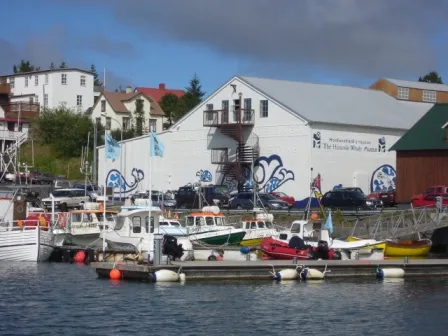
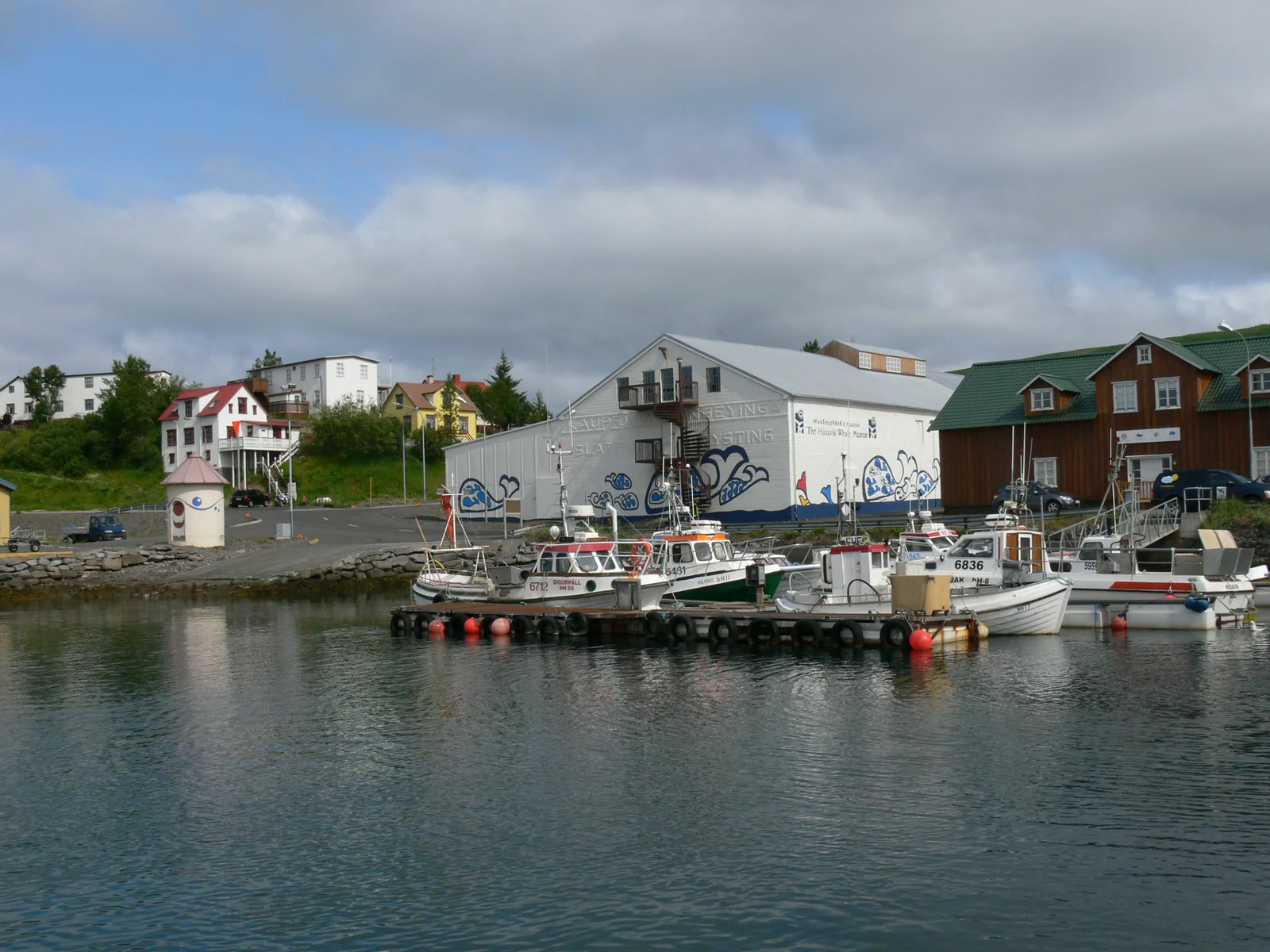
The museum occupies a converted Norwegian-style stone and timber warehouse from the late 19th century, originally built as a processing facility for the fishing and agricultural products of the Húsavík area. The building's conversion in 1997 preserved the original structure while opening up the interior to accommodate the large whale skeletons — the blue whale skeleton in particular required significant structural reinforcement of the ceiling to support its weight. The harbour-facing wall incorporates large windows that frame the view of Skjálfandi Bay, creating a visual connection between the skeletal specimens inside and the living population of the same species visible offshore. The exterior retains its traditional corrugated-iron cladding in the characteristic Icelandic colour palette of red and white.
Guided Tours
Húsavík's choice to establish a dedicated whale museum reflects the town's deliberate repositioning from fishing economy to whale watching economy — a transition that began in the early 1990s when the first commercial whale watching boats departed from the harbour. The museum was founded in 1997 as both a scientific institution and a tourism anchor, providing an educational reason to spend time in Húsavík beyond the boat tours themselves. The timing was significant: Iceland was in the midst of an international debate about resuming commercial whaling, and the museum's existence — drawing tourists specifically to experience whales as living, observable animals — represented an economic argument that whale watching tourism was more valuable per animal than commercial harvest. Today the harbour from which tens of thousands of tourists depart annually to observe live whales occupies the same waterfront that once processed whale carcasses — a transformation of economic and cultural identity that the museum documents without triumphalism.
Whale Museum in Pictures
When to Visit
Best time to visit: Morning, before a whale watching afternoon departure — the museum provides context that makes the boat tour richer. Duration: 1.5–2 hours for the full permanent collection at a comfortable pace. Summer peak (July–August): The museum fills with cruise ship visitors between 10 AM–2 PM; arriving at opening (8:30 AM) or after 4 PM provides a more contemplative experience. Winter visits: The museum is open year-round but whale watching is limited November–March; winter visitors often combine it with Northern Lights touring from Húsavík.
Admission and Costs
Admission: ISK 2,200 adults, ISK 1,100 ages 7–16, under-7 free. Opening hours: May–September 8:30 AM–6:30 PM daily; October–April 10 AM–5 PM daily. Audio guide: Available in English, Icelandic, and several European languages; included with admission. Combined ticket with whale watching: Available through most Húsavík boat operators at a small discount. Photography: Permitted throughout the museum, including of the skeleton collection. Café: A small café operates in the museum during summer; full lunch service in the harbourfront restaurants 2 minutes' walk away.
The Case for a Guide
The museum's exhibitions are thorough enough for self-guided visits, but a local guide who also leads whale watching tours adds an irreplaceable dimension:
- Species identification in context: A guide who has spent hundreds of hours on Skjálfandi Bay can point to specific anatomical features on the skeletons — the humpback's 4-metre pectoral fins, the blow hole position on sperm whales versus baleen whales — and explain exactly what you will look for when those same features appear above the waterline on the boat.
- Individual whale recognition: Húsavík's research community has been photo-identifying individual humpbacks in Skjálfandi Bay for over 20 years. A guide who knows the research catalogue can tell you which named individuals — some of whom return to the bay every summer — are currently being sighted, turning an anonymous natural spectacle into an encounter with known individuals.
- The whaling debate in Icelandic terms: A museum guide can speak with more nuance than the exhibition panels allow about the internal Icelandic debate over commercial whaling — a politically charged topic on which Icelandic citizens, the fishing industry, and the tourism industry hold genuinely conflicting positions. The conversation is richer than the displays, which by necessity present all sides without resolution.
- Blue whale biology beyond the skeleton: The blue whale skeleton's scale is shocking in person, but a guide who has followed blue whales at sea can describe behaviour — the extended surface breathing sequence before a 200-metre dive, the way the animal's blue-grey coloration appears luminescent in clear water at depth — that the skeleton cannot convey.
Tips for Visitors
Visit before your whale watching tour — the museum's species identification materials are most useful as preparation, not as retrospective explanation. Ask about photo-identification — Húsavík's cetacean research community maintains one of Europe's longest running whale photo-ID datasets; museum staff can often tell you which individuals have been sighted this season. Allow 2 hours — visitors who rush through in 45 minutes miss the smaller exhibition rooms covering whale song, mother-calf behaviour, and Iceland's specific whaling regulations. Combine with the Exploration Museum — a 5-minute walk from the Whale Museum, covering Húsavík's connection to the Apollo space programme; together they make a rewarding half-day before an afternoon whale watching departure. Children's section — well-designed interactive exhibits on whale biology make this one of Iceland's more child-friendly museums.
Frequently Asked Questions
How large is a blue whale, and does the museum really have one?
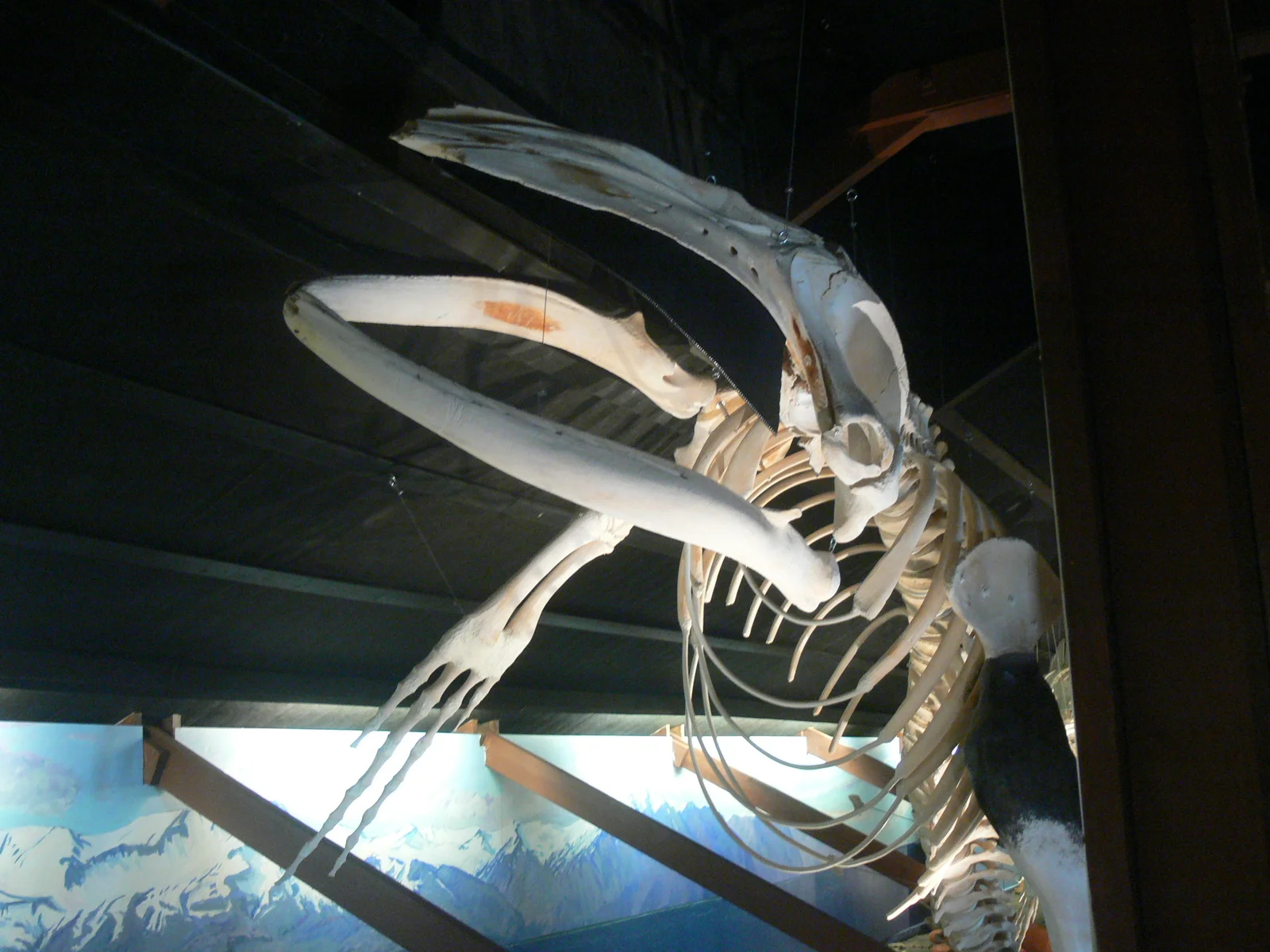
Yes — the museum's centrepiece is a 25-metre blue whale skeleton, suspended from the ceiling of the main hall. Blue whales are the largest animals that have ever lived on Earth — larger than any dinosaur — with the largest recorded individuals reaching 33 metres and weighing 190 tonnes. The heart of a blue whale is the size of a small car; its arteries are wide enough for a human to crawl through. The skeleton in the museum was recovered from a whale that stranded on the Icelandic coast, cleaned and articulated over several years, and installed in the converted slaughterhouse building that the museum now occupies. Standing beneath it provides the most direct possible experience of the scale of these animals — photographs cannot convey what it feels like to look up at a skull the size of a family living room.
What is Iceland's history with whaling, and what does the museum say about it?
Iceland has one of the world's most complex and contested relationships with commercial whaling. Commercial whaling was practised continuously from the early 20th century until Iceland suspended it under international pressure in 1989, then resumed it in 2003 for scientific purposes and 2006 for commercial fin whale and minke whale hunting. Iceland remains one of three countries — with Norway and Japan — that conducts commercial whaling despite the International Whaling Commission moratorium. The museum presents this history with deliberate balance: it covers the economic role of whaling in Icelandic coastal communities, the science of whale biology and conservation, and the international debate over sustainable catch levels without taking an explicit political position. The result is an exhibition that generates genuine reflection rather than advocacy — visitors leave with the complexity of the issue clear, which is arguably more valuable than a museum with a predetermined conclusion.
How does the museum complement whale watching tours from Húsavík?
The museum is the ideal preparation for a whale watching boat tour from Húsavík harbour, and most visitors do both on the same day. At the museum, you learn to identify humpback whales by their distinctive long pectoral fins and the unique patterns on the underside of their flukes (tails) — patterns used by researchers to identify individual animals across multiple seasons. You see the scale of a minke whale skeleton alongside the blue whale and understand why minkes appear at the surface more frequently than the larger species. The museum's section on whale song and communication is particularly effective at preparing visitors for the acoustic dimensions of their boat experience. Many visitors also spend time with the museum's photographic archive of Skjálfandi Bay whale sightings, which gives a sense of which species appear in which months.