
Guided Tours in Sydney: Choosing the Right Experience
A practical guide to picking the right guided tour in Sydney — harbour cruises, the BridgeClimb, walking tours and coastal walks — with honest notes on timing, budget and the Opal-card logistics that shape your day.
Read the full guideUpdated · 14 min read
In Sydney, skip guided tours for the free, self-explanatory sights and spend your budget on access-only experiences: the Opera House interior (A$37–45), the BridgeClimb (A$174–388), an Aboriginal coastal walk, or a Blue Mountains day trip. For everything else, an Opal card and the Manly Ferry do the job.
Sydney is one of the easiest major cities in the world to navigate alone — English-speaking, compact at its core, and stitched together by one of the great public-transport networks. So the honest question here is rarely whether to take a guided tour, but which of the many on offer actually adds something you couldn't get with an Opal card and a comfortable pair of shoes. The harbour cruises, the bridge climbs, the cultural walks and the Blue Mountains day trips each justify their price in different ways. This guide sorts the options by what they're genuinely good for, what they cost, when to go, and the local logistics that decide whether a day runs smoothly. Read it alongside the Sydney city guide and the wider Australia overview for the bigger picture.
What Does a Guide Actually Add in Sydney?
A guide earns its fee on the layer beneath the postcard: access you cannot get alone, like the Opera House interior and the Bridge summit; the story behind the 1788 landing or the Gadigal rock engravings; and the logistics of a Blue Mountains or Hunter Valley day handled for you.
Plenty of Sydney is free and self-explanatory. You don't need anyone to help you photograph the Sydney Opera House from the forecourt, walk the pedestrian path across the Sydney Harbour Bridge, or spread a towel on Bondi Beach. Where a guide earns its fee is the layer beneath the postcard:
- Access you can't get otherwise. The Opera House interior, the Bridge summit, and certain heritage buildings in The Rocks are only open on a booked tour.
- Story and context. A good guide explains why the British chose this exact cove in 1788, how the Opera House nearly bankrupted New South Wales, or what the rock engravings along the coastal cliffs mean to the Gadigal people.
- Logistics handled. For a Blue Mountains or Hunter Valley day, a tour absorbs the driving, the timing, and the route-planning so you spend the day looking out the window rather than at a map.
If your trip is short and your interests are mainstream, you can see most of Sydney without a single paid tour. The art is spending your tour budget where it changes the experience rather than just packaging something you could do yourself.
What Are the Main Types of Guided Tour in Sydney?
Sydney's tours sort into six formats: harbour cruises and the Manly Ferry alternative, the guided Opera House interior tour, the BridgeClimb, walking tours of The Rocks, coastal and Aboriginal cultural walks, and private guides or day trips. Matching the format to your interests matters more than paying the most.
Sydney's tour market sorts into a handful of distinct experiences. Matching the format to your interests — and your appetite for early starts — matters more than booking the most expensive option.
Harbour Cruises and the Ferry Alternative
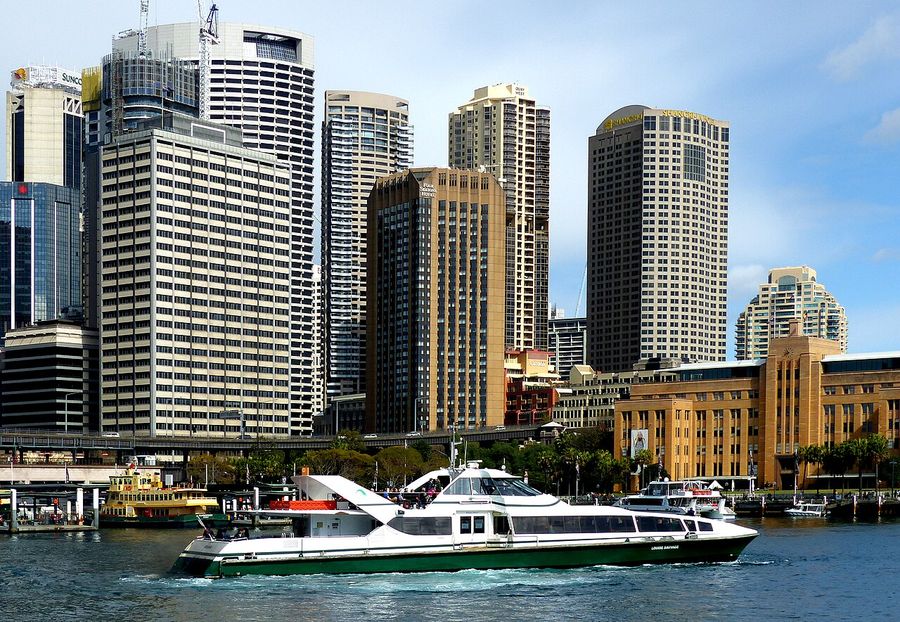
The harbour is the reason Sydney exists, and seeing the city from the water reorders your whole sense of its geography. Dedicated cruises range from hop-on-hop-off sightseeing boats to lunch, dinner, and sunset sailings with commentary.
That said, the single best-value "cruise" in Sydney isn't sold as one: the public Manly Ferry from Circular Quay passes the Opera House, slides under the Harbour Bridge, and crosses to Manly in about 30 minutes for the price of an Opal fare. Pay for a dedicated cruise when you specifically want narration, a meal, a sunset departure, or a smaller vessel that explores the side coves.
- Best for: First-day orientation; anyone who wants the classic harbour panorama.
- Typical length: 1–3 hours.
- Rough cost: Manly Ferry around A$8.70 (US$5.65) each way; commercial cruises A$35–120 (US$23–78) with food.
Guided Opera House Tour
You can stand outside the Opera House for free forever, but the hour-long interior tour is the only way to see the concert halls, learn how Jørn Utzon's sails were engineered, and understand why the building took 14 years and ten times its budget to complete. It is one of the few tours in Sydney with no real do-it-yourself substitute.
- Best for: Architecture and history enthusiasts; first-time visitors.
- Typical length: About 1 hour.
- Rough cost: A$37–45 (US$24–29) per adult.
The BridgeClimb
Climbing the Sydney Harbour Bridge to its 134-metre summit is Sydney's signature paid experience, and a genuinely guided one — you're harnessed to a safety line and led in a small group by a trained climb leader. The free pedestrian walkway and the Pylon Lookout offer cheaper bridge views, but neither puts you on the arch itself.
- Best for: Travellers who want a once-in-a-trip highlight and don't mind heights.
- Typical length: 2.5–3.5 hours depending on the climb.
- Rough cost: A$174–208 (US$113–135) weekday Explorer; A$308–388 (US$200–252) for the premium dawn or twilight Summit.
Walking Tours of The Rocks and the CBD
The convict-era lanes of The Rocks are tailor-made for a walking tour, and several operators run tip-based free walks that cover the area's colonial origins, the 1900 plague clearances, and its market culture. Paid small-group and themed walks (true-crime, pub history, food) go deeper.
- Best for: History lovers, budget travellers, anyone wanting a guided introduction on day one.
- Typical length: 90 minutes to 2.5 hours.
- Rough cost: Free–A$25 (US$16) tip for free tours; A$40–70 (US$26–46) for paid themed walks.
Coastal Walks and Aboriginal Cultural Tours
The Bondi-to-Coogee coastal walk is free and well signposted, but a guided version with a naturalist or an Aboriginal cultural interpreter transforms it — the rock engravings, bush-tucker plants, and clifftop ecology only come alive with someone who can read them. These tours are among the most rewarding in the city.
- Best for: Active travellers, families, anyone wanting the natural and Indigenous side of Sydney.
- Typical length: 2.5–4 hours.
- Rough cost: A$65–120 (US$42–78) per person; Aboriginal cultural tours A$95–150 (US$62–98).
Private Guides and Day Trips
If you want the itinerary built around you — or you're heading out of the city to the Blue Mountains, the Hunter Valley wine region, or the northern beaches — a private guide or a full-day group tour removes the planning. Day trips in particular are where a guide's value is highest, because the alternative is a long self-drive on unfamiliar roads.
- Best for: Families, time-pressed visitors, day-trippers beyond the city.
- Typical length: Half a day in the city; 9–11 hours for a Blue Mountains run.
- Rough cost: A$250–400 (US$163–260) private half-day (up to four); A$120–250 (US$78–163) per person for a group day trip.
How Do You Match Tours to the Length of Your Trip?
Think in days. One day: a harbour cruise or Manly Ferry, the Opera House tour, then a free Rocks walk. Two days: add the Bondi-to-Coogee coastal walk and the BridgeClimb on your clearest morning. Three or more: a Blue Mountains trip and an Aboriginal cultural walk.
Rather than booking tours one by one, it helps to think in days:
- One day: Take a harbour cruise or the Manly Ferry to orient yourself, add the Opera House interior tour, and finish with a free Rocks walking tour. That trio covers Sydney's historic and scenic heart without a car.
- Two days: Keep day one as above, then spend day two on the eastern beaches — the Bondi-to-Coogee coastal walk, guided or solo — and reserve the BridgeClimb for whichever morning has the clearest forecast.
- Three days or more: Add a full-day Blue Mountains or Hunter Valley trip, where a guided tour genuinely outperforms going it alone, and slot in an Aboriginal cultural walk to round out the city's deeper story.
Resist over-booking. Sydney rewards unstructured time — a slow ferry, an unplanned hour in a Rocks laneway, a swim before the crowds — as much as any ticketed experience.
When Is the Best Time to Take a Tour in Sydney?
Spring (September–November) is the sweet spot: warm, settled, and quieter than summer, with short booking lead times. Autumn (March–May) is second-best and brings Vivid Sydney. Summer means peak heat, crowds, and prices, so climb early; mild winter offers the clearest skies for a dramatic dawn BridgeClimb.
Sydney runs tours year-round, but the season shapes the experience:
- Spring (September–November): Arguably the sweet spot — warm enough to swim by November, settled enough for clear harbour views, and quieter than summer. The best window for booking the Opera House and BridgeClimb without long lead times.
- Summer (December–February): Peak heat, peak crowds, and peak prices. Temperatures regularly top 35°C, so favour early-morning climbs and walks. New Year's Eve fireworks over the harbour are spectacular but demand bookings months ahead.
- Autumn (March–May): Sydney's second-best window — warm days, fewer visitors, and the Vivid Sydney light festival illuminating the Opera House sails through late May and into June.
- Winter (June–August): Mild by global standards and the clearest skies of the year. A dawn BridgeClimb on a still winter morning is the city at its most photogenic, and coastal walks are crisp and uncrowded.
Whatever the month, book the marquee experiences — Opera House, BridgeClimb, popular cruises — several days ahead in low season and a couple of weeks ahead during school holidays and around New Year. For a fuller seasonal breakdown, the Sydney city guide covers month-by-month conditions.
How Much Should You Budget for Sydney Tours?
Sydney is not cheap. A free Rocks walk runs on tips (A$20–25), the Opera House tour is A$37–45, and the BridgeClimb spans A$174 for a weekday Explorer to A$388 for the dawn Summit. Spend on access-only experiences; the coastal walk, forecourt, and ferries cost little or nothing.
Sydney is not a cheap city, and tour prices reflect it. Thinking in ranges helps:
| Tour type | Approximate cost |
|---|---|
| Manly Ferry (each way) | A$8.70 (US$5.65) with Opal card |
| Free Rocks walking tour | Free–A$25 (US$16) tip |
| Opera House interior tour | A$37–45 (US$24–29) per adult |
| Commercial harbour cruise | A$35–120 (US$23–78) with food |
| Bondi coastal walk (guided) | A$65–120 (US$42–78) per person |
| Aboriginal cultural tour | A$95–150 (US$62–98) per person |
| BridgeClimb Explorer (weekday) | A$174–208 (US$113–135) per person |
| BridgeClimb Summit (dawn) | A$308–388 (US$200–252) per person |
| Private half-day city guide | A$250–400 (US$163–260), up to 4 |
| Blue Mountains group day trip | A$120–250 (US$78–163) per person |
A few cost notes worth knowing before you book:
- The free layer is large. Bondi Beach, the coastal walk, the Bridge pedestrian path, the Opera House forecourt, and The Rocks markets all cost nothing — spend your tour budget on the access-only experiences.
- Opal fare caps reward exploring. Daily and weekly caps mean ferries, trains, and buses get cheaper the more you ride; a day of harbour-hopping by ferry can cost less than a single cruise ticket.
- Family pricing varies widely. The BridgeClimb has age minimums and steep per-head costs; coastal and ferry options are far gentler on a family budget.
- Tipping. Not expected in Australia, though A$10–20 (US$7–13) for an outstanding free-tour guide is a kind gesture.
What Local Logistics Make a Sydney Day Run Smoothly?
Get an Opal card or tap a contactless card for trains, buses, light rail, and ferries under one fare-capped system. Base yourself near Circular Quay, within ten minutes of The Rocks, the Opera House, and the wharves. Respect the fierce UV, and check the forecast before committing to the Bridge.
Most of the difference between a smooth Sydney day and a frustrating one comes down to a few practical details:
- Get an Opal card or tap a contactless bank card. It covers trains, buses, light rail, and ferries on one tap-on/tap-off system with fare caps — no paper tickets needed.
- Base yourself around Circular Quay. The Rocks, the Opera House, the BridgeClimb base, and the ferry wharves are all within a 10-minute walk of the Quay.
- Reach Bondi by the 333 bus from Bondi Junction (a few stops on the Eastern Suburbs line), then walk the coastal path; the 372 or 373 returns you from Coogee.
- Respect the sun. Australia has the world's highest UV levels — SPF 50+, a hat, and water are non-negotiable on any outdoor tour, even in winter.
- Build buffer time around day trips. A Blue Mountains return is a long day; don't schedule a tight dinner reservation right after it.
- Check the forecast before committing to the Bridge. Climbs run in most weather, but a clear morning is worth rearranging your itinerary for.
How Do You Find a Good Guide in Sydney?
Look for operators accredited by recognised bodies — Ecotourism Australia for nature experiences, and Aboriginal tourism peak bodies for cultural walks, which ensures appropriate community benefit. For city walks, favour small groups that leave room for questions, and guides who adjust the pace and turn a checklist of sights into a story.
Look for operators accredited by recognised bodies — Ecotourism Australia for nature and reef-style experiences, and operators endorsed by Aboriginal tourism peak bodies for cultural walks — to ensure standards and, in the case of Indigenous tours, appropriate community benefit. For city walks, small group sizes leave room for questions, and the best guides read the room: they adjust the pace, skip the script when a question is more interesting, and turn a checklist of sights into a coherent story of harbour, history, and place.
Related Guides
- Sydney city guide — neighbourhoods, attractions, and practical tips for the wider stay
- Australia country guide — how Sydney fits into a longer trip across the continent
- Best Time to Visit Melbourne — pairing Sydney with Australia's southern cultural capital
- Getting Around Brisbane — transport notes for extending the trip north to Queensland
Final thoughts: In a city this navigable, the smartest approach is to spend freely on the experiences that genuinely need a guide — the Opera House interior, the Bridge summit, an Aboriginal cultural walk, a Blue Mountains day — and lean on Sydney's superb ferries and free coastal walks for everything else. Decide what you actually came for, book the marquee slots ahead, tap on with an Opal card, and let the harbour do the rest.
Frequently Asked Questions
Do you need a guided tour to see Sydney?
Not for the headline sights — the Opera House forecourt, Bondi Beach and The Rocks are all easy to reach and explore independently with an Opal card. A guide earns its keep for the experiences you can't replicate alone: the interior of the Opera House, the summit of the Harbour Bridge, the Aboriginal history layered under the harbour foreshore, and full-day trips to the Blue Mountains where a driver removes the logistics.
How much does a guided tour in Sydney cost?
Free walking tours of The Rocks run on tips (budget A$20–25 / US$13–16 per person). A guided Opera House interior tour is A$37–45 (US$24–29), the BridgeClimb ranges from about A$174 (US$113) for a weekday Explorer Climb to A$388 (US$252) for the dawn Summit slot, a guided Bondi-to-Coogee coastal walk is A$65–120 (US$42–78), and a private half-day city guide for up to four people is A$250–400 (US$163–260).
When is the best time to take a tour in Sydney?
October–November and March–April offer warm, settled weather and thinner crowds than the December–February summer peak. Book Opera House and BridgeClimb slots well ahead in school holidays and around New Year's Eve. For the Bridge, dawn climbs in autumn and winter deliver the clearest air and most dramatic light.
What is the best Sydney tour for first-time visitors?
Start with the harbour. A Circular Quay-based harbour cruise or the public Manly Ferry orients you to the city's geography in 30 minutes, after which a guided Opera House tour and a free Rocks walking tour fill out the historic core. Add the Bondi-to-Coogee coastal walk on a second day for the beach side of Sydney.
Are harbour cruises worth it, or is the ferry enough?
For most visitors the regular Manly Ferry from Circular Quay is the better value — it passes the Opera House and slips under the Bridge for the price of an Opal fare. Pay for a dedicated cruise when you want commentary, a meal, a sunset sailing, or a vessel that lingers in the coves a scheduled ferry skips.