
Havana: Should You Go Self-Guided or Hire a Guide?
Walk Havana's plazas independently, choose a local for history or music, and compare car rides and Viñales excursions with practical cash and booking advice.
Read the full guideUpdated · 9 min read
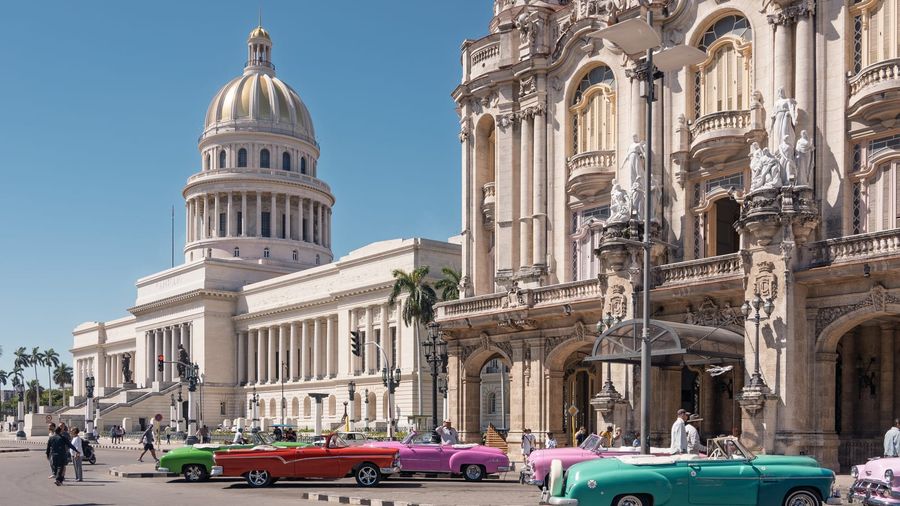
Old Havana invites wandering: a plaza, a courtyard, then a pause on the Malecón. A guide becomes useful when you want to understand the buildings, find a particular music scene or organise a trip beyond the city. Start with the experience you care about, then choose the person or transport that makes it possible.
Colonial, republican and revolutionary history occupy the same few square kilometres of Havana. You can enjoy the facades without a commentary, but a historian may change what you notice in a restored courtyard or a public square. This guide weighs those choices against the practical work of finding transport, agreeing prices and paying for outings. The Havana city guide covers the neighbourhoods; the Cuba overview puts the capital into a wider itinerary.
Where you're fine on your own
The plazas, the seafront and the museums add up to a rich trip on their own — no guide required. Keep the historic core for walking and agree transport separately for the outer neighbourhoods.
You can wander the five colonial plazas of the Old Havana UNESCO district, sit on the sea wall of the Malecón at dusk, and photograph El Capitolio from Parque Central without any help at all. For the mosaic courtyards of Fusterlandia out in Jaimanitas, plan the journey and return fare before leaving the centre. None of this asks for a licence or a booking — only comfortable shoes, an early start against the heat, and the small friction of a taxi fare agreed in advance. On a short trip with mainstream tastes, you can tick off the headline sights without paying for a single tour.
Where a local changes the trip
The Havana a map can't show you lives in three places: the layered history stacked into the plazas, the cash-only informal economy behind the paladares and casas, and the music and day-trip logistics that are hard to arrange from cold.
The plazas of Habana Vieja are handsome on their own, but a guide connects the colonial palaces, the 1959 Revolution and the ongoing restoration run by the Oficina del Historiador into a single coherent story instead of a series of pretty facades. Havana's best food, music and lodging move through paladares and casas particulares — private, family-run businesses where a local knows which are worth your money and how the dual-history economy actually works. For the Viñales tobacco valley, an operator can handle the road journey while a guide adds introductions and explanations at the stops. Give colonial Trinidad an overnight stay rather than treating it as another short excursion from Havana. If you do not speak Spanish, confirm the language of each service; hiring an English-speaking driver does not necessarily buy a history tour.
The self-guided-versus-guided breakdown, sight by sight
A driver, a historian and a music specialist offer different services. Check which one a listing actually includes before treating every booking as a guided city tour.
| Sight or experience | Best approach | Why |
|---|---|---|
| Old Havana plazas | Self-guided or short guided | Easy to wander; a guide adds the colonial history |
| The Malecón at dusk | Self-guided | Just sit on the sea wall and watch the city |
| Classic-car convertible ride | Guided (driver) | Covers the spread-out city fast; priced per car |
| Food, rum & cigar tour | Guided (bilingual) | Access to paladares; a local separates real from trap |
| Live-music & nightlife | Guided (local) | The right venues are unmarked; timing is everything |
| Viñales day trip | Guided excursion or pre-arranged transport | Check the stops, return time and whether guiding is included |
A classic-car ride can be chiefly about the vehicle and the route; it need not replace a walk with someone who knows the city's architecture. Likewise, paying for a music outing should buy a clear plan for the evening, including venue admission and how you will get home. Ask those questions before choosing from the table.
Costs, and the cash-only catch
In Havana, payment arrangements deserve as much attention as the headline price. Confirm the currency, deposit, cash balance and any venue or transport charges before the outing begins.
The plazas and seafront themselves are free. The following ranges help compare paid outings, but ask whether a quoted figure covers one person, the whole group or the vehicle.
| Item | Approximate cost |
|---|---|
| Old Havana plazas & Malecón, self-guided | Free (taxi fares aside) |
| Group Old Havana walking tour | US$20–40 per person (about 2 hours) |
| Classic-car convertible city tour | US$60–100 per vehicle (2–3 hours) |
| Private half-day guide (up to 4) | US$60–120 |
| Private full-day guide | US$150–250 |
| Viñales tobacco-valley day trip | From roughly US$80–150 per person |
A few cost notes worth knowing before you book:
- Cash is non-negotiable. Cards issued by US banks do not work anywhere in Cuba, and even non-US cards are unreliable — ATMs that accept foreign cards are scarce and often empty. Bring enough US dollars or euros in small denominations for your whole stay, plus a reserve. €50 and €100 notes are frequently refused over counterfeiting concerns.
- Guided experiences are priced per group or per car. Share a half- or full-day guide, or a classic-car ride, among three or four people and the per-person cost drops steeply.
- Tipping. A tip on top of the agreed fee is customary and genuinely appreciated for guides, drivers and musicians.
None of these figures is a quote — use them for planning only, since prices shift with the season and demand; confirm current rates when you book.
Choosing your season, and why the early start wins
Keep a walking tour in the cooler part of the day, and leave enough flexibility to change a seafront outing when the weather turns.
Because the city sits just inside the tropics on Cuba's northwest tip, the calendar is driven by rain and heat, not temperature swings. November through April is the dry, comfortable window, with temperatures around 25°C and low humidity — the best stretch for walking the plazas or an open-top car ride. December to February is peak season and the richest run for festivals, including the Havana International Jazz Festival, so reserve casas particulares and marquee experiences well ahead. May through October is hotter and more humid but quieter, with hurricane season peaking in September and October, when storms occasionally flood the Malecón — build in flexibility if you travel then. Whatever the month and whatever you book, start walking early and hand the midday heat to a museum, a long paladar lunch or a shaded plaza; a midday break also leaves more energy for an evening performance. For a fuller month-by-month breakdown, the Havana city guide covers seasonal conditions.
Booking a guide you can trust
Book through Agencia San Cristóbal or the established state agencies, lean on your casa particular for trustworthy recommendations, insist on a genuinely bilingual guide, and keep groups small enough for real conversation.
Agencia San Cristóbal, run by the Oficina del Historiador, is the official operator for Habana Vieja and its guides are thoroughly trained in the city's colonial and architectural history. The state agencies — Havanatur, Cubatur and Gaviota — can arrange licensed guides and day trips across the country, and can be booked through your hotel. For informal, on-the-ground recommendations, the hosts of casas particulares are often the best source, with real relationships to trusted drivers and guides. Because Spanish is the working language of daily life, confirm your guide is genuinely bilingual rather than relying on a few rehearsed phrases. Avoid the unlicensed jineteros who tout tours on the street — the main hassle rather than a safety threat — agree every price up front, and trust that the best Havana guides will sense the mood, dropping the script when a plaza or a paladar sparks a better story and turning a checklist of sights into a coherent portrait of a capital suspended between memory and reinvention.
Related Guides
- Havana city guide — neighbourhoods, attractions, and practical tips for the wider stay
- Cuba country guide — how Havana fits into a longer trip across the island
- Guided Tours in Bogotá — choosing tours in another Latin American capital where a bilingual guide is key
- Guided Tours in São Paulo — matching tours to interests in a sprawling city of culture
For a short Havana stay: reserve the specialist outing you care about most, then leave gaps for the plazas and waterfront. Agree prices and payment currency in advance, keep a return-transport plan for evenings out, and allow a longer stay if Viñales is a priority.
Frequently Asked Questions
Do you need a guided tour in Havana?
Not for everything. You can explore Old Havana's plazas and the Malecón independently, with normal care over belongings and a return-transport plan after dark. A guide earns its fee on the layers you can't read off a map — the colonial and revolutionary history stacked into the same streets, the informal economy behind the paladares and casas, and the live-music scene that only opens up with a local. For Viñales, decide whether you want a transport package or a guide as well; give Trinidad more time as an overnight stop. A classic-car ride is another separate booking, usually priced per vehicle.
How much does a tour guide cost in Havana?
A licensed group walking tour of Old Havana runs roughly US$20–40 per person for about two hours. A private half-day guide for up to four people is US$60–120, and a full private day covering Old Havana, Vedado and the Plaza de la Revolución is US$150–250. A vintage convertible city tour with a driver-guide is US$60–100 per vehicle for two to three hours. Bring US dollars or euros in small denominations — US bank cards do not work anywhere in Cuba, and even non-US cards are unreliable.
When is the best time to take a tour in Havana?
November through April is the comfortable dry season, with temperatures around 25°C, low humidity and little rain; December to February is peak season and the richest stretch for festivals, so book ahead. May to October is hotter and more humid but quieter, with September and October carrying real hurricane risk. Whatever the month, start walking tours early and keep the midday heat for a museum, a long lunch or a shaded plaza.
What is the best Havana tour for first-time visitors?
Start with a licensed walking tour of the Old Havana UNESCO district to read the colonial plazas and their history, then take a classic-car convertible ride along the Malecón and out to the Plaza de la Revolución to stitch the rest of the city together. On a second day add a food-and-rum or live-music tour, and if you have three or more, take a full-day trip to the Viñales tobacco valley.
Are unlicensed street guides (jineteros) a problem in Havana?
They are the main hassle rather than a safety threat. Jineteros tout unlicensed tours, restaurants and cigars, often steering you to places that pay them a commission. Stick to guides from Agencia San Cristóbal, the state agencies, or a recommendation from your casa particular, agree every price before you start, and a polite firm no is enough to move on.