
Guided Tours in Bogotá: Choosing the Right Experience
How to choose the right guided tour in Bogotá — La Candelaria walks, graffiti tours, the Gold Museum, Monserrate and Zipaquirá day trips — with candid notes on altitude, timing, budget and the transit logistics that shape a day in Colombia's high-Andean capital.
Read the full guideUpdated · 15 min read
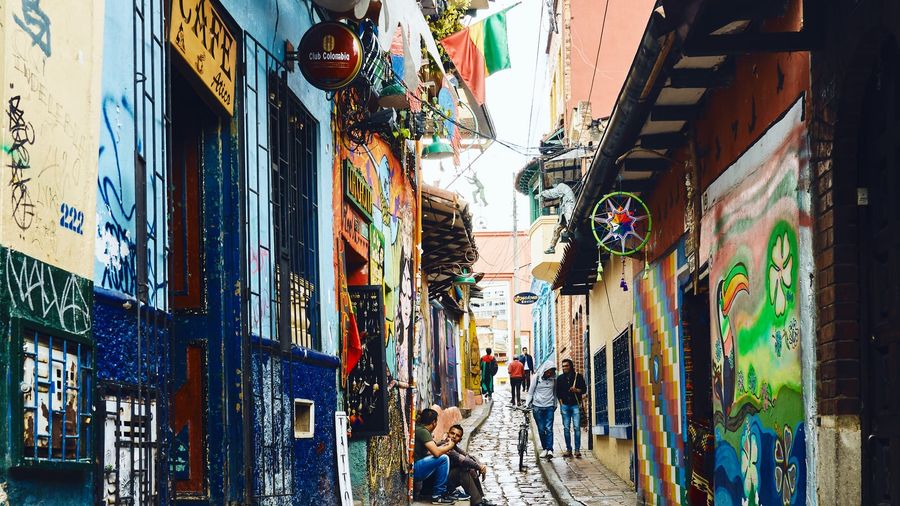
Choosing a Bogotá tour comes down to matching the format to what you came for: a La Candelaria walking or graffiti tour for the old town (COP 50,000–100,000), a guided Gold Museum visit for the pre-Hispanic story, a Paloquemao market food tour, or a half-day trip out to the Salt Cathedral of Zipaquirá (COP 200,000–350,000). Factor in the altitude, ride Monserrate early, and lean on a bilingual guide in a city where English is scarce.
Bogotá is a sprawling capital of nearly eight million people, stretched along a high Andean plateau at 2,640 metres — one of the highest capital cities on Earth. That altitude, the sheer scale of the city, and the fact that English is rarely spoken outside upscale hotels all change the calculation on guided tours: here a good guide is less a luxury than a translator, a navigator, and an interpreter of a place that doesn't give up its stories easily. This guide sorts Bogotá's tour options by what each one is genuinely good for, what they cost, when to go, and the local logistics that decide whether a day runs smoothly. Read it alongside the Bogotá city guide and the wider Colombia overview for the bigger picture.
What does a guide actually add in Bogotá?
A guide earns its fee on the layers you can't read off a map — the meaning behind the goldwork, the politics behind the murals, the food histories behind the market stalls — and on the practical problems of language, altitude, and a city too big to improvise across.
Plenty of Bogotá is straightforward to do alone. You can wander the painted lanes of La Candelaria, ride the funicular up Monserrate, and buy a ticket into the Gold Museum without any help. Where a guide changes the experience is the layer beneath the surface:
- Interpretation, not just access. The Museo del Oro holds more than 55,000 pieces of pre-Hispanic goldwork — the largest collection on the planet — spanning the Muisca, Quimbaya, and other cultures. Wandering it alone, the darkened offering room and the famous Muisca raft are striking; with a guide, they become a coherent story about ritual, metallurgy, and the myth of El Dorado.
- Language. Spanish is the sole working language of daily life here, and English is scarce beyond hotel lobbies. A bilingual guide is the difference between pointing at a menu and understanding what a tamal santafereño or a cup of ajiaco actually is.
- Local navigation and judgement. Bogotá is enormous and uneven. A guide knows which cobbled blocks of La Candelaria are best on foot, when to switch to a taxi, and how to structure a day so the altitude doesn't flatten you by mid-afternoon.
If your trip is short and your interests are mainstream, you can see the headline sights without a single paid tour. The skill is spending your tour budget where it genuinely adds meaning or removes friction, rather than paying for something you could manage yourself.
What are the main types of guided tour in Bogotá?
Bogotá's tours sort into five broad formats: La Candelaria walking and graffiti tours of the colonial old town, guided museum visits led by the Gold Museum, market and food tours around Paloquemao, Monserrate and viewpoint outings, and day trips out to the Salt Cathedral of Zipaquirá. Matching the format to your interests matters more than booking the priciest option.
The city's tour market falls into a handful of distinct experiences. Each suits a different traveller, and a well-planned trip usually mixes two or three rather than piling on the same kind.
La Candelaria Walking and Graffiti Tours
The colonial quarter, founded in 1538 by Gonzalo Jiménez de Quesada, is the natural first-day orientation. Tip-based free tours and licensed small-group walks cover the same ground — Plaza de Bolívar, painted colonial facades, university plazas, and the cobbled Callejón del Embudo — but Bogotá has also made street art part of its identity, and dedicated graffiti tours read the politically charged murals with local artists or long-time residents as guides.
- Best for: First-time visitors, history and art lovers, anyone wanting their bearings on day one.
- Typical length: 2–3 hours.
- Rough cost: COP 20,000–40,000 tip for free walks; COP 50,000–100,000 per person for licensed group tours.
Guided Museum Visits
Two collections reward a guide. The Gold Museum is the obvious one, but the Botero Museum — free to enter, built around Fernando Botero's donated collection of his own rotund figures alongside Picasso, Monet, and Dalí — gains a lot from someone who can place the works in context. Guided visits turn a fast walk-through into a proper reading of the art.
- Best for: Culture travellers, rainy afternoons, anyone who finds museums flat without context.
- Typical length: 1.5–2 hours per museum.
- Rough cost: A guide's fee on top of admission; the Botero Museum is free, and the Gold Museum charges a modest single ticket.
Market and Food Tours
Bogotá's food is best understood through its markets. A guided tour of Paloquemao — a working wholesale market — puts exotic Andean and Amazonian fruits you've likely never seen into your hands, while walking food tours trace ajiaco, arepas, and street snacks through La Candelaria and beyond. This is a tour where a bilingual guide is close to essential.
- Best for: Food-focused travellers, curious eaters, early risers (markets are a morning affair).
- Typical length: 3–4 hours with tastings.
- Rough cost: Priced per person including tastings, generally in the licensed-group range or a little above.
Monserrate and Viewpoint Outings
The sanctuary atop Monserrate rises above the city at more than 3,150 metres, reached by funicular or cable car. You don't need a guide for the ride, but a guided sunset visit ties the panorama to the history of the Sabana plateau below and handles the timing so you catch the city lights coming on rather than a wall of afternoon cloud.
- Best for: Photographers, couples, anyone wanting the classic Bogotá panorama.
- Typical length: 2–3 hours including the ascent.
- Rough cost: Funicular or cable-car ticket, plus a guide's fee if you want a led visit.
Day Trips and Private Guides
Bogotá is a springboard. The Salt Cathedral of Zipaquirá — a working church carved some 180 metres inside a former salt mine, about an hour north — is the standout guided day trip, and a private guide can build a broader itinerary around markets, museums, and viewpoints at your own pace. Day trips are where a guide's value peaks, because the alternative is navigating regional transport in Spanish.
- Best for: Families, time-pressed visitors, anyone heading beyond the city.
- Typical length: Half a day for Zipaquirá; a full day for combined trips.
- Rough cost: Zipaquirá day trip COP 200,000–350,000 including transport; private half-day COP 250,000–400,000, full day COP 450,000–750,000.
How do you match Bogotá's tours to your trip length?
Think in days rather than single bookings. With one day, pair a morning La Candelaria walk with the Gold Museum. With two, add Monserrate at sunset and a Paloquemao food tour. With three or more, slot in the Salt Cathedral of Zipaquirá and leave one slow afternoon for the old-town cafés.
Rather than booking tours one at a time, it helps to plan by the day:
- One day: Take a guided La Candelaria walk in the morning to absorb the colonial old town and the street-art scene, then step into the Gold Museum in the afternoon — the two sit close together and cover the city's colonial and pre-Hispanic layers in a single, walkable day.
- Two days: Keep day one as above, then use day two for a Paloquemao market food tour in the morning and Monserrate at sunset, when the city lights ignite across the Sabana.
- Three days or more: Add the half-day trip to the Salt Cathedral of Zipaquirá, fold in the Botero Museum or a graffiti tour, and leave one unstructured afternoon for the coffee shops and bookstores around La Candelaria.
Resist over-booking, especially on your first day — the altitude has a way of shortening ambitious itineraries, and Bogotá rewards a slower pace than its size suggests.
When is the best time to take a tour in Bogotá?
Bogotá's altitude keeps temperatures cool year-round (8–20°C), so the season is about rain, not warmth. The dry windows — December through March and July through August — bring the clearest skies for Monserrate and dry cobbles in La Candelaria. April–May and October–November are the wettest, with heavy afternoon downpours. Whatever the month, go early for mountain views and keep a Sunday for the Ciclovía.
Because the city sits at 2,640 metres just a few degrees north of the equator, the temperature barely shifts across the year — what changes is how much it rains:
- Dry seasons (December–March, July–August): The best windows for walking tours and viewpoints, with clearer skies over Monserrate and firmer footing on the steep cobblestone lanes. These are also the busiest stretches, so book marquee tours ahead.
- Wet seasons (April–May, October–November): Heavy afternoon downpours are common, though mornings often stay dry — schedule outdoor tours early and keep museums and the Salt Cathedral as rain-proof afternoon options.
- Cultural peaks: The Bogotá International Book Fair in April and the Ibero-American Theatre Festival around March draw big crowds but reward visitors with world-class programming.
Two timing habits pay off regardless of season: ride Monserrate in the morning before cloud builds over the peak, and keep a Sunday free for the Ciclovía, when 120 km of roads close to cars and roughly 1.5 million cyclists, joggers, and skaters take over the city — a guided bike tour on a car-free Sunday is one of Bogotá's best experiences. For a fuller month-by-month breakdown, the Bogotá city guide covers seasonal conditions.
How much should you budget for guided tours in Bogotá?
Bogotá is one of South America's best-value cities for guided experiences. Tip-based walks run COP 20,000–40,000, licensed group tours COP 50,000–100,000, a private half-day COP 250,000–400,000, and a full day COP 450,000–750,000. A guided Zipaquirá day trip with transport is COP 200,000–350,000. Museum entry, the Monserrate funicular, and meals are typically extra.
Guiding here is affordable by international standards, but the pieces still add up. Thinking in ranges helps:
| Tour type | Approximate cost |
|---|---|
| Tip-based free walking tour | COP 20,000–40,000 (US$5–10) tip per person |
| Licensed group walking tour | COP 50,000–100,000 (US$12–25) per person |
| Private half-day guide (up to 4) | COP 250,000–400,000 (US$60–100) |
| Private full-day guide | COP 450,000–750,000 (US$110–185) |
| Salt Cathedral of Zipaquirá day trip | COP 200,000–350,000 (US$50–85) including transport |
A few cost notes worth knowing before you book:
- The free layer is real. Wandering La Candelaria, the Botero Museum's free entry, and the views from the Plaza de Bolívar cost nothing — spend your budget on the access-and-interpretation experiences and the day trips.
- Private guides are priced per group, not per head. Splitting a half-day guide across three or four people brings the per-person cost down sharply.
- Extras stack up. The Monserrate funicular, Gold Museum admission, and market tastings sit on top of the guide's fee — plan for them separately.
- Tipping. For guides, COP 15,000–30,000 per day is standard and appreciated, and tip-based free walks depend on it entirely; in restaurants a 10% propina is customary, in line with the rest of Colombia.
Treat every figure here as a planning guide rather than a quote — guide, transport, and admission prices shift with the season and the peso, so confirm current rates when you book.
What local logistics make a Bogotá tour day run smoothly?
A few details decide whether a day flows. Respect the altitude on day one, ride Monserrate early for clear air, and use taxis or ride-hail rather than walking long stretches after dark. TransMilenio moves fast but gets chaotic at rush hour, cash is king in markets, and a bilingual guide smooths the language gap.
Most of the difference between a smooth Bogotá day and a frustrating one comes down to practical details:
- Pace yourself for the altitude. At 2,640 metres, take your first day slowly, drink plenty of water, and go easy on alcohol until you've acclimatised — it's the single most common way visitors lose an afternoon.
- Ride Monserrate early. Morning air is clearest; cloud and haze often gather over the peak by midday, especially in the wet season.
- Know the transit trade-offs. TransMilenio, the city's rapid bus network, is cheap and covers the main corridors but turns chaotic at rush hour; guides often route around it. Taxis and ride-hail apps are the norm for La Candelaria's steep lanes and hilltop destinations.
- Mind safety after dark. The main tourist corridors are well travelled by day, but keep valuables discreet and lean on your guide's judgement about which blocks to walk and which to cross by car once the light goes.
- Carry cash for markets. Paloquemao and smaller stalls run on Colombian pesos; cards are patchy outside malls and larger restaurants.
- Dress for shifting weather. Mountain conditions change quickly — pack a warm layer for chilly evenings and a rain jacket in any month.
How do you find a good guide in Bogotá?
Look for guides and operators registered under Colombia's Registro Nacional de Turismo (RNT), which signals a legitimate, insured business. Bilingual certification matters more here than almost anywhere, and small groups leave room for the questions that make a tour worthwhile. Hotels, hostels, and established local operators are reliable starting points.
Colombia's Registro Nacional de Turismo certifies legitimate operators, and a visible RNT number is a good first filter for quality and legal compliance. Because English is scarce in daily life, confirm that your guide is genuinely bilingual rather than relying on a few rehearsed phrases — it changes how much of the city you'll actually understand. Hotels and well-run hostels maintain relationships with trusted guides, and specialist operators handle graffiti tours, food tours, and Zipaquirá excursions with real depth. For city walks, smaller groups leave room to ask questions, and the best Bogotá guides read the room — shifting the pace for the altitude, dropping the script when a mural or a market stall sparks a better conversation, and turning a checklist of sights into a coherent story of a capital reinventing itself.
Related Guides
- Bogotá city guide — neighbourhoods, attractions, and practical tips for the wider stay
- Colombia country guide — how Bogotá fits into a longer trip across the country
- Guided Tours in São Paulo — choosing tours in another sprawling South American capital of culture
- Getting Around Santiago — transport tips for another high-altitude-adjacent Andean city
Final thoughts: In a capital this large, this high, and this Spanish-speaking, the smartest approach is to spend on the tours that genuinely need a guide — the goldwork inside the Museo del Oro, the politics behind the murals, the food behind the market stalls, the trip out to Zipaquirá — and rely on your own two feet and a good map for the rest. Respect the altitude on day one, ride Monserrate before the clouds, keep a Sunday for the Ciclovía, and let a bilingual guide open the door to a city that rewards patience.
Frequently Asked Questions
Do you need a guided tour in Bogotá?
Not for everything. La Candelaria is compact enough to wander alone, and the Gold Museum, the Botero Museum, and the Monserrate funicular are all easy to reach independently. A guide earns its fee on the layers you can't read off a map — the Muisca and Quimbaya goldwork inside the Museo del Oro, the political stories behind the street art, the immigrant-and-market food culture, and full-day trips out to the Salt Cathedral of Zipaquirá where transport and timing matter. With English rarely spoken outside upscale hotels, a bilingual guide is also the difference between skimming Bogotá and understanding it.
How much does a tour guide cost in Bogotá?
Tip-based free walking tours run roughly COP 20,000–40,000 (US$5–10) per person if you tip fairly. A licensed group walking tour is about COP 50,000–100,000 (US$12–25), a private half-day guide for up to four people COP 250,000–400,000 (US$60–100), and a private full day COP 450,000–750,000 (US$110–185). A guided Zipaquirá day trip including transport is COP 200,000–350,000 (US$50–85). Museum entry, the Monserrate funicular, and meals are usually extra.
When is the best time to take a tour in Bogotá?
Bogotá sits at 2,640 metres, so it stays cool — 8–20°C — all year and the season matters more for rain than for temperature. The dry windows of December–March and July–August bring the clearest skies for Monserrate views and dry cobbles underfoot in La Candelaria. April–May and October–November are the wettest months, with heavy afternoon downpours, though mornings often stay dry. Take Monserrate early for the clearest air, and keep a Sunday free for the Ciclovía.
What is the best Bogotá tour for first-time visitors?
Start with a guided walk through La Candelaria to grasp the colonial old town and the graffiti scene, then pair it with the Gold Museum the same day for the pre-Hispanic story. On a second day add Monserrate at sunset and a Paloquemao market food tour, and if you have a third, take the half-day trip out to the Salt Cathedral of Zipaquirá.
Is it safe to take walking tours in Bogotá?
Yes, on established routes and with a reputable guide. Bogotá rewards street awareness rather than fear — keep phones and cameras discreet, follow the local advice not to flash valuables, and let your guide choose which blocks are fine on foot and which are better crossed by taxi or ride-hail. La Candelaria and the main tourist corridors are well travelled by day; guides know how the picture changes after dark.