
São Paulo Tours: Fitting the Format to Why You Came
How to choose the right guided tour in São Paulo — street art, food, museums or downtown history — with candid notes on timing.
Read the full guideUpdated · 14 min read
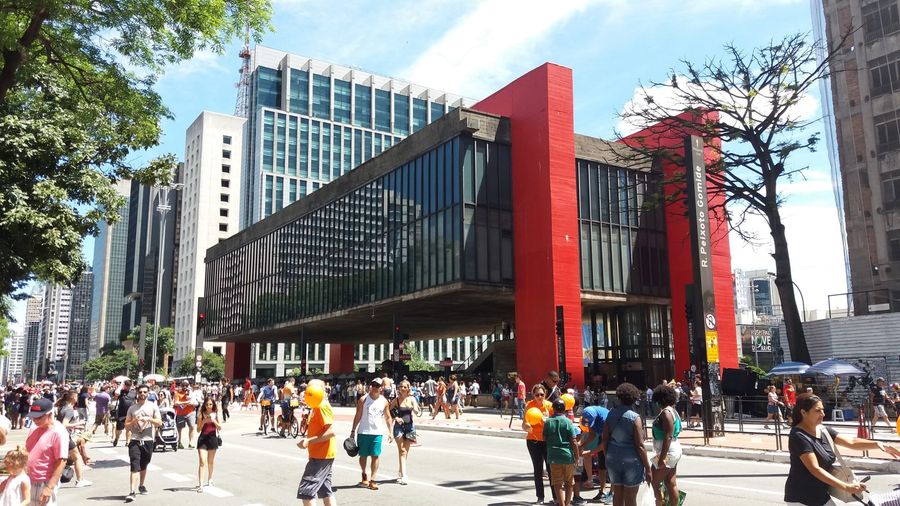
Choosing a São Paulo tour is about matching the format to what you actually came for: a downtown history walk or a Paulista-and-MASP stroll for orientation (R$120–200), a food tour through the Municipal Market and Liberdade (R$250–400), a Vila Madalena street-art walk, or a full-day private guide (R$1,000–1,500) to stitch a sprawling city together. Lean on the metro, dodge rush hour, and keep Sunday free for Paulista.
São Paulo is not a city that reveals itself from a hop-on-hop-off bus window. It is vast — twelve million people in the city proper, more than twenty million across the metropolitan region — and its rewards are scattered across neighbourhoods that each feel like a separate town. There is no single skyline moment, no one monument that stands in for the whole. That scale is exactly why the question here is rarely whether to take a guided tour but which of the many on offer fits your interests, your appetite for walking, and your patience with the city's legendary traffic. This guide sorts the main options by what they are genuinely good for, what they cost, when to go, and the local logistics that decide whether a day runs smoothly. Read it alongside the São Paulo city guide and the wider Brazil overview for the bigger picture.
Why does São Paulo reward a guide more than most cities?
São Paulo's attractions sprawl across dozens of distinct neighbourhoods with little English outside business districts, and its highlights are as much about layered immigrant history and street culture as ticketed sights. A guide turns a bewildering, low-signposting megacity into a legible one, handles the metro-and-traffic logistics, and decodes the food, art and social stories that self-guided visitors usually walk straight past.
Plenty of the city is easy to see alone. You do not need anyone to help you photograph MASP from beneath its famous red beams or to spread out on the lawns of Ibirapuera Park. Where a guide changes the experience is in everything around those postcard stops:
- Scale and orientation. São Paulo has no obvious centre and no single tourist trail. A guide compresses a chaotic map into a coherent day, deciding what to see on foot, what to reach by metro, and what to skip.
- Language. English drops away quickly outside Paulista Avenue and the business hotels. In the Municipal Market, in Liberdade, or on a Paraisópolis community visit, a bilingual guide is the difference between watching and understanding.
- Layered history. The city was built by waves of immigration — Italian, Japanese, Lebanese, Portuguese, and internal migrants from Brazil's northeast. That story is invisible unless someone points to the Bixiga cantina, the Liberdade torii, or the northeastern flavours of a downtown lunch counter and explains how they got there.
- Street culture that isn't on a map. The murals of Vila Madalena's Beco do Batman and the graffiti of the elevated Minhocão change month to month. A local guide knows which artists are working and what the walls are saying now.
None of this means you can't explore São Paulo alone — it means a good guide removes the friction and hands you the context that turns a sprawling grey megacity into one of South America's most rewarding urban destinations.
What are the main types of guided tour?
São Paulo's market sorts into six broad formats: downtown history walks, the Paulista-and-museums cultural route, food and immigration tours, street-art walks in Vila Madalena, community tours in Paraisópolis, and private full-day guides. Matching the format to your interests matters far more than paying the most.
The city's tour scene has grown up around its neighbourhoods rather than a checklist of monuments. Picking well is mostly about deciding which side of São Paulo you came to see.
Downtown History Walks
The old Centro — often overlooked by visitors who never leave the leafy west-side districts — holds the city's origins. A guided walk links the Theatro Municipal, the Pátio do Colégio where Jesuits founded the city in 1554, the Sé cathedral, and the art nouveau Copan building, threading together four centuries of boom and reinvention.
- Best for: History lovers, architecture enthusiasts, anyone wanting to understand how the city began.
- Typical length: 2.5–3.5 hours.
- Rough cost: R$120–200 (US$25–40) per person for a group walk.
Avenida Paulista and the Museums Route
Avenida Paulista is the city's cultural and financial spine, and a guided walk along it takes in the São Paulo Museum of Art — whose glass easels display European masters at eye level — along with Instituto Moreira Salles and the leafy Trianon park across the road. Go on a Sunday, when the avenue closes to traffic, and the walk becomes a street festival.
- Best for: First-time visitors, art and design enthusiasts, Sunday strollers.
- Typical length: 2–3 hours, longer if you tour MASP's collection.
- Rough cost: R$120–200 (US$25–40) group; MASP admission extra.
Food and Immigration Tours
If any single tour explains São Paulo, it is a food tour. Guides lead tastings through the Mercado Municipal — home of the outsized mortadella sandwich and stalls of tropical fruit — into Liberdade, the historic Japanese quarter with the largest ethnic-Japanese population outside Japan, and often into Bixiga, the old Italian district of family cantinas. It is the city's immigrant history served on a plate.
- Best for: Food-focused travellers, culture seekers, anyone who learns a city through its markets.
- Typical length: 3–4 hours with multiple tastings.
- Rough cost: R$250–400 (US$50–80) per person including food.
Street-Art and Neighbourhood Walks
Vila Madalena is São Paulo's bohemian heart, and its Beco do Batman alley is an open-air gallery repainted continually by local and visiting artists. A walking tour here weaves murals, independent galleries, and botecos into an afternoon that captures the creative, unpolished energy the city is known for.
- Best for: Younger travellers, photographers, art and design fans.
- Typical length: 2–3 hours.
- Rough cost: R$120–250 (US$25–50) per person.
Community and Social Tours
A handful of responsible operators run visits to Paraisópolis, one of the city's largest favelas, led by residents who show the entrepreneurship, music, and daily life behind the headlines. Done ethically — with local guides and community benefit — these are among the most memorable and eye-opening experiences in the city; done carelessly, they are voyeuristic, so the operator matters enormously.
- Best for: Socially curious travellers who choose their operator carefully.
- Typical length: 2.5–3.5 hours.
- Rough cost: R$150–300 (US$30–60) per person, ideally with a resident guide.
Private Full-Day and Bespoke Tours
Because São Paulo is so spread out, a private guide with a car or ride-hail budget is the efficient way to combine districts that public transport links awkwardly. You set the itinerary — a morning at Ibirapuera's museums, a Liberdade lunch, an afternoon in Vila Madalena — and someone else absorbs the traffic and the planning.
- Best for: Time-pressed visitors, families, anyone wanting to cover a lot without logistics stress.
- Typical length: 6–8 hours.
- Rough cost: R$600–900 (US$120–180) half-day; R$1,000–1,500 (US$200–300) full-day private.
How do you match tours to the length of your trip?
Think in days. One day: a Paulista-and-MASP walk plus a food tour through the market and Liberdade. Two days: add a Vila Madalena street-art walk and time in Ibirapuera Park. Three or more: a downtown history walk and, chosen carefully, a Paraisópolis community visit.
Rather than booking tours one at a time, it helps to plan by the day:
- One day: Take a morning walk along Avenida Paulista, touring MASP, then join an afternoon food tour through the Municipal Market and Liberdade. That pairing covers the city's cultural and culinary core.
- Two days: Keep day one as above, then spend day two on the creative west side — a Vila Madalena street-art walk in the morning and the museums and lawns of Ibirapuera Park in the afternoon.
- Three days or more: Add a downtown history walk to understand the city's origins, and consider a carefully chosen Paraisópolis community tour for a fuller, more honest picture of São Paulo.
Resist over-scheduling. Distances between districts are longer than the map suggests once traffic is factored in, and São Paulo rewards a slow lunch or an unplanned hour in a padaria as much as any booked experience.
When is the best time to take a tour?
Dry-season winter (June–August) is the sweet spot: mild, low-humidity days made for walking. Summer (December–February) is hot with heavy afternoon rain, so walk in the mornings and save museums for the downpours. Autumn (March–May) is comfortable and quieter, and Sunday is always best for a car-free Avenida Paulista.
São Paulo runs tours year-round, but the season shapes the day:
- Winter (June–August): The dry season brings mild temperatures around 15–22°C and low humidity — the most comfortable window for walking tours through Vila Madalena, Liberdade, and downtown.
- Summer (December–February): Hot and punctuated by intense afternoon downpours that can flood streets in minutes. Schedule outdoor walks for the morning and indoor museums for the afternoon, and always carry an umbrella.
- Autumn (March–May): A quiet sweet spot of comfortable weather and thinning crowds as the cultural season gets under way in the theatres and galleries.
- Carnival (February): Not the sequined spectacle of Rio, but hundreds of free street blocos that turn neighbourhoods into open-air parties. Atmospheric and crowded — book any guided tour well ahead.
Whatever the month, favour a Sunday for Avenida Paulista, which closes to cars and fills with pedestrians, cyclists, and buskers. For a fuller month-by-month breakdown, the São Paulo city guide covers seasonal conditions in detail.
How should you budget honestly?
Group walking tours are São Paulo's best value at R$120–200; food tours run R$250–400 with tastings; a half-day private guide is R$600–900 and a full day R$1,000–1,500. Budget separately for museum entry, meals, and the ride-hailing that stitches distant districts together — the hidden cost in a city this size.
Thinking in ranges helps, and remember that the biggest variable is often getting between neighbourhoods rather than the tour price itself:
| Tour type | Approximate cost |
|---|---|
| Group walking tour (downtown, Paulista, Vila Madalena) | R$120–200 (US$25–40) per person |
| Community tour (Paraisópolis) | R$150–300 (US$30–60) per person |
| Food tour with tastings | R$250–400 (US$50–80) per person |
| Half-day private city tour | R$600–900 (US$120–180) |
| Full-day private guide | R$1,000–1,500 (US$200–300) |
A few cost notes worth knowing before you book:
- Museum entry is usually extra. MASP and the Pinacoteca charge admission on top of any tour, though several museums are free on specific days — ask your guide.
- Ride-hailing adds up. São Paulo's neighbourhoods are far apart, and app-based rides between them are the real logistical cost of a self-planned day. A private tour folds this in.
- Tipping. A 10% service charge is often already included at restaurants; for a walking-tour guide, R$20–50 for good service is a kind gesture.
- Cash and cards. Cards are accepted almost everywhere in the city, but carry some reais for market stalls, tips, and small botecos.
Which local logistics make the day work?
The metro is São Paulo's saving grace — clean, safe, and fast — so build days around it and use ride-hail only to bridge gaps. Avoid rush hour (7–9 AM and 5–8 PM), when traffic is punishing. Keep valuables discreet, get a Bilhete Único transit card, and keep Sunday for a car-free Avenida Paulista.
Most of the difference between a smooth São Paulo day and a frustrating one comes down to a few practical details:
- Ride the metro. It is clean, efficient, safe, and by far the fastest way across the city. Plan tours around metro-accessible districts and treat the network, not taxis, as your default.
- Respect rush hour. São Paulo's congestion is legendary. Avoid moving across the city between 7–9 AM and 5–8 PM; use those windows for a museum or a long lunch instead.
- Get a Bilhete Único. The rechargeable transit card covers metro, buses, and trains and saves fumbling for fares on every leg.
- Keep valuables low-key. São Paulo rewards street awareness — carry your phone discreetly, avoid flashing cameras or jewellery in crowds, and follow your guide's lead on which blocks to cross on foot versus by ride-hail.
- Save Sunday for Paulista. When Avenida Paulista closes to cars, it becomes the best free experience in the city — a walkable, festive artery you can enjoy with or without a guide.
- Build in buffer time. Distances deceive once traffic is involved, so don't schedule a tight dinner reservation right after a cross-town afternoon tour.
How do you find a good guide in São Paulo?
Look for guides certified through CADASTUR, Brazil's national tourism registry, and for small groups that leave room for questions. Reputable city hotels keep trusted rosters, and established operators run professional bilingual tours. For community and street-art tours in particular, choose operators who work with local residents and artists — the best guides turn a sprawling city into a story you can follow.
Look for guides registered with CADASTUR, the Brazilian Ministry of Tourism's official registry, which signals a baseline of professionalism and accountability. Favour small group sizes that leave room for real conversation, and confirm English fluency when you book, since it varies. Upmarket São Paulo hotels keep vetted rosters, and established operators run polished bilingual walks. For Paraisópolis community visits and Vila Madalena art tours especially, choose operators who genuinely partner with residents and local artists so your money benefits the neighbourhoods you visit. The best guides do more than recite dates: they read the group, adjust the pace, and turn a bewildering megacity into a coherent story of migration, art, food, and reinvention.
Related Guides
- São Paulo city guide — neighbourhoods, attractions, and practical tips for the wider stay
- Brazil country guide — how São Paulo fits into a longer trip through Rio, Salvador, and beyond
- Planning a Rio de Janeiro Trip — pair São Paulo with Brazil's beach-and-mountain capital
- Best Time to Visit Salvador — extend the itinerary north to Bahia's Afro-Brazilian heart
Final thoughts: São Paulo asks a little more of its visitors than the postcard cities do, and it repays the effort generously. Decide first what you came for — the immigrant food histories, the street art, the downtown architecture, or the museums of Paulista — and choose the tour that serves it best rather than trying to swallow the whole megacity in a day. Ride the metro, dodge the rush hour, keep Sunday free for Paulista, and let a good guide turn one of the world's largest cities into one of its most surprising.
Frequently Asked Questions
Do you need a guided tour to explore São Paulo?
For the headline sights — MASP, Ibirapuera Park, the Municipal Market — no; the metro reaches them and they are easy to visit alone. A guide earns its fee on the parts of São Paulo that resist independent travellers: the street-art alleys of Vila Madalena, the immigrant food histories of Liberdade and Bixiga, downtown's fast-changing blocks, and community visits to Paraisópolis where local knowledge is essential.
How much does a tour guide cost in São Paulo?
A group walking tour runs roughly R$120–200 (US$25–40 per person), a guided food tour with tastings R$250–400 (US$50–80), a half-day private city tour R$600–900 (US$120–180), and a full-day private guide R$1,000–1,500 (US$200–300). Museum entry, meals and ride-hailing between districts are usually extra.
When is the best time to take a tour in São Paulo?
The dry winter months of June through August bring mild, low-humidity days that suit walking tours best. Summer (December–February) is hot with heavy afternoon downpours, so pair morning walks with afternoon museums. Sunday is prime for Avenida Paulista, which closes to cars, while Carnival in February fills the streets with free blocos.
What is the best São Paulo tour for a first-time visitor?
Start on Avenida Paulista — a guided walk taking in MASP and the Sunday street closure orients you to the city's cultural spine in a couple of hours. Follow it with a food tour through the Municipal Market and Liberdade to grasp São Paulo's immigrant heritage, then add a Vila Madalena street-art walk for the creative, neighbourhood side of the city.
Is it safe to take walking tours in São Paulo?
Yes, on established routes and with a reputable guide. São Paulo rewards street awareness rather than fear: keep phones and cameras discreet, favour the metro over walking through the quieter downtown blocks after dark, and let your guide set the pace and route. Reputable operators know which streets are fine on foot and which are better crossed by ride-hail.