
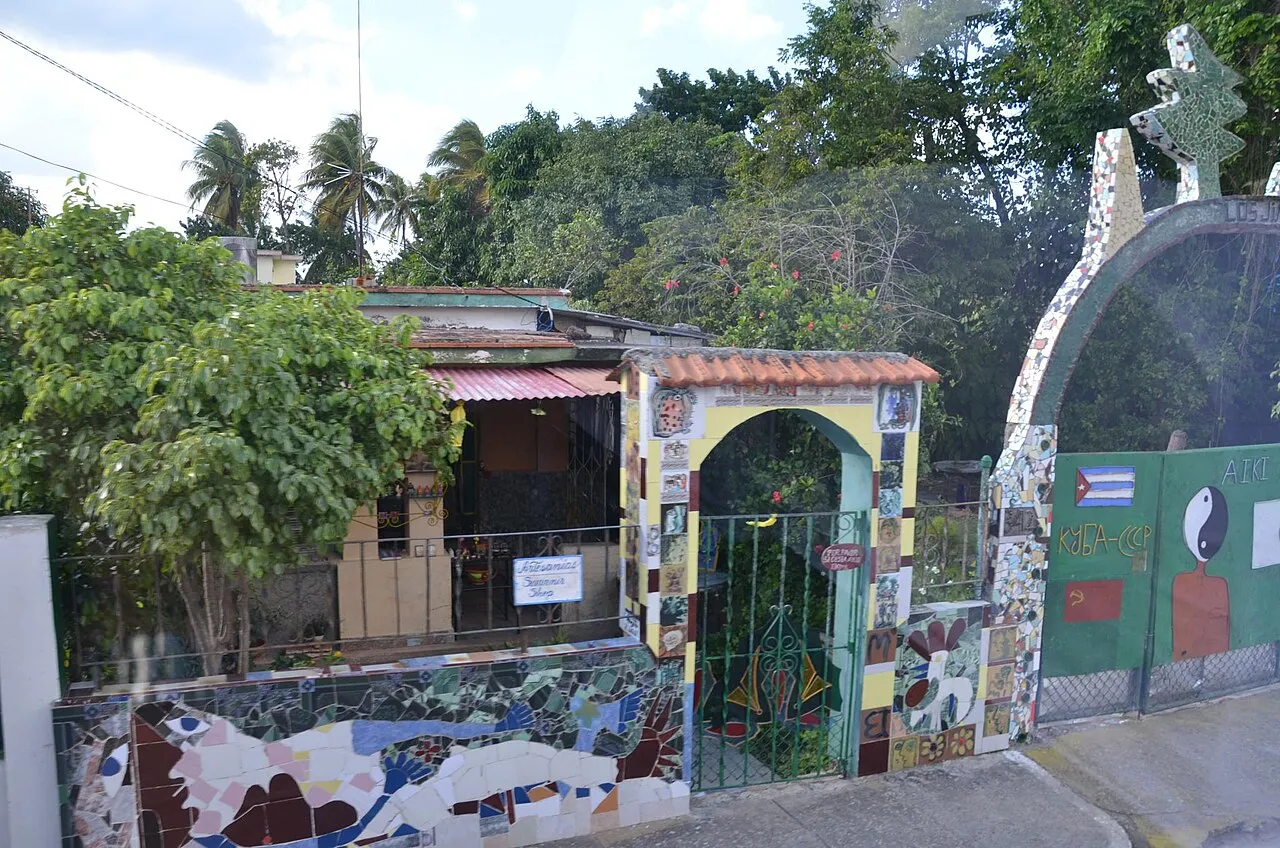
Local Life
Fusterlandia's significance extends beyond its visual impact:
- Community art in the Cuban context — Fuster's project was accomplished entirely within Cuba's post-1989 "Special Period" economic constraints, using ceramic tiles, broken pottery, and locally available materials; the resourcefulness of his technique mirrors the broader Cuban experience of creating beauty under scarcity
- The iconographic program — A careful reading of the imagery reveals a complete symbolic world: the mural at the entrance to the neighborhood contains portraits of José Martí and Che Guevara alongside Catholic and Santería religious figures, reflecting the complex spiritual and political identity of Cuban street culture
- The participatory dimension — Unlike public art installed on community surfaces by outsiders, Fusterlandia emerged from within the neighborhood; Fuster offered his labor and materials freely to neighbors who wanted their houses included, making the project genuinely collaborative
When to Visit
Outdoor areas: Always open (public streets). Estudio-Taller Fuster (the studio and home): Daily approximately 9 AM–6 PM; hours are informal — the studio operates on Cuban time and may be closed for personal reasons. Best light: Midday Caribbean light makes the mosaic colors most saturated; late afternoon creates long shadows that add depth to the textured ceramic surfaces.
Admission and Costs
Outdoor public areas: Free. Studio entry: $3–5 USD, collected informally. Original artworks available for purchase in the studio at prices set by Fuster directly. Taxi from central Havana: $15–25 each way (negotiate before boarding a vintage car taxi).
The Case for a Guide
Fusterlandia rewards a guide who knows both the art and the neighborhood:
- The iconographic reading — Each major mural at the studio entrance contains a deliberate program of symbols — a guide who knows Fuster's iconographic language identifies the specific orishas (Santería deities), the historical Cuban figures, and the personal symbols Fuster repeats across his work; without this reading, the images are beautiful but opaque
- Meeting Fuster — Fuster is often present at the studio and speaks freely with visitors who show genuine curiosity about his work; a guide who has a relationship with him facilitates introductions that turn a visual tour into a conversation with a genuinely exceptional person
- The evolution of the project — A guide who has visited over multiple years can show the sections completed in the 1990s, the 2000s, and recently, demonstrating how Fuster's style and vocabulary has evolved over three decades of continuous work on the same outdoor canvas
Tips for Visitors
Allow at least 1.5 hours: The neighborhood is denser than it looks from photographs; walking slowly through every street takes time. Photography: The scale and color saturation of the mosaics photograph best in midday light, not golden hour; the surfaces absorb rather than reflect warm light. Combine with Hemingway: The Hemingway Museum (Finca Vigía) is 20 minutes south of Fusterlandia by taxi, making a logical western Havana half-day. Studio purchases: Fuster's smaller ceramic pieces make exceptional gifts; buying directly from the studio means the money goes directly to him and his community projects.
Frequently Asked Questions
How do you get to Fusterlandia from central Havana?
Fusterlandia is in the Jaimanitas neighborhood, approximately 14 kilometers west of Old Havana — about 25–35 minutes by taxi. A classic car taxi or modern cab will cost $15–25 each way. Many tour operators include Fusterlandia as part of a western Havana half-day or full-day tour combining the Hemingway Museum (Finca Vigía) and the Marina Hemingway. The neighborhood is not easily accessible by public transportation from the center.
Is Fusterlandia free to visit?
Walking through the outdoor areas of Jaimanitas where Fuster's mosaics cover public walls, benches, and streetscapes is completely free. Entry to Fuster's private studio and home (Estudio-Taller José Fuster) costs approximately $3–5 USD, which is collected informally and directly supports the artist's community projects. Inside the studio, original ceramic pieces are available for purchase and direct conversation with Fuster or his assistants is often possible.
Who is José Fuster and what inspired Fusterlandia?
José Rodríguez Fuster (born 1946) is one of Cuba's most celebrated living artists, known internationally through his distinctive ceramic mosaic style that blends Picasso's cubism, Gaudí's organic exuberance, and Afro-Cuban religious imagery. He began tiling his home and studio in the 1990s, then started covering his neighbors' homes at no charge, expanding the project over three decades to cover approximately 80 houses and every public surface in the surrounding blocks. He describes the project as a gift to his community — a "paradise" he created using his art.