
Spiritual Significance
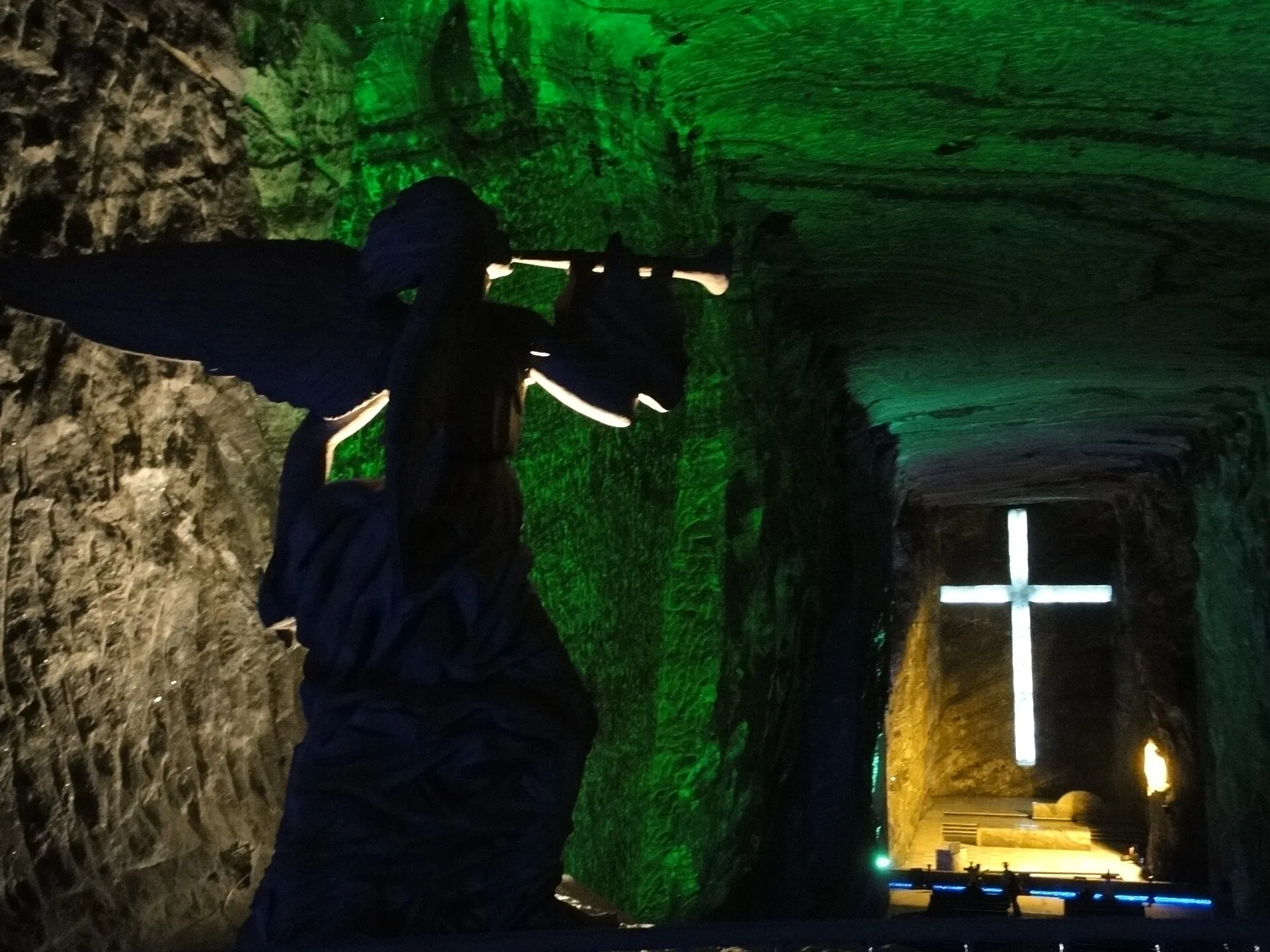
The Salt Cathedral is not a museum piece but a working Roman Catholic sanctuary, and its layout is a piece of theology carved in stone. The descent is meant to be read as a pilgrimage: visitors pass the fourteen Stations of the Cross, then move through three linked naves that symbolise the birth, life, and death of Jesus, before arriving at the main nave beneath a soaring salt vault. The great cross behind the altar — recessed into the rock so its illuminated form seems to float — is often described as the largest underground cross in the world.
Salt itself carries the meaning here. In the biblical tradition it is a sign of covenant and preservation, and the faithful are called the salt of the earth — so a church quarried entirely from salt reads as far more than a novelty. The recurring motif of light emerging from darkness restates the Easter message the whole route builds toward. The original 1954 chapel was dedicated to Our Lady of the Rosary of Zipaquirá, patron of the miners who first knelt here, and that devotion endures: Mass is celebrated on Sundays, and the cathedral remains a place of living pilgrimage and national pride rather than a decommissioned mine gallery — much as Monserrate does high above the capital.
Visitor Etiquette
Although the tunnels feel theatrical, the Salt Cathedral is a consecrated place of worship, and a little awareness goes a long way — especially on Sundays, when Colombian families arrive for Mass rather than sightseeing. Dress is casual but modest, and sound carries far in the salt chambers, so keep conversation low near the naves and altar. If a service is under way when you reach the main hall, wait quietly at the edges or return afterwards rather than crossing in front of the congregation.
- Photography is welcome for personal use, and the LED lighting makes handheld shots easy — but do not photograph worshippers at prayer, and switch off flash.
- Do not touch or lick the walls. People try; the salt is part of a protected national monument.
- Follow your guide's route. Straying from the marked path in a former mine is both disrespectful and unsafe.
- The constant 14 °C chill and dim light call for a jacket and sensible shoes, as the floor can be slightly damp.
Salt Cathedral of Zipaquirá timeline
- Pre-1537
Muisca salt mines
The Muisca evaporated highland brine into hard trade-salt loaves for centuries before the Spanish arrived, enriching the Zipa whose title survives in the town's name.
-
First miners' chapel
Miners carved an original sanctuary into the worked-out galleries, dedicating it to Our Lady of the Rosary, the patron saint of miners.
-
Original chapel closed
Structural and safety concerns in the aging excavation forced the first chapel to close to the public.
-
Present cathedral opens
A new cathedral, carved deeper and more securely into the mountain, was inaugurated and quickly became a national landmark.
-
First Wonder of Colombia
A national public vote named the Salt Cathedral the First Wonder of Colombia, cementing its place among the country's top attractions.
When to Visit
Daily: 9 AM – 5:30 PM, with last entry at 4:15 PM (hours can shift for religious holidays, so confirm on the official site before a holiday visit). Allow 1.5–2 hours for the cathedral and the included light-and-sound show, plus about 30 minutes for the on-site brine museum and salt park.
The best time to arrive is a weekday morning, soon after opening: weekends, school holidays, and Colombian public holidays fill the tunnels with large family groups, and Sunday mornings are busiest of all with worshippers arriving for Mass. Because the mine holds a near-constant temperature, the season barely affects the visit underground — but the December–March dry window makes the road trip smoother and the colonial town above more pleasant. Reaching Zipaquirá takes 1–1.5 hours each way from central Bogotá: most visitors come by car or organised tour, buses run frequently from the Portal del Norte TransMilenio terminus, and on weekends the vintage Turistren tourist train climbs up from the city for a slow but memorable approach.
Admission and Costs
Entry (foreign visitors): COP 65,000 (about $16). Entry (Colombian nationals): COP 40,000 (about $10), with reduced rates for children, students, and seniors; ticket tiers are set by the operator and listed on the official site. Standard admission includes a Spanish-language group guide inside the mine (English-speaking guides can be arranged on request) and the underground light-and-sound show.
- 3D film and brine museum — an extra COP 10,000–15,000 for the add-on experiences.
- Private day trip from Bogotá — COP 200,000–350,000 ($50–85) per person including round-trip transport, matching the Zipaquirá day trip rate quoted on the Bogotá guide page.
- Turistren weekend train — a separate ticket, priced as a full-day excursion from the city.
Compared with near-free sights like the Gold Museum, the cathedral is one of Bogotá's pricier attractions, but the guided descent and the show are bundled into the gate price, so there are few surprise costs once you are inside.
The Case for a Guide
The Salt Cathedral can be walked in under an hour as a photo stop, but its meaning — geological, historical, and religious — only opens up with someone to narrate it, which is why most day trips from Bogotá include a guide.
- Reading the symbolism — A guide explains why the route runs past fourteen stations into three naves, so the descent reads as the intended pilgrimage rather than a string of dark rooms.
- The mining story — From Muisca brine evaporation to modern extraction, a guide connects the cathedral to the five centuries of salt work that made it possible.
- Logistics handled — The 50-kilometre run north, parking, and timed entry are far smoother on an organised tour than by improvised public transport.
- Language — In-cathedral guiding is primarily in Spanish; a booked bilingual guide fills the gap for English speakers, exactly as on the Monserrate and La Candelaria circuits.
- Pacing a full day — A guide can pair the cathedral with the colonial plaza of Zipaquirá or a second stop, turning a there-and-back trip into a satisfying day out of the city.
Tips for Visitors
- Bring a jacket. The mine holds a constant 14 °C (57 °F) whatever the weather in Bogotá, and the air is dim — give your eyes a moment to adjust at the top of the tunnel.
- Book transport or a tour. Handing off the 50-kilometre drive and parking is well worth it, and most tours fold in the town of Zipaquirá.
- Photography is easy but tripods are not allowed — the colour-shifting LED lighting makes handheld shots work well throughout.
- It is genuinely step-free. The main tunnel descends on gentle ramps, so the cathedral is wheelchair accessible from entrance to altar — rare for an underground site.
- Linger in colonial Zipaquirá. The town's arcaded main plaza and salt-themed restaurants make a natural lunch stop before the drive back to Bogotá.
Frequently Asked Questions
Does the season matter when visiting the Salt Cathedral of Zipaquira?
The underground cathedral maintains a constant 14 degrees Celsius year-round, making it a comfortable visit regardless of the weather outside. However, January, February, and December bring drier roads for the 50-kilometer drive from Bogota and lighter weekend crowds, while the rainy months of April and May can slow travel and fill the tunnels with large Colombian family groups during school holidays.
When is Salt Cathedral of Zipaquirá open outside of worship services?
Daily: 9 AM – 5:30 PM (last entry 4:15 PM). Best: Weekday mornings — weekends and holidays bring large Colombian family groups. Allow: 1.5–2 hours for the cathedral, plus 30 minutes for the salt museum.
What does it cost to visit Salt Cathedral of Zipaquirá?
Entry (foreigners): COP 65,000 ($16). Entry (Colombians): COP 40,000 ($10). Guided group inside: Included with entry (Spanish; English guides available on request).
What should visitors know before visiting Salt Cathedral of Zipaquirá?
Book transport: Organized tours handle the 50km drive and skip parking hassles — well worth it. Bring a jacket: The mine maintains a constant 14°C (57°F) regardless of surface weather.
How do you get to the Salt Cathedral from Bogotá?
The cathedral sits about 50 kilometers north of central Bogotá, roughly 1–1.5 hours each way. Most visitors come by car or on an organized day tour; buses run frequently from the Portal del Norte TransMilenio terminus to Zipaquirá, and on weekends the vintage Turistren tourist train climbs up from the city for a slow, scenic approach.
Is the Salt Cathedral a real, working church?
Yes. It is a consecrated Roman Catholic sanctuary where Mass is celebrated on Sundays, and it remains an active place of pilgrimage — though it is not the seat of a bishop, so despite its name it is not a cathedral in the strict ecclesiastical sense. Visitors are welcome, but should be discreet during services.
Is the Salt Cathedral of Zipaquirá wheelchair accessible?
Largely, yes. The main tunnel descends on gentle ramps rather than stairs, so the route to the three naves and the main hall is step-free end to end — unusual for a former mine. The floor can be slightly damp and the light is dim, so allow extra time.