
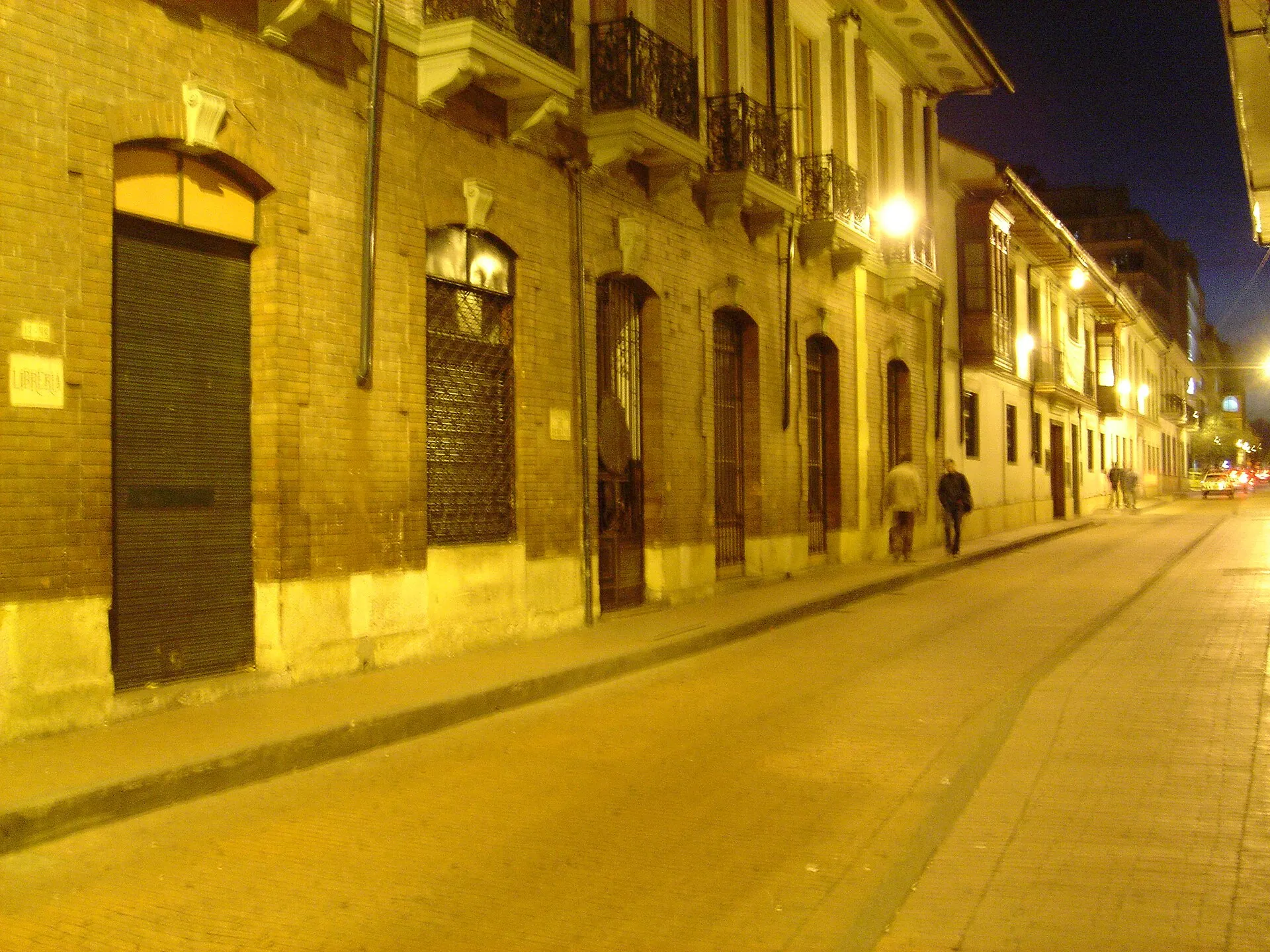
Walking Route
Walking Routes
The quarter is small enough to cross in 20 minutes, but a looping walk of 90 minutes to two hours links its landmarks without backtracking. Start at the civic Plaza de Bolívar, flanked by the Catedral Primada, the Capitolio Nacional, and the rebuilt Palacio de Justicia, then step into the Casa del Florero on its northeast corner to catch the story of 20 July 1810. Walk south on Calle 11 past the whitewashed church of La Candelaria to the Museo Botero, free and anchoring the Banco de la República's Manzana Cultural of linked museums. Climb east through the painted lanes — this is the densest street-art stretch — to the Chorro de Quevedo and the funnel-shaped Calle del Embudo, the bohemian heart of the neighborhood and its best chicherías. Finish with a short walk north to Parque Santander and the Gold Museum, or east to the Monserrate funicular for a sunset view back over the colonial roofs.
Local Life
More than a museum quarter, La Candelaria is a living student town. Undergraduates from Los Andes, the Rosario, and the Externado crowd the Calle 12 bakeries for pan de bono and tinto each morning, reading on the steps of plazoletas between classes. On the corner of Avenida Jiménez and Carrera 7, esmeralderos still cluster on the pavement to haggle over raw emeralds the way they have for generations — Colombia produces much of the world's finest emerald, and this informal open-air market is one of the sights guides point out but rarely explain.
Behind unmarked doors on Calle 9 and around the Chorro de Quevedo, chicherías serve homebrewed chicha de maíz in clay cups — a fermented corn drink that was effectively banned in 1948 after the Bogotazo and only fully revived decades later, now a badge of the neighborhood's identity. Come the weekend, the Mercado de las Pulgas fills Carrera 3 with secondhand books, vinyl, old cameras, and handmade ruana wool ponchos brought down from Boyacá, while street performers work the crowds spilling off the car-free Carrera 7.
La Candelaria timeline
-
Bogotá is founded
Gonzalo Jiménez de Quesada founded Santa Fe de Bogotá on the eastern savanna; tradition places the first mass and twelve rough huts at the Chorro de Quevedo, the small plaza at the heart of today's La Candelaria.
-
The university quarter takes root
The Colegio Mayor de Nuestra Señora del Rosario opened its doors, the first of the colleges and universities — later joined by the Externado and Los Andes — that still give the neighborhood its student character.
- 1686-1703
La Candelaria's church is built
Augustinian Recollects raised the church of Nuestra Señora de la Candelaria over these decades; the parish lent its name to the whole quarter.
-
The cry for independence
On 20 July a staged quarrel over a borrowed flower vase in the Casa del Florero, on Plaza de Bolívar, sparked the uprising that began Colombia's road to independence — still the national holiday.
-
El Bogotazo
The assassination of Jorge Eliécer Gaitán a few blocks north triggered riots that gutted much of downtown and reshaped the colonial core for a generation.
- 2011 onward
The street-art era
After the police killing of teenage writer Diego Felipe Becerra, Bogotá shifted toward tolerating graffiti, and La Candelaria's walls became one of Latin America's most celebrated open-air galleries.
When to Visit
La Candelaria is an open neighborhood you can walk at any hour, but it rewards an early start. Come on a weekday between 9 and 11 AM, when the Calle 12 bakeries are busy with students, the morning light is best on the murals, and the graffiti tours and school groups haven't yet filled the lanes. Plaza de Bolívar is at its calmest before 10 AM. Because Bogotá's rainy peaks (April–May and October–November) bring reliable mid-afternoon downpours, it pays to do your outdoor walking in the morning and save museums for after lunch. Sundays change the rhythm entirely: the Mercado de las Pulgas flea market spreads along Carrera 3, the Carrera 7 Ciclovía closes to cars, and the Museo del Oro is free — lively, but busier. Avoid the quieter streets east of Chorro de Quevedo after dark.
Admission and Costs
Wandering the neighborhood is free, and so are two of its best museums — the Museo Botero every day and the Gold Museum on Sundays — which keeps a full day of sightseeing cheap. Guided options add the context the walls and plazas don't explain on their own:
- Graffiti walking tour — officially free, run on tips of COP 40,000–80,000 ($10–20) per person for about 2.5 hours.
- Private walking guide — COP 150,000–300,000 ($37–75) for 3–4 hours.
- Food-and-chicha tour — COP 100,000–180,000 ($25–45) per person.
- Chicha (traditional fermented-corn drink) — COP 5,000–10,000 a clay cup in the Chorro de Quevedo chicherías.
Pay cash in small notes for tips, street food, and the flea market; cards work in museums and sit-down restaurants but rarely at the chicha bars.
The Case for a Guide
La Candelaria is photogenic on its own, but almost all of its meaning is invisible without someone to unlock it. A good local guide turns a pretty stroll into five centuries of layered story and threads the quarter into the rest of Bogotá:
- Reading the murals — naming the artists behind Bogotá's graffiti, decoding the politics in each wall, and explaining how the city went from painting over graffiti to protecting it.
- The founding ground — standing at the Chorro de Quevedo where the 1538 mass is said to have been held, and tracing how the colonial grid grew from that spring.
- 1810 and 1948 — walking from the Casa del Florero to the spots that shaped the independence uprising and the Bogotazo riots, so Plaza de Bolívar reads as more than a photo stop.
- Finding the chicherías — the best homebrewed chicha is served behind unmarked doors a guide knows and you wouldn't; they also keep an eye on the group in the crowds.
- Linking the sights — connecting the free Museo Botero, the Gold Museum, and the Monserrate trailhead into one coherent day on foot.
Tips for Visitors
Wear comfortable, flat shoes — the cobbles are uneven and the streets tilt uphill toward the mountains, which also means the thin air at 2,640 m can leave first-day visitors short of breath, so pace yourself and hydrate. Dress in layers: Bogotá's days swing from cool morning to brief sun to a sharp afternoon chill, often within a few hours, and carry a compact umbrella in the rainy months. Keep your phone and camera out of sight on quieter streets, where petty theft is the main risk, and take a taxi or rideshare rather than walking the eastern lanes after dark. On a graffiti tour, ask before photographing artists at work — some prefer privacy — and bring small cash notes for tips, chicha, and the flea market. The Monserrate trailhead at the quarter's eastern edge makes an easy add-on for sunset.
Frequently Asked Questions
When is the best time of year to visit La Candelaria?
Bogotá sits at 2,640 m, so it has no real summer or winter — just drier and wetter spells, and every day runs cool, roughly 8–19 °C. The driest, sunniest windows are December to March and July to August, the best stretches for walking the cobblestones and photographing the murals against blue sky. April–May and October–November are the two rainy peaks, when afternoon downpours arrive almost on schedule around 3–4 PM; mornings usually stay clear even then, so start early and carry a compact umbrella whatever the month.
What time of day is best for exploring the neighborhood?
Weekday mornings between 9 and 11 AM are ideal: the student cafés on Calle 12 are buzzing, the light rakes low across the painted facades, and the graffiti tours and school groups have not yet filled the lanes. Plaza de Bolívar is quietest before 10 AM. Sundays bring the Mercado de las Pulgas flea market and the car-free Ciclovía on nearby Carrera 7, a lively but busier scene. Some streets east of Chorro de Quevedo thin out and feel less comfortable after dark, so save evenings for the better-lit blocks around the main plazas.
How much should visitors budget for a guided visit?
Wandering the neighborhood is free. The famous Bogotá graffiti walks run on tips, so budget roughly COP 40,000–80,000 ($10–20) per person to tip fairly; a private walking guide is about COP 150,000–300,000 ($37–75) for three to four hours, and a food-and-chicha tour COP 100,000–180,000 ($25–45). Most museums help the maths: the Museo Botero and, on Sundays, the Museo del Oro are free, so a full day of sightseeing can cost very little beyond a guide, lunch, and a few glasses of chicha at COP 5,000–10,000 each.
Is La Candelaria safe for tourists, and what should I watch for?
The core tourist blocks — Plaza de Bolívar, the Manzana Cultural, Chorro de Quevedo and the main graffiti routes — are busy and generally fine by day, but petty theft and phone-snatching do happen, so keep your phone and camera out of sight on quieter streets and don't flash valuables. The neighborhood empties and dims after about 8 PM; stick to well-lit blocks or take a taxi or rideshare at night. A local guide is the easiest way to read which lanes are comfortable to wander and which to skip, and to keep an eye on the group in crowds.