
Walking Route
Observation Points
The 520-foot observation deck delivers a 360-degree horizon of volcanic peaks and saltwater channels. To the south, the 14,411-foot cone of Mount Rainier dominates on clear days; Mount Baker rises to the north, the Olympic Mountains line the western skyline beyond Puget Sound, and the Cascade Range — including Glacier Peak — stretches along the east.
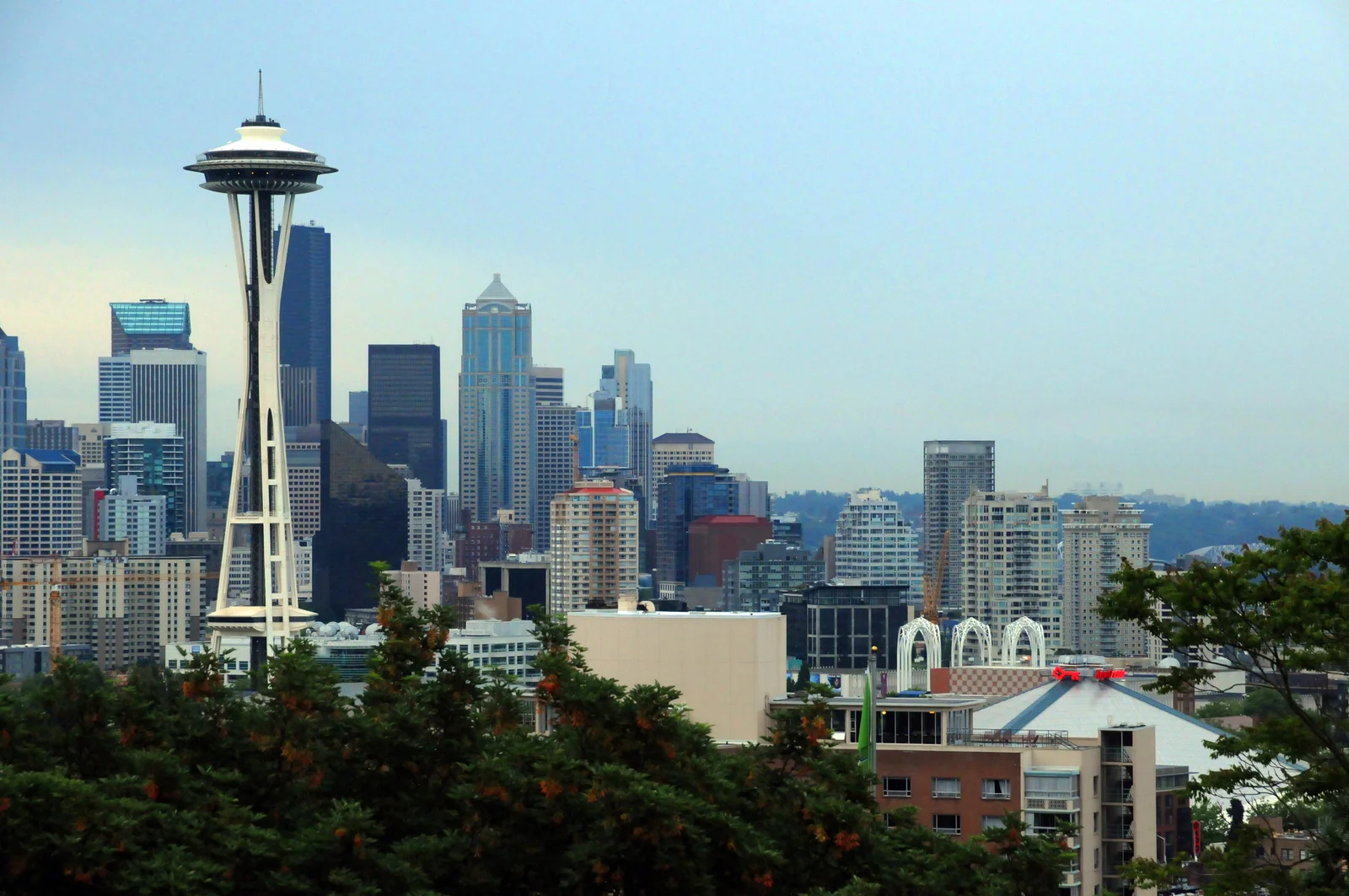
Closer in, you can pick out Elliott Bay ferries bound for Bainbridge Island, seaplanes lifting off Lake Union, the glass canopy of Chihuly Garden and Glass directly below, and the rippling steel skin of the Museum of Pop Culture. One level down, The Loupe revolving glass floor rotates slowly at 500 feet, letting you look straight down onto the Seattle Center grounds. For the reverse composition — the Needle framed against the downtown towers with Rainier floating behind — pair your visit with the classic vantage at Kerry Park on Queen Anne Hill.
Engineering Facts
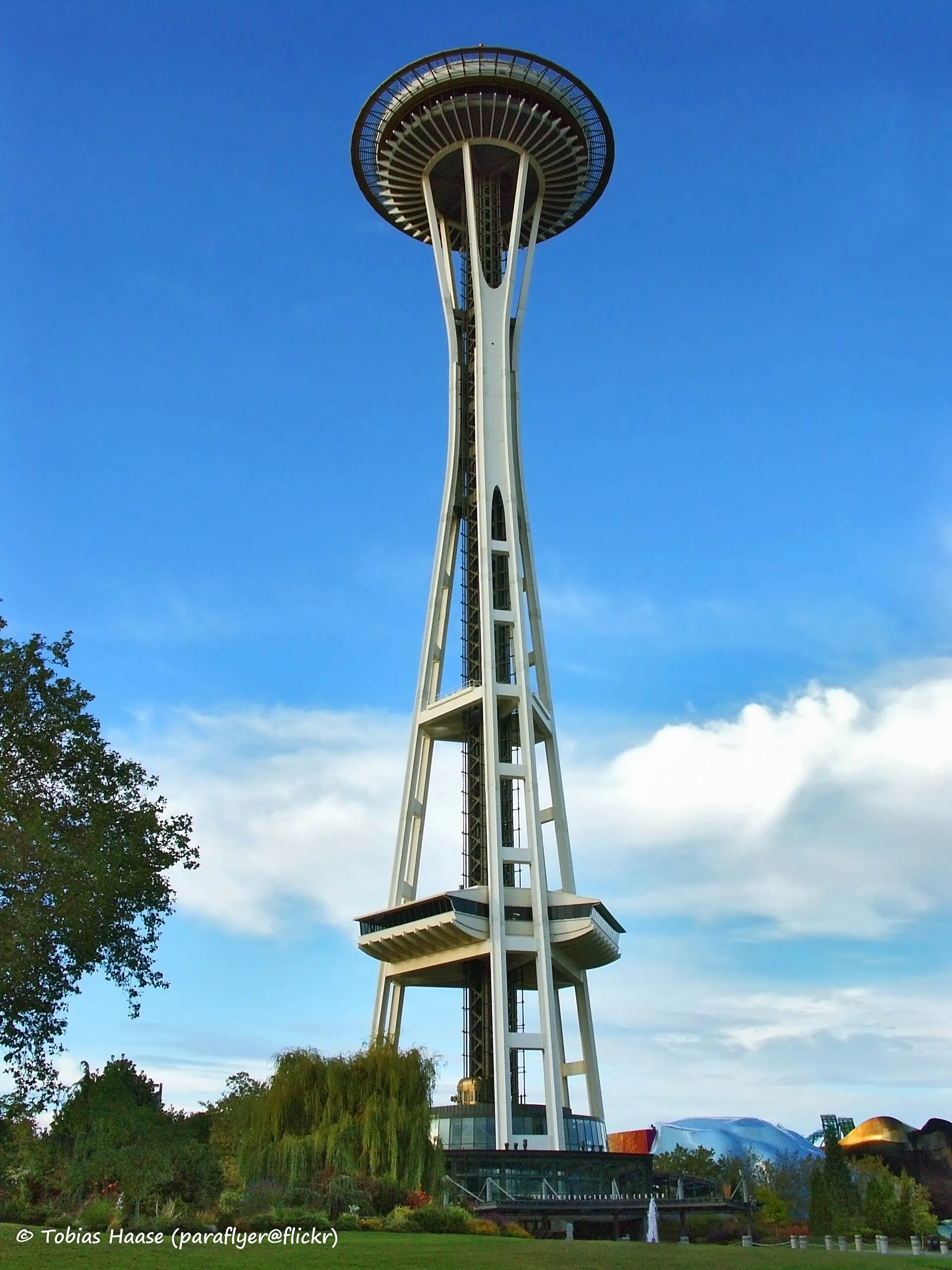
The Space Needle was engineered to survive the Pacific Northwest's extremes. Its foundation is a 30-foot-deep block of reinforced concrete poured in a single continuous 12-hour pour — some 467 truckloads, roughly 5,850 tons — so heavy that the tower's centre of gravity sits just five feet above ground level. That ballast lets the structure withstand winds of 200 mph and major earthquakes; it rode out the magnitude-6.8 Nisqually earthquake in 2001 without damage, and sways only about one inch for every 10 mph of wind.
- Elevator ride: the high-speed elevators climb at up to 10 mph (about 800 feet per minute), reaching the observation deck in roughly 41 seconds, and automatically slow to 5 mph in high wind.
- Landmark status: the tower became an official City of Seattle landmark in 1999 and was repainted its original "Galaxy Gold" for its 50th anniversary in 2012.
- Timed entry: tickets are booked for specific 30-minute windows — arrive inside your window or you may need to reschedule.
- Weather check: Seattle skies shift quickly, so check the forecast the morning of your visit for the best chance at a clear Mount Rainier.
- Accessibility: both observation levels are fully wheelchair-accessible by elevator, with lowered glass benches on the open-air deck.
Construction and engineering details are documented on the Space Needle's official facts page.
Space Needle in Pictures
When to Visit
- Standard hours: daily 10:00 AM – 9:00 PM, extended to 10:00 PM on weekends during summer; hours shift around holidays, so confirm before planning a late visit.
- Best light: mid-morning on clear days, when Mount Rainier tends to emerge before afternoon haze and cloud build along the mountain.
- Sunset: book a timed entry about 45 minutes before sunset to watch the sky change over Puget Sound, then linger as the city lights switch on across the skyline.
- Quietest windows: Tuesday and Wednesday mornings usually see the lightest crowds; weekend afternoons in summer are the busiest.
- Peak season: June through September brings the clearest skies, but arrive early — timed-entry slots for prime sunset evenings often sell out days ahead.
Admission and Costs
- Adult admission: $37–42 depending on the time slot (timed-entry tickets are required).
- Children (5–12): $28–32; kids under 5 enter free.
- Day/Night combo: $52–57 for two visits in the same day, pairing daylight and nighttime views.
- Combo passes: the Chihuly Garden and Glass combo ticket and the Seattle CityPASS bundle the Needle with nearby attractions at a meaningful discount if you are visiting several sights.
- Guided Seattle Center tours: $45–65 per person (typically 2–3 hours, weaving in Space Needle history and context).
- Private area guide: $200–350 for groups up to 8 people, covering the cluster of Seattle Center landmarks.
The Case for a Guide
The Space Needle was conceived, designed, and built in just thirteen months for the 1962 World's Fair, a feat of engineering ambition that defined Seattle's identity for generations. Guides bring this history to life and help visitors make sense of the sweeping panorama at 605 feet above the city.
- Construction story and design origins: Guides explain how architects sketched early concepts on napkins, how construction crews worked around the clock to meet the World's Fair deadline, and how the futuristic design captured the space-age optimism of its era.
- The $100 million renovation: The Century Project replaced solid walls with floor-to-ceiling glass and added The Loupe — the world's first revolving glass floor — and guides explain the engineering challenge of retrofitting transparent floors onto a structure built in 1962.
- Reading the panorama: From 605 feet up, guides identify Mount Rainier dominating the southern horizon, Mount Baker rising to the north, the Olympic range to the west, and the Cascade peaks lining the east — turning an impressive view into a geographic orientation that shapes the rest of the trip.
- Hidden details at ground level: The glass structures of Chihuly Garden and Glass and the Museum of Pop Culture visible from above gain richer meaning when guides connect the aerial perspective to a street-level visit.
- Itinerary connections: Guides extend the visit to nearby Seattle Center attractions or south to Pioneer Square and Pike Place Market, building a coherent day around the needle as its centrepiece.
Tips for Visitors
- The Loupe: step onto the world's first revolving glass floor and look straight down 500 feet to the plaza below — unnerving and unforgettable.
- Photography: anti-reflective glass cuts glare, but a polarizing filter still helps on bright days; the angled glass benches on the open-air deck give unobstructed frames.
- Puget Sound watching: track the green-and-white Washington State Ferries crossing Elliott Bay and, on the clearest days, the distant San Juan Islands.
- Layer up: the open-air deck at 520 feet catches wind off the Sound and runs noticeably cooler than street level, even in summer.
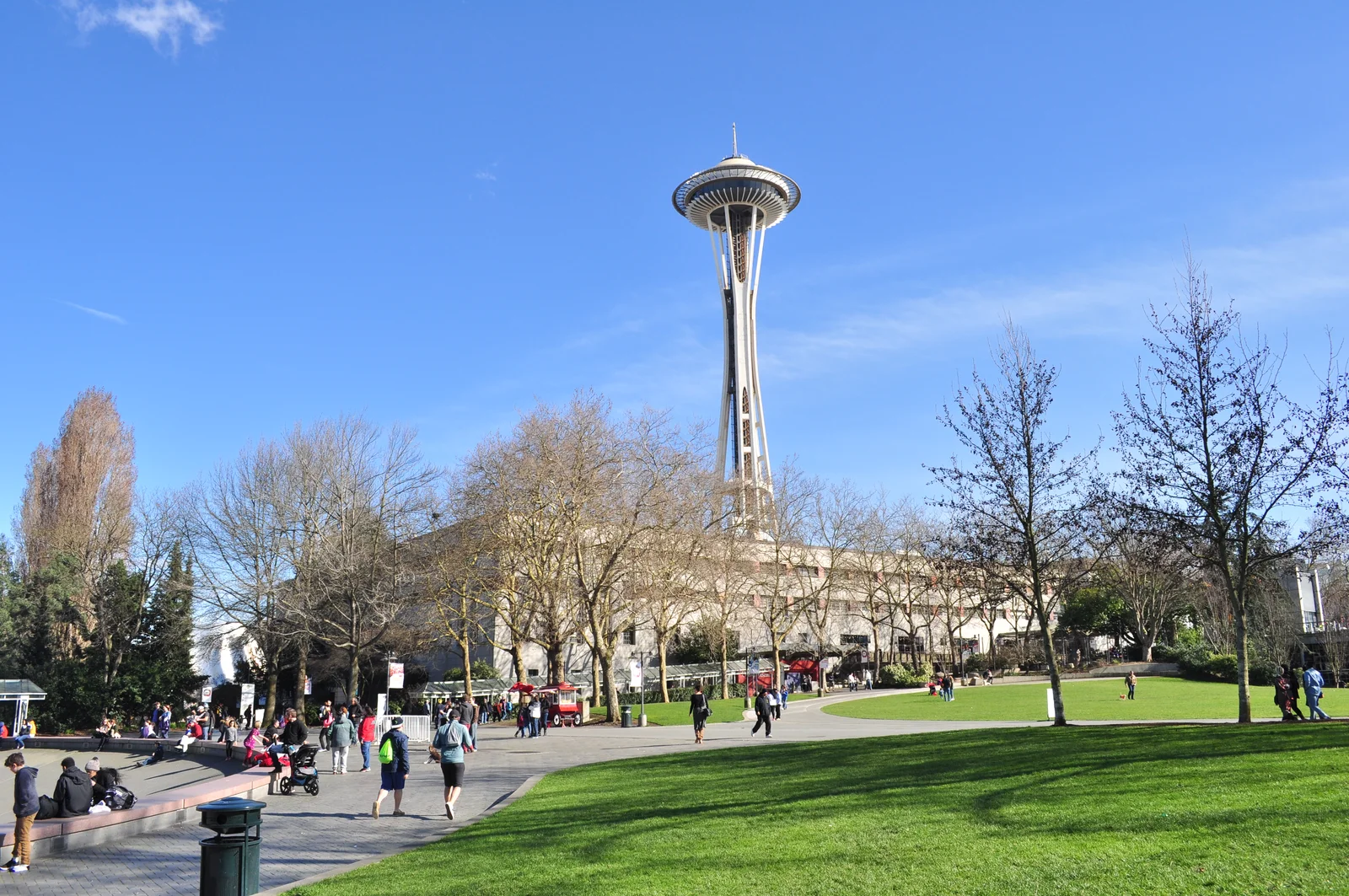
- After you descend: explore the Seattle Center grounds on foot — the International Fountain, the Armory food hall, and the museums cluster within a five-minute walk.
Frequently Asked Questions
What are the opening hours at Space Needle?
Standard hours: Daily 10:00 AM - 9:00 PM (extended to 10:00 PM on weekends during summer). Best for views: Mid-morning on clear days when Mount Rainier emerges from the clouds.
What is the history behind Space Needle's construction?
The Space Needle was conceived, designed, and built in just thirteen months for the 1962 World's Fair, a feat of engineering ambition that defined Seattle's identity for generations.
What is the best way to experience Space Needle?
The Loupe: Step onto the world's first revolving glass floor and look straight down 500 feet to the ground below. Mount Rainier panorama: On clear days the 14,411-foot volcano dominates the southern horizon.