
Walking Route
Walking Routes
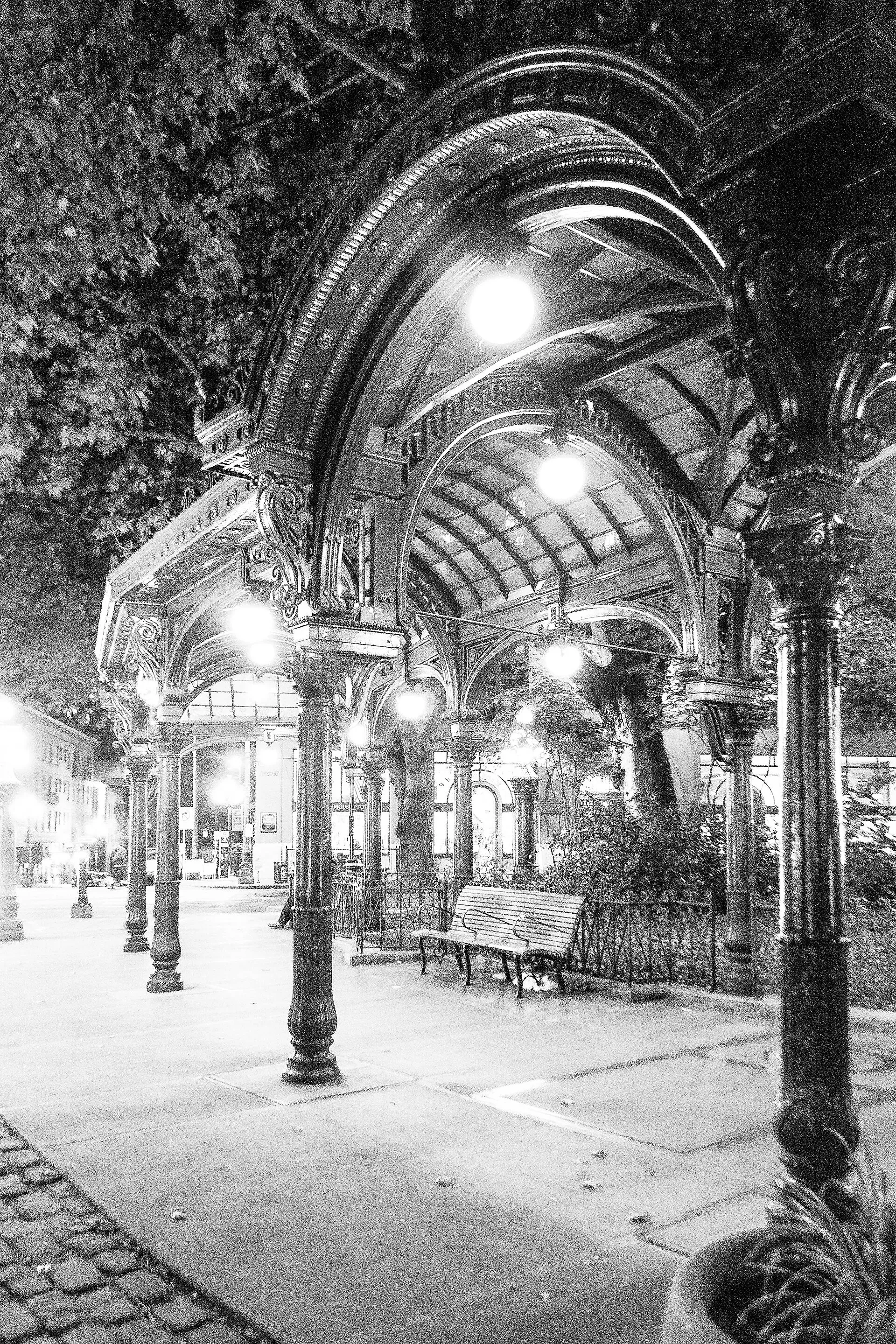
A compact, mostly flat loop links the neighborhood's landmarks in about two hours on foot. Start at Pioneer Place Park at First Avenue and Yesler Way, where the restored 1909 cast-iron Pergola shelters a 60-foot Tlingit totem pole — a 1940 replacement, carved by Tlingit artists, for an original taken from a village at Tongass in 1899 and lost to arson. Step across to the Pioneer Building (completed 1892 to a design by architect Elmer Fisher), one of the finest Romanesque Revival structures on the West Coast and the departure point for the Underground Tour.
From there walk east to Smith Tower, opened in 1914 and, at 484 feet, the tallest building west of the Mississippi for nearly two decades; its 35th-floor observatory now pairs panoramic views with a speakeasy-style bar. Loop south through Occidental Square, a tree-lined cobblestone plaza with cedar totem poles by carver Duane Pasco and the bronze Fallen Firefighters' Memorial, then continue to the free Klondike Gold Rush National Historical Park museum, which tells how Seattle outfitted the stampede to the Yukon in 1897. Finish at the pocket-sized Waterfall Garden Park on South Main Street, a quiet courtyard marking the 1907 birthplace of United Parcel Service. For photography, early morning light rakes across the red-brick textures along Occidental Avenue most beautifully.
Local Life
On June 6, 1889, a glue pot in a cabinet shop boiled over and ignited a fire that consumed 25 blocks of wooden buildings in a single afternoon. What rose from those ashes defines Pioneer Square today, and understanding that transformation rewards a good storyteller. Guides narrate the fire's spread, the city's audacious decision to regrade and rebuild one to two storeys higher than the original street level, and the Romanesque Revival architecture that replaced flammable wood with brick and stone. They point out the decorative cornices, ornamental iron pergolas, and arched windows that most visitors photograph without recognizing their significance.
The neighborhood's second life is its gallery scene. First Thursday, launched in 1981 and one of the oldest continuously running art walks in the country, fills First Avenue and Occidental Avenue with free evening openings on the first Thursday of every month. Guides who know the district introduce visitors to gallery owners and emerging Pacific Northwest artists, and can tell you which spaces specialize in studio glass, which showcase Indigenous Coast Salish and Alaska Native traditions, and which represent the next generation of Seattle talent — studio glass being a medium the city celebrates on a grand scale at Chihuly Garden and Glass. Pioneer Square is also the city's sports gateway — Lumen Field and T-Mobile Park stand just south, so game days flood the bars and streets with fans. After exploring here, natural connections extend north to Pike Place Market, up to the viewpoint at Kerry Park, or out to the modern landmarks of Seattle Center, including the Space Needle and the Museum of Pop Culture.
When to Visit
Neighborhood access: Open around the clock as a public neighborhood; shops and galleries typically keep 10:00 AM - 6:00 PM hours, later on gallery evenings. Underground Tour departures: Multiple daily walks run from 10:00 AM to 5:00 PM, and advance booking is strongly recommended in summer and on weekends. First Thursday Art Walk: On the first Thursday of every month, galleries stay open late with free receptions, roughly 5:00 to 8:00 PM. Game days: When the Seahawks play at Lumen Field or the Mariners at T-Mobile Park, expect dense crowds and busy restaurants a few hours before kickoff or first pitch — great atmosphere, but plan tours around it. Best light for photography: Early morning, when low sun catches the brick on Occidental Avenue. Seasonal events: Holiday markets and outdoor concerts animate the Occidental Square plaza in December and across summer weekends.
Admission and Costs
Walking the neighborhood is free — streets, Occidental Square, public art, and the Klondike Gold Rush museum all cost nothing. Bill Speidel's Underground Tour: $22-25 per adult, $10-13 for children, for the 75-minute walk. Guided historical walking tour: $30-50 per person (1.5-2 hours, covering architecture, the fire, and the city's founding). Art gallery tour with a guide: $40-65 per person (2 hours, curated stops at 5-7 galleries with artist background). Smith Tower observatory: about $25-30 per adult for the 35th-floor deck and bar. Private guide: $175-300 for groups up to 8, with flexible routes and customized storytelling. Budget a little extra for coffee, a gallery print, or a craft cocktail in one of the restored 1890s buildings.
The Case for a Guide
Pioneer Square looks handsome on its own, but almost all of its story is invisible without someone to read it for you. A knowledgeable guide turns a pretty grid of old brick into the layered history of a city that burned down and rebuilt itself upward.
- The buried city: The Seattle Underground is accessible only on a guided tour — the sealed 1890s sidewalks, buried skylights, and storefronts beneath the modern grade cannot be reached any other way
- Reading the architecture: Guides decode the Romanesque Revival details — rusticated stone, arched windows, cast-iron columns — and explain how the post-fire building code turned wood into brick
- The founding narrative: From Arthur Denny's landing to Henry Yesler's mill and the origin of "Skid Road" on Yesler Way, the district's names and lots carry the whole 1850s story
- Gallery access: On First Thursday and beyond, a guide introduces you to owners and working artists, and knows which rooms show glass, Indigenous work, or emerging Pacific Northwest talent
- Efficient routing: A guide links the Pergola, Smith Tower, Occidental Square, and the Klondike museum into one coherent loop, so you see the highlights without doubling back on the hills
Tips for Visitors
Comfortable walking shoes: The neighborhood is built on a slope of cobblestone and brick; sturdy, grippy footwear makes a real difference, especially in the rain. Underground Tour footwear: The subterranean paths are dusty and uneven with several steep staircases, so avoid sandals or heels, and note that this route is not wheelchair or stroller accessible. Getting there: Pioneer Square Station on the Sound Transit 1 Line light rail drops you in the heart of the district and connects directly to Sea-Tac Airport; driving is possible, but meters and small lots fill fast. Food and drink: The restaurant scene is strong, from craft-cocktail bars in renovated buildings to ramen counters and wood-fired pizza. Connecting to other attractions: Walk north along the waterfront to Pike Place Market, or ride the light rail toward Seattle Center for the Space Needle. Safety: The area is lively by day and early evening; like any dense urban district, stay aware of your surroundings after dark.
Frequently Asked Questions
What season is ideal for exploring Pioneer Square?
June through September brings Seattle's dry season, making outdoor exploration of the Victorian brick facades, cobblestone streets, and public art installations most enjoyable. The Underground Tour operates year-round and provides a fascinating indoor activity during the rainy months from October through May. First Thursday art walks throughout the year bring galleries alive with openings and receptions, adding evening energy to the neighborhood regardless of season.
What is the Seattle Underground Tour in Pioneer Square?
The Underground Tour is a guided walk through the buried remnants of 1890s Seattle. After the 1889 fire, the city regraded and raised the streets a full storey, leaving the original sidewalks and shopfronts sealed beneath the new grade. Bill Speidel's Underground Tour, running since 1965, takes visitors down into these preserved subterranean passages for roughly 75 minutes of history, humour, and old storefronts frozen in place.
How much should visitors budget for Pioneer Square?
Walking the neighborhood is free: streets, Occidental Square, the Klondike Gold Rush museum, and most public art cost nothing. Bill Speidel's Underground Tour runs about $22-25 per adult and $10-13 for children for the 75-minute walk. Independent guided history or gallery walks generally range from $30-65 per person, and a private guide for a small group costs roughly $175-300.
What footwear should visitors wear when exploring Pioneer Square?
Comfortable, closed walking shoes with grip are essential. The neighborhood sits on a slope paved with cobblestone and brick that turns slick in the rain, and the Underground Tour adds dusty, uneven floors and several steep staircases. Skip sandals and heels; sturdy flat shoes make the difference between an enjoyable afternoon and a careful shuffle.
Is the Underground Tour accessible for wheelchairs or strollers?
No. The subterranean route involves multiple flights of stairs, narrow passages, and uneven ground, so it is not wheelchair or stroller accessible and is not recommended for those with mobility limitations. The above-ground neighborhood, however, is largely walkable and flat along First Avenue and Occidental Avenue, where galleries, cafes, and public art can all be enjoyed without descending underground.
How do I get to Pioneer Square by public transit?
Pioneer Square Station on Sound Transit's 1 Line light rail sits in the heart of the district, one stop from downtown and a direct ride from Sea-Tac Airport. Numerous bus routes and the King Street Station transit hub for Amtrak and Sounder trains are a block or two away. Driving is possible, but street meters and small lots fill quickly, so transit is usually the easier choice.