
Collections Highlights
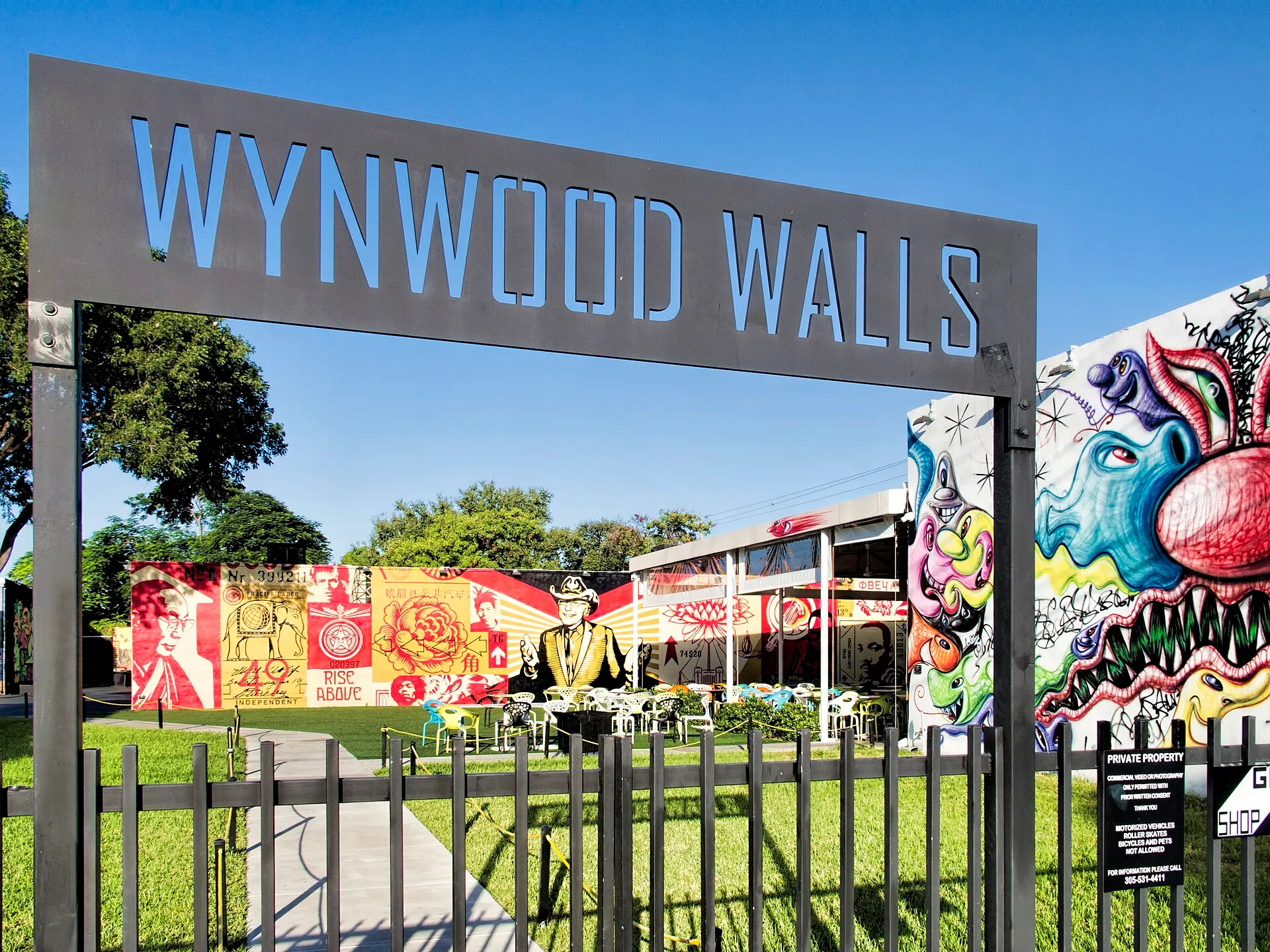
Treat the walled garden as the permanent collection and seek out its signature works first, then let the street lead you outward. The curated pieces inside the gates rotate. Even so, several artists have become synonymous with Wynwood and reward a close look:
- RETNA — intricate calligraphic murals whose invented script blends Gothic blackletter, Arabic, and hieroglyphic forms into walls that read like sacred manuscripts.
- Shepard Fairey — the OBEY and Hope artist, whose bold, poster-like stenciled portraits anchor the collection's political voice.
- POSE — vivid, cartoon-charged lettering rooted in the graffiti tradition that carries the movement's New York and Los Angeles DNA into Miami.
Beyond the marquee names, budget time for the district's distinct galleries and rooms:
- Wynwood Doors — a row of painted roll-up warehouse doors that works as a compact secondary gallery, with smaller-scale works sitting at eye level.
- The garden mural walls — the core courtyard, where fresh commissions appear each Art Basel season and older pieces are painted over.
- Museum of Graffiti — opened in 2019 as the world's first museum dedicated to graffiti and street art, contextualizing the outdoor murals with canvases, artifacts, and rotating exhibitions.
Because Art Basel Miami Beach each December brings artists who repaint existing walls, the highlights list is genuinely dynamic. Ask garden staff which pieces are newly finished: a standout work of one season may be painted over by the next, so each visit is a distinct viewing of an ever-changing collection.
Guided Tours
Guided tours turn a colorful photo walk into genuine art education, and Wynwood offers several tiers. The standard street-art walking tour runs roughly two hours. It covers both the walled garden and the surrounding district murals along NW 2nd Avenue, with a guide identifying works by internationally significant artists and decoding the political messages, cultural references, and spray-paint techniques that most visitors miss entirely. Guides also explain how each artist fits within the broader canon of contemporary street art, why certain walls command attention from collectors and curators, and how one mural references pre-Columbian iconography while another responds to current events.
A private art guide delivers a customized two-to-three-hour experience for small groups. It adds gallery visits and, when available, artist-studio access that no self-guided walk can replicate. Many tours weave in the neighborhood's fraught story of art, real estate, and gentrification, tracing how Tony Goldman's vision transformed abandoned warehouses into the world's most celebrated outdoor gallery while reshaping the surrounding blocks. The best guides lead visitors to hidden walls on side streets that tourist maps skip, pair the murals with the collections at the nearby Museum of Graffiti, arrange introductions to gallerists, and connect the work to Miami's wider creative scene. Book ahead for Art Basel week in December, when new murals appear daily and a knowledgeable guide is the surest way to keep up with the constant rotation.
When to Visit
The Wynwood Walls garden keeps gallery hours, while the street murals never close. Plan your visit around the light and the crowds:
- Walled garden: Monday–Thursday 11 AM–7 PM, Friday–Saturday 11 AM–8 PM, Sunday 11 AM–7 PM. Hours shift for Art Basel and private events, so confirm current times on the official Wynwood Walls site.
- Street murals: Visible 24 hours, since they cover public-facing building walls throughout the neighborhood.
- Best light: Weekday mornings before noon, when shadows are soft and the sidewalks are thin enough to photograph murals without a crowd in the frame.
- Art Basel week (early December): The district becomes a global art fair with new murals, pop-up galleries, and celebrity sightings — electric, but overwhelming.
- Second Saturday Art Walk: Galleries open late with special exhibitions and receptions on the second Saturday of each month, the liveliest evening to visit.
Allow two to three hours to do the garden and the surrounding blocks justice; art-focused visitors with a guide often stay half a day.
Admission and Costs
Most of Wynwood costs nothing to see — the walls are the exhibit, and the streets are open to all:
- Wynwood Walls garden: Free admission to the main walled garden and its curated murals.
- Street murals: Completely free, visible from public sidewalks throughout the district.
- Guided street-art walking tour: $30–55 per person for a two-hour tour covering the Walls and the surrounding neighborhood murals with art-historical context.
- Private art guide: $200–350 for a customized two-to-three-hour tour for up to eight people, including gallery visits and artist-studio access when available.
- Gallery visits: Nearly all Wynwood galleries are free to enter and browse.
The Case for a Guide
Wynwood rewards context. Without it, even a stunning wall is just a photo; with a knowledgeable guide it becomes a lesson in technique, politics, and the economics of a neighborhood remade by art. A good street-art guide will:
- Name the artists and place each mural within the wider canon of contemporary street art, from graffiti's New York roots to today's global scene.
- Decode the work — the political messages, cultural references, and spray-can techniques that most visitors walk straight past.
- Find the hidden walls on side streets that tourist maps skip, and time the route so you catch the best pieces in the best light.
- Open doors — introductions to gallerists and, on private tours, occasional artist-studio access no self-guided walk can replicate.
- Tell the harder story of art, real estate, and gentrification, tracing how Tony Goldman's vision reshaped the surrounding blocks.
For first-time visitors especially, two hours with a guide turns an Instagram walk into genuine art education — and leaves you seeing the rest of Miami differently.
Tips for Visitors
- Wear comfortable shoes: exploring the full district means two to three miles of walking on concrete sidewalks.
- Plan for sun and heat: much of the route is exposed. Bring water, wear sunscreen, and duck into air-conditioned galleries to cool off.
- Parking and transit: several paid lots ($10–20) are scattered through the district, and street parking is limited and heavily metered. The free downtown Metromover does not reach Wynwood, so most visitors arrive by ride-share or car.
- Charge your phone: you will photograph everything — bring a portable battery so it survives the whole walk.
- Pair it with Little Havana: a 15-minute drive south, so a morning of Cuban culture and an afternoon of street art make one of Miami's best day itineraries.
- Architecture-and-art day: start in the Art Deco Historic District for 1930s elegance, then contrast it with Wynwood's raw contemporary energy in the afternoon.
- Safety: Wynwood is well-patrolled and tourist-friendly by day; stick to the main avenues after dark and stay aware of your surroundings on quieter side streets.
Frequently Asked Questions
What season should visitors choose for Wynwood Walls?
December through February offers the most comfortable walking weather for this largely outdoor experience. The Art Basel Miami Beach fair in early December also brings a fresh wave of artists who repaint walls and open pop-up galleries throughout the district. Summer visits mean navigating exposed sidewalks in intense heat and humidity. The murals themselves stay viewable year-round, and many galleries provide air-conditioned respite between outdoor stretches.
When is the Wynwood Walls garden open and murals viewable?
Wynwood Walls garden: Monday through Thursday 11 AM to 7 PM, Friday and Saturday 11 AM to 8 PM, Sunday 11 AM to 7 PM. Street murals: Visible 24 hours since they cover public-facing building walls throughout the neighborhood.
How much should visitors budget for Wynwood Walls?
Wynwood Walls garden: Free admission to the main walled garden and its curated murals. Street murals: Completely free, visible from public sidewalks throughout the district.
Is a walking tour of Wynwood Walls worth it?
Guides identify works by Shepard Fairey, Retna, POSE, and other internationally significant street artists. They decode political messages, cultural references, and techniques that transform an Instagram photo walk into genuine art education.
How do you get to Wynwood Walls, and how long should you stay?
Wynwood sits just north of downtown Miami, roughly a 10-minute ride-share from Brickell or 15 minutes from South Beach; the free Metromover does not reach it, so a ride-share or car is easiest. The walled garden is at 2516 NW 2nd Avenue. Budget two to three hours to combine the garden with the surrounding district murals. Allow half a day if you add galleries, the Museum of Graffiti, and lunch at one of the neighborhood breweries or cafes.