
Spiritual Significance
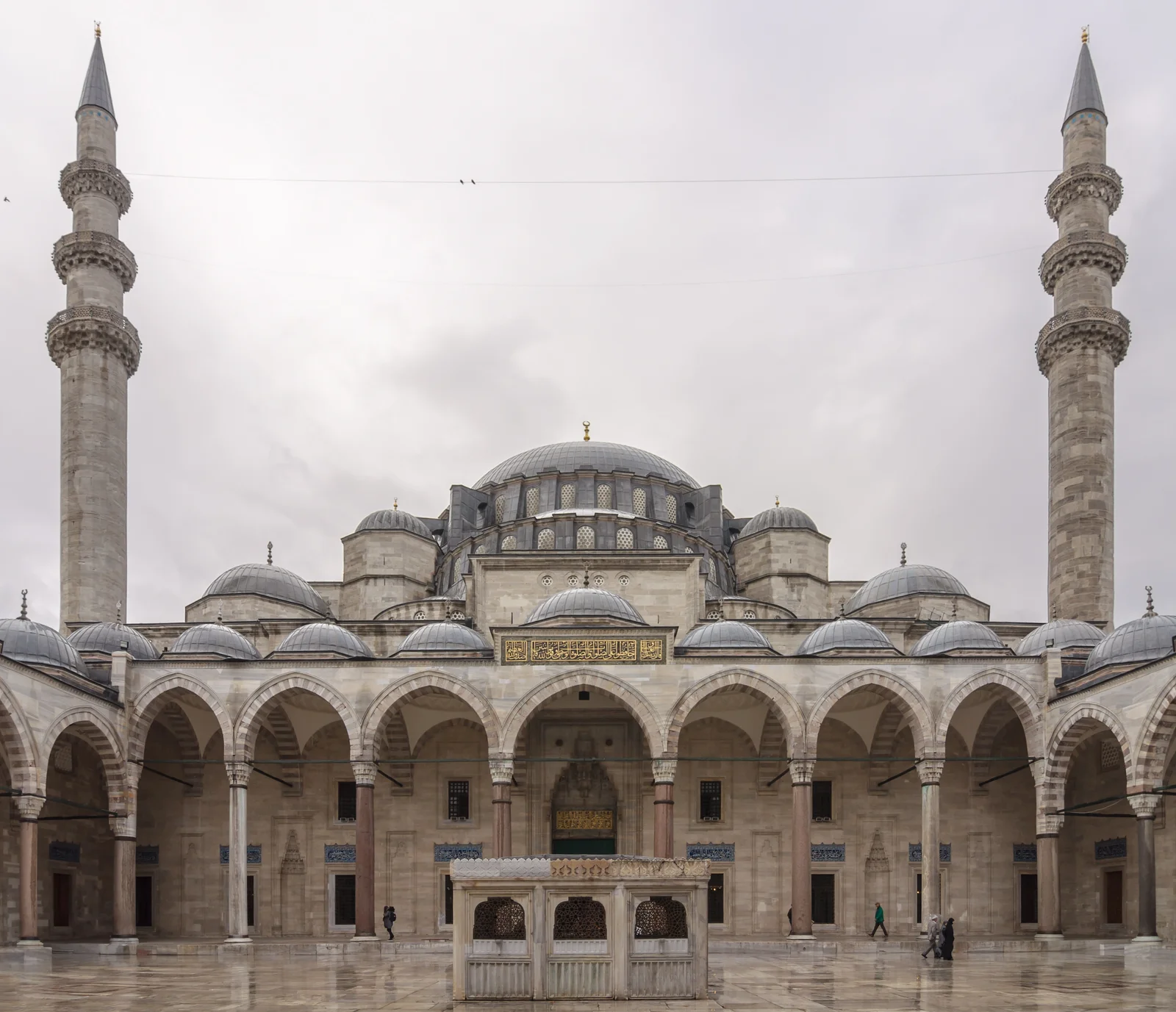
Süleymaniye was conceived as the dynastic mosque of the Ottoman golden age, and its symbolism is deliberate: the four minarets mark Suleiman as the fourth sultan to rule from Istanbul after the conquest, and their ten balconies (şerefe) note that he was the tenth sultan of the House of Osman. The design consciously answers Hagia Sophia across the skyline — Sinan set out to master and surpass the Byzantine dome — while remaining unmistakably an Ottoman house of prayer. Behind the qibla wall, the walled garden holds the türbe of Suleiman the Magnificent and that of his wife Hürrem Sultan, making the site a place of pilgrimage as well as worship; Sinan himself lies in a modest self-designed tomb just outside the walls. As an active mosque, it fills for the five daily prayers and the Friday cuma service, when the marble courtyard overflows with worshippers.
Visitor Etiquette
Süleymaniye is a functioning mosque, so dress modestly: shoulders and knees covered for everyone, and a headscarf for women (free loaner scarves and wraps are available at the visitor entrance). Remove your shoes before stepping onto the carpet and carry them in the plastic bags provided rather than leaving them on the racks. Enter through the designated tourist door, keep your voice low, and never walk in front of or photograph people at prayer. Photography without flash is permitted; tripods are not. Time your visit for the gaps between the five daily prayers and avoid the Friday midday congregation, when the prayer hall closes to sightseers entirely. A small donation toward the mosque's upkeep is welcome since there is no entry charge.
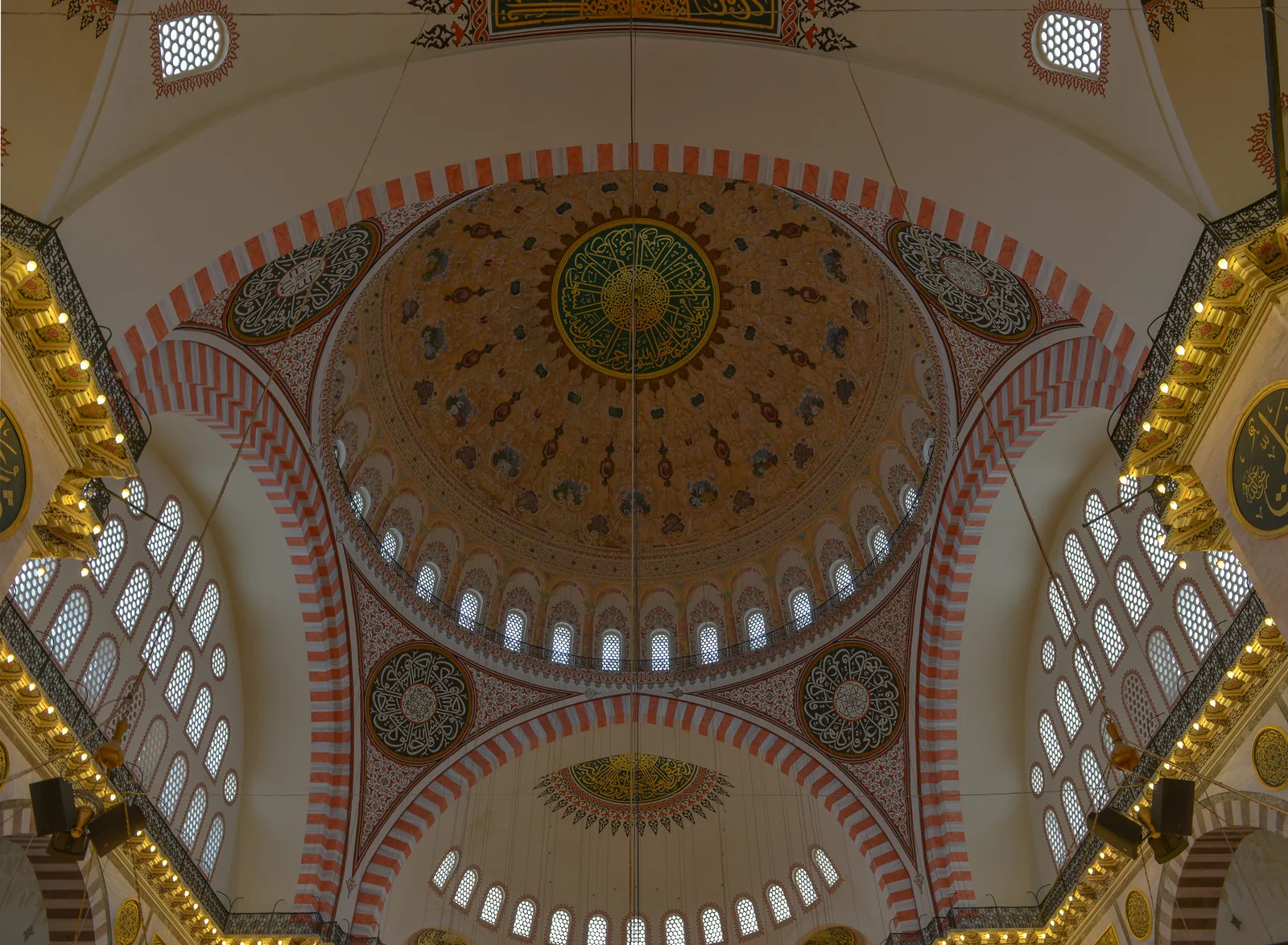
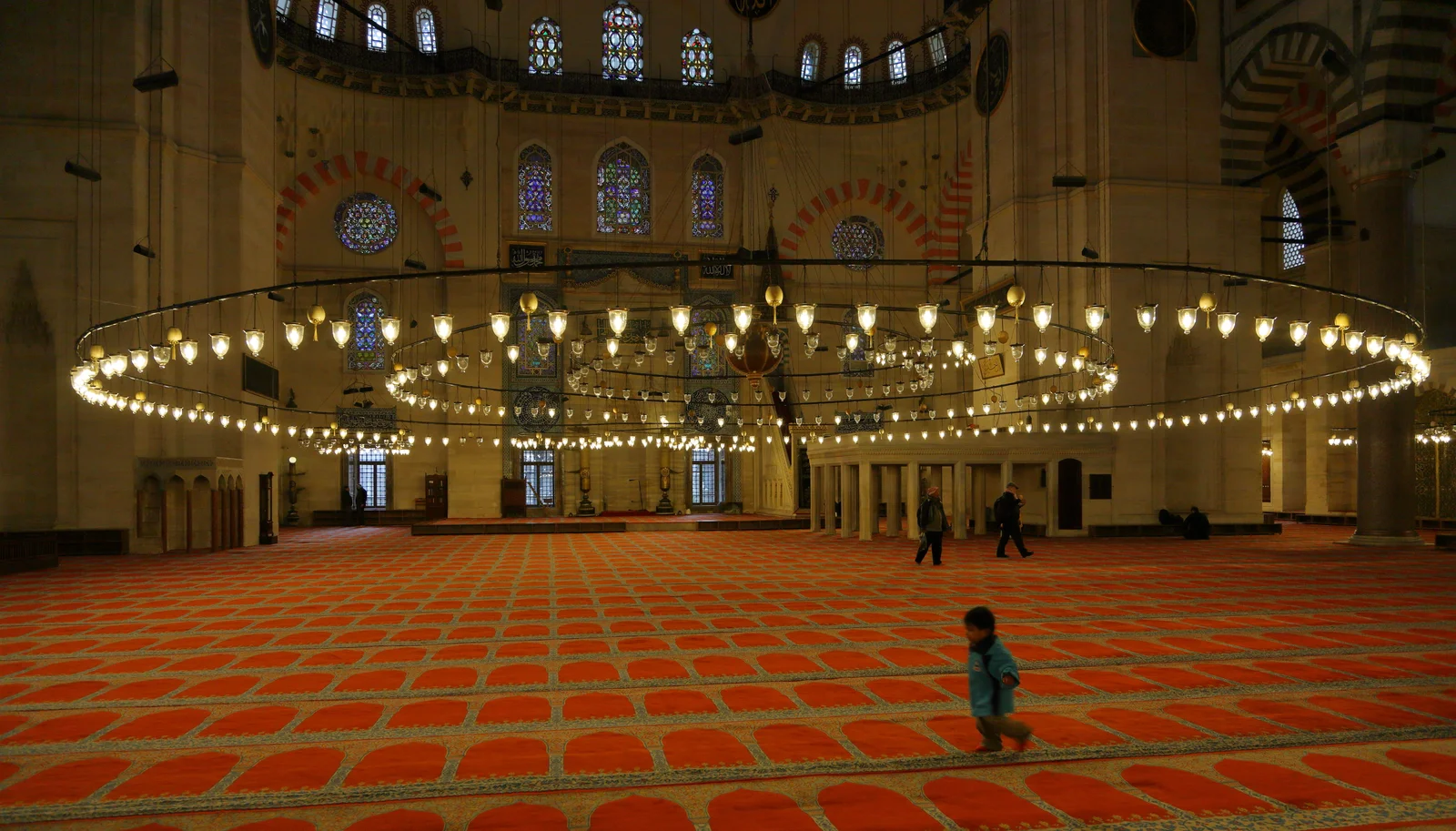
Süleymaniye Mosque in Pictures
When to Visit
Open daily for visitors from roughly 9:00 AM to 6:00 PM in summer and until dusk in winter, closing to sightseers for about 90 minutes around each of the five daily prayers and for the Friday midday service (roughly 12:30–2:30 PM). Best time: shortly after the morning opening for quiet and soft light, or the last hour before sunset, when the low sun floods the prayer hall and the terrace gives the finest Golden Horn panorama in the old city. Allow 45–60 minutes for the mosque and courtyard, or 1.5 hours to include the tomb garden and walk the külliye. The mosque sits a 10-minute uphill walk from the Eminönü and Grand Bazaar areas, so combine it with the bazaars rather than backtracking.
Admission and Costs
Admission is FREE — Süleymaniye is an active mosque, and only a voluntary donation toward its maintenance is suggested. Guided options: a small-group walking tour that includes the mosque and its külliye runs about ₺600–1,200 (€17–34) per person; a private licensed guide for up to six people is roughly ₺4,000–7,500 (€115–215) for a half-day that folds in the surrounding old-city sights. Combined Historic Peninsula tours pairing Süleymaniye with Hagia Sophia and the Grand Bazaar typically cost ₺1,500–3,000 (€43–86). There is no ticket counter and no Museum Pass requirement, since entry never carries a charge.
The Case for a Guide
A knowledgeable guide turns Süleymaniye from a beautiful room into a lesson in how Ottoman power built in stone. They explain Sinan's structural tricks — the hidden buttresses disguised as arcaded galleries, the ostrich-egg cups set among the lamps to deter spiders and keep the interior clean, and the acoustic jars built into the dome to soften echoes. Guides decode the İznik tiles framing the mihrab, translate the calligraphy of Ahmed Karahisari's school, and trace the full külliye on foot so you grasp that a great mosque was also a hospital, school, and kitchen for the poor. Many pair the visit with the tomb garden and the panoramic terrace, then lead you down through the old book market toward the Grand Bazaar, giving context that a self-guided wander rarely uncovers.
Tips for Visitors
Reach Süleymaniye from the T1 tram: alight at Beyazıt–Kapalıçarşı or Eminönü and climb the lanes of the old book and hardware markets — there is no visitor car park. Come outside prayer times and check the posted daily namaz schedule at the gate, as closures run about 90 minutes each. Slip out to the western terrace behind the mosque for a free, sweeping view over the Golden Horn, the Galata skyline, and the Galata Bridge — it is one of Istanbul's great photo spots and busiest at sunset. The historic Vefa Bozacısı and the shady külliye teahouses nearby make an easy pause. Pair the mosque with the Spice Bazaar downhill and the tile-clad Rüstem Pasha Mosque for a rewarding half-day on the Istanbul peninsula.
Frequently Asked Questions
Do you need a ticket to enter Süleymaniye Mosque?
No. Süleymaniye is a working mosque and entry is free for everyone, though a donation toward upkeep is appreciated. Unlike Istanbul's state museums, there is no ticket and no online booking; you simply remove your shoes, dress modestly, and walk in outside prayer times.
How does Süleymaniye compare with the Blue Mosque for visitors?
Süleymaniye is older, calmer, and considered the more refined piece of architecture, designed by Mimar Sinan and finished in 1557, half a century before the Blue Mosque. It sits away from the Sultanahmet tourist crush on its own hilltop terrace, so queues are short and the Golden Horn views from the courtyard are unmatched.
Who is buried behind the Süleymaniye Mosque?
The walled garden cemetery behind the qibla wall holds the domed türbe of Sultan Suleiman the Magnificent and, beside him, that of his wife Hürrem Sultan (Roxelana). The architect Mimar Sinan is buried in a small triangular tomb he designed for himself just outside the northern corner of the complex.
What is the best time of day to visit Süleymaniye?
Arrive soon after the morning opening or in the late afternoon, avoiding the roughly 90-minute closures around each of the five daily prayers and the busy Friday midday service. Late afternoon light pours through the qibla-wall windows and the terrace is the finest spot in the old city to watch sunset over the Golden Horn.