
Visitor Etiquette
Dress modestly: shoulders and knees must be covered for all visitors. Women must wear a headscarf (free loaners available at the entrance). Remove shoes before entering — plastic bags are provided; keep them with you inside. Respectful behavior is essential: this is an active place of worship — quiet voices, no pointing at worshippers, no flash photography. Donations are encouraged since entry is free but restoration costs are significant. Photography is permitted without flash.
Spiritual Significance
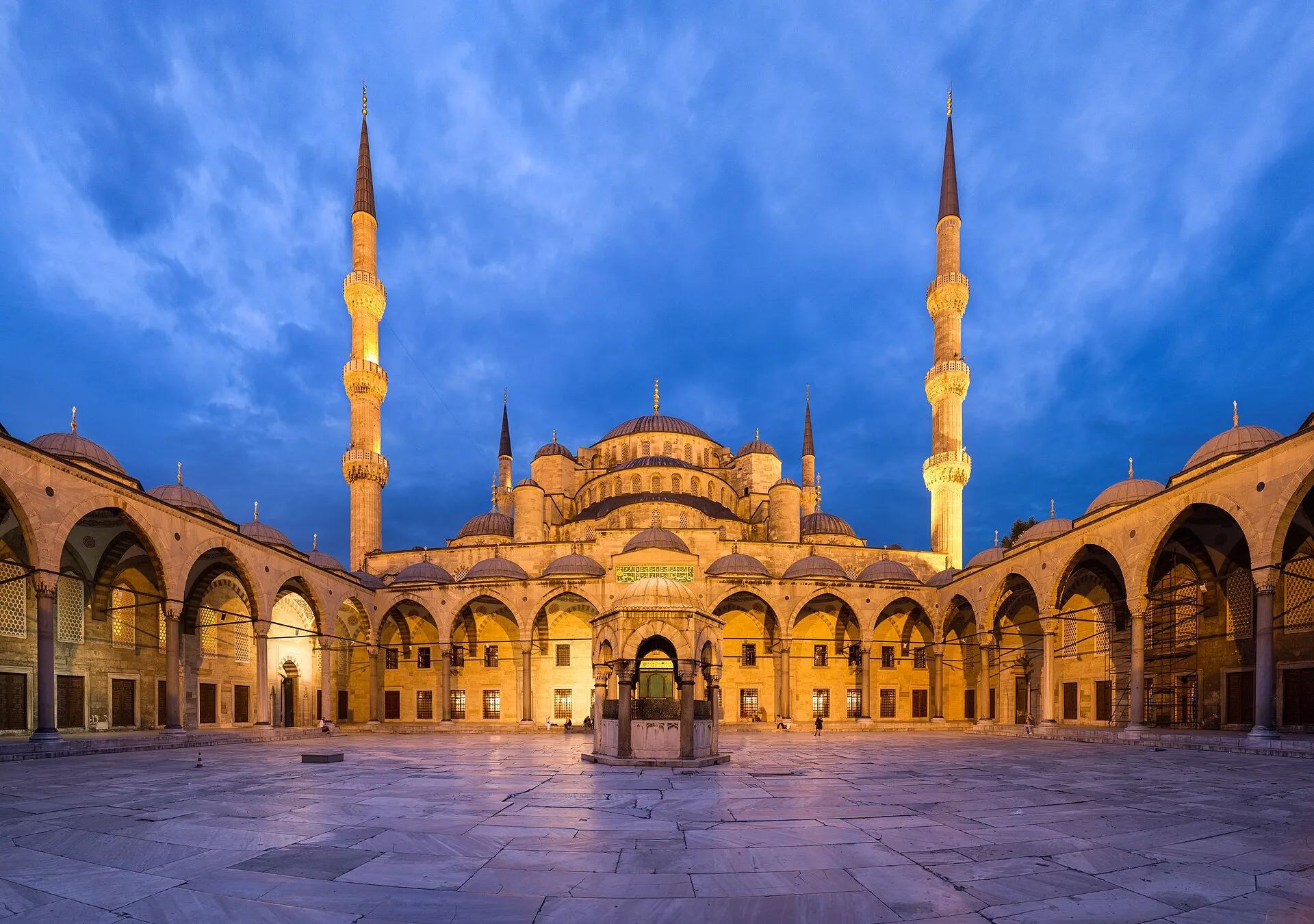
Built 1609–1616 by Sultan Ahmed I and designed by the royal architect Sedefkâr Mehmed Ağa, a pupil of the great Mimar Sinan, the Blue Mosque (Sultanahmet Camii) gets its nickname from the stunning blue Iznik tiles adorning its interior. With six minarets (controversial at the time — only Mecca's Masjid al-Haram had as many, so the sultan is said to have funded a seventh for Mecca to resolve the offence), cascading domes, and a massive courtyard equal in size to the prayer hall, it represents the pinnacle of Ottoman classical architecture. It stands directly on the site of the Byzantine Great Palace, facing Hagia Sophia across the Sultanahmet square and forming part of the Historic Areas of Istanbul, inscribed on the UNESCO World Heritage list in 1985. Unlike Hagia Sophia — a converted church — it was purpose-built as a mosque and remains an active place of worship. A major structural and tile restoration wrapped up in 2023, returning the Iznik interior to full public view.
When to Visit
Open daily 8:30 AM–6:45 PM, closed during the five daily prayer times (each lasting 30–90 minutes). Prayer closures occur at dawn, midday, afternoon, sunset, and evening — check the daily schedule posted at the entrance. Best time: early morning 8:30–9:00 AM or late afternoon 4:00–5:00 PM between prayers. Avoid: Friday mornings (main communal prayer day) and summer midday (largest tour groups). Late afternoon light makes the tiles glow beautifully. Allow 45–60 minutes to appreciate the details independently, or 1.5 hours with a guide. A 5-minute walk connects to Hagia Sophia, Topkapi Palace, or the Basilica Cistern.
Admission and Costs
Admission: FREE (functioning mosque, donations welcome). Group tours: ₺400-700 (€12-22) per person with guide (1 hour). Private guide: ₺3,500-6,500 (€100-200) for up to 6 people (1.5 hours). Combined tours: ₺1,000-1,800 (€30-55) with Hagia Sophia and Hippodrome. Photography tours: ₺5,000-8,000 (€150-250) with professional photographer-guide
The Case for a Guide
Ottoman architecture: Understand the innovative engineering of cascading domes and semi-domes. Iznik tile artistry: Learn about the 50+ tulip and flower patterns in handmade tiles. Historical context: Why Sultan Ahmed built it (after military defeats, to regain God's favor). Six minaret controversy: How this nearly caused diplomatic crisis with Mecca. Calligraphy secrets: Guides translate the Arabic inscriptions and explain symbolism. Prayer time planning: Navigate closures efficiently, combine with nearby sites.
Tips for Visitors
Use the tourist entrance on the south side, opposite Hagia Sophia; the west entrance is reserved for worshippers. Check the prayer timetable posted at the entrance before planning your visit — closures last 30–90 minutes each time and occur five times daily. The blue Iznik tilework is best appreciated from the upper gallery level, which few visitors discover without guidance. Getting there: the T1 tram stops at Sultanahmet, a two-minute walk from the mosque, and both the Marmaray and metro connect from the airport lines — there is no visitor car park, so public transport is easiest. Best photo angle: the fountain and gardens of Sultanahmet Square between the mosque and Hagia Sophia frame all six minarets at once, and the domes glow at sunset when the exterior floodlights come on. Combine with Hagia Sophia and Topkapi Palace in a single morning for an efficient circuit of the Istanbul old city.
🎧 Audio companion for Blue Mosque
Read the introduction transcript
The Blue Mosque anchors the middle of our free, self-guided Istanbul: Sultanahmet Old City audio walk. Two stops cross the square to it and lead you into its wide forecourt, where the narration untangles the famous story of its six minarets and points out the cascade of domes that steps up to the central one, all raised for a young sultan in the early 1600s.
Inside, the walk describes the tens of thousands of blue-and-white İznik tiles that give the mosque its nickname and the etiquette for visiting a working place of prayer. Open the full walk to read the whole narration — or listen to your browser read it aloud — while you look up at the domes; the mosque is free to enter outside prayer times, and this audio introduction is free everywhere.
Frequently Asked Questions
When is the best time of year to visit the Blue Mosque?
April through June and September through October offer Istanbul's most pleasant weather for visiting, with mild temperatures and softer light that enhances the blue Iznik tilework visible through the mosque's large windows. The mosque is an indoor experience and accessible year-round, but summer crowds from July to August can create long entry queues, while winter visits in January and February are quieter with fewer prayer-time closures competing with tourist traffic.
During which hours can visitors explore Blue Mosque?
Hours: Open daily 8:30 AM-6:45 PM, closed during 5 prayer times (30-90 minutes each). Best time: Early morning 8:30-9 AM or late afternoon 4-5 PM between prayers. Avoid Friday mornings (main prayer day).
What dress code rules apply when visiting the Blue Mosque?
Dress modestly: Shoulders, knees covered. Women must wear headscarf (free loaners at entrance). Remove shoes: Required - plastic bags provided, keep them with you inside.
Why is it worth hiring a guide for the Blue Mosque?
Ottoman architecture: Understand the innovative engineering of cascading domes and semi-domes. Iznik tile artistry: Learn about the 50+ tulip and flower patterns in handmade tiles.