
Architecture
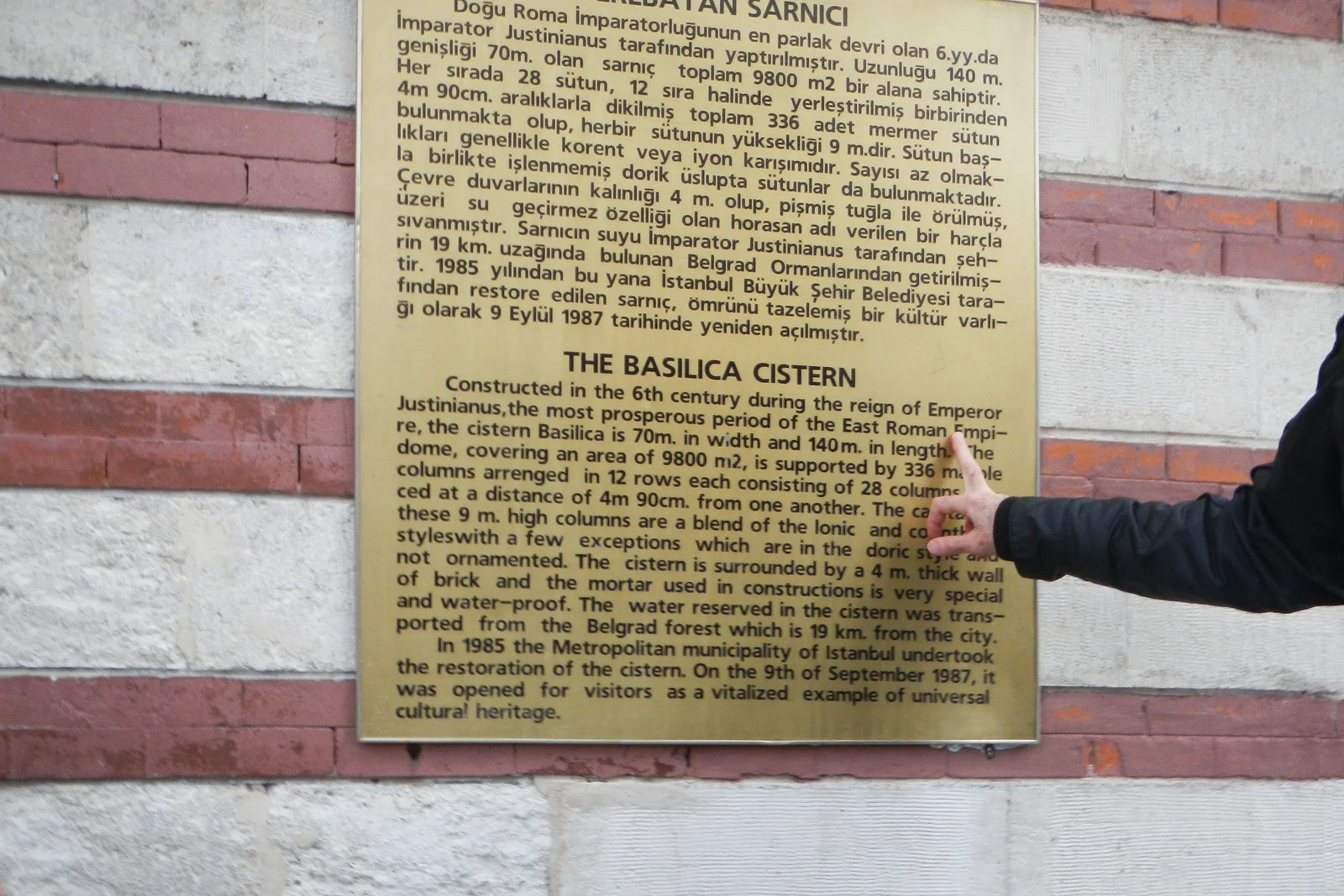
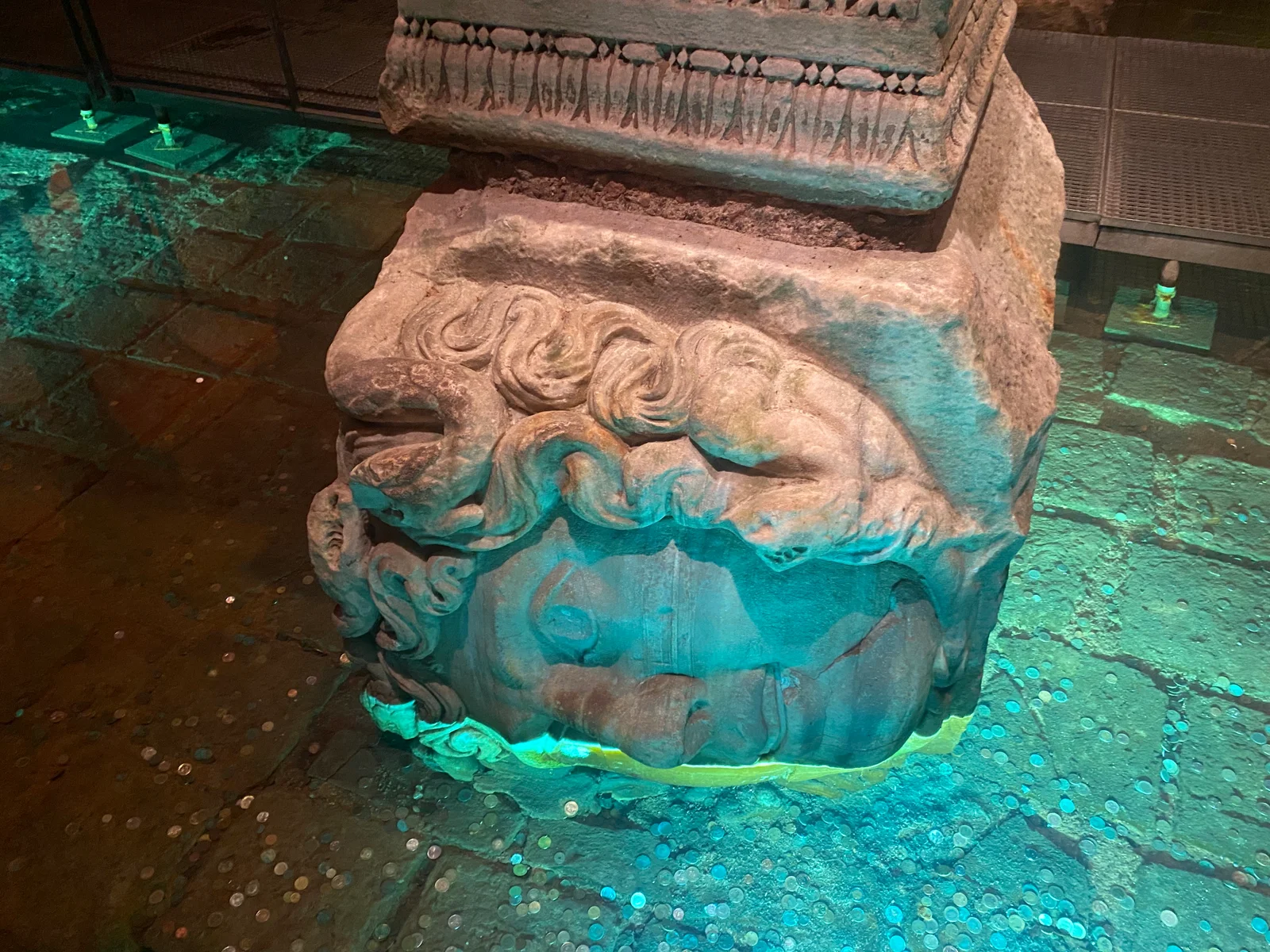
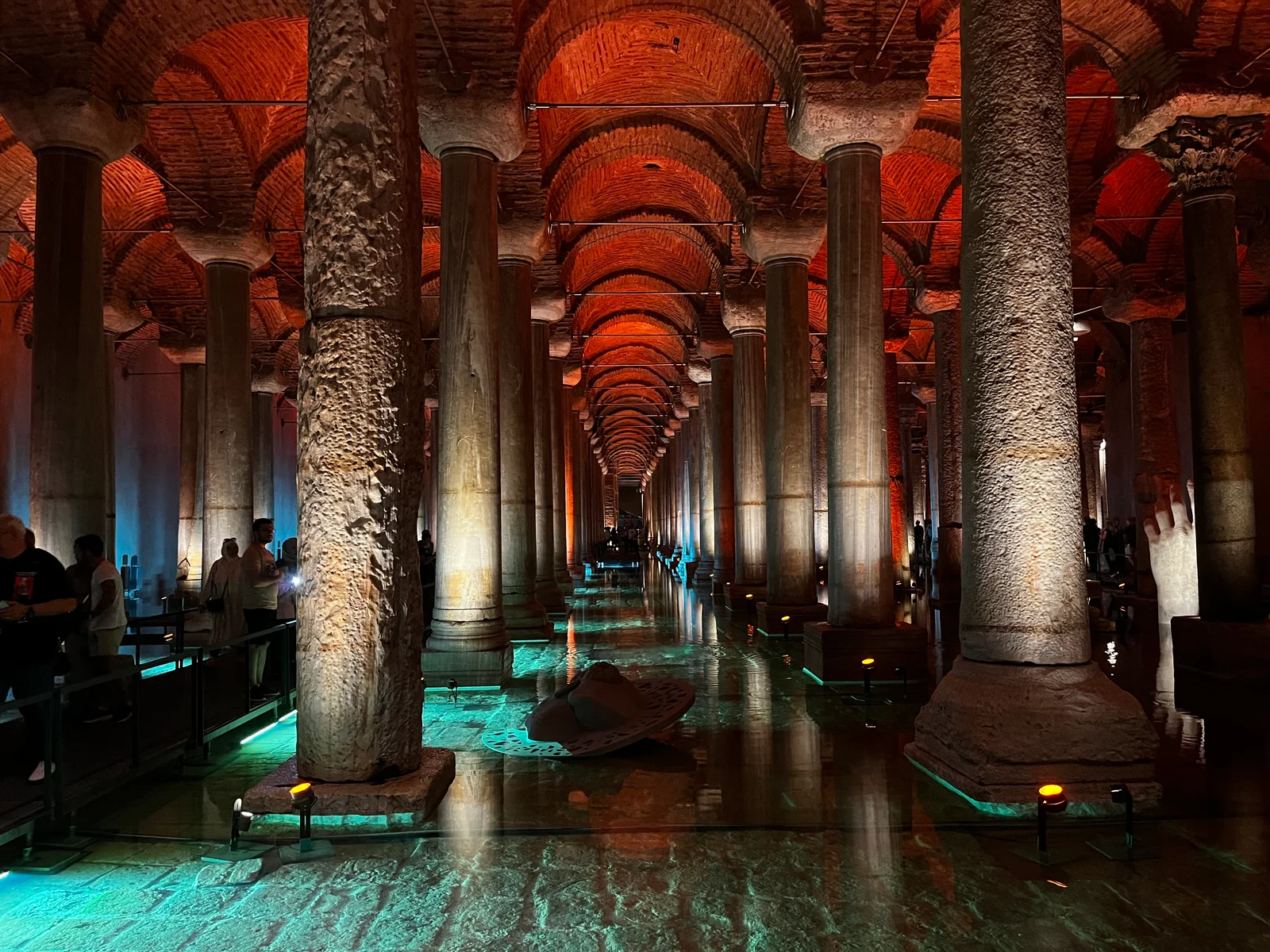
The cistern measures roughly 138 by 65 metres, an interior area of about 9,800 square metres, and could hold on the order of 80,000 cubic metres of water. Its brick vaulted roof is carried on 336 marble columns set in twelve rows of twenty-eight, each column around 9 metres tall and spaced about 4.8 metres apart. Because the columns were largely gathered from earlier structures, they vary in style — Corinthian, Ionic and plain Doric shafts stand side by side — and two rest on the famous inverted and sideways Medusa-head blocks in the northwest corner. The whole chamber is waterproofed with a thick layer of fireproof mortar, and its scale, high enough to feel like a submerged basilica, is what gave the reservoir its name. Fibre-optic lighting installed during the 2022 works now picks out individual capitals against the dark water.
Historical Significance
The cistern was built in 532 CE under Emperor Justinian I, in the same burst of monumental construction that produced the rebuilt Hagia Sophia after the Nika riots. It took its name from a great public basilica that had stood on the site, and for centuries it fed the Great Palace of the Byzantine emperors. After the Ottoman conquest the reservoir was gradually forgotten; the 16th-century scholar Petrus Gyllius famously rediscovered it after noticing locals drawing water — and even catching fish — through holes in their basement floors. Cleared and restored several times under the Ottomans and again by the modern city, it entered global popular culture as a filming location, including the 1963 James Bond film From Russia with Love. Today it is protected as part of the UNESCO-listed Historic Areas of Istanbul.
Basilica Cistern in Pictures
When to Visit
The cistern is open daily, with daytime sessions running roughly 09:00–19:00 and a separate ticketed night visit in the evening (approximately 19:30 onward). Early morning right after opening is the calmest window; midday brings the largest tour groups, especially in summer. Because it is entirely underground it stays cool in the July–August heat and is a welcome refuge on a rainy winter day, which is why it rates well even in the low season. Allow 30–45 minutes for the walkway circuit, or up to an hour if an art installation is on show. The T1 tram stop at Sultanahmet is a two-minute walk away, so it slots neatly before or after Hagia Sophia.
Admission and Costs
Foreign-passport visitors pay a daytime timed-entry ticket of about ₺700–900 (€20–26), while the evening night-visit session costs more, in the region of ₺1,200–1,500 (€35–45). Holders of Turkish ID pay a substantially lower rate. Tickets are timed, so buying online in advance avoids the queue that forms at the Sultanahmet entrance in high season. A licensed guide for the cistern typically adds ₺2,500–5,000 (€75–150) for a small group, and many visitors save money by booking a combined walking tour that also covers the Hippodrome of Constantinople and Hagia Sophia. The Museum Pass Istanbul does not include the cistern, so budget for it separately.
The Case for a Guide
A good guide turns what can feel like a quick photo stop into a lesson in how a metropolis of half a million people was kept supplied with water. They explain why the columns are so mismatched — the builders raided older temples and ruins for ready-made spolia — and can point out the "hen's eye" column carved with teardrop motifs that many visitors miss. Guides also untangle the many myths that have grown around the two Medusa heads, separating documented Roman practice from the romantic stories sold at the door. Because the cistern connects so directly to the story of nearby Hagia Sophia and imperial Constantinople, a knowledgeable escort stitches the underground reservoir into the wider narrative of the old city rather than leaving it as an isolated curiosity.
Tips for Visitors
Book a timed slot online before you arrive; walk-up queues are the single biggest frustration here. The steps down are worn and the walkways can be damp, so wear shoes with grip. The best photographs come from the far end looking back along the columns, and the two Medusa bases in the northwest corner are the must-see detail — head there first before groups cluster. It is genuinely cool underground, so a light layer helps in summer. The T1 tram to Sultanahmet is the easiest approach; there is no visitor car park. Combine your visit with the Blue Mosque and Topkapi Palace for an efficient old-city circuit, and check whether a contemporary art installation is running, as these change through the year.
Frequently Asked Questions
What are the two Medusa heads at the Basilica Cistern?
Two carved Medusa heads serve as bases for columns in the northwest corner, one set sideways and the other upside down. They are almost certainly spolia salvaged from an earlier Roman building and reused as convenient blocks rather than placed for meaning. Their odd orientation has spawned centuries of legend, but scholars think it simply matched the required column height.
How much does entry to the Basilica Cistern cost in 2026?
Foreign visitors pay a timed-entry daytime ticket of roughly ₺700–900 (about €20–26), noticeably more than the price for holders of Turkish ID. A separate, more expensive night-visit ticket is sold for evening sessions. Booking a slot online in advance is wise because on-site queues at the Sultanahmet entrance can be long in peak season.
Is the Basilica Cistern suitable for visitors with mobility needs?
The 2022 restoration added raised steel walkways, handrails and lighting, but you still descend a flight of stone steps to reach the cistern floor and the surface underfoot can be damp. There is no lift, so wheelchair users and those who cannot manage stairs will find access difficult. Allow around 45 minutes to complete the circuit at an easy pace.
How long should I plan to spend inside?
Most visitors spend 30 to 45 minutes walking the full loop, pausing at the Medusa bases and the columns. If a temporary art installation is showing, or you want unhurried photographs of the reflections, budget closer to an hour. It pairs well with the nearby Sultanahmet monuments in a single morning.