
Visitor Etiquette
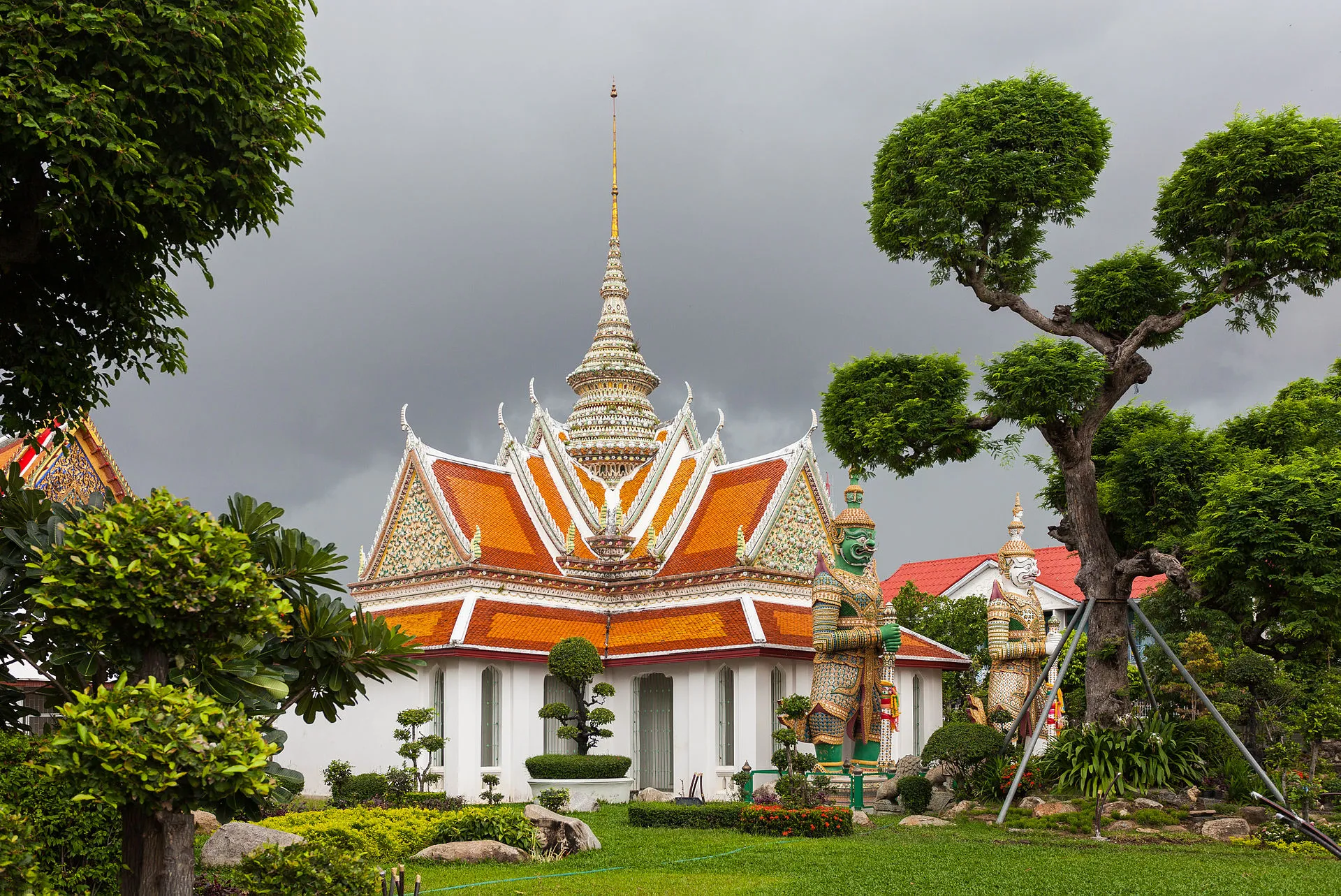
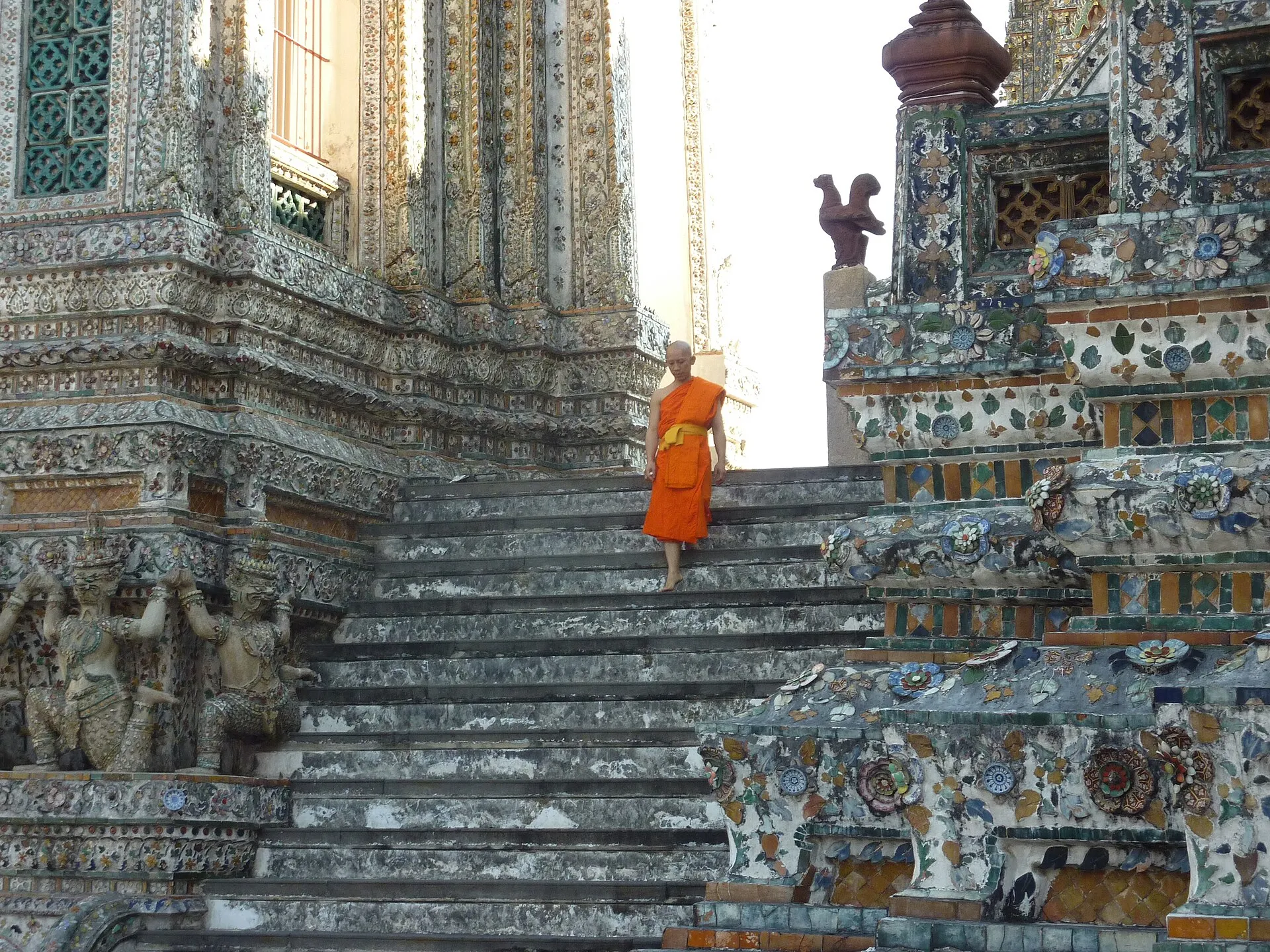
Wat Arun is a functioning Buddhist temple — the dress code is firmly enforced by staff at the entrance. Both men and women must cover shoulders and knees completely; if you arrive without appropriate clothing, sarong wraps are available to borrow or rent at the gate. Remove footwear before entering the ordination hall (ubosot) and any enclosed shrine buildings within the complex. The central prang staircase climb is steep at approximately 70 degrees — use the handrails provided and descend sideways if you feel unsteady. Photography throughout the temple grounds is freely permitted and encouraged; the porcelain mosaic surfaces and demon guardian statues are among the most photographed architectural details in Bangkok. However, show respectful restraint when monks are in residence or performing rituals — do not photograph monks without permission, and give them space in the cloisters and chapel areas. Speak quietly near active shrines. Do not point feet toward Buddha images or religious statues (a sign of disrespect in Thai Buddhist culture); when sitting near shrine areas, cross your legs to one side. Women should not touch or hand objects directly to monks.
Spiritual Significance
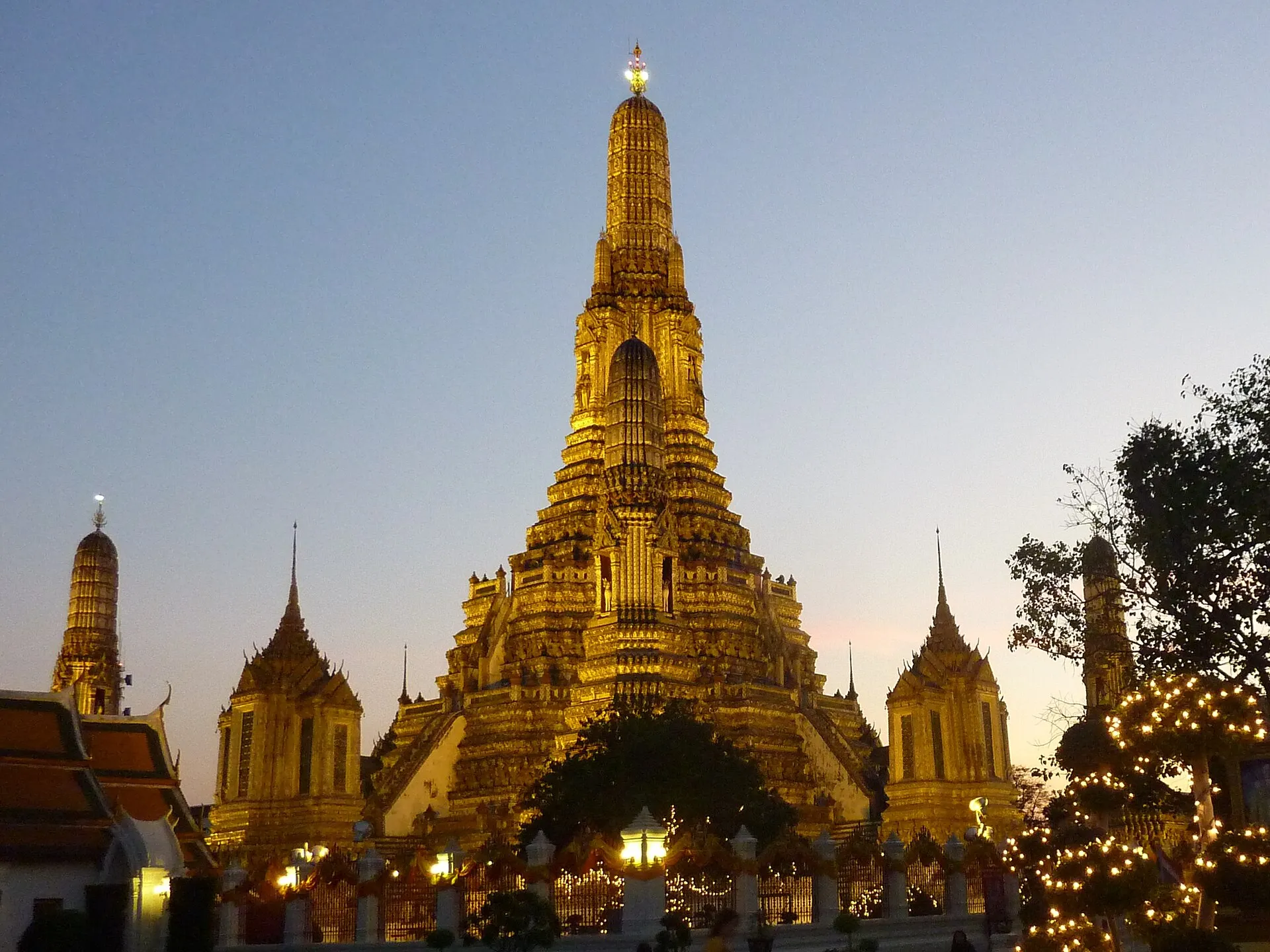
Wat Arun is dedicated to Aruna, the Hindu god of dawn — the same deity whose name the temple carries in Thai (Wat Chaeng, meaning Temple of Dawn). This solar connection gives the temple its defining identity: the central prang, soaring 82 meters above the riverbank, represents Mount Meru, the cosmic axis of both Buddhist and Hindu cosmology. Its five towers mirror the sacred mountain's peak and four cardinal faces, while the four satellite prangs at the corners symbolize the four continents orbiting Meru in classical Buddhist geography. The temple played a pivotal role in Thai national history. After the fall of Ayutthaya in 1767, King Taksin made Wat Arun the royal temple of his Thonburi Kingdom, choosing it as the temporary home of the Emerald Buddha — Thailand's most sacred religious image — before it was transferred to Wat Phra Kaew across the river in 1784. This connection to the Emerald Buddha imbues the site with deep dynastic and spiritual significance. The elaborate porcelain mosaic encrusting the prang carries its own sacred dimension: Chinese merchants sailing the river were said to donate broken porcelain as votive offerings, transforming commercial ballast into a shimmering act of devotion. Today, the temple's monks still open each morning with traditional prayers at dawn, honoring the ancient dedication to Aruna and preserving a living religious community at one of Bangkok's most iconic landmarks.
Wat Arun Bangkok in Pictures
When to Visit
Hours: 8:00 AM - 6:00 PM daily. Best time to visit: Late afternoon (4-6 PM) for cooler weather and sunset light. Photography: View from across river at sunset (6-7 PM) for iconic silhouette shots. River ferry timing: Runs until 8 PM from Tha Tien pier. Plan for: 45 minutes to 1.5 hours depending on climbing and photography
Admission and Costs
Temple entrance: 100 THB ($3 USD). River ferry: 5 THB from Tha Tien pier (near Wat Pho). Longtail boat tour: 300-500 THB per person (includes multiple temples). Group tour with guide: 800-1,200 THB per person (combined with other temples). Private guide: 1,500-2,500 THB for up to 4 people (entrance and ferry separate)
Tips for Visitors
Steep climbing: Prang stairs are extremely steep (70°) with narrow steps - not for those with mobility issues or fear of heights. Dress code: Cover shoulders and knees - enforcement usually relaxed but respect appreciated. Proper footwear: Remove shoes before entering bot, but wear secure shoes for climbing prang steps. River ferry: Cheapest way across (5 THB) from Tha Tien pier - frequent departures, scenic ride. Sunset viewing: Best photos taken from east bank (Wat Pho side) as sun sets behind temple. Crowds: Fewer tourists than Grand Palace/Wat Pho - more peaceful experience. Photography: Allowed throughout temple, sunrise/sunset light makes porcelain sparkle. Combine efficiently: Do Grand Palace and Wat Pho morning, ferry to Wat Arun afternoon, watch sunset
Frequently Asked Questions
When should visitors plan a trip to Wat Arun?
The cool dry season from November through February offers the most comfortable conditions for climbing the temple's steep central prang, with lower humidity and golden afternoon light that makes the porcelain-encrusted spire glow against clear blue skies. December is particularly magical with cooler riverside breezes. June through September brings monsoon rains that make the steep, narrow stairways slippery and can obscure the famous sunset views across the Chao Phraya.
During which hours can visitors explore Wat Arun Bangkok?
Hours: 8:00 AM - 6:00 PM daily. Best time to visit: Late afternoon (4-6 PM) for cooler weather and sunset light. Photography: View from across river at sunset (6-7 PM) for iconic silhouette shots.
How does a guide enhance a visit to Wat Arun?
Architectural history: Understand Khmer-influenced design, symbolic meaning of prang tiers (Mount Meru). Porcelain craftsmanship: Learn about decorative technique using broken Chinese porcelain from ballast ships.
What should visitors know before visiting Wat Arun Bangkok?
Steep climbing: Prang stairs are extremely steep (70°) with narrow steps - not for those with mobility issues or fear of heights. Dress code: Cover shoulders and knees - enforcement usually relaxed but respect appreciated.