
Grand Palace Bangkok timeline
-
Bangkok becomes the capital
King Rama I founds the Chakri dynasty, moves the capital across the river from Thonburi, and lays out the Grand Palace on Rattanakosin Island as the seat of the new kingdom.
-
The Emerald Buddha enshrined
Wat Phra Kaew is consecrated inside the palace walls to house the jade Emerald Buddha, Thailand's most sacred image, brought from Vientiane by Rama I.
- 1809-1851
Successive reigns expand the compound
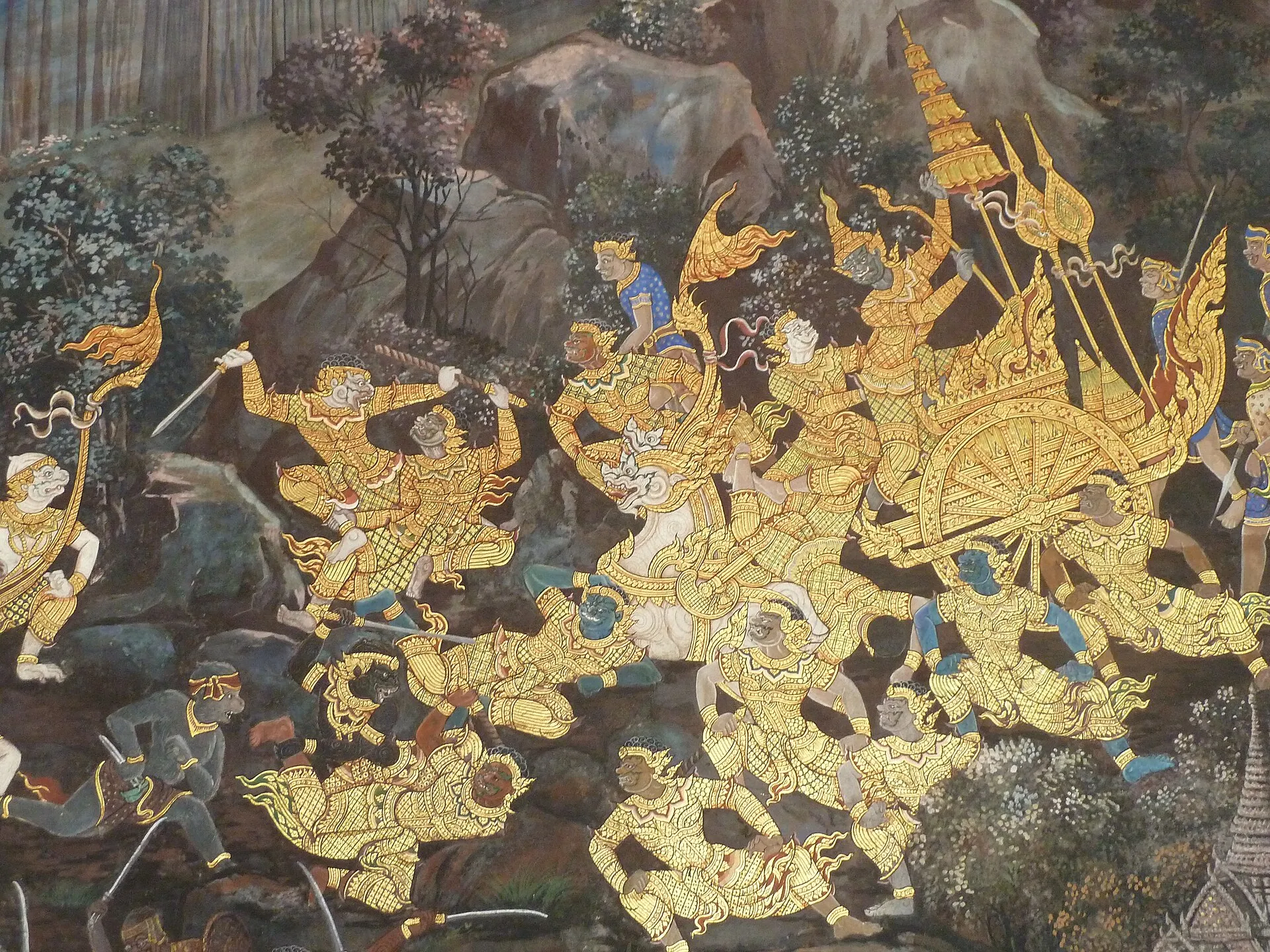
Rama II and Rama III add halls, chedis and cloisters, and commission the 178 Ramakien mural panels that still wrap the temple's inner gallery.
-
The Chakri Maha Prasat rises
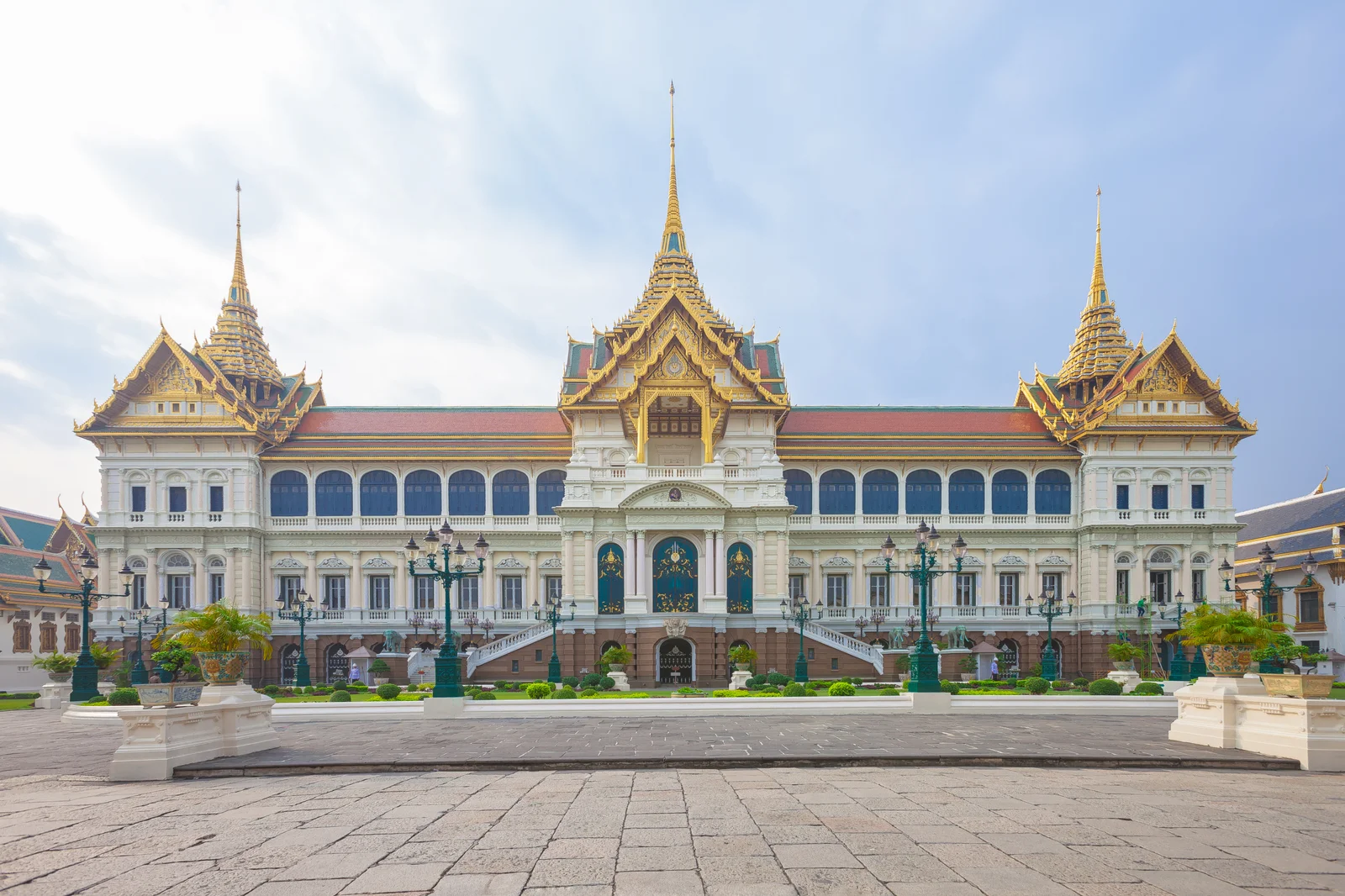
For Bangkok's centenary Rama V builds the throne hall that fuses an Italianate stone body with Thai tiered roofs, the compound's most photographed European-Thai hybrid.
-
End of the absolute monarchy
A bloodless revolution ends absolute rule; the working royal residence had already shifted to Dusit, leaving the Grand Palace to ceremonial duty.
-
A king dies at Boromphiman
King Ananda Mahidol (Rama VIII) is found dead in the palace's Boromphiman Hall, an event that sealed its transition from a lived-in home to a ceremonial stage.
- 2016-2017
A nation mourns Rama IX
The palace hosts the year-long lying-in-state and royal cremation of King Bhumibol Adulyadej, drawing millions of mourners to Sanam Luang beside the walls.
Historical Significance
For 150 years the Grand Palace was the literal centre of the Thai kingdom - the place where kings were crowned, where the court lived and governed, and where the nation's guardian image, the Emerald Buddha, was enshrined. Rama I laid it out in 1782 in deliberate imitation of the lost royal city of Ayutthaya, sacked by Burmese armies fifteen years earlier, so that the new capital on Rattanakosin Island could inherit the prestige of the old one. Every later reign added to it: Rama III lined the temple cloister with the 178-panel Ramakien mural, Rama IV built the Phra Mondop scripture library and a scale model of Angkor Wat, and Rama V raised the Italianate Chakri Maha Prasat throne hall for Bangkok's 1882 centenary.
The compound is far more than a museum. It remains an active ceremonial stage: the King still changes the Emerald Buddha's three gold seasonal robes in person, the Coronation of Rama X was proclaimed here in 2019, and in 2016-2017 the palace hosted the year-long lying-in-state and royal cremation of King Bhumibol Adulyadej, drawing millions of mourners to neighbouring Sanam Luang. Grasping this living royal role - not just admiring the gilding - is what turns a bewildering hour of glare and crowds into a coherent story, which is why most visitors pair the palace with a licensed guide.
Architecture
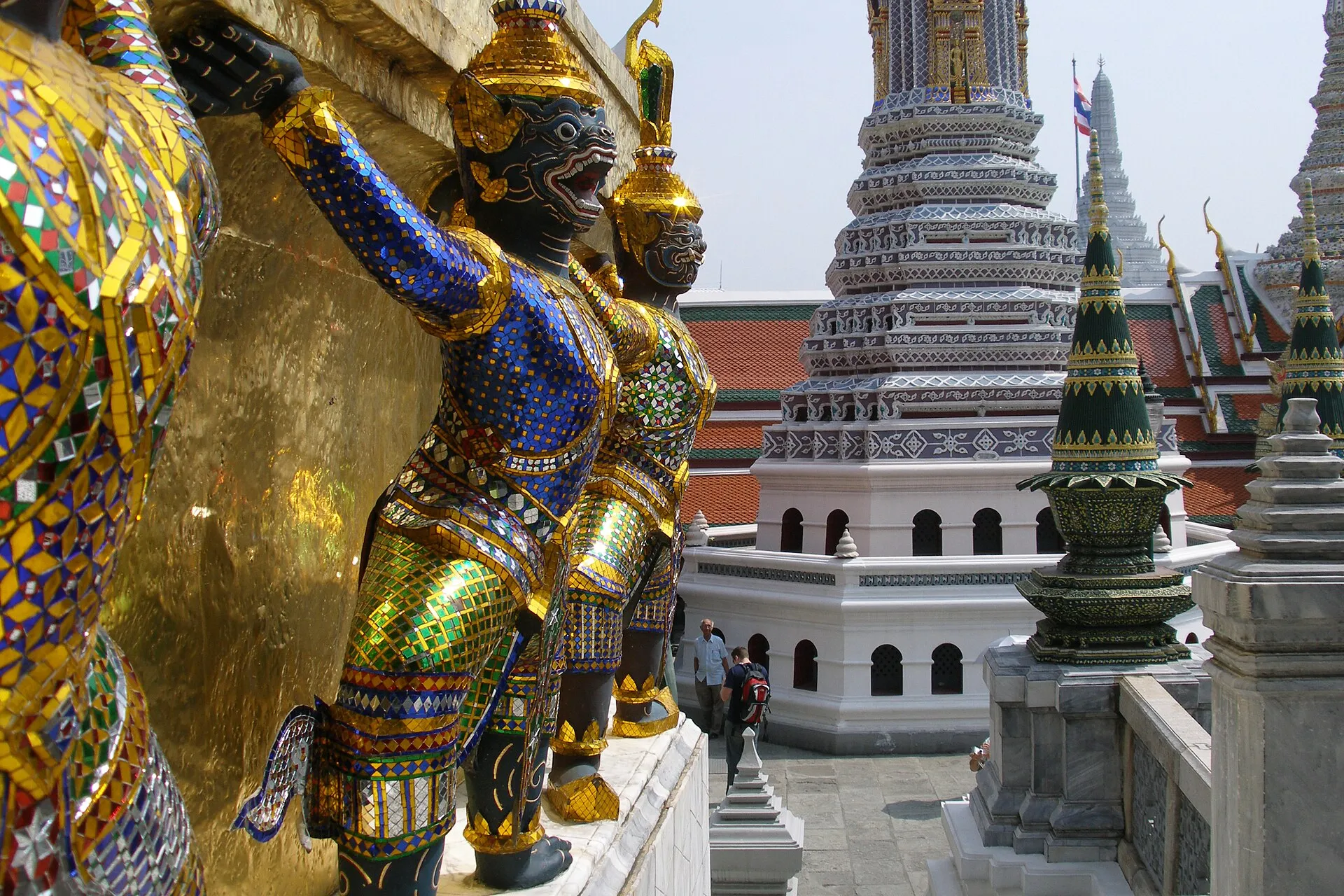
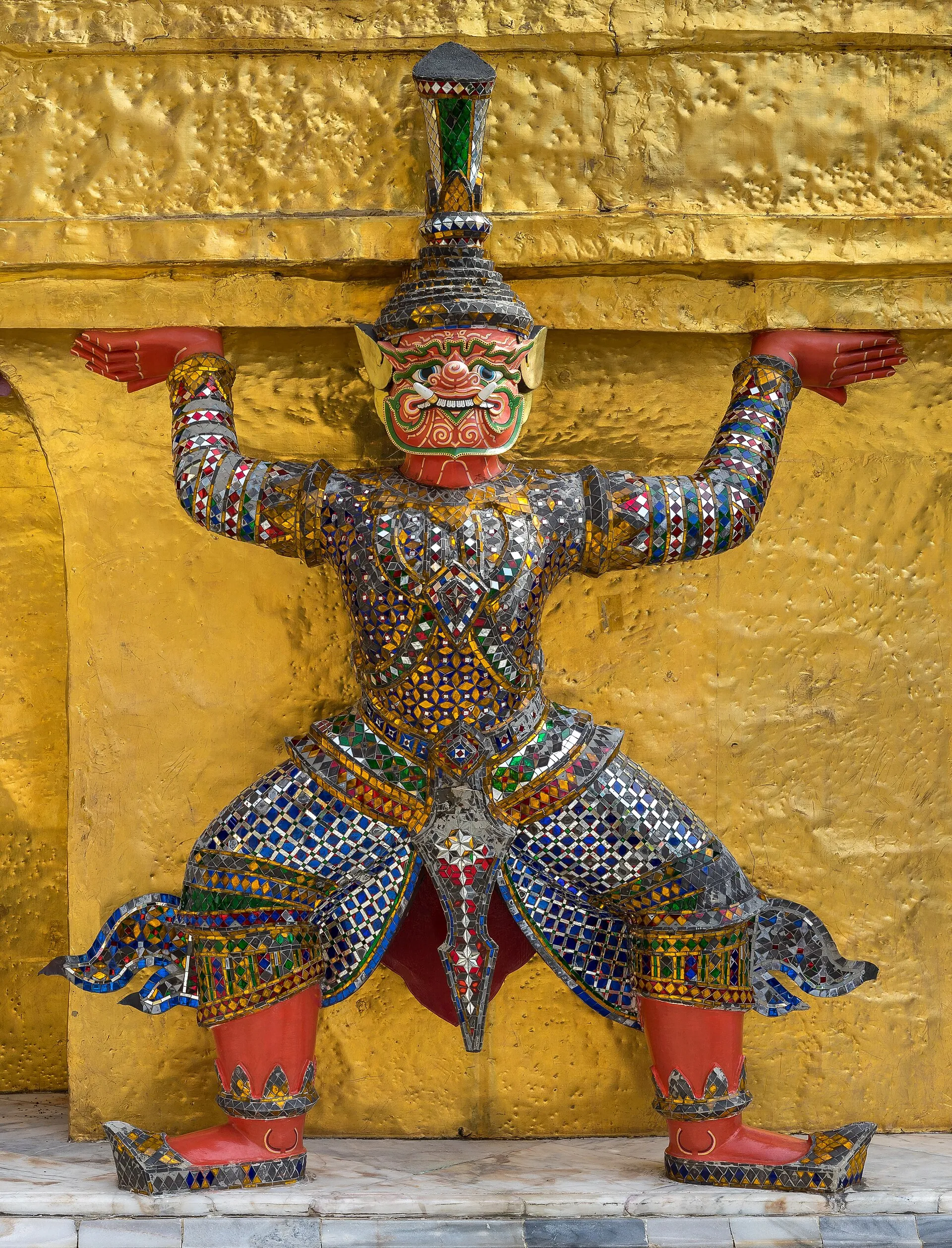
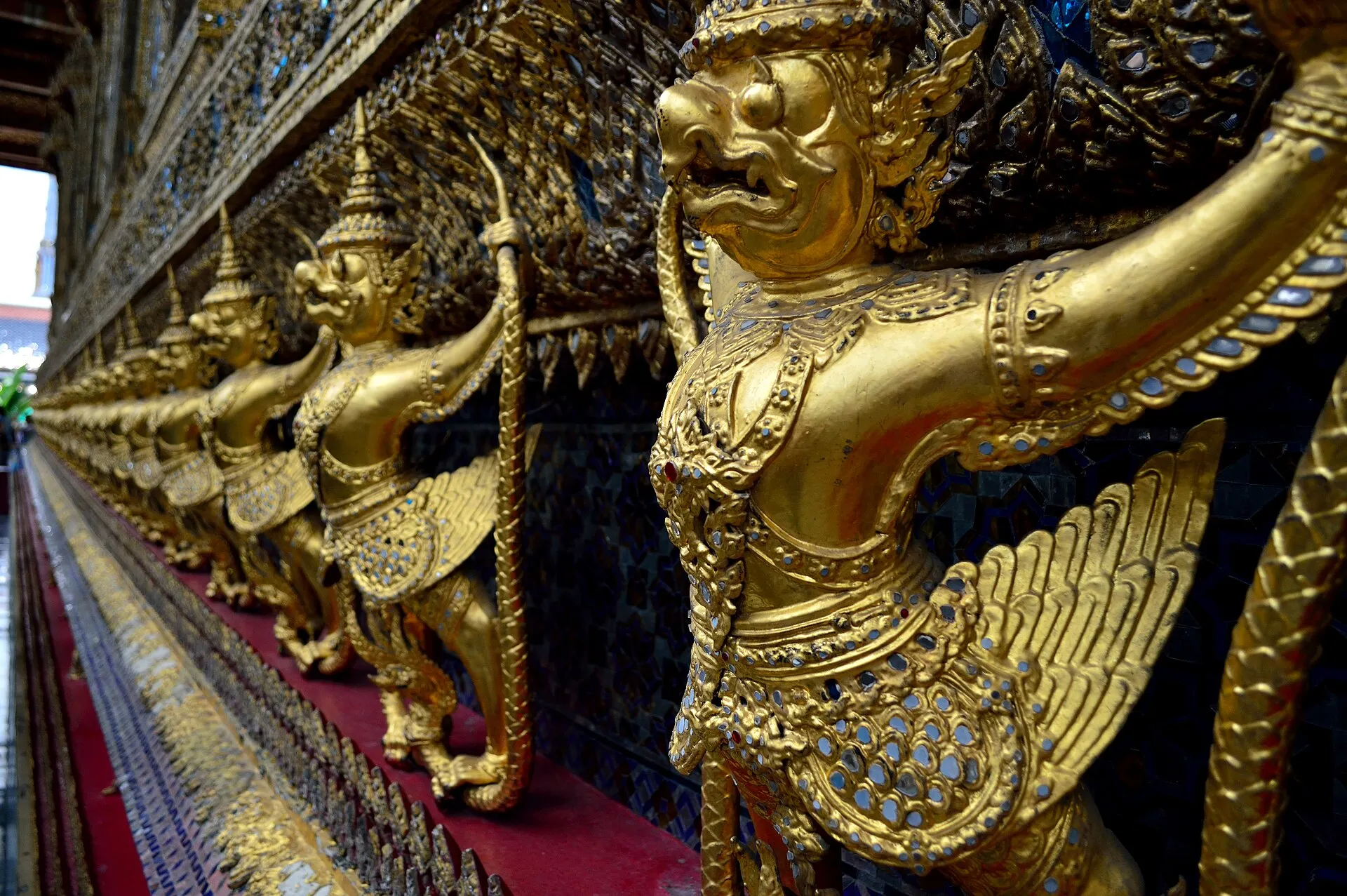
The walled compound splits into a sacred half and a residential half. Just inside the Na Phra Lan gate stands Wat Phra Kaew, the royal chapel, a dense cluster of gilded spires where the Emerald Buddha - a 66-centimetre figure carved from a single block of green jade - sits high on a golden altar. Despite the name the image is jade rather than emerald, and it surfaced by accident: the chronicles say a lightning strike in 1434 cracked the plaster of a chedi in Chiang Rai to reveal the green figure beneath, which then spent three centuries shuttling between Lampang, Chiang Mai and the Lao capitals of Luang Prabang and Vientiane before General Chao Phraya Chakri seized it from Vientiane in 1779 and carried it to Taksin's capital at Thonburi; as Rama I he moved it across the river to his new capital, Bangkok, and in 1784 enshrined it in Wat Phra Kaew, the temple built to hold it. Around it rise the mosaic-clad Phra Si Rattana Chedi, a Sri Lankan-style golden stupa enshrining a relic of the Buddha; the Phra Mondop library with its mother-of-pearl doors; and a stone model of Angkor Wat that Rama IV ordered built in the 1860s, when the Khmer temple still lay in territory Bangkok controlled - a miniature claim of sovereignty that outlasted the suzerainty it was meant to advertise, since Siam ceded the Angkor provinces to French Cambodia within a generation. The cloister framing the courtyard carries the 178 Ramakien mural panels and is guarded at its gates by six-metre yaksha demons in glass-and-gold armour, while rows of gilded garudas grapple with nagas along the base of the ordination hall. Uniquely among Thai temples, Wat Phra Kaew has no resident monks and no monastic living quarters - it is purely a royal chapel, which is why the courtyard reads more like a walled treasury of relics and regalia than a working monastery.
Beyond the temple wall the architecture shifts register into the royal residence proper. The Chakri Maha Prasat throne hall marries an Italianate marble body with three Thai tiered-and-spired roofs - a Victorian-era hybrid Rama V built for the 1882 centenary - while the earlier Dusit Maha Prasat is pure Thai, a cruciform hall crowned by a seven-tiered spire and still used for royal lyings-in-state. Gold leaf, mirrored-glass mosaic and hand-glazed ceramic tile cover almost every surface, a decorative density that rewards slow, unhurried looking.
Grand Palace Bangkok in Pictures
When to Visit
The complex is open daily from 8:30 AM to 3:30 PM, with the last tickets sold at 3:00 PM and no lunchtime closure. The single smartest move is to join the queue before the 8:30 AM opening: you win a roughly hour-long head start over the tour coaches, and you cross the shadeless courtyards while the air is still merely warm rather than punishing. From about 10:00 AM to 1:00 PM the crowds thicken and the open stone bakes in the sun, so a late-morning arrival means shuffling through packed cloisters in the worst of the heat.
Parts of the grounds close without much notice for royal ceremonies and state occasions, so if your itinerary is tight it is worth checking the official schedule the evening before. Budget two to three hours to walk Wat Phra Kaew and the throne-hall courtyard at a reasonable pace, or closer to four hours if a guide is unpacking the murals and interiors panel by panel.
Admission and Costs
A single 500 THB (about $15) ticket covers the entire walled complex - the Temple of the Emerald Buddha (Wat Phra Kaew), the outer-court throne halls, and the Queen Sirikit Museum of Textiles just inside the gate - and it is valid only on the day of purchase, so there is no returning the next morning on the same stub. Children under 120 centimetres tall enter free. If you are exploring without a human guide, an audio guide rents for around 200 THB at the entrance and walks you through the main buildings. Two small on-site museums ride along with the same stub and rarely make it onto itineraries: the Wat Phra Kaew Museum near the exit, which displays the Emerald Buddha's retired seasonal robes, scale models of the compound and the tusks of royal white elephants, and the Pavilion of Regalia, Royal Decorations and Coins by the entrance. One thing the 500 THB ticket no longer buys is Vimanmek Mansion, the golden-teak royal villa in Dusit that older guidebooks still bundle in - it has been closed to visitors since 2016, so do not plan a same-ticket detour there.
A guided small-group tour typically runs 800-1,500 THB per person for roughly three hours and usually bundles the skip-the-line handling, while a private guide costs 2,500-4,000 THB for a party of up to four, with the palace entrance ticket paid separately on top. Whichever you choose, buy the entrance ticket only at the official window inside the Na Phra Lan gate and ignore anyone on the street offering tickets or telling you the palace is shut.
The Case for a Guide
The Grand Palace's gilded spires and intricate murals carry layers of Buddhist cosmology, dynastic symbolism, and royal ceremony that stay locked away without someone to read them aloud for you.
- The Emerald Buddha's three robes: The 66-centimetre jade figure is dressed in a different solid-gold costume for the hot, cool and rainy seasons, and only the King may change them, climbing to the altar himself on the first waning-moon day of the 4th, 8th and 12th lunar months — roughly March, July and November. A good guide tells you which robe the image is wearing the morning you visit and what the change is meant to summon — rain for the rice fields, relief from the April heat — so a distant silhouette becomes a working part of the royal year.
- Reading the Chakri emblem: The discus-and-trident crest repeated across gables, gates and finials fuses the weapons of Vishnu and Shiva into a single sign of the dynasty's cosmic authority. Once it is pointed out you start noticing it everywhere, and the compound stops being a jumble of gold and resolves into a coherent statement about the king as the embodiment of dharma on earth.
- Following the Ramakien clockwise: The 178 cloister panels are not wallpaper but a continuous comic strip of the Thai Ramayana, read in sequence from the north gate. Walking the wall in story order — Hanuman's burning tail, the ten-headed demon Thotsakan, the siege of Longka — is the difference between glancing at faded paint and following a plot, and it surfaces the Thai twists that set this telling apart from the Indian original.
- Why the dress code exists: Covered shoulders, knees and ankles are less about modesty than about marking the compound as consecrated ground, sealed off from the ordinary city outside the wall. Hearing that logic on the way in makes the sarong booth feel like a threshold you cross rather than a tourist tax you pay.
- The demons at the gate: The six-metre yaksha in glass-and-gold armour flanking the temple doors are named characters from the Ramakien, posted as spirit-guards against anything malevolent trying to slip inside. Each carries a colour and a weapon that fixes its identity, so a row of look-alike giants turns into a cast you can tell apart.
Tips for Visitors
The dress code is enforced at the gate, not merely suggested: shoulders, knees and ankles must be covered, which rules out shorts, ripped jeans, sleeveless tops and any see-through fabric. Turn up under-dressed and you are sent to a booth that lends sarongs and trousers against a refundable deposit, so a compliant outfit saves you a detour first thing in the morning. Because you remove your shoes to step inside the temple buildings, easy slip-on footwear beats laced shoes, and since the courtyards offer almost no shade in Bangkok's 32°C-plus humidity, carry water and wear a hat. When the glare gets too much, the air-conditioned Queen Sirikit Museum of Textiles just inside the Na Phra Lan gate is covered by your ticket and makes a welcome mid-visit cool-down, and the small Wat Phra Kaew Museum near the exit gives you a second air-conditioned pause before you step back into the heat.
Inside the temple, treat the ground as consecrated: never point your feet toward a Buddha image or sit with your legs stretched toward the altars, and remember that photography is fine across the compound except inside the Emerald Buddha ordination hall, where cameras must stay down. On the street outside, ignore any tuk-tuk driver who insists the palace is "closed today" and offers a cut-price temple tour instead - it is a long-running scam, and the palace keeps its posted hours. Large bags must be checked at the entrance, so travel light.
Getting there takes a little planning because the palace has no nearby BTS Skytrain stop. The smoothest approaches are the Chao Phraya Express Boat to Tha Chang pier (N9), a two-minute walk from the gate, or the MRT Blue Line to Sanam Chai station, about a 15-minute walk through the old town of Bangkok; metered taxis and tuk-tuks reach the Na Phra Lan entrance but crawl through the heavy midday traffic around Sanam Luang. Because the palace empties by mid-afternoon, most visitors chain it with Wat Pho and its reclining Buddha, a ten-minute walk south, then the cross-river ferry to Wat Arun - and a guide will sequence that route so you are never doubling back.
Frequently Asked Questions
What is the best season to visit the Grand Palace in Bangkok?
November through February is the optimal window, when Bangkok's cool season brings temperatures in the high 20s Celsius and lower humidity that make the open-air palace courtyards far more bearable. The Grand Palace compound offers virtually no shade, so visiting during the hot season (March-May) or monsoon season (June-October) means contending with either searing 38°C heat or sudden heavy downpours that flood the walkways between buildings.
When can visitors tour Grand Palace Bangkok?
The complex opens daily from 8:30 AM to 3:30 PM, with last admission at 3:00 PM, and it does not close for a lunch break. Aim to be in the queue before the 8:30 AM opening: you get an hour of relative calm and cooler air before the tour buses arrive, and the shadeless courtyards become punishing between roughly 10:00 AM and 1:00 PM. The palace occasionally shuts parts of the grounds for royal ceremonies and state funerals, so it is worth checking the official schedule the day before if your trip is time-sensitive.
How do you get to the Grand Palace without a Skytrain stop nearby?
No BTS Skytrain line reaches Rattanakosin Island, so the two smoothest arrivals are by water or the newer metro. The Chao Phraya Express Boat drops you at Tha Chang pier (N9), a two-minute walk from the Na Phra Lan gate, and the orange-flag boats are the quickest along the river; alternatively the MRT Blue Line runs to Sanam Chai station, a flat 15-minute walk through the old town of Bangkok. Metered taxis and tuk-tuks reach the entrance but crawl through the heavy traffic around Sanam Luang from mid-morning, so the river or the metro usually beats the road.
Why is it worth hiring a guide for Grand Palace Bangkok?
The gilded halls give up almost nothing on their own. A licensed guide unpacks 240 years of Chakri royal history, decodes the Ramakien murals that wrap the cloister, and explains why the Emerald Buddha is dressed in three different seasonal robes changed by the King himself. They also handle the practical friction, steering you past the fake-ticket touts, timing the route to dodge the worst of the crowds, and pointing out photography rules so you do not get stopped inside Wat Phra Kaew.
What should visitors know before visiting Grand Palace Bangkok?
The dress code is enforced strictly at the gate: shoulders, knees and ankles must be covered, so leave the shorts, ripped jeans, sleeveless tops and see-through fabric at the hotel. If you turn up under-dressed you will be sent to a booth that lends sarongs and trousers against a refundable deposit, which eats into your morning. Bring slip-on shoes because you remove footwear to enter the temple buildings, carry water for the open courtyards, and ignore any tuk-tuk driver who tells you the palace is closed today - it is a well-worn scam.
How much time should I budget, and what pairs well with the Grand Palace?
Plan on two to three hours for the palace and Wat Phra Kaew alone, or closer to four with a guide who works through the murals and throne halls. Because the palace opens early and empties by mid-afternoon, it slots naturally into a Rattanakosin walking morning: Wat Pho and its reclining Buddha are a ten-minute walk south, and the Chao Phraya cross-river ferry from Tha Tien pier drops you at Wat Arun in a few minutes. Doing the palace first, while you are fresh and it is cool, makes the rest of the day easier.
What does the 500 THB Grand Palace ticket include?
The single 500 THB ticket covers the whole walled complex: the Temple of the Emerald Buddha (Wat Phra Kaew), the outer-court throne halls including the Chakri Maha Prasat, and the Queen Sirikit Museum of Textiles just inside the entrance. It also admits you to two often-overlooked on-site museums - the Wat Phra Kaew Museum near the exit and the Pavilion of Regalia, Royal Decorations and Coins - but it no longer covers Vimanmek Mansion in Dusit, which many older guides still list yet which has been closed since 2016. The ticket is valid only on the day of purchase, so there is no coming back tomorrow on the same stub. Children under 120 cm enter free, and an optional audio guide rents for around 200 THB if you are exploring without a human guide.
Do you need to book Grand Palace tickets in advance?
No advance booking is needed for entry: there is one official ticket window inside the Na Phra Lan gate, it does not sell out, and buying on the spot the moment you arrive is the norm. Because there is no online queue to skip, the only tickets worth pre-arranging are guided tours, where the guide covers your entrance and times your route around the crowds. Treat anyone on the street selling palace tickets, or claiming the palace is closed for a holiday and offering an alternative temple tour, as a scam - the official window is the only place to pay, and the palace keeps its posted 8:30 AM to 3:30 PM hours.
What can you pair with the Grand Palace for a full day in Bangkok?
Because the palace empties by mid-afternoon, most itineraries continue rather than stop at the gate. The natural follow-on is the rest of the Rattanakosin temple trio: Wat Pho and its reclining Buddha are a ten-minute walk south, and the cross-river ferry from Tha Tien pier reaches Wat Arun in a few minutes. If you have already done the temples, the cooler afternoon suits Bangkok's markets - on a Saturday or Sunday the sprawling Chatuchak weekend market and its 15,000 stalls sit a 30-minute MRT ride north - while the floating markets outside the city make a better separate half-day, since the best of them wind down by late morning and lie too far out to bolt onto the same day. Doing the shadeless palace first and the shaded market or riverside later keeps you out of the worst midday heat.