
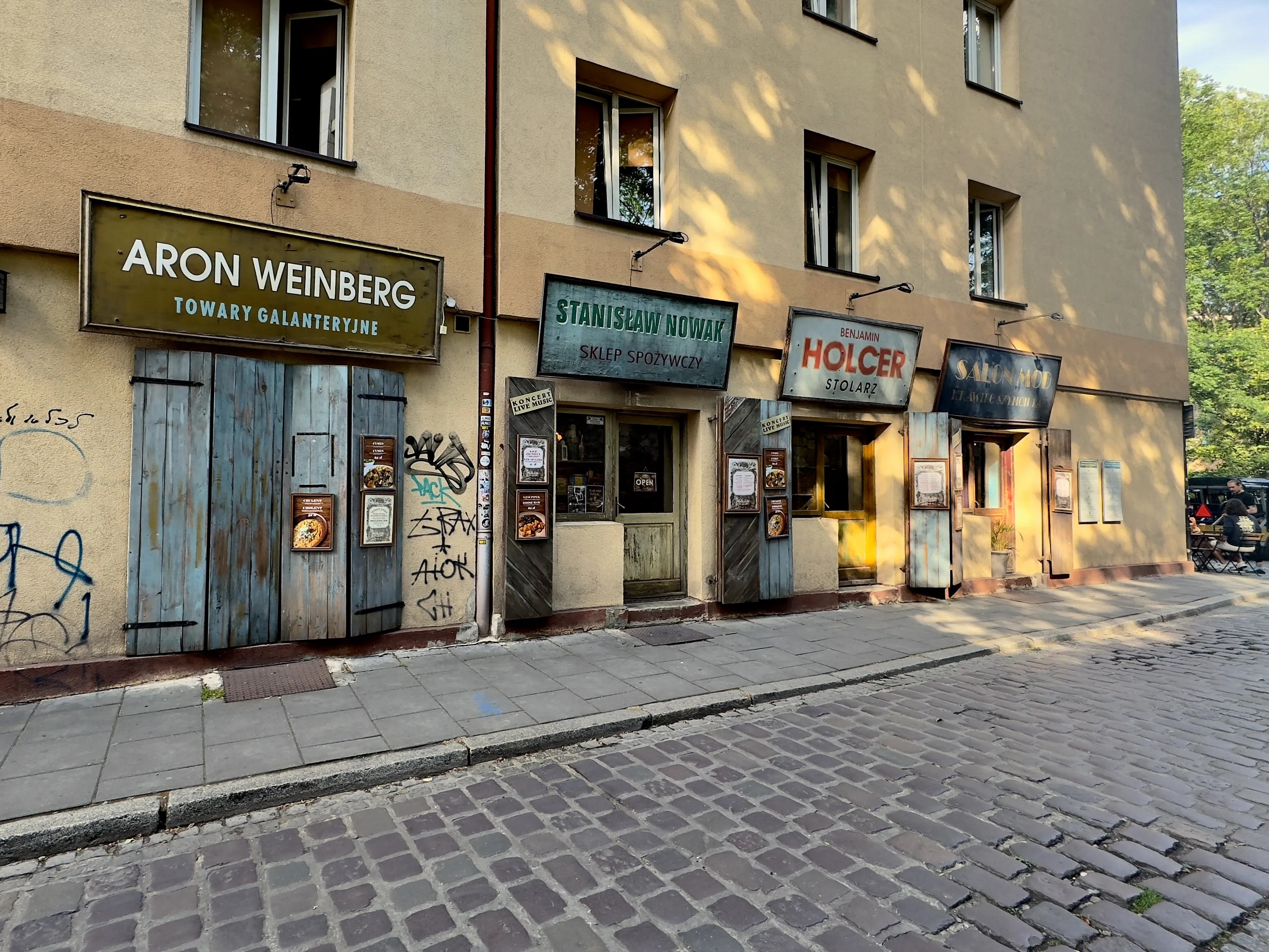
Local Life
Kazimierz represents the most completely preserved urban fabric of pre-war Central European Jewish life that survived the Holocaust. Seven synagogues remain standing within a few blocks of each other — the Old Synagogue (1407, rebuilt 1557), the Remuh (1553), the High Synagogue (1556), the Kupa (1643), the Isaac (1644), the Tempel (1862), and the Popper (1620) — an extraordinary concentration that no other European city can match. The Remuh Cemetery, established in 1551, contains tombstones inscribed in Hebrew and Aramaic spanning four centuries, including the tomb of Rabbi Moses Isserles (the Remu), one of the greatest codifiers of Jewish law in history and the reason Kazimierz was known across the Jewish world as a city of learning. Steven Spielberg filmed much of Schindler's List in Kazimierz and the adjacent Podgórze district in 1993, bringing global attention to its architectural survival.
When to Visit
Kazimierz is a living neighbourhood and can be explored at any hour; the best morning light for the Remuh Cemetery is 8–10 AM before tour groups arrive. Old Synagogue Museum: Sunday–Friday 9 AM–5 PM (summer hours), closed Saturday. Remuh Synagogue: Monday–Friday 9 AM–6 PM, Sunday 9 AM–2 PM (closed Saturday). The neighbourhood's café culture is at its most vibrant on weekend evenings from April through October. The Jewish Culture Festival takes place annually in late June and early July — book accommodation and tours months in advance if visiting during this period.
Admission and Costs
The Old Synagogue Museum charges 20 PLN adults / 10 PLN reduced entry. Remuh Synagogue entry is 5 PLN with a small additional fee for the cemetery. Most other synagogue museums charge 10–15 PLN for entry. A guided group walk of Kazimierz (2 hours) typically costs 50–80 PLN per person. Combined Kazimierz and Podgórze (Schindler's Factory) guided tours run 80–120 PLN per person for 3–4 hours. Private guides: 300–500 PLN for up to 6 people for a 2.5-hour Kazimierz walk. The Schindler Factory Museum charges 22 PLN adults / 16 PLN reduced, with online advance booking strongly recommended.
The Case for a Guide
A guide with specialist knowledge of Jewish history and culture transforms Kazimierz from an appealing neighbourhood walk into a structured encounter with one of the most complex chapters in European history:
- Reading the synagogues — Each of the seven synagogues has a distinct architectural and communal history; a guide explains their original function, the communities they served, and what happened to them
- The Remuh Cemetery — Decoding Hebrew inscriptions and understanding the significance of symbolic carvings on sixteenth-century gravestones requires specialist knowledge
- Kazimierz to Podgórze — Connecting the neighbourhood to the wartime ghetto story and the Schindler Factory provides the historical arc that gives the physical evidence its full meaning
- Contemporary revival — A local guide can explain how and why Kazimierz has reinvented itself and what the Jewish cultural revival means in a city where almost no Jews live permanently
Tips for Visitors
Wear comfortable shoes — the cobbled streets of Kazimierz are uneven and a good walk takes several kilometres. Bring cash; many of the smaller cafes and synagogue museums are cash-only. Plac Nowy (New Square) is the neighbourhood's informal heart and its flea market on Sunday mornings is one of the best in Poland. The zapiekanka — a toasted open baguette with mushrooms and cheese — sold from windows around Plac Nowy is a Kazimierz institution and costs about 10 PLN. Women visiting the Remuh Synagogue should bring a scarf; men should bring a head covering (kippot are usually available at the door). Most café and restaurant owners in Kazimierz speak good English and are happy to share their perspective on the neighbourhood's recent transformation.
Frequently Asked Questions
When is the best time to visit Kazimierz?
Kazimierz is a living neighbourhood that rewards visits at any time of year, but the contrast between daytime heritage sites and evening café and bar culture is most enjoyable from late spring through early autumn. The Jewish Culture Festival held in Kazimierz each June–July draws musicians, scholars, and visitors from around the world and transforms the district's courtyards and synagogue courtyards into performance spaces. Early mornings are best for the Old Cemetery, before tour groups arrive. Weekends bring more street market energy to Plac Nowy, the neighbourhood's market square.
What is the most important site to visit in Kazimierz?
The Old Synagogue on Szeroka Street — the oldest surviving synagogue in Poland, now a museum of Jewish history and culture — is the most historically significant single building. The Remuh Synagogue, still in active use, and its adjacent Renaissance cemetery are equally moving: many of the tombs date from the sixteenth century and survived the war when local residents concealed the cemetery behind a wall of broken tombstones.
How does Kazimierz connect to the Holocaust?
Kazimierz was the historic heart of Kraków's Jewish community, but during the Nazi occupation of 1941–42, the city's Jewish population was forcibly relocated to the Podgórze ghetto across the Vistula river — a short walk from Kazimierz. The Ghetto Heroes Square and the Schindler Factory Museum (telling the story depicted in Steven Spielberg's Schindler's List) are in Podgórze, and most guided walks combine Kazimierz and Podgórze to tell the full story. Connecting these sites requires a guide.