
Tips for Visitors
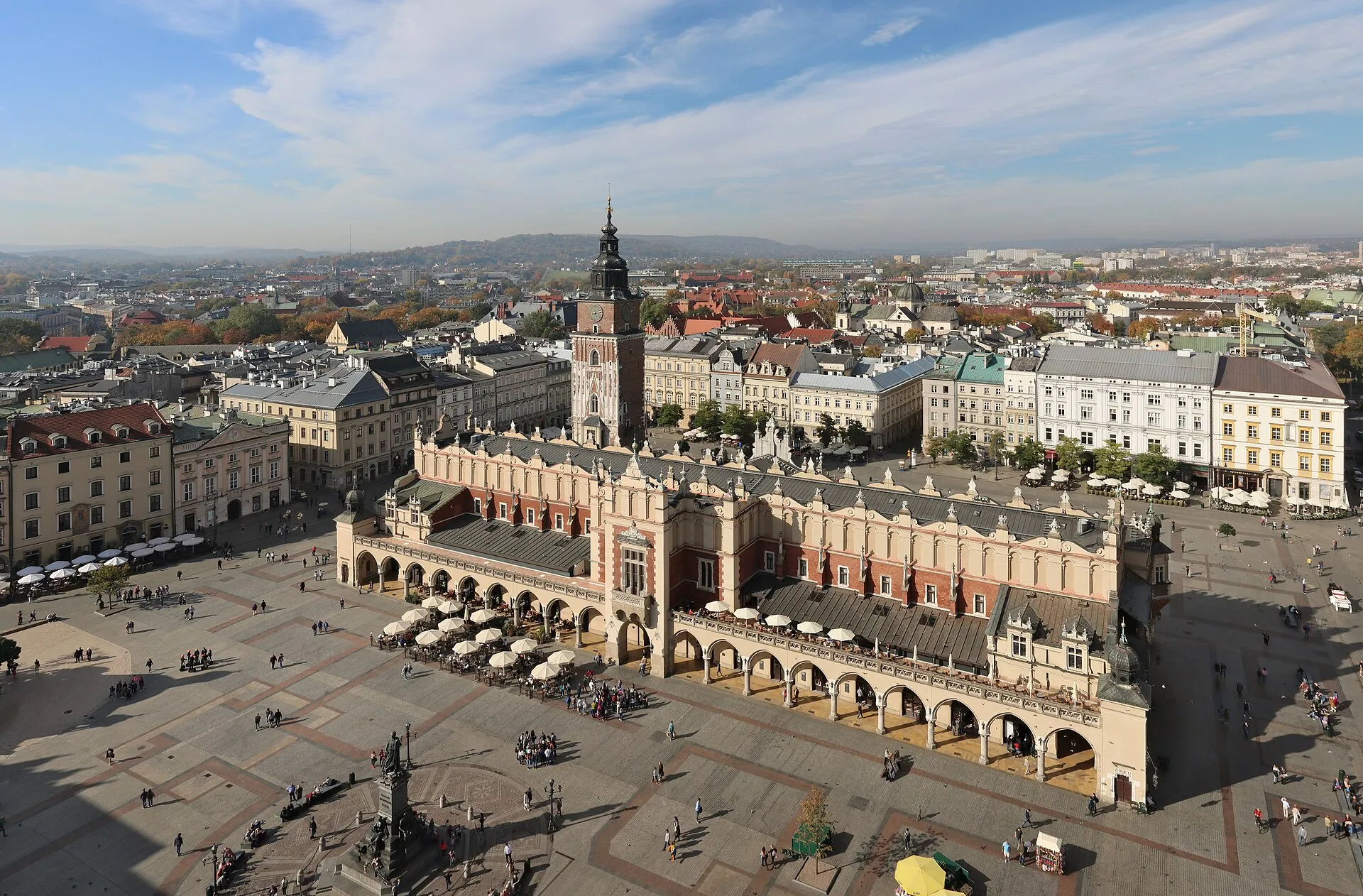
The amber stalls inside the Cloth Hall's arcades are a legitimate place to buy genuine Baltic amber, but compare prices and quality between multiple stalls before purchasing. Genuine natural amber can be tested by rubbing it vigorously — it produces a faint pine resin smell; plastics and resins do not. The view from St Mary's Basilica tower to the north of the Cloth Hall is one of the finest in Kraków, looking directly down onto the building's attic ornament from above. The tower is open to visitors for a small fee and requires a short climb. The Horse-Drawn Carriage rides around the square are a genuine local institution and moderately expensive; a guide can negotiate fair rates.
When to Visit
Market stalls (ground floor): Open daily approximately 9 AM–9 PM in summer, 10 AM–7 PM in winter. Gallery of 19th-century Polish Painting: Tuesday–Sunday 10 AM–6 PM, closed Monday. The market and arcades are accessible at any time of day; early mornings before tourist groups arrive (before 10 AM on weekdays) offer the most relaxed atmosphere for the square itself. The gallery is free on Tuesdays. Christmas market stalls begin operating in late November and the square is at its most atmospheric in the evenings under illumination.
Admission and Costs
The market stalls charge no entry — you pay only for purchases. Gallery of 19th-century Polish Painting: 30 PLN adults / 20 PLN reduced (free entry Tuesdays). Market stall goods range from 15 PLN for simple amber earrings to 300+ PLN for large hand-crafted amber necklaces. A guided walk of the market square including the Cloth Hall's history and context typically runs 40–70 PLN per person as part of a broader Kraków Old Town tour; the Cloth Hall is nearly always included in any guided Old Town walk. Private guide for a focused Cloth Hall and market square tour: 200–350 PLN for up to 6 people (1–1.5 hours).
The Case for a Guide
A guide brings the Cloth Hall to life in ways that the physical building alone cannot convey:
- Market square orientation — Understanding the spatial logic of Rynek Główny, with its church towers, town hall tower, and the Cloth Hall at its centre, requires explanation of how medieval market squares were planned and used
- Amber expertise — A guide who knows the market can help visitors identify genuine Baltic amber versus pressed amber or resin imitations — a genuinely useful skill given the prevalence of both in the stalls
- Gallery highlights — The Gallery upstairs contains some of Poland's most important paintings; a guide who can identify Matejko's major works and explain their political context at the time of painting (when Poland had been erased from the map) adds enormous depth
- Square history — The stories attached to the square — royal coronation processions, medieval jousting tournaments, nineteenth-century coffee house culture — give the space a narrative dimension
Frequently Asked Questions
When is the best time to visit the Cloth Hall?
The ground-floor market is open daily and is busiest midday and weekends during summer. For shopping, late afternoon weekdays in spring or autumn means fewer crowds and more bargaining room. The Gallery of 19th-century Polish Painting upstairs (a branch of the National Museum) is best visited on weekday mornings. December transforms the square and Cloth Hall arcades into one of Poland's finest Christmas markets, with mulled wine, folk crafts, and wooden figurines filling the space from late November through the end of the year.
What is sold in the Cloth Hall today?
The ground floor contains around 40 permanent stalls selling Polish handicrafts, folk art, and souvenirs — amber jewellery (Poland is one of the world's largest amber producers), hand-painted wooden boxes, lace, embroidered textiles, leather goods, and traditional Polish pottery. Quality varies between stalls; a guide can point out which sellers offer genuine artisan work versus mass-produced goods. Prices are negotiable, especially for larger purchases.
What is in the Gallery of Polish Painting upstairs?
The upper floor holds a significant collection of Polish Romantic and Realist painting from the 19th century, including major works by Jan Matejko — Poland's most celebrated history painter, whose vast canvases documenting decisive moments in Polish history include Battle of Grunwald (1878), arguably the most important painting in Polish national culture. Entry to the gallery is separate from the market.