
Walking Routes
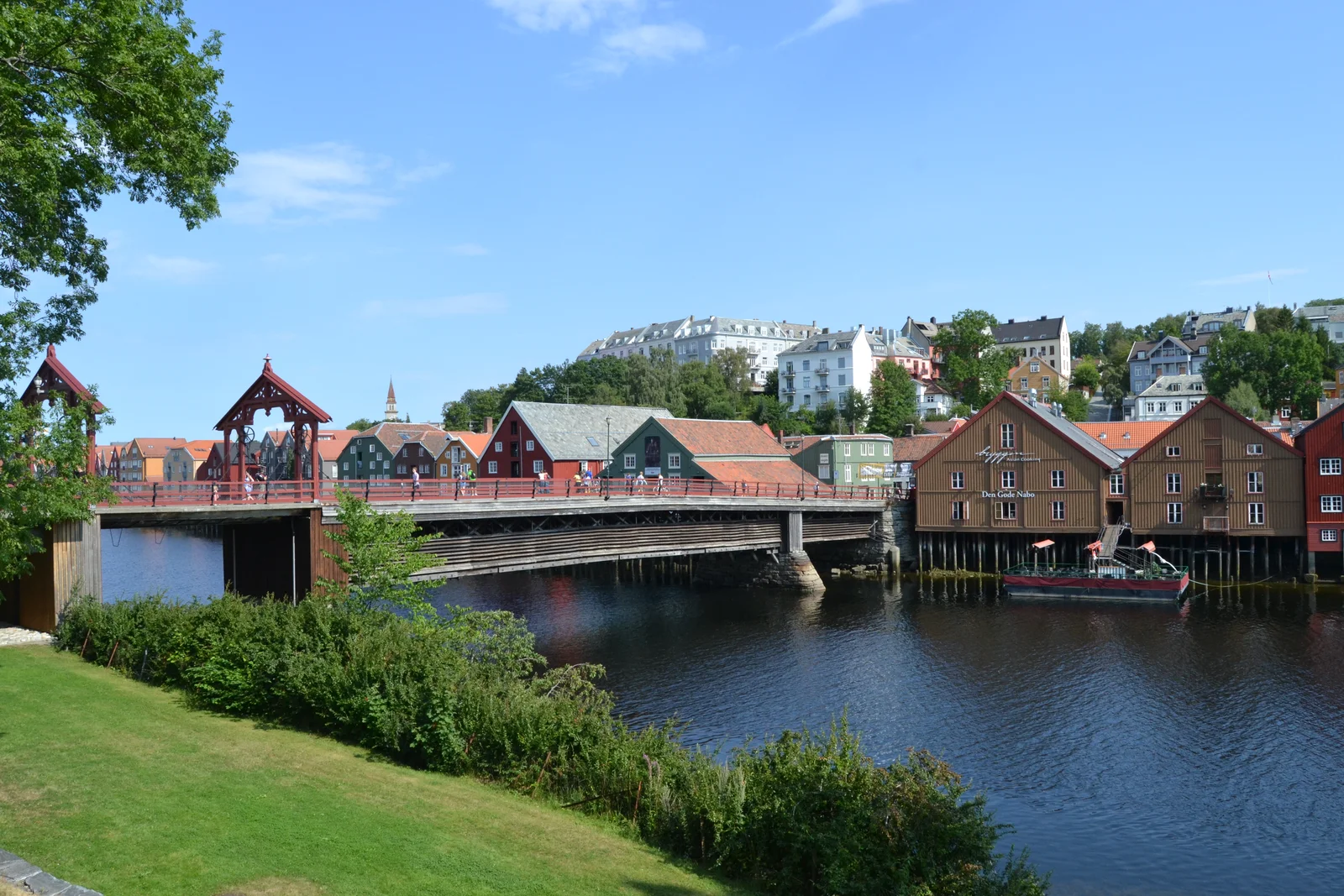
The natural circuit begins at Nidaros Cathedral, crosses the Old Town Bridge with its red portals — pausing for the postcard view up the river to the wharves — and drops into the cobbled lanes of Bakklandet on the far bank. From there you wander the streets past cafés and shops, following the riverfront for the best angles on the painted storehouses.
Those with more energy continue uphill from Bakklandet to Kristiansten Fortress, a ten- to fifteen-minute climb rewarded by a panorama over the whole scene — the wharves, the bridge, the river and the cathedral tower beyond. Returning by a different lane completes a compact, hugely rewarding loop that captures the essence of Trondheim in an hour or two on foot.
Local Life
Bakklandet's charm is that it remains a real neighbourhood rather than a preserved stage set. Saved from demolition by residents who fought off a planned motorway, its old workers' houses are now homes, studios and small independent businesses, and the quarter has a relaxed, slightly bohemian feel quite distinct from the grander city centre across the river.
The rhythm here is the daily one of a café culture famous across Norway — Trondheim's students and locals treat the coffee houses and bakeries of Bakklandet as living rooms — and of small-shop trade in antiques, crafts and second-hand goods. Understanding the district's rescue and reinvention, from dockside slum to beloved conservation area, is what gives its pretty lanes their depth, and it is a story a good guide loves to tell.
When to Visit
Bakklandet is an outdoor, all-hours quarter — the lanes and bridge are always open — but it is at its best in the long light of a summer morning or evening, when the painted wharves glow and the cafés spill onto the cobbles. Midday in peak season brings the most people, so early or late walks are quietest and most atmospheric.
The district rewards a visit in any season: snow and low winter sun suit the wooden houses, and the bridge is prettily lit in the dark months. Allow an hour or two to wander, browse and stop for coffee, longer if you fold in a meal. Because it adjoins the cathedral and sits below the fortress, it slots naturally into a half-day exploring central Trondheim on foot.
Admission and Costs
Walking Bakklandet and crossing the Old Town Bridge is entirely free, and simply strolling the lanes and photographing the wharves costs nothing — one of the best-value experiences in Trondheim. Your spending is up to you.
The quarter's real expense is its cafés and shops: a coffee and a pastry at one of the famous little coffee houses runs to around NOK 90–150 ($8–14), and a sit-down meal in a riverside restaurant naturally more. Antique and craft shops range from browsable to tempting. A guided walking tour taking in Bakklandet, usually as part of a wider city walk, costs roughly NOK 300–500 ($28–46) per person. All figures are estimates.
The Case for a Guide
A guide adds the history and the human story behind Bakklandet's pretty facades — the district's origins as a poor riverside workers' quarter, the battle in the twentieth century that saved it from the bulldozers, and the meaning of the "Gate of Happiness" on the Old Town Bridge. They know the best angles and the quietest lanes, the cafés worth stopping in, and how the quarter connects to the wider city, weaving it into a walk between Nidaros Cathedral and Kristiansten Fortress. For a district whose appeal is atmosphere and story rather than any single monument, a guide's local knowledge turns a stroll into a genuine sense of what makes Trondheim tick.
Tips for Visitors
Come for the light: shoot the wharves and the Old Town Bridge in the early morning or late evening for the warmest colours and fewest people, and try both the bridge's red portals and the riverbank below for different angles on the classic view. Wear comfortable shoes for the cobbles and the short climb.
Treat the quarter as a place to linger — pick a café, order coffee and a cinnamon bun, and watch the river — rather than a checklist. Combine the walk with Nidaros Cathedral just over the bridge and a climb to Kristiansten Fortress for the view back over the coloured houses and the cathedral spire.
Frequently Asked Questions
What is the Old Town Bridge?
The Old Town Bridge (Gamle Bybro) is Trondheim's much-loved wooden bridge over the River Nidelva, linking the cathedral side of the city to the Bakklandet quarter. The present bridge dates from 1861, replacing a 1681 original, and is famous for its red-painted gate portals — nicknamed the "Gate of Happiness" (Lykkens portal) — which frame the classic postcard view down the river to the old wharves.
What is there to do in Bakklandet?
Bakklandet is a district for wandering, browsing and lingering rather than ticking off sights. Its cobbled lanes and old wooden houses are packed with independent cafés, bakeries, antique and craft shops and small restaurants, and the riverfront wharves make one of the most photographed scenes in Norway. It is best enjoyed slowly, with a coffee and a cinnamon bun as much the point as any monument.
Is it far from the cathedral?
No — Bakklandet lies just across the river from the city centre, and the walk from Nidaros Cathedral over the Old Town Bridge takes only about ten minutes. From Bakklandet it is a short further climb up to Kristiansten Fortress, so the three sights make an easy walking circuit.