
Spiritual Significance
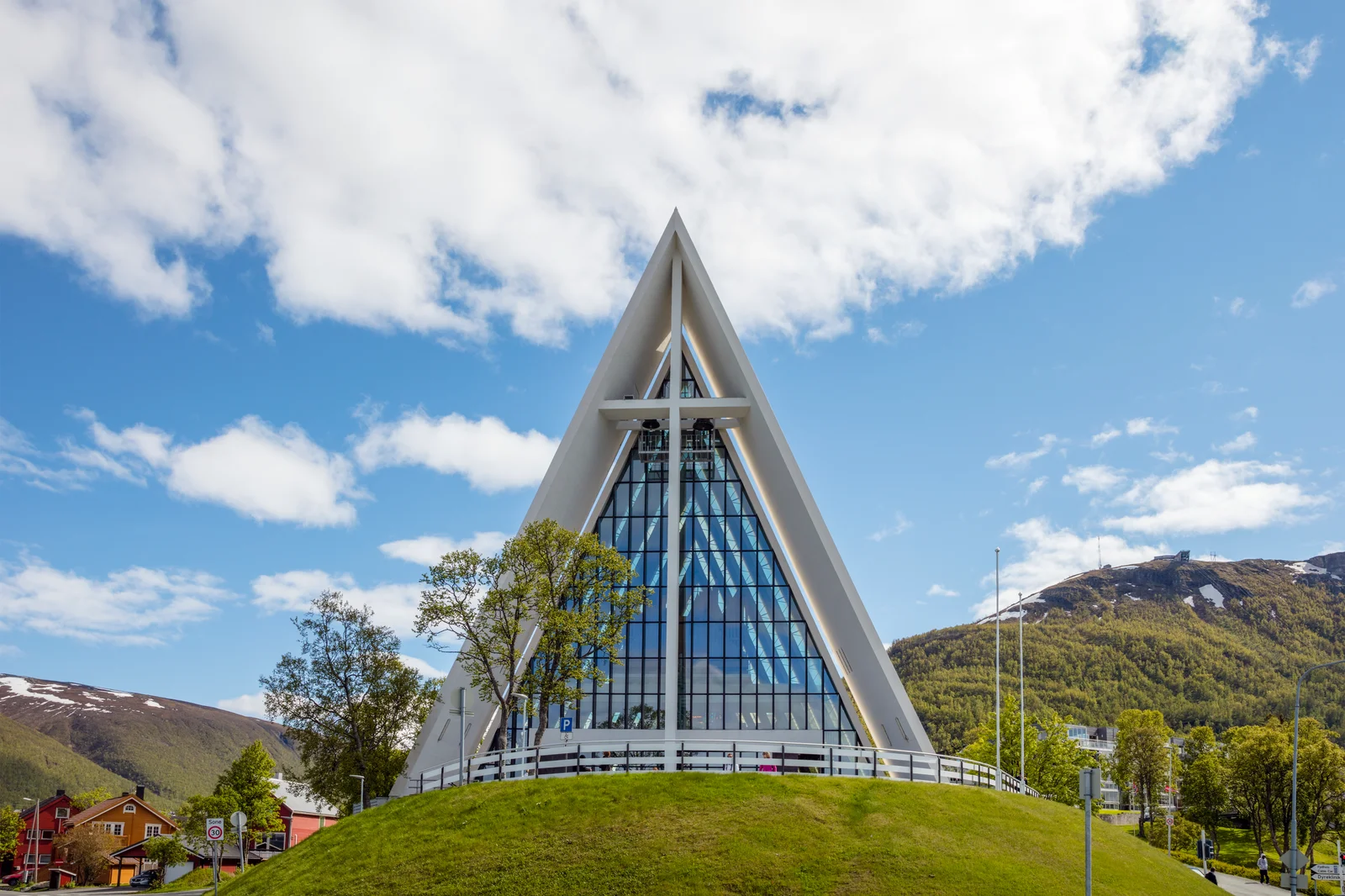
As Tromsdalen parish church, the building is first and foremost a place of Lutheran worship for the community on the mainland side of the strait, holding regular services, weddings and funerals as it has since 1965. Its architecture is not decoration but theology in built form: the ascending triangular peak draws the eye upward, and the whole structure is conceived to express aspiration and light in a land of extreme seasons of darkness and midnight sun.
That symbolism culminates in Victor Sparre's window of the Second Coming, which makes the returning, glorified Christ the literal focal point of the interior, bathing worshippers in coloured light. For a modern church the building carries an unusual spiritual charge, and its concerts of sacred and folk music extend that sense of the numinous to visitors of every faith and none who come simply to sit in the extraordinary space.
Visitor Etiquette
Because this is an active church, dress and behave as you would in any place of worship: keep your voice low, silence your phone, and remove hats inside. Photography is generally permitted for personal use, but avoid flash and never photograph a service, a wedding or people at prayer.
Sightseeing is not permitted during Sunday morning worship, though you are warmly welcome to join the service itself; at other times, be mindful of any rehearsal in progress for the evening concerts, sitting quietly rather than wandering if music is being prepared. Move calmly, don't touch the organ or altar furnishings, and leave a small donation or pay the admission that helps keep this working parish church open to the many thousands who visit each year.
When to Visit
The cathedral keeps seasonal opening hours for visitors that work around services and rehearsals, so check the current schedule before you go — it is generally open to sightseers through the afternoon and, in summer, later for concerts. It is closed to casual visits during Sunday morning worship, which anyone is welcome to attend instead.
A daytime visit takes only twenty to thirty minutes, but the building is at its most memorable during a concert, when the interior is lit and the music fills the triangular space. In winter the white exterior glows against the polar dark and often features on Northern Lights tours; in summer the midnight sun keeps it luminous around the clock. It is a five-minute walk from the base station of the Fjellheisen, so the two are easily combined.
Admission and Costs
Daytime admission for sightseeing is modest, around NOK 65–75 ($6–7) for an adult, with children usually free; entry is free if you are attending a service. Because it is a working parish church rather than a state monument, this small charge helps maintain the building.
Concerts are ticketed separately, typically NOK 200–300 ($19–28) per adult depending on the programme, and are among the most atmospheric things to do in Tromsø — booking ahead is advisable in the busy summer and Northern Lights seasons. A guided city tour that includes the cathedral usually folds the entry into its price. All figures are estimates worth confirming.
The Case for a Guide
A guide gives the Arctic Cathedral the context that its stark modern lines conceal. They explain Jan Inge Hovig's design and the Arctic imagery behind the eleven triangles, decode Victor Sparre's Second Coming window, and place the building in the story of post-war Norwegian church architecture and of Tromsø itself. Guides can advise on which concert to catch and often time a stop here as part of a wider city walk or a winter aurora tour, linking it to the Fjellheisen cable car and the Tromsø University Museum. For a landmark whose meaning is architectural and spiritual rather than obvious, that interpretation turns a quick photo stop into a genuine understanding of the far north's most famous church.
Tips for Visitors
Time your visit to catch a Midnight Sun or Northern Lights concert if you possibly can — the short evening performances show off the acoustics and the glowing interior far better than a quiet daytime look, and they are a highlight of many travellers' stay. Book tickets in advance in peak season.
Photographers should shoot the exterior from across the water on the Tromsø side for the classic view with the bridge, ideally in the low light of morning or evening (or under the aurora in winter). Inside, be quiet and respectful, especially if a rehearsal or prayer is under way. Combine the visit with a ride up the neighbouring Fjellheisen cable car for the panorama over the city.
Frequently Asked Questions
Is the Arctic Cathedral actually a cathedral?
Despite the nickname, it is not technically a cathedral — Tromsø's true cathedral is the wooden Tromsø Cathedral in the town centre. This building is officially Tromsdalen Church (Tromsdalen kirke), a parish church completed in 1965. The name "Ishavskatedralen", the Cathedral of the Arctic Ocean, arose from its dramatic form and stuck, and it is now used everywhere.
Can I attend a concert there?
Yes, and it is one of the highlights of a visit. The church hosts regular Midnight Sun Concerts in summer and Northern Lights concerts in winter, short performances of Norwegian folk music, classical pieces and sacred music that make superb use of the building's acoustics and its great glass window. Tickets are sold separately from ordinary admission and are worth booking ahead in high season.
What is the big window behind the altar?
The eastern end is filled by an enormous stained-glass window installed in 1972 and designed by the artist Victor Sparre, depicting the Second Coming — Christ's return in glory. It is one of the largest stained-glass works in Europe and floods the white interior with colour, forming the visual and spiritual focus of the whole building.