
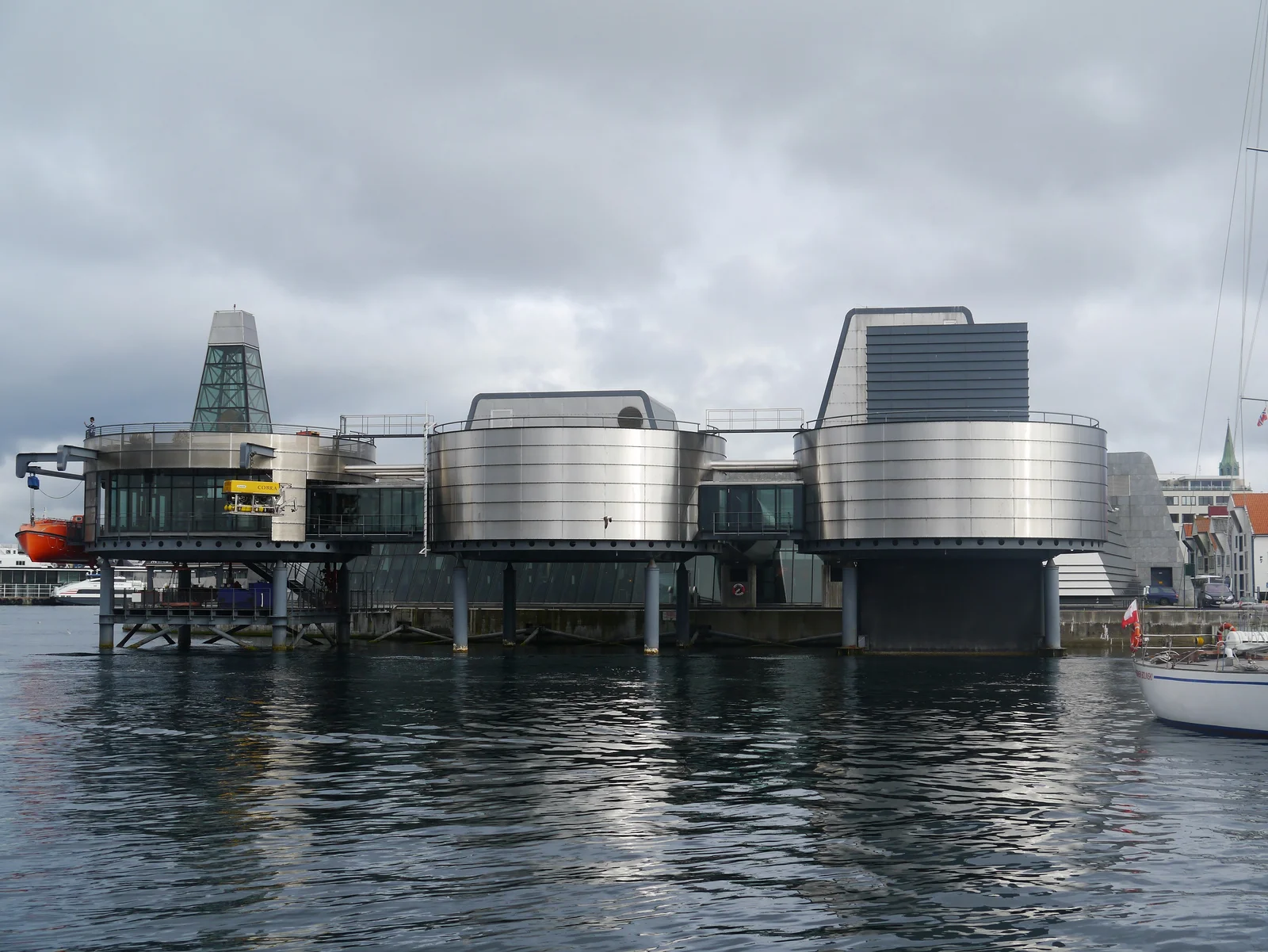
Collections Highlights
The collection's power lies in its real, full-scale objects rather than cased artefacts: sections of drill string and enormous drill bits, a genuine diving bell and the survival suits and escape capsules that speak to the danger of the work, and cutaway models of platforms that show how a rig functions from seabed to helideck. Geological exhibits use rock cores and animated models to explain how hydrocarbons form and how seismic surveying locates them.
A recurring theme is the human cost and risk — the 1980 capsize of the Alexander L. Kielland accommodation platform, which killed 123 workers, is treated with due seriousness — alongside the extraordinary wealth the industry generated. Outside, the Geopark repurposes actual decommissioned rig parts into a sculptural playground, one of the most imaginative pieces of industrial reuse anywhere on a Norwegian waterfront.
Guided Tours
The museum is designed for independent, self-paced visiting, with clear multilingual labelling and interactive stations that reward unhurried exploration, so most visitors do not need a guide to get a great deal from it. Films and hands-on exhibits carry much of the interpretation on their own.
For groups and school parties, the museum offers guided tours and educational programmes that can be booked in advance, and a knowledgeable city guide will often build the museum into a wider Stavanger walking tour that connects the oil story to the harbour, the old town and the modern city. That pairing is the most rewarding way to see it: the museum supplies the depth on the industry, while a guide ties it into the fabric of the city that oil built.
When to Visit
As an indoor museum on the harbour, this is the ideal wet-weather attraction in a city that sees plenty of rain, and it can be visited at any time of year with equal reward. It is busiest on summer afternoons and cruise-ship days, so a morning visit is generally quieter.
Check the seasonal opening hours before you go, as they are longer in summer than in winter. Allow one to two hours inside, and add time in fine weather for the outdoor Geopark playground on the quay beside the building, which children can enjoy for free. The museum's central location means it drops neatly into a half-day of harbour-side sightseeing.
Admission and Costs
Adult admission is around NOK 180–200 ($17–19), with reductions for children, students and seniors and a family ticket available; children under a certain age enter free. The ticket is sometimes bundled into a combined Stavanger museum pass if you plan to see several sites, which can be better value.
The outdoor Geopark, built from real decommissioned rig components on the waterfront, is free to play in whether or not you enter the museum. A guided visit or a themed talk may be offered at extra cost or on set dates. All prices are estimates that change over time, so confirm current rates when planning.
Tips for Visitors
Give the interactive stations proper time rather than treating the museum as a walk-through — trying the drilling and operations simulations is where the exhibits come alive, especially for children. The short films are worth sitting through for the human stories of life offshore.
Combine your visit with the free Geopark playground outside, then continue on foot around the harbour to the white lanes of Gamle Stavanger and the market square — the whole waterfront is walkable. Save the museum for a rainy afternoon if the forecast is mixed, keeping fair days for the Preikestolen hike and Lysefjord.
Frequently Asked Questions
Do I need to be interested in oil or engineering to enjoy it?
Not at all — it is one of the most approachable industrial museums in Europe. As much as it covers rig technology and geology, it is really about how North Sea oil transformed Norwegian society since 1969, from a modest fishing and shipping economy into one of the world's wealthiest countries. Interactive models, films and hands-on stations make it engaging for families, and many visitors with no technical interest leave fascinated.
What are the highlights inside?
The signature exhibits include full-size pieces of real offshore equipment — drill bits, a diving bell, survival capsules — a cinema, geological models explaining how oil forms and is found, and interactive stations where you can try tasks such as controlling a drilling operation. Children gravitate to the outdoor "Geoparken", a playground built from decommissioned rig parts on the waterfront beside the museum.
How long should I allow for a visit?
Most visitors spend one to two hours inside. The building is compact but dense with things to read, watch and try, so allow longer if you like interactive exhibits or are visiting with children who will want time in the outdoor Geopark. It pairs naturally with a walk along the harbour to Gamle Stavanger.