
Walking Routes
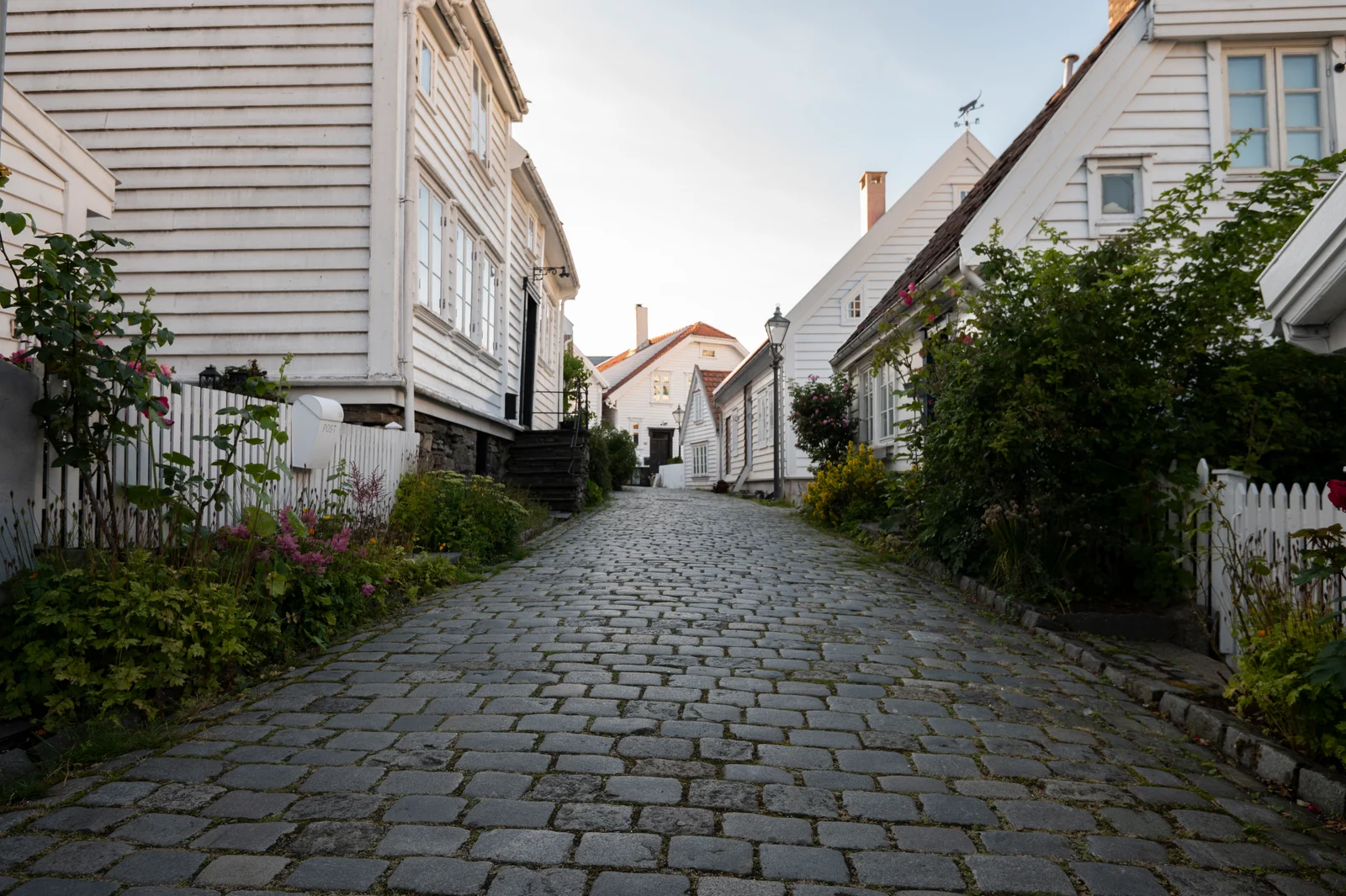
The natural way to see Gamle Stavanger is a slow, unstructured loop that starts from the harbour front and climbs one of the cobbled lanes — Øvre Strandgate is the main artery — before wandering the cross-lanes and dropping back down toward the water. There is no single "route" to follow; the pleasure is in the aimless meander, and the district is small enough that you cannot really get lost, with the harbour always downhill to orient you.
A satisfying circuit takes in the Norwegian Canning Museum midway, then continues to the highest lanes for views back over the rooftops before returning to the quay. From there it is a five-minute walk around the harbour to Stavanger Cathedral and the market square, or across to the Norwegian Petroleum Museum, making the old town the first leg of a longer central-Stavanger walk.
Local Life
The enduring character of Gamle Stavanger is that it remains ordinary domestic life in an extraordinary setting. The houses were built for the working families of a port and canning town — sailors, coopers, women who packed sardines by the thousand — and their descendants and successors still occupy them, tending gardens, repainting the regulation white cladding and living to the strict conservation rules that keep the quarter intact.
That heritage of canning is the district's defining industry: at its peak Stavanger had dozens of factories tinning brisling and sardines for export around the world, and the Norwegian Canning Museum preserves the trade in a genuine former cannery here. Understanding that history — a poor fishing port transformed first by canning and later by North Sea oil — is the key to reading the modest, hard-working houses as more than a picturesque backdrop.
When to Visit
Gamle Stavanger is an outdoor place best enjoyed on foot in daylight, and it is at its prettiest in the long light of a summer morning or evening, when the white walls glow and the flowers are out. Because it is residential and compact, it never feels overrun, but cruise-ship days can bring a brief midday flurry through the main lanes; early or late visits are quietest.
The quarter is rewarding year-round — snow and low winter sun suit the white houses just as well as summer roses — but the gardens are at their best from May to September. Allow thirty to sixty minutes to wander the lanes, longer if you stop at the Canning Museum or pause at a café. It sits within easy walking distance of the harbour, so it slots neatly into a half-day exploring central Stavanger.
Admission and Costs
Walking the district is completely free, and there is no ticket, gate or opening time for the lanes themselves. This makes it one of the best-value things to do in Stavanger — an hour among some of Europe's finest wooden architecture at no cost.
The one paid attraction within the quarter is the Norwegian Canning Museum (Norsk Hermetikkmuseum), with a modest admission of around NOK 120–150 ($11–14) for an adult, sometimes covered by a combined Stavanger museum ticket. A guided walking tour of the old town, often folded into a wider city walk, typically costs NOK 300–500 ($28–46) per person. Café stops and any souvenirs are extra, and all figures are estimates.
The Case for a Guide
A guide turns a pretty stroll into the social history of a city. Walking these lanes, a knowledgeable local explains why the houses are uniformly white, how the conservation battle of the 1950s saved them, and what daily life was like for the sailors and cannery workers who built them — the sardine trade that once employed half the town, and the oil boom that transformed it a century later. Guides know which lanes hold the finest details and can open up the story of the Canning Museum, and they naturally weave the old town into a wider walk taking in the cathedral, the harbour and the Petroleum Museum. For a district whose meaning lies in its history rather than any single monument, that context is precisely what a guide provides.
Tips for Visitors
Respect that people live here: keep voices down, don't peer through windows or step into private yards, and photograph the streetscape rather than residents' front rooms. That courtesy is what keeps the quarter welcoming to visitors.
Wear comfortable shoes for the uneven cobbles, which are slippery when wet. Come in the morning or evening for the best light and the fewest people, and give yourself permission to get lost in the side lanes, where the quietest and prettiest corners are. Time a visit to include the Norwegian Canning Museum — on select days its ovens are fired and you can taste freshly smoked sardines — and pair the walk with the harbour and the Petroleum Museum just below.
Frequently Asked Questions
How many old houses are there in Gamle Stavanger?
The protected quarter contains more than 170 wooden buildings, most dating from the late eighteenth and nineteenth centuries, making it one of the best-preserved wooden settlements in Northern Europe. Nearly all are painted white, with cobbled lanes, picket fences and climbing roses between them, and — crucially — they are still lived in rather than turned into a museum street.
Is it free to walk around, and are the houses open?
The lanes are public and free to wander at any time, and doing so is the whole experience. The houses themselves are private homes and not open to visitors, so admire them from the street and respect residents' privacy. The one interior you can visit is the Norwegian Canning Museum, set in a former cannery within the quarter, which does charge admission.
How did the wooden houses survive when so many old towns burned?
Partly luck and partly deliberate protection. Stavanger escaped the large fires that destroyed the timber cores of many Norwegian towns, and from the 1950s the city architect Einar Hedén led a campaign to preserve rather than demolish the district, at a time when clearing "old" wooden housing was fashionable. That early conservation decision is why the quarter survives so completely today.