
Planning the Perfect Trip to Pula: Roman Istria on the Adriatic
A practical Pula trip planner — how many days to give the Roman core, when to visit around the arena concerts and the film festival, which tours actually earn their fee, what a visit costs, and how to handle the airport, buses, and a rental car for the rest of Istria.
Read the full guideUpdated · 9 min read
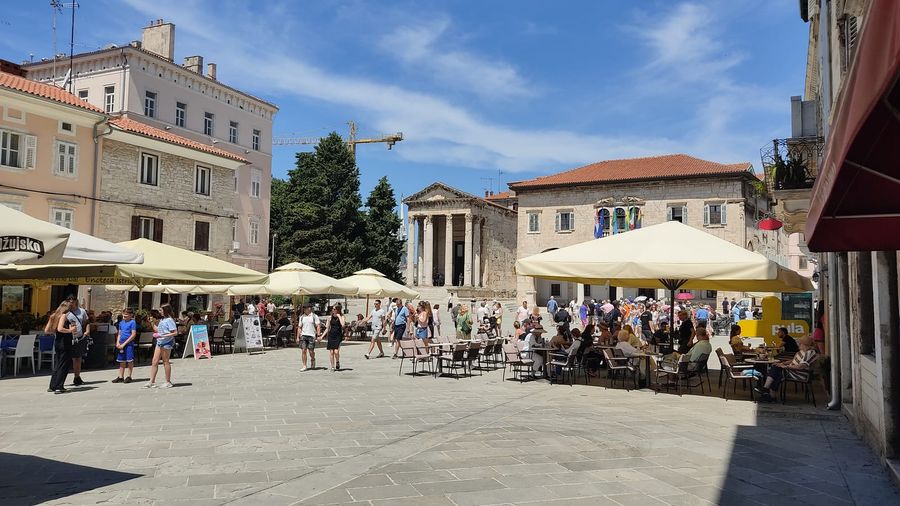
Give Pula one full day for its walkable Roman core — the amphitheatre, Forum, and Temple of Augustus all sit within a short stroll — and a second or third for Cape Kamenjak and the Istrian interior. Visit in May, June, or September for warm, uncrowded weather, book a licensed walking tour to unlock the history, and rent a car if you want the rest of the peninsula.
Few small cities wear their history as openly as Pula. The southern tip of the Istrian peninsula holds one of only six completely preserved Roman amphitheatres left in the world, and it stands not behind a fence in a ruin field but at the edge of a living port city of 57,000 people, a short walk from cafés and a working fish market. That density is what makes Pula so rewarding and so easy to underestimate: you can see the headline monuments in an afternoon, but the city rewards travellers who slow down, eat their way through the Istrian larder, and use it as a base for one of Croatia's most underrated regions. Planning a Pula trip comes down to three decisions — how long to stay, when to come, and whether to rent a car — and this guide walks through each.
How many days do you need in Pula?
One full day is enough for the Roman core, two lets you add Cape Kamenjak or a summer concert, and three opens up the Istrian hill towns and wine roads inland. Pula works equally well as a focused city break or as the anchor for a wider peninsula tour.
Pula's ancient monuments are unusually concentrated, so a single well-planned day goes a long way.
| Time you have | What it covers |
|---|---|
| One full day | The Pula Arena, the Roman Forum with the Temple of Augustus, the Arch of the Sergii, and a harbour-side lunch — all on foot |
| Two days | The above plus Cape Kamenjak for wild swimming, or an evening film screening or concert inside the arena |
| Three days or more | Adds day trips to Rovinj, the hill towns of Motovun and Grožnjan, and the truffle and wine roads of the interior |
Most travellers find two nights the comfortable sweet spot. A single night works if Pula is a stop on a longer Croatian coastal route, but it leaves no room for the beaches or the interior — and the Istrian countryside is arguably the best reason to come.
When is the best time to visit Pula?
May, June, September, and October are the ideal windows — warm, swimmable, and far quieter than midsummer. July and August are hot and busy but bring the arena to life with the film festival and concert season. Winter is quiet and authentic, with food and wine at their off-season best.
Pula has a mild Mediterranean climate, and the month you choose shapes the trip more than the temperature alone suggests.
Late spring (May–June) is arguably the best time of all. The weather is warm enough to swim, the Roman sites are easy to explore without the summer heat, and the Istrian countryside is at its greenest — May is also wild-asparagus season, when the vegetable appears on every local menu. Crowds remain manageable and rooms are far cheaper than in peak season.
High summer (July–August) is hot, lively, and the busiest stretch, partly because of cruise-ship day-trippers. It is also the cultural high point: the Pula Film Festival screens films inside the floodlit amphitheatre each July, and the arena's summer concert season has drawn names from Sting to Pavarotti to the 2,000-year-old stone bowl. If those events are your reason for coming, plan around them deliberately and book accommodation months ahead.
Autumn (September–October) brings the best of both worlds: warm sea, cooler air, the start of truffle season in the interior, and the grape harvest on the wine roads. September in particular is one of the finest months to visit.
Winter turns Pula back into a genuine Istrian town — quiet, authentic, and excellent for long lunches without the tourist premium, though many beach-season businesses close.
Which Pula tours are worth booking?
A licensed walking tour of the Roman sites is the single most useful booking, turning a handsome cluster of monuments into a coherent 2,000-year story. Guided truffle-hunting and wine excursions into the interior are where a guide earns the most, since they solve the transport and access problems on their own. The beaches and the Forum you can manage alone.
Pula's centre is compact and walkable, so the honest question is never whether you can see something on your own — it is whether a guide adds enough to justify the booking.
A walking tour of the Roman core is the most valuable single booking. A licensed guide connects the amphitheatre, the Forum, and the Arch of the Sergii into the story of Pula as the Roman colony of Pietas Iulia, explaining how the Temple of Augustus survived only because it was recycled first as a church and then as a granary. Licensed guides certified by the Croatian Ministry of Tourism can also arrange skip-the-line access to the arena during peak periods.
A truffle-hunting or wine excursion into the interior is where a guide earns the most, because it handles the driving and gets you into family vinarije and truffle forests around Motovun that are hard to find and harder to book on your own. These trips fold in transport you would otherwise have to arrange yourself.
A day tour to Rovinj or the hill towns suits travellers without a car, stringing together several stops that would take a frustrating patchwork of buses to reach independently.
For everything else — Forum Square, the harbour, and a swim at Cape Kamenjak — you are perfectly fine exploring at your own pace.
How much does a trip to Pula cost?
Pula is gentler on the budget than Croatia's Dalmatian headliners like Dubrovnik. A tip-based walking tour runs €8–12, a private half-day guide €80–140, and a specialist archaeology guide €120–200. Arena concert tickets swing widely by performer, and your biggest variable is accommodation timing around the July–August peak.
Istria is generally more affordable than the southern Dalmatian coast, and Pula reflects that.
| Experience | Typical price |
|---|---|
| Free walking tour (tip-based) | €8–12 per person |
| Private half-day guide (small group) | €80–140 |
| Specialist Roman-archaeology guide | €120–200 |
| Pula Film Festival screening | €7–15 per film |
| Arena concert ticket | €30 (local acts) to €100+ (international headliners) |
Croatia adopted the euro in January 2023, so payments are straightforward and cards are widely accepted, though small konoba taverns and market stalls still prefer cash. As with most seasonal destinations, your largest cost swing is accommodation timing — a room in June and the same room during the film festival are barely the same product on price. If your dates are flexible and a specific event is not the point of your trip, shifting a week or two either side of the July–August peak is the easiest saving you will make.
Do you need a car, and how do you get around?
Pula's Roman core is entirely walkable, but a rental car transforms the trip if you want the rest of Istria — Cape Kamenjak, the hill towns, and the wine roads all need transport that buses serve poorly. Pula's own airport brings in summer flights from across Europe, and the compact old town needs nothing more than your feet.
Getting in is easiest by air in summer, when Pula Airport handles low-cost and charter routes from across Europe, a short taxi or bus ride from the centre. Overland, buses connect Pula to the rest of Croatia and to Italy and Slovenia, and the drive down the Istrian coast is scenic.
Once you arrive, the entire Roman core is walkable: the amphitheatre, Forum, Temple of Augustus, and Arch of the Sergii form a compact circuit you can cover on foot in about two hours. Local buses reach the broader city and residential neighbourhoods, but run infrequently outside peak hours.
For the rest of Istria, rent a car. It is close to essential for reaching Cape Kamenjak, the wild limestone headland ten kilometres south, and for the hill towns of Motovun and Grožnjan and the wine and truffle roads inland. Rovinj, with its pastel Venetian old town, is a worthwhile forty-minute drive north for a change of scenery. A few logistics worth knowing: tipping runs to €8–12 for free walking tours and around 10% for private guides, café culture follows relaxed Italian-influenced rhythms, and the morning market beside the old town is the place to taste pršut, Istarski sir cheese, and the region's celebrated truffle-infused olive oil.
Why does Pula reward a little planning?
Because Pula packs a Roman city, a swimmable coast, and Croatia's finest food region into one compact base — but the version of the trip you get depends on your timing and whether you have wheels. Pick your season, give the Roman core an unhurried day, and rent a car for the interior, and Pula delivers far more than its size suggests.
Pula is the rare destination that works as both a quick monument stop and a slow, food-led week, and the difference comes down to planning. Choose your dates around the weather and the arena calendar, give the Roman core the unhurried day it deserves, book a walking tour to make the stones talk, and pick up a rental car if the truffle forests and hill towns tempt you. Do that, and a city many travellers give a single hurried afternoon turns out to be the ideal gateway to Istria — Croatia's most underrated corner.
Frequently Asked Questions
How many days do you need in Pula?
One full day covers the compact Roman core — the amphitheatre, Forum, Temple of Augustus, and Arch of the Sergii sit within a fifteen-minute walk of each other. Give it two days to add Cape Kamenjak or a summer arena concert, and three if you want to reach the Istrian hill towns and wine roads inland.
When is the best time to visit Pula?
May, June, September, and October bring warm, comfortable weather and thinner crowds than the July–August peak. Come in July if the Pula Film Festival or the arena concert season is the point of your trip; those weeks are the busiest and priciest, but the amphitheatre under the stars is unforgettable.
Do you need a car in Pula?
Not for the city itself, which is entirely walkable, but a rental car transforms the trip if you want to see the rest of Istria. Cape Kamenjak, the hill towns of Motovun and Grožnjan, and the wine and truffle roads all need transport, and bus links to them are slow and infrequent.
How much does a Pula tour guide cost?
A tip-based free walking tour of the Roman sites warrants about €8–12 per person. A private half-day guide for a small group runs roughly €80–140, while a specialist Roman-archaeology guide with an academic background charges €120–200. Arena concert tickets range from about €30 for local acts to over €100 for international headliners.