
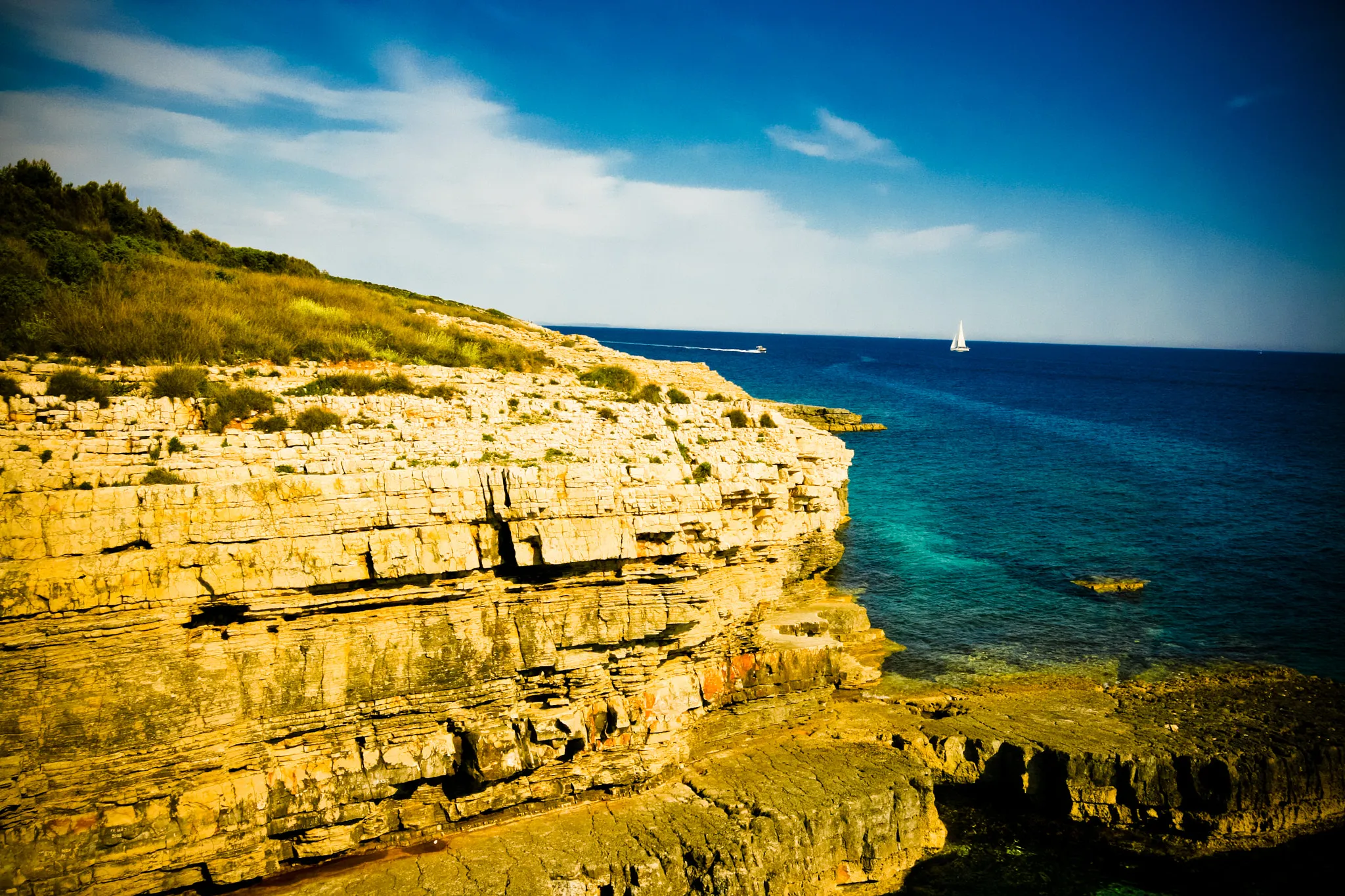
Formation
Kamenjak is built from Cretaceous limestone, the same pale, dense rock that underlies much of the Istrian coast. Over millions of years the sea and weather have sculpted the soft horizontal beds into low cliffs, wave-cut platforms, sea caves, and a deeply indented shoreline of coves and inlets. The flat coastal slabs at the southern tip preserve fossilised dinosaur footprints roughly 130 million years old, impressed when the area was a muddy tidal flat at the edge of an ancient sea. The peninsula's gentle relief, exposed bedrock, and thin soils are a direct product of this karst geology, which also shapes the rest of Istria's distinctive landscape.
Trails
A network of unpaved gravel tracks and footpaths loops around the peninsula, linking the entrance near Premantura to the southern tip and the string of coves along both shores. Routes are mostly flat and easy, suitable for walking and cycling, though the surface is dusty and uneven in places. There is no single marked long trail; instead visitors follow the tracks freely between beaches and viewpoints. Sturdy shoes or water shoes help on the rocky shoreline approaches, and a bicycle covers far more ground than walking. Allow a couple of hours to cycle a satisfying loop with swimming stops, or a full day to explore the cape's farthest corners on foot.
Wildlife
Despite its small size, Kamenjak is botanically and biologically rich. The meadows and maquis support hundreds of plant species, including several wild orchids that are rare or absent elsewhere in Istria and bloom most spectacularly in spring. Birds of prey and migratory species pass over the open ground, while the clear surrounding waters host shoals of fish, sea urchins, and occasional sightings of dolphins offshore; the critically endangered Mediterranean monk seal has historically been associated with the area's caves. The protective park status exists precisely to shield this concentration of life, so visitors are asked to tread lightly and observe rather than disturb.
When to Visit
The reserve is open year-round during daylight, but it is best enjoyed from late spring through early autumn. The vehicle entrance is typically staffed and charging tolls from around 9 AM to 8 PM in summer; outside those hours access on foot or by bike is usually possible. Allow at least half a day to do the cape justice — a quick swim and a look at one cove takes an hour, but exploring several beaches, cycling the tracks, and finding the dinosaur footprints can easily fill 4–6 hours. Arrive early in July and August to claim a parking spot and a shady patch before the midday heat.
Admission and Costs
Entry is free on foot or by bicycle; the main cost is the vehicle toll of roughly €10–12 ($11–13) per car in peak season, lower in shoulder months. There are a few rustic beach bars inside the park — drinks and simple food run about €3–8 ($3–9). Bring your own water and snacks, as supplies are limited. Bicycle rental in Premantura costs around €10–15 ($11–16) per day. Small boat and kayak tours exploring the coves and sea caves from the water typically cost €30–60 ($32–65) per person; a private guided nature or snorkelling outing runs higher depending on group size.
The Case for a Guide
Kamenjak rewards independent wandering, but a guide unlocks the parts of the reserve that casual visitors usually miss and adds the natural-history context that turns a swim into an education.
- Finding the dinosaur footprints: They are tucked along the shoreline rock and easy to walk straight past — a guide takes you to the exact ledges and explains the prehistoric tidal flat they record
- Reading the ecosystem: A naturalist guide identifies the rare orchids, the maquis shrubs, and the bird and marine life, revealing why the whole peninsula is protected
- The best coves for the conditions: With the bura and jugo winds shifting the sea, a guide knows which sheltered cove will be calm and swimmable on any given day
- Safe cliff and snorkelling spots: Local knowledge matters where there are no lifeguards; a guide points out the established jumping ledges and the clearest snorkelling reefs
- Logistics without stress: Guides handle the toll, the gravel-road navigation, and timing around crowds, leaving you free to enjoy the landscape
Tips for Visitors
Bring everything you need: There is little shade, no shops to speak of, and no lifeguards — pack water, sunscreen, a hat, and water shoes for the rocky entries. Cycle if you can: Bicycles handle the gravel tracks better than nervous drivers and let you reach quiet coves easily. Go early or late: Midday sun is fierce and parking fills fast in summer; morning and the golden hour before sunset are cooler and far more beautiful. Respect the protection: Stay on tracks, take all litter out with you, and do not pick the wildflowers. Combine with Premantura: The village at the entrance has cafés and rental shops, making a natural base before or after exploring the cape.
Frequently Asked Questions
How do you get to Cape Kamenjak and is there a fee?
Kamenjak occupies the peninsula's southern tip beyond the village of Premantura, roughly a 20–30 minute drive (about 10 km) from central Pula. At the reserve entrance there is a vehicle toll of around €10–12 per car in high season; pedestrians and cyclists usually enter free. Inside, the roads are unpaved gravel and there is no public bus, so most visitors drive, cycle, or walk in. A bicycle is often the most enjoyable way to cover the network of tracks without raising dust in a car.
Which beaches and swimming spots are best at Kamenjak?
The cape is ringed by dozens of small coves and pebble beaches rather than one big resort beach. Popular spots include Plovanija and the gravel coves near the tip, while strong swimmers seek out the dramatic cliff-jumping ledges on the southeastern side. The water is exceptionally clear, but there are no lifeguards, no showers, and almost no shade, so the experience is wild rather than developed. Many of the best coves require a short walk from where you park.
Are there really dinosaur footprints at Cape Kamenjak?
Yes. Along the shoreline at the very southern tip, fossilised dinosaur footprints dating back roughly 130 million years are preserved in the coastal limestone, left by animals that crossed the area when it was a tidal flat. They are not always easy to spot — low water and good light help — and a guide who knows their exact location saves a great deal of searching along the rock platforms.
When is the best time of year to visit Kamenjak?
Late spring (May–June) and early autumn (September) are ideal: the sea is warm enough for swimming, the wildflower meadows are at their best in spring, and the crowds and heat of midsummer are absent. July and August bring the warmest water but also the most visitors and intense midday sun with little shade. Winter visits are quiet and atmospheric but too cold for swimming and exposed to the bura wind.