
How to Plan the Perfect 3-Day Trip to Rome
Complete Rome itinerary for first-time visitors covering the Colosseum, Vatican, Roman Forum.
Updated · 11 min read
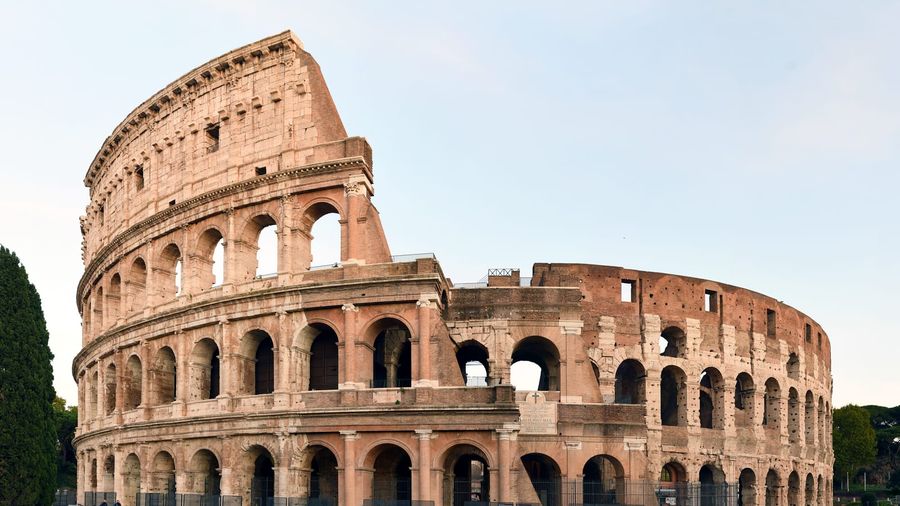
Plan Rome by theme over three days: ancient Rome — the Colosseum, Forum, Palatine, and Pantheon — then the Vatican's museums and St. Peter's, and finally Baroque squares and fountains. Book timed Colosseum and Vatican tickets two to three weeks ahead, hire licensed guides, and visit in spring or autumn for bearable weather.
Rome layers 2,800 years of civilization into a single walkable city. Ancient temples prop up medieval churches. Renaissance palaces face Baroque fountains. A Roman lunch break might mean eating cacio e pepe in a trattoria built into the arches of a 2nd-century aqueduct. This guide organizes the city by theme so you can follow the threads that interest you most. The Rome city guide pairs with the broader Italy overview.
How do you tackle ancient Rome?
Concentrate on the compact core south of the Colosseo metro stop. Reach the Colosseum at 8:30 AM opening, then use the same ticket for the adjacent Roman Forum and Palatine Hill, ideally with an archaeologist guide. Finish fifteen minutes north at the Pantheon, the best-preserved Roman building, free but with a security line.
If you see nothing else, see this — the ancient core is the reason the city matters.
The Colosseum
The Colosseum, the largest amphitheater ever built, still dominates the skyline after nearly two millennia. Arriving at the 8:30 AM opening beats both the midday heat and the wall of tour groups that forms by 10.
A licensed archaeologist guide transforms the experience entirely. They explain the underground hypogeum where animals and fighters waited, the retractable awning system (velarium) that shaded 50,000 spectators, and the ingenious engineering that once allowed the arena floor to be flooded for naval battle reenactments. Combo tours covering the Colosseum, Roman Forum, and Palatine Hill run €55-75 per person with skip-the-line access.
Book two to three weeks ahead — the Colosseum caps daily visitors and sells out in peak season — or plan on losing half a day to the queue. Underground and arena-floor access needs a special tour that fills even faster: reserve two months out.
The Roman Forum & Palatine Hill
Your Colosseum ticket includes both of these adjacent sites, and skipping them would be like visiting the White House but ignoring Washington, D.C. The Roman Forum was ancient Rome's civic center: the place where Caesar was cremated, senators debated, and triumphal processions paraded through. Palatine Hill, just above, is where emperors built their palaces and enjoyed panoramic views that are still spectacular today.
What to look for in the ruins:
- Temple of Julius Caesar (the platform where Romans cremated him, still visible)
- Arch of Titus (commemorating the conquest of Jerusalem in 70 AD)
- House of Augustus (surprisingly well-preserved frescoes behind glass)
- Stadium of Domitian on Palatine Hill
Without a guide, the Forum is honestly bewildering: a field of broken columns and scattered marble. With one, it becomes a living city. No live guide in the budget? Our free Colosseum and Roman Forum audio walk narrates the same route at your own pace. Budget the morning for all three ancient sites together.
The Pantheon
A fifteen-minute walk north from the Forum brings you to the world's best-preserved Roman building. The Pantheon's dome remained the largest unreinforced concrete span on Earth for 1,300 years (43.3 meters in diameter, exactly equal to the building's interior height). The oculus at its apex is still open to the sky; when it rains, water drains away through barely visible floor channels.
Entry is free but expect a security line. Early morning or late afternoon visits are quietest.
What should you see at the Vatican?
Book the earliest 8:00 AM entry to the Vatican Museums, walking four miles of galleries — the Raphael Rooms, Gallery of Maps, and Laocoön — toward Michelangelo's Sistine Chapel ceiling. Then enter free St. Peter's Basilica for the Pietà and Bernini's baldachin, and climb the 551-step dome for the rooftop view.
Vatican City is technically a separate country: the square mile where the Catholic Church concentrated the artistic patronage of centuries.
Vatican Museums & the Sistine Chapel
The Vatican Museums house one of the world's greatest art collections across four miles of corridors. Michelangelo's Sistine Chapel ceiling is the crown jewel, but the journey there passes through extraordinary galleries.
Standout rooms and works:
- Raphael Rooms, especially The School of Athens (philosophy's greatest hits in one fresco)
- Gallery of Maps (40 topographic maps of Italy painted in the 1580s)
- Laocoön sculpture (rediscovered in 1506, it directly influenced Michelangelo)
- Sistine Chapel ceiling and the towering Last Judgment on the altar wall
An expert guide navigates the optimal route, times your Sistine Chapel arrival to avoid the worst crowds, and decodes Michelangelo's symbolism: the hidden self-portrait in the flayed skin of St. Bartholomew, and the anatomical accuracy that betrays his secret dissection studies. Skip-the-line Vatican tours run €65-90 per person.
By mid-morning the galleries turn uncomfortably packed and hot, so the earliest 8:00 AM slot is worth the early start.
St. Peter's Basilica & the Dome
The basilica is free to enter, though security lines can stretch. Inside, seek out Michelangelo's Pietà (now behind bulletproof glass following a 1972 attack), Bernini's towering bronze baldachin over the papal altar, and the grottoes below where St. Peter is traditionally believed to be buried.
The dome climb is optional but rewarding: €10 buys an elevator-assisted ascent (320 remaining steps), or €8 the full 551-step haul up the narrow, tilted staircase squeezed between the dome's inner and outer shells. The rooftop view across Rome justifies every step.
On Wednesday mornings the 9:30 AM Papal Audience is free to attend (tickets required, booked weeks ahead through the Vatican website).
What defines Baroque Rome?
Baroque Rome is the city's most theatrical layer, shaped by the rivalry of Bernini and Borromini. See Bernini's Fountain of the Four Rivers in Piazza Navona, toss a coin at the Trevi Fountain at sunset, and hunt down Caravaggios in San Luigi dei Francesi and Bernini's Ecstasy of St. Teresa.
After the ancient and the sacred comes the theatrical: fountains that seem to move, churches designed as optical illusions, and a rivalry between two architects that shaped entire neighborhoods.
Piazza Navona & the Fountain of the Four Rivers
Built atop an ancient stadium (you can still trace the oval), Piazza Navona is Rome's most beautiful Baroque square. Bernini's Fountain of the Four Rivers at its center represents the Nile, Ganges, Danube, and Río de la Plata through four monumental figures. Legend says Bernini positioned the Río de la Plata figure recoiling from Borromini's church across the square, though the timeline doesn't quite work.
Trevi Fountain
Come at sunset when the marble glows golden. Toss a coin over your left shoulder with your right hand to ensure your return to Rome. The tradition is genuine, not a tourist invention: the fountain collects roughly €3,000 in coins daily, donated to Caritas for social services.
Avoid the restaurants immediately surrounding the fountain; walk five minutes toward Piazza Navona or the Pantheon for honest trattorias instead.
Churches You Shouldn't Skip
Rome has over 900 churches, and several contain art that would be the star attraction of any museum:
- Sant'Ignazio: Trompe l'oeil ceiling by Andrea Pozzo that creates the illusion of a soaring dome (there is no dome, just a flat surface painted to fool your eyes)
- San Luigi dei Francesi: Three Caravaggio paintings of St. Matthew, free to view, in a side chapel
- Santa Maria della Vittoria: Bernini's Ecstasy of St. Teresa, one of Baroque art's most famous (and controversial) sculptures
A Baroque Rome walking tour (€30-45 per person) threads these scattered gems into one story of artistic rivalry, papal ambition, and Counter-Reformation propaganda.
Where do Romans actually eat?
Roman food follows unwritten rules: lunch is the main meal, dinner starts at 8:30 PM, and the best trattorias hide where tourists rarely wander. Cross the Tiber to atmospheric Trastevere for textbook cacio e pepe, head to Testaccio for carbonara and supplì, or try Armando al Pantheon, serving since 1961.
One rule worth knowing: traditional trattorias still cook to a weekly rhythm inherited from Rome's Catholic-calendar kitchen — gnocchi on Thursday (giovedì gnocchi), salt cod on Friday, and tripe on Saturday. Order the day's dish and you are eating what Romans eat.
Trastevere, across the Tiber, is the traditional go-to for atmospheric dining: medieval streets, ivy-covered buildings, and restaurants like Da Enzo al 29 (book ahead), Flavio al Velavevodetto (for textbook Roman cacio e pepe), and Tonnarello (generous portions, long waits).
Testaccio is where Romans eat well without the Trastevere crowds. The neighbourhood market and surrounding trattorias serve Roman classics: carbonara, amatriciana, supplì (fried rice balls), and coda alla vaccinara (oxtail stew).
Near the Pantheon, Armando al Pantheon is one of the few restaurants beside a major monument that's actually worth the price.
The universal rule: if a restaurant has photos on its menu or a greeter pulling you in from the sidewalk, keep walking.
What practical details should you plan for Rome?
Rome's historic centre is compact enough that walking covers most of it, though metro lines A and B cross at Termini. Expect €550 to €1,100-plus for three days, with a 72-hour transit pass at €18. Pack a scarf for church dress codes, and book the Galleria Borghese's timed entry weeks ahead.
Getting around
The Colosseo stop on Line B is the single most useful metro stop for sightseeing, but the historic centre is compact enough that walking is the primary mode, and you'll cover 12+ miles daily whether you plan to or not.
Bus line 64 connects Termini to the Vatican. It has earned the nickname "pickpocket express," so secure your valuables. Legal taxis are white with meters; avoid unmarked cars.
When to visit
Mid-September through October and April through early May deliver the best weather and manageable crowds. Summer is hot and packed; Romans themselves flee the city in August, and many restaurants close. Winter is mild and budget-friendly, with shorter queues at major sites.
Budget overview
Accommodation runs €120-200 (budget) to €600+ (luxury) for three nights. A Roma 72-hour transit pass costs €18, and airport transfers via the Leonardo Express train run €14 each way.
Guided tours and admissions for the Colosseum, Vatican, Galleria Borghese, and a walking tour total roughly €210 at mid-range bookings.
Dress codes and booking lead times
Vatican City, St. Peter's, and most major churches enforce dress codes: shoulders and knees must be covered. Pack a lightweight scarf to throw over bare shoulders rather than being turned away at the door.
The Galleria Borghese (housing Bernini's Apollo and Daphne, Caravaggio's David, Canova's reclining Pauline Bonaparte) requires timed-entry reservations that fill weeks in advance. Book as soon as you've confirmed flights.
Choosing guides
Italian law requires official licensing for guides at the Colosseum, Vatican, and archaeological sites. Look for a displayed badge and credentials in archaeology or art history, plus headset systems for groups over eight. Context Travel (scholar-led) and Walks of Italy (small-group specialists) are reliable platforms; GetYourGuide and Viator work too if you filter for 4.8+ stars with 200+ reviews.
Related Guides
For more Rome travel planning resources, check out:
- Athens Archaeological Tours - Another ancient civilisation brought to life by expert guides
- Planning the Perfect Florence Trip - Renaissance art and a natural Italian pairing with Rome
- Planning the Perfect Paris Trip - A comparable European capital itinerary
- European Christmas Markets - Seasonal Rome and broader Europe holiday planning
Invest in licensed guides for the Colosseum and Vatican, book your timed entries well ahead, and leave room in your schedule to get lost. Some of Rome's best moments happen when you turn down an unmarked alley and find a 500-year-old fountain trickling into a courtyard no guidebook mentions.
Have questions about planning your Rome trip? Contact us for personalized recommendations and connections to licensed expert guides.
Save How to Plan the Perfect 3-Day Trip to Rome
Save How to Plan the Perfect 3-Day Trip to Rome to your free account
Sign in or create a free account to keep this place in Saved places and add it to your trips.
Frequently Asked Questions
Do I need to book the Colosseum and Vatican in advance?
Yes. Both have timed-entry tickets that sell out in peak season and let you bypass very long queues. For the Vatican Museums, the earliest slot is best for beating the crowds.
How many days do I need in Rome?
Three days comfortably covers ancient Rome, the Vatican and the Baroque centre. A fourth day allows a slower pace or a day trip to Ostia Antica or the Castelli Romani.
Is the Roma Pass worth buying?
It can be, if you plan to use public transport and visit several paid sites, as it bundles transit with free or discounted entries and some queue-skipping. Tally your planned sights to check the maths.
What is the best time of year to visit Rome?
Spring and autumn offer warm but bearable weather and lighter crowds. Summer is hot and crowded, and in August many local businesses close for the holidays.