
Athens Archaeological Tours
How to tour Athens's ancient sites — the Acropolis, Acropolis Museum and Ancient Agora — with tickets, the €30 combined pass, timing and guide advice.
Updated · 9 min read
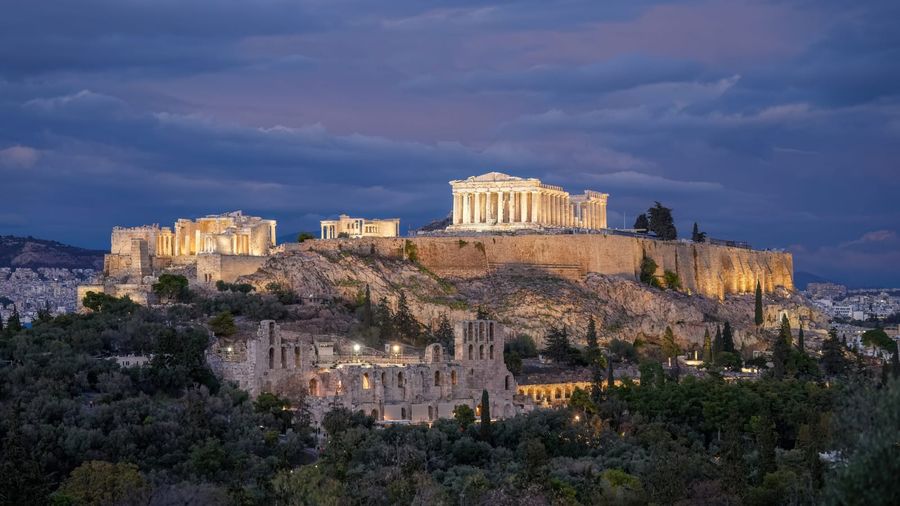
Athens's ancient core comes down to three places that sit within a short walk of one another: the Acropolis and its hilltop temples (€20 in summer), the Acropolis Museum at its foot (€15), and the Ancient Agora where democracy was practised (€10). A €30 combined ticket covers seven sites over five days, and the single most useful decision you make is the hour you arrive — be at the 8 AM gate before the cruise groups and the midday heat on the marble.
Athens is the most rewarding classical site in Europe to visit on foot, because its ruins cluster tightly around one rocky hill rather than sprawling across a region. This guide covers which sites to prioritise, what each costs, when to go, and when a licensed guide is worth the extra money. Read it alongside the Athens city guide for neighbourhoods and transport, and the wider Greece overview if you are pairing the capital with the islands of Santorini or Mykonos.
Why Athens's ruins reward a guide
A ruin rarely explains itself, and Athens is layered with twenty-five centuries of rebuilding, so the plaques leave most visitors missing what they are looking at. Guides licensed by the Greek Ministry of Culture — many with archaeology or classics degrees — supply the reconstruction visuals, connect the Parthenon to the democracy practised below it, and carry skip-the-line access that saves an hour in summer.
That matters most at the big two. On the Acropolis and in the Ancient Agora, foundations and fragments only become the birthplace of drama, philosophy and civic voting once someone fills in what stood where. At smaller, self-explanatory stops — the Temple of Olympian Zeus, say — a good audio guide or a careful read of this page does the job just as well. Spend the guide budget where the interpretation gap is widest.
The Acropolis: what crowns the hill
The Acropolis is a single fortified outcrop carrying the monuments of Athens's 5th-century-BCE Golden Age, reached through the Propylaea gateway and dominated by the Parthenon. It takes two to three hours at a steady pace; the climb is steep and the surfaces are polished marble, so the footwear warning is not optional.
| Monument | Built | Why it stops you |
|---|---|---|
| Parthenon | 447–432 BCE | Temple of Athena by Ictinus and Callicrates; once brightly painted and holding Phidias's gold-and-ivory statue |
| Erechtheion | 421–406 BCE | The Caryatid porch of six draped maidens, on the spot where Athena and Poseidon contested the city |
| Temple of Athena Nike | c. 420 BCE | A jewel-box temple to victory, fully dismantled and rebuilt in the 2010s |
| Propylaea | 437–432 BCE | The monumental gateway, left unfinished when the Peloponnesian War broke out |
| Theatre of Dionysus | 6th c. BCE | On the south slope, the birthplace of Greek tragedy, where Sophocles and Euripides premiered |
| Odeon of Herodes Atticus | 161 CE | A Roman theatre still used for the summer Athens Festival |
The Theatre of Dionysus and the Odeon sit on the slopes below the summit and are included in your ticket, so build them into the descent rather than treating the Parthenon as the whole visit.
Tickets, hours and the combined pass
Admission is €20 from April to October and €10 from November to March, with a €30 combined ticket that covers seven archaeological sites over five days. If you intend to see three or more of them, the combined pass pays for itself and lets you spread the sites across days without queuing again.
| Ticket | Price | Covers | Valid |
|---|---|---|---|
| Acropolis (summer) | €20 | Acropolis hill and slopes | Day of visit |
| Acropolis (winter) | €10 | Acropolis hill and slopes | Day of visit |
| Combined ticket | €30 | Acropolis, Ancient Agora, Roman Agora, Kerameikos, Temple of Olympian Zeus and more (7 sites) | 5 days |
Opening hours run 8 AM–8 PM from April to October and 8 AM–5 PM from November to March, with last entry roughly half an hour before closing. Entry is free on a handful of national days (25 March, 28 October) and the first Sunday of each month from November through March. Book the timed-entry slot online in peak season — the gate can sell out mid-morning in July and August.
The Acropolis Museum
The Acropolis Museum, opened in 2009 at the foot of the hill, holds the original sculptures lifted from the monuments for safekeeping, and its glass-walled top floor is laid out to the exact dimensions of the Parthenon. Admission is €15 in summer and €10 in winter; see it after the hill, when you can place every frieze block against the building it came from.
You enter over glass floors suspended above a live excavation of an ancient Athenian neighbourhood, then climb past Archaic statues that still carry traces of their original paint. The top-floor Parthenon Gallery wraps the surviving 160-metre frieze around a steel core at its true scale, with plaster casts marking the blocks held in London — the clearest way to grasp the Elgin Marbles dispute that a good guide will explain in full. The genuine Caryatids stand together on the floor below, replaced on the Erechtheion itself by copies.
The Ancient Agora: the birth of democracy
The Ancient Agora was the marketplace and civic heart of classical Athens, where the assembly's council met, Socrates argued daily, and Paul the Apostle later preached (Acts 17). Entry is €10 on its own or included in the combined ticket, and it is far quieter than the hill above it.
Two buildings anchor the site. The Temple of Hephaestus is the best-preserved ancient Greek temple anywhere — more complete than the Parthenon — because it served as a church for centuries. The reconstructed Stoa of Attalos, a two-storey colonnade rebuilt in the 1950s, now houses the site museum and shows exactly how an ancient shopping arcade looked.
Between them lie the foundations of the Bouleuterion, where the 500-member council governed, and the Tholos, where its standing committee worked around the clock. This is foundations-and-imagination terrain, which is precisely where a guide earns the fee.
Other sites worth your time
Beyond the Acropolis and Agora, several sites repay a short detour, and the National Archaeological Museum is the one unmissable indoor stop. Weigh each against your stamina and the weather rather than trying to see everything.
| Site | Entry | The draw | Guide worth it? |
|---|---|---|---|
| Roman Agora | €8 | The octagonal Tower of the Winds, an ancient weather station and water clock | Optional |
| Temple of Olympian Zeus | €8 | Fifteen of 104 colossal columns, beside Hadrian's Arch | No |
| Kerameikos | €8 | The ancient cemetery and potters' quarter, peaceful and uncrowded | Optional |
| Panathenaic Stadium | €10 | The all-marble stadium of the first modern Olympics (1896); excellent audio guide | No |
| National Archaeological Museum | €12 | The Mask of Agamemnon, the Antikythera Mechanism and the bronze Poseidon | Yes |
The National Archaeological Museum sits a kilometre north of the ancient sites and is vast enough to overwhelm; a two-hour highlights tour (€50–75) navigates it far better than wandering. The Roman Agora, Kerameikos and Temple of Olympian Zeus are all on the combined ticket.
Choosing the right tour
Match the tour to your time, not the longest option available: a half-day Acropolis focus suits most first visits, while a full day adds the Agora and the museums for those staying longer. Whatever you pick, confirm the guide is licensed by the Ministry of Culture and the group is small — above twenty people you will struggle to hear or ask questions.
| Tour | Length | Typical price | Best for |
|---|---|---|---|
| Group Acropolis tour | 2–3 hrs | €40–60 pp | First visit, skip-the-line access |
| Acropolis + Museum combo | 4–5 hrs | €55–80 pp | Seeing site and sculptures together |
| Full-day Ancient Athens | 6–8 hrs | €120–180 pp | Adds Agora and Plaka walk |
| Mythology-themed tour | 3–4 hrs | €60–90 pp | Families with children |
| Private guide | flexible | €200–350 per group (to 6) | Custom pace, photography stops |
Private rates usually exclude admission tickets, so budget those separately. Early-morning departures cost a little more and are worth it in summer for the cool air and the thin crowds.
Planning your days and what to pack
One focused day covers the Acropolis, its museum and the Agora if you start at 8 AM; two days make it comfortable, and three leave room for a day trip to Delphi or Cape Sounion. The kindest conditions are April–May and September–October, when temperatures sit in the 20s and the light is clear; July and August exceed 35°C on shadeless marble.
A workable one-day rhythm is the Acropolis at opening (8–11 AM), the Acropolis Museum through the middle of the day (11.30 AM–1.30 PM), and the Ancient Agora in the late afternoon (3–5 PM), finishing with dinner in Plaka beneath the floodlit hill.
Pack grippy walking shoes for the slick marble, a hat, sunglasses, sunscreen and at least a litre of water, and carry only a small bag through the security screening. Leave the tripod and drone behind — both are restricted at Greek archaeological sites — and shoot the Parthenon in the soft early light for the best photographs.
For more ancient-city planning, see Planning the Perfect Rome Trip, where guided context is just as indispensable, and Bangkok Temple Tours for sacred sites that reward the same early start and cultural care.
Save Athens Archaeological Tours
Save Athens Archaeological Tours to your free account
Sign in or create a free account to keep this place in Saved places and add it to your trips.
Frequently Asked Questions
How much time should I budget for the Acropolis and its museum?
Plan at least two to three hours for the Acropolis itself and a further two hours for the Acropolis Museum at the base of the hill. Visiting both in one morning is comfortable if you arrive at opening time.
Is the combined ticket worth buying for Athens archaeological sites?
Yes. The €30 combined ticket covers the Acropolis, Ancient Agora, Roman Agora, Kerameikos and several other sites over five days, and works out cheaper than separate entries if you plan to see three or more.
What is the best time of day to visit the Acropolis?
Arrive right at the 8 AM opening or in the last two hours before closing to avoid both the cruise-ship crowds and the midday heat, which is intense on the exposed marble in summer.
Do I need a licensed guide to enter the Acropolis?
No, you can visit independently with a ticket, but only guides licensed by the Greek Ministry of Culture may lead tours on site, and a good one adds the historical context the sparse signage leaves out.