
Bangkok Temple Tours: Buddhist Sites
How to tour Bangkok's temples — the Grand Palace, Wat Pho and Wat Arun on Rattanakosin Island, plus quieter wats, dress code, prices and timing.
Updated · 8 min read
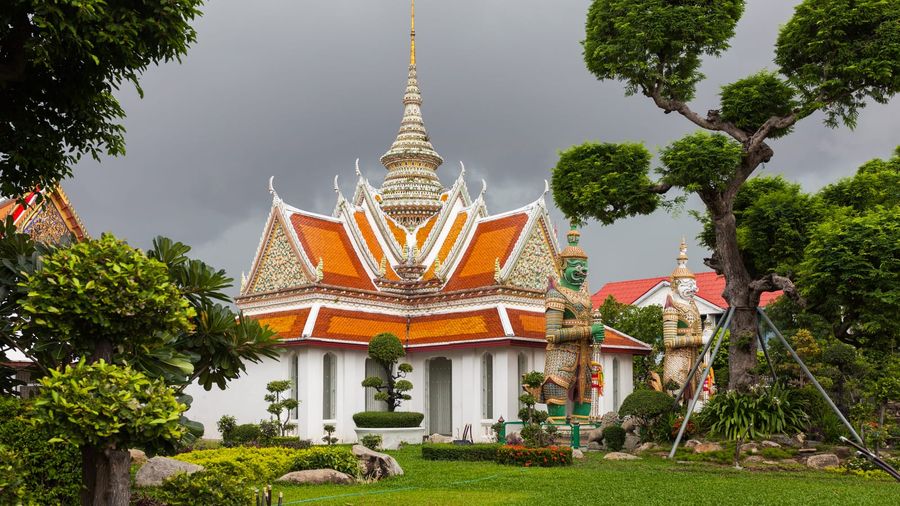
Bangkok's temple circuit comes down to three sites clustered on Rattanakosin Island — the Grand Palace and Wat Phra Kaew (500 THB), Wat Pho and its 46-metre Reclining Buddha (200 THB), and riverside Wat Arun (100 THB) — plus a handful of quieter wats for anyone with a second morning. Cover your shoulders and knees, slip your shoes off before every hall, and be at the 8:30 AM opening before the heat and the tour buses arrive.
Bangkok's temples, or wats, cluster tightly in the old royal quarter of Rattanakosin, which is what makes a half-day on foot and ferry so efficient here. This guide covers which temples to prioritise, how to behave inside them, and what a day actually costs. Read it alongside the Bangkok city guide for neighbourhoods and transport, and the wider Thailand overview if you are pairing the capital with temple-rich Chiang Mai in the north.
What a Thai wat asks of its visitors
A wat is a working monastery where monks live, study and chant daily, so the etiquette is not decorative — Buddha images are sacred, modest dress is enforced at the gate, and shoes come off before you step into any hall.
Dress is the rule most visitors trip over: shoulders, knees and ankles should be covered, which rules out shorts, sleeveless tops, ripped jeans and see-through fabric. The Grand Palace turns away anyone under-dressed and lends sarongs against a deposit, which eats into a precious cool morning. Beyond clothing, a few customs matter inside every temple:
- Never point your feet toward a Buddha image, and tuck them behind you when you sit.
- Keep your head lower than monks and Buddha statues where you can; the head is the most sacred part of the body in Thai culture.
- Women do not hand items directly to monks — place them down for the monk to pick up.
- Walk clockwise around a chedi (stupa), keep your voice low, and skip the flash indoors.
The three temples that anchor a first visit
Three temples carry most first visits and sit within a ten-minute walk and a short ferry of each other: the Grand Palace with the revered Emerald Buddha, Wat Pho with its gilded Reclining Buddha and massage school, and Wat Arun's porcelain-clad prang across the river.
| Temple | Entry | Hours | Why it earns the stop |
|---|---|---|---|
| Grand Palace & Wat Phra Kaew | 500 THB | 8:30 AM–3:30 PM (last entry 3 PM) | The Emerald Buddha, Ramakien murals and Chakri throne halls; ticket also covers the Textiles Museum |
| Wat Pho | 200 THB | 8:00 AM–6:30 PM | The 46-metre Reclining Buddha with mother-of-pearl feet; birthplace of Thai massage |
| Wat Arun | 100 THB | 8:00 AM–6:00 PM | A 70-metre Khmer-style prang clad in Chinese porcelain, climbable by steep stairs |
The Grand Palace is the one to do first, while you are fresh and the shadeless courtyards are still cool — its single 500 THB ticket is valid only on the day of purchase and children under 120 cm go free.
Wat Pho is a ten-minute walk south; book a traditional massage at its school (420–600 THB) to end the morning. From the Tha Tien pier beside Wat Pho, the cross-river ferry reaches Wat Arun in a few minutes, where the central prang's roughly 70-degree steps reward the climb with a river panorama — hold the rail on the way down.
Quieter wats for a second morning
With a repeat morning, trade crowds for atmosphere: climb Wat Saket's Golden Mount for the city's best view, admire the marble symmetry of Wat Benchamabophit, meet the solid-gold Buddha of Wat Traimit, or find local calm at Wat Suthat beside the Giant Swing.
| Temple | Entry | The draw |
|---|---|---|
| Wat Saket (Golden Mount) | 50 THB | 344 steps to a 360-degree city view and a relic-topped chedi; superb at sunset |
| Wat Benchamabophit (Marble Temple) | 50 THB | Italian Carrara marble, perfect symmetry, 53 Buddha images in the cloister |
| Wat Traimit (Golden Buddha) | 100 THB | The world's largest solid-gold Buddha (5.5 tonnes), hidden under plaster for 200 years |
| Wat Suthat & Giant Swing | 100 THB | Bangkok's finest murals and a working neighbourhood temple with few tourists |
These sit east of Rattanakosin rather than on the river, so they pair better with each other than with the big three. Wat Traimit also anchors the edge of Chinatown, making it an easy lead-in to an afternoon of street food.
Three ways to plan the day
Most visitors fit one of three templates: a half-day classic linking the big three before midday heat, a full-day deep dive that adds the hidden gems, or an off-the-beaten-path morning for repeat visitors.
| Itinerary | Length | Route | Guided cost (per person) |
|---|---|---|---|
| Half-day classic | 4–5 hrs | Grand Palace → Wat Pho → ferry to Wat Arun | 1,800–3,000 THB |
| Full-day deep dive | 7–8 hrs | The big three, plus Wat Saket and the Marble Temple, with a Rattanakosin lunch | 3,500–5,500 THB |
| Off-the-beaten-path | 3–4 hrs | Benchamabophit → Wat Saket → Wat Suthat → Wat Traimit | 1,200–2,000 THB |
The half-day classic is the default for a reason: it covers the essential three while they are least crowded and the river crossing builds in a natural break. Start between 8:00 and 8:30 AM either way — finishing the open courtyards before the heat peaks matters more than the exact order.
What a temple day costs
A self-guided day covering the major temples, ferry and water runs around 1,050 THB per person; a mid-range guided half-day with lunch and a Wat Pho massage lands near 2,700 THB; a premium private full day with a sunset river cruise reaches roughly 5,000 THB.
| Tier | What it includes | Total per person |
|---|---|---|
| DIY | ~800 THB admissions + public ferry + water | ~1,050 THB |
| Mid-range | Half-day small-group guide + lunch + Wat Pho massage | ~2,700 THB |
| Premium | Private full-day guide + admissions + lunch + sunset cruise | ~5,000 THB |
Admission is the fixed floor at roughly 800 THB for the big three; almost everything above that is the cost of guidance and comfort. Many temples take cash only, so carry small notes for entry and the 4 THB cross-river ferry.
Guide or on your own?
A guide earns its fee at the Grand Palace and Wat Pho, where the Ramakien murals, royal history and Buddhist symbolism mean little without someone to decode them; independent visits work well for the quieter wats once you have the etiquette down.
Licensed guides — look for Tourism Authority of Thailand (TAT) certification, small groups capped around eight to ten, and ratings above 4.8 — explain which halls you can enter versus photograph, and route you efficiently through a complex that overwhelms first-timers. Booking platforms such as Viator, GetYourGuide and Klook make it easy to compare.
The one scam to ignore outright is any tuk-tuk driver who insists the palace is "closed today" and offers an alternative temple-and-gem-shop tour; the official ticket window inside the Na Phra Lan gate is the only place to pay, and it never sells out.
Timing, weather and what to carry
Visit between 8 and 10 AM for the coolest air and thinnest crowds, and avoid the 11 AM–3 PM peak; the cool season from November to February is the most comfortable despite the crowds.
No BTS Skytrain reaches Rattanakosin, so arrive by water — the Chao Phraya Express Boat stops at Tha Chang pier, two minutes from the Grand Palace gate — or take the MRT Blue Line to Sanam Chai and walk. The hot season (March–May) brings brutal midday heat but thinner crowds, while the rainy season (June–October) trades occasional afternoon downpours, which make Wat Arun's steep steps slippery, for quieter grounds. Whatever the month, pack modest, lightweight clothing, slip-on shoes you can remove quickly, a refillable water bottle, sun protection and cash.
Related Guides
- Bangkok city guide — neighbourhoods, street food and logistics for the wider stay
- Siem Reap & the Angkor Temple Tours — the natural next stop for temple-focused Southeast Asia travel
- Athens Archaeological Tours — how expert interpretation elevates ancient sites on the other side of the globe
Final thoughts: Bangkok's temples are living expressions of Thai Buddhist culture, not just photo backdrops, and approaching them with the right dress and quiet respect transforms the visit. Do the Grand Palace first and cool, pair Wat Pho and Wat Arun across the river, and spend on a guide where the symbolism actually needs unlocking. Save the quieter wats for a second morning, and let the old royal quarter reveal itself at a walking pace.
Save Bangkok Temple Tours: Buddhist Sites
Save Bangkok Temple Tours: Buddhist Sites to your free account
Sign in or create a free account to keep this place in Saved places and add it to your trips.
Frequently Asked Questions
What is the dress code for Bangkok's temples?
Shoulders and knees must be covered for both men and women, and shoes are removed before entering temple buildings. The Grand Palace enforces this strictly and turns away visitors in shorts, short skirts or sleeveless tops; it lends sarongs and trousers against a refundable deposit if you turn up under-dressed.
How much does it cost to enter the Grand Palace?
Entry to the Grand Palace and Wat Phra Kaew is 500 baht and covers the whole walled complex, including the throne halls and the Queen Sirikit Museum of Textiles. Wat Pho costs 200 baht and Wat Arun about 100 baht, so the three together come to roughly 800 baht per person.
What is the best time of day to visit Bangkok temples?
Arrive at opening, around 8 to 8.30 am, to beat the heat and the tour-bus crowds. The shadeless Grand Palace courtyards become punishing between roughly 10 am and 1 pm, and the Grand Palace stops admitting visitors at 3 pm and closes at 3.30 pm.
Can I visit Wat Arun and Wat Pho on the same day?
Yes, they sit on opposite banks of the Chao Phraya River and the cross-river ferry from Tha Tien pier links them in a few minutes, making them an easy and popular pairing with the Grand Palace just north of Wat Pho.