
Colosseum timeline
-
Construction begins
Vespasian started the amphitheater on land reclaimed from Nero's palace complex.
-
Games inaugurate arena
Titus opened the Colosseum with spectacles that announced Flavian power.
-
Historic Rome listed
UNESCO recognition placed the amphitheater within the protected historic center.
Architecture
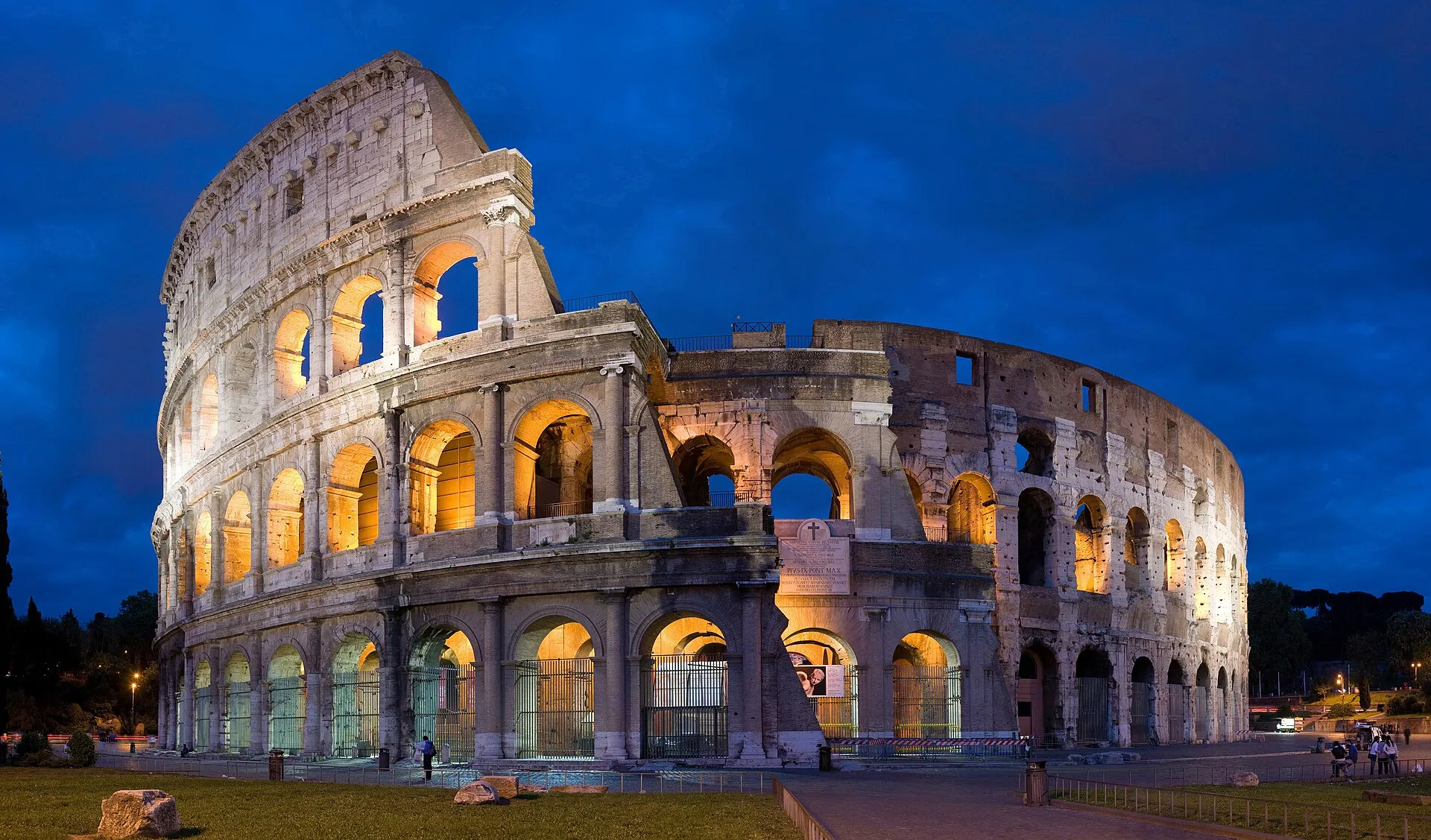
The arena floor is where gladiators fought, now partially reconstructed to allow visitors to stand at the center. The underground hypogeum reveals tunnels for animals and machinery -- 80 vertical lifts could raise wild beasts onto the arena floor simultaneously. The upper levels offer panoramic views over the Roman Forum and Palatine Hill. The exterior facade rises 48 meters in four stories of Doric, Ionic, and Corinthian columns -- a textbook demonstration of the classical orders. The structure used an estimated 100,000 cubic meters of travertine limestone, held together by 300 tonnes of iron clamps rather than mortar.
Historical Significance
Commissioned by Emperor Vespasian in 70 AD and completed by his son Titus in 80 AD, the Flavian Amphitheatre was built on the site of Nero's private lake -- a deliberate act of returning imperial excess to public use. The inaugural games lasted 100 days and are said to have involved 9,000 wild animals. For nearly four centuries, the arena hosted gladiatorial combat, wild beast hunts (venationes), public executions, and dramatic re-enactments of mythological tales. After the fall of Rome, the Colosseum was quarried for building materials -- much of St. Peter's Basilica was built with its stone. The structure survived earthquakes, fires, and centuries of neglect to become the symbol of Rome itself.
When to Visit
Daily: 9 AM - one hour before sunset (varies seasonally). Last entry: one hour before closing. Closed: January 1, December 25. Best time: early morning (9-10 AM) or late afternoon.
Admission and Costs
Standard ticket: €18 (includes Forum and Palatine Hill). Underground plus Arena: €22 (must book separately). Guided tour: €50-70 per person with skip-the-line. Private guide: €250-400 for up to 6 people.
The Case for a Guide
Standing on the reconstructed arena floor is one thing; understanding what actually happened here — stripped of Hollywood myth and restored to brutal Roman reality — requires a guide who knows what the stones reveal and what they conceal.
- Gladiator training routes and real combat facts: Guides debunk the "thumbs up/thumbs down" myth entirely, explaining the actual editor's signal system and how gladiators were expensive trained professionals, not slaves thrown into random slaughter.
- Underground hypogeum access: The subterranean network of tunnels, animal cages, and 80 vertical lift shafts is closed to standard ticket holders — guided tours gain access to the level where lions, bears, and condemned prisoners waited beneath the arena floor.
- Social hierarchy seating decoded: Guides point out the exact marble inscription slots that identified each senator's reserved seat, and explain how the seating arrangement from emperor to slaves physically encoded the Roman social order into the architecture.
- Animal lift mechanics: The Roman engineering behind the 80 counterweighted trap doors that could simultaneously release wild beasts onto the arena floor is explained in detail — a feat of hydraulic and pulley technology that modern engineers still study.
- Execution history vs. popular mythology: The evidence for Christians being martyred here is far weaker than popular belief suggests — guides explain what executions actually looked like, what damnatio ad bestias meant legally, and how the myths developed.
Tips for Visitors
The combined ticket includes the Roman Forum and Palatine Hill -- plan 3-4 hours for all three. Bring water: Rome fountains (nasoni) provide free refills. Sun protection is essential as there is little shade inside. Skip-the-line access saves 1-2 hours of waiting. Underground access requires a special tour booked separately. The Vatican Museums make a natural second half of the day.
🎧 Audio companion for Colosseum
Read the introduction transcript
The Colosseum is the opening act of our free, self-guided Rome: Colosseum & Roman Forum audio walk. Its first three stops keep you outside on public ground: you take in the whole curve of the amphitheatre from Piazza del Colosseo, then learn to read the outer wall — why the columns change from storey to storey, where those pale blocks were quarried, and what the rows of little holes near the parapet once held.
The third stop crosses to the Arch of Constantine, the last of Rome’s great imperial monuments and a puzzle stitched together from recycled sculpture. Open the full walk to read the complete narration for each stop — or have your browser read it aloud — as you stand in front of it, with no ticket, no app and nothing to pay.
Frequently Asked Questions
What months offer the best experience at Rome's Colosseum?
April, May, September, and October are the prime months, combining warm Roman sunshine with manageable visitor numbers and closing hours that allow late-afternoon golden light to illuminate the travertine arches. June is also excellent but hotter. July and August bring fierce heat to the largely unshaded interior, while March and November are cooler shoulder months that still offer pleasant touring conditions. Winter visits benefit from the shortest ticket lines of the year.
When can visitors tour Colosseum?
Daily: 9 AM - one hour before sunset (varies seasonally). Last entry: One hour before closing. Closed: January 1, December 25. Best time: Early morning (9-10 AM) or late afternoon
How much is the entrance fee for Colosseum?
Standard ticket: €18 (includes Forum & Palatine Hill). Underground + Arena: €22 (must book separately). Guided tour: €50-70 per person with skip-the-line. Private guide: €250-400 for up to 6 people
What should visitors know before visiting Colosseum?
Combined ticket: Includes Forum & Palatine - see all three. Water: Bring bottle - Rome fountains for refills. Sun protection: Little shade inside