
Krakow in 3 Days: A First-Timer's Itinerary
A practical three-day plan for Krakow — the Old Town and Wawel on day one, Kazimierz and the Jewish quarter on day two.
Read the full guideUpdated · 9 min read
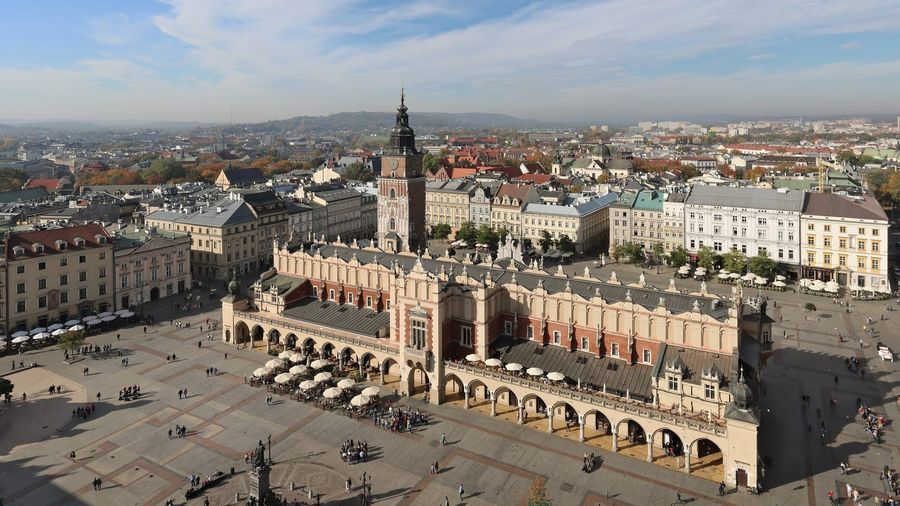
Three days is the ideal first visit to Krakow: spend day one on the Rynek Główny and Wawel, day two in the Kazimierz Jewish quarter, and day three on the sobering trip to Auschwitz-Birkenau, 70 kilometres west. The Old Town, Wawel, and Kazimierz form a compact triangle you can walk in twenty minutes.
Krakow is the rare European capital-in-spirit that survived the twentieth century with its medieval heart intact. Where Warsaw was flattened and rebuilt, Krakow came through the war physically whole, and the result is one of the continent's most complete old cities: a vast market square, a royal castle on a limestone hill, and a former Jewish quarter that has become the city's most atmospheric neighbourhood. Three days is enough to take in the essentials without rushing, and the city's compactness means you spend your time looking at things rather than getting between them. This itinerary balances the grandeur of the Poland of the kings with the harder history that sits an hour outside the city.
What should you see on day one in Krakow's Old Town and Wawel?
Start at the Rynek Główny, Europe's largest medieval market square at roughly 200 metres a side, with the Renaissance Cloth Hall and St Mary's Basilica, where a trumpeter breaks off the hourly hejnał mid-note. Walk south down Grodzka Street to Wawel for the cathedral, courtyard, and one or two ticketed interiors.
Start where Krakow has always started: the Rynek Główny, the largest medieval market square in Europe at roughly 200 metres on each side. It has been the commercial centre of the city since 1257, and it still works as one, ringed by cafés and dominated by two landmarks. The first is Cloth Hall, the Renaissance trading hall that runs down the middle of the square — once the engine of Krakow's cloth trade, now a covered arcade of souvenir and amber stalls, with the excellent Gallery of 19th-Century Polish Art on the upper floor. The second is St Mary's Basilica, whose two mismatched towers frame the square; every hour a trumpeter plays the hejnał from the taller tower, breaking off mid-note in memory of a medieval bugler said to have been shot during a Mongol raid.
Spend the morning simply absorbing the square and the lanes around it, then walk south down Grodzka Street to Wawel. The walk up the hill is short, and the castle complex rewards a slow circuit: the cathedral where Polish monarchs were crowned and buried, the arcaded Renaissance courtyard, and a clutch of separately ticketed interiors. Don't try to see everything inside — pick one or two, such as the State Rooms or the Crown Treasury, and leave time to walk the ramparts for the view over the Vistula. Below the hill, children and adults alike queue for the fire-breathing Wawel Dragon statue, a nod to the legend at the city's foundation.
How should you spend day two in Kazimierz and the Jewish quarter?
Give the day to Kazimierz, for centuries the heart of Jewish Krakow. Begin at the Old Synagogue, Poland's oldest surviving synagogue, and the Remuh Synagogue with its Renaissance cemetery, then cross to Podgórze for the ghetto remnants and the square of empty chairs. By afternoon the mood lifts among vintage shops and cellar restaurants.
Krakow's second day belongs to Kazimierz Jewish Quarter, the district that was for centuries the centre of Jewish life in the city and is today its most characterful neighbourhood. For nearly five hundred years Kazimierz was home to one of Europe's great Jewish communities, all but destroyed in the Holocaust; the synagogues, cemeteries, and squares remain, and walking among them with a knowledgeable guide turns a pretty district into a legible one.
Begin at the Old Synagogue, the oldest surviving synagogue building in Poland, now a museum of Jewish history, and work through the cluster of preserved synagogues nearby. The Remuh Synagogue and its Renaissance cemetery, with its wall of fragmented tombstones, is the most moving. By afternoon the mood lightens: Kazimierz's tangle of streets is full of vintage shops, galleries, and bars set in faded courtyards, and the food is some of the best in the city. Cross the footbridge to Podgóra to see the remnants of the wartime ghetto and the square of empty chairs that memorialises its deportations, then return for dinner in one of the district's cellar restaurants.
What should you know before visiting Auschwitz-Birkenau on day three?
Auschwitz-Birkenau lies about 70 kilometres west near Oświęcim and asks a full half-day. Between 10am and 3pm entry requires a licensed educator-guide and a timed ticket booked weeks ahead on the official site. A three-and-a-half-hour tour covers Auschwitz I and the vast Birkenau site; treat the rest of the day gently.
The third day is the hardest and, for most visitors, the most important. Auschwitz-Birkenau lies about 70 kilometres west of Krakow, near the town of Oświęcim, and a visit there is the reason many people come to this part of Poland at all. The former concentration and extermination camp, where more than a million people were murdered, is preserved as a memorial and museum, and it asks a full half-day at minimum.
Plan the logistics carefully. Between 10am and 3pm, entry requires a licensed educator-guide and a timed ticket booked in advance, and those slots sell out weeks ahead in summer; the official museum website is the place to book. A guided three-and-a-half-hour tour covers both the Auschwitz I base camp, with its brick blocks and exhibitions, and the vast Birkenau site two kilometres away, where the scale of the railway sidings and ruined gas chambers lands hardest. Dress for the weather, as much of the visit is outdoors, and treat the rest of the day gently — this is not an afternoon to pair with sightseeing. If you would rather close the trip on a different note, the Wieliczka Salt Mine, a UNESCO-listed underground world of carved chapels and chambers, makes a lighter alternative day trip closer to the city.
How should you pace three days in Krakow?
The rhythm matters more than the order. Front-load the joyful, walkable sightseeing — the square, the castle, the food of Kazimierz — and reserve the Auschwitz day for when you have the emotional room, ideally not your final morning before a flight. The Planty ring makes a pleasant stroll between any two points.
The order matters less than the rhythm. Front-load the joyful, walkable sightseeing — the square, the castle, the food of Kazimierz — and reserve the Auschwitz day for when you have the emotional room for it, ideally not your final morning before a flight. Krakow is small enough that you will keep crossing your own path: the Planty, the ring of green park that replaced the medieval walls, loops the whole Old Town and makes a pleasant stroll between any two points.
What should you eat and drink in Krakow?
Polish food in Krakow has shed its grey reputation. Seek out pierogi, żurek soured rye soup in a bread bowl, and the ringed obwarzanek sold from blue carts. Milk bars serve enormous home-cooked plates for a few złoty, while Kazimierz turns modern with the mushroom-and-cheese zapiekanka of Plac Nowy.
Polish food in Krakow has shed its grey reputation. Seek out pierogi in their dozen varieties, żurek soured rye soup served in a bread bowl, and the obwarzanek — the chewy ringed bread sold from blue carts on every corner, a cousin of the bagel that locals eat on the move. Milk bars (bar mleczny), the subsidised cafeterias left over from the communist era, still serve enormous plates of home cooking for a few złoty and are an experience in themselves. In Kazimierz, the food turns more modern and international, and the zapiekanka — a long toasted baguette piled with mushrooms and cheese — is the late-night staple of the Plac Nowy rotunda.
Is it worth hiring a local guide in Krakow?
Krakow rewards a guide for two reasons. In Kazimierz and at Auschwitz the value is interpretive: the physical fabric means little without the history behind it. In the Old Town it is orientation and access, unpicking Wawel's legends and its ticketed interiors. For Auschwitz's peak hours a licensed educator-guide is mandatory anyway.
Krakow rewards a guide more than most short-break cities, and for two distinct reasons. In Kazimierz and at Auschwitz, the value is interpretive: these are places where the physical fabric means little without the history, and a guide who can connect the empty synagogue to the community that filled it transforms the visit. In the Old Town, the value is orientation and access — a good walking-tour guide unpicks the legends of Wawel, points out which castle interiors are worth the separate tickets, and threads you through the square's history in the time it would take you to find the right café. For the Auschwitz day specifically, the licensed educator-guide is not optional during peak hours, so booking a structured tour solves the logistics as well as the storytelling.
Related Guides
- Budapest in 3 Days — a parallel itinerary for the other great Central European short break
- European Christmas Markets: A City-by-City Guide — Krakow's Rynek hosts one of the finest, if you visit in December
- Planning the Perfect Vienna Trip — the imperial city a short hop away, easily paired with Krakow
Three days in Krakow give you a complete city and a piece of difficult history in equal measure. Walk the square and the castle, give Kazimierz its full day, and book Auschwitz well ahead — do that, and you leave understanding why this small Polish city draws travellers from across the world, and why it asks something of them in return.
Frequently Asked Questions
Is three days enough for Krakow?
Three days is the sweet spot for a first visit. It gives you a full day for the Old Town and Wawel, a second for Kazimierz and the Jewish quarter, and a third for the day trip to Auschwitz-Birkenau or the Wieliczka Salt Mine. A fourth day lets you slow down or add Zakopane and the Tatra mountains.
How far in advance should I book Auschwitz-Birkenau tickets?
Book as early as you can — at least several weeks ahead in summer, and a month or more for peak season. Entry between 10am and 3pm requires a licensed guide, and those timed slots sell out. Tickets are released on the official museum site; early-morning or late-afternoon individual entry is sometimes available when guided slots are gone.
Do I need to climb Wawel Hill to see the castle?
The walk up Wawel Hill is gentle and short, and the castle courtyard and cathedral grounds are free to enter. You only pay for the individual timed exhibitions inside — the State Rooms, the Crown Treasury, and the cathedral towers — each ticketed separately, so decide which interiors matter most rather than buying everything.
Is Krakow a walkable city?
Very. The Old Town, Wawel, and Kazimierz form a compact triangle you can cross on foot in twenty minutes, and the medieval core is largely pedestrianised. Trams fill in longer hops, and the city is flat apart from the small rise of Wawel Hill, so most visitors barely use transport beyond the airport transfer.