
Budapest in 3 Days: A Complete Itinerary
A day-by-day Budapest guide covering Buda Castle, thermal baths, ruin bars, the Parliament building, and the Great Market Hall.
Read the full guideUpdated · 10 min read
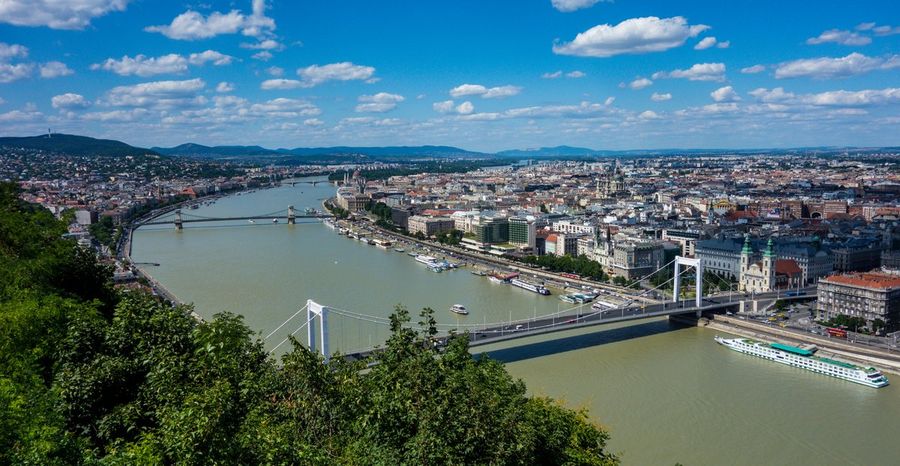
Three days in Budapest splits naturally by geography: day one climbs Buda's Castle Hill for the Fisherman's Bastion and Matthias Church, day two crosses to Pest for the Parliament and Jewish Quarter, and day three soaks in the Széchenyi thermal baths before browsing the Great Market Hall. Cheap trams and a 24-hour travelcard tie it together.
Budapest is two cities separated by the Danube and united by a shared history that neither side entirely agrees on. Buda — hilly, medieval, crowned by its castle — faces Pest, which is flat, commercial, and architecturally dense with the Austro-Hungarian grand buildings of a nineteenth century in which this was one of the capitals of a major European empire. Three days is enough to move between them comfortably and to understand, at least partially, why this city inspires such loyal affection among repeat visitors.
How is Budapest laid out?
Budapest is two cities divided by the Danube: hilly Buda with its castle on the west bank, flat commercial Pest on the east. Bridges like the Chain Bridge link them, while trams, three Metro lines, and trolleybuses cover everywhere. Buy a 24-hour travelcard at any Metro station on arrival.
The Danube bisects Budapest on a rough north-south axis. Most of the major tourist attractions distribute themselves between Buda's castle hill on the west bank and Pest's inner districts on the east. The bridges that connect them — particularly the Chain Bridge (Széchenyi Lánchíd) — are architectural highlights in their own right.
Public transport is excellent: trams, a Metro with three historic lines (Line 1, dating from 1896, is a UNESCO World Heritage Site), and trolleybuses cover the city comprehensively. A 24-hour travelcard (napijegy) is worth buying at any Metro station on arrival.
What should you do on day one in Buda?
Day one belongs to Buda's Castle Hill. Ride the funicular up to Buda Castle, home of the Budapest History Museum and Hungarian National Gallery, then walk north to the Fisherman's Bastion and Matthias Church. Add Óbuda's Roman Aquincum or the Hospital in the Rock, and dine in riverside Víziváros.
Morning: Buda Castle and the Fisherman's Bastion
Begin at the top of Castle Hill, reached by the Budavári Sikló funicular from the Chain Bridge approach (a short, atmospheric ride) or by walking up via the winding castle paths.
Buda Castle (Budavári Palota) is a massive Neo-Baroque complex that has been rebuilt so many times — after Mongol, Ottoman, Habsburg, and Soviet-era destruction — that its current form is essentially a twentieth-century reconstruction of a nineteenth-century reconstruction. The substance is in what it houses: the Budapest History Museum in the basement contains excavated medieval remains from the original castle that survived beneath the layers of rebuilding, and the Hungarian National Gallery occupies the main palace wings with a comprehensive collection of Hungarian fine art from the medieval period through the twentieth century.
The Fisherman's Bastion (Halászbástya), a few hundred metres north along the castle ridge, is a neo-Romanesque fantasy built in 1902 with seven towers representing the seven Magyar tribes. It exists primarily as a viewpoint platform and photo opportunity — the view across the Danube to the Hungarian Parliament is one of the city's defining images. The upper terraces require a ticket; the lower levels are free.
Matthias Church (Mátyás-templom) next to the Bastion is the coronation church of Hungarian kings — Francis Joseph I and Charles IV were crowned here. The interior is covered in geometric tile and fresco decoration reflecting nineteenth-century neo-Gothic renovation; it is striking but not particularly medieval in feel.
Afternoon: Óbuda and the Roman Heritage
If the castle district has left you hungry for deeper historical layers, take tram 17 north along the Buda embankment to Óbuda, the oldest section of the city. Aquincum, the Roman legionary fortress and civilian town that occupied this position from the first century AD, has an outdoor museum adjacent to an indoor exhibition of mosaics, tools, and everyday objects from the period. It is less visited than the castle quarter and more genuinely archaeological.
Alternatively, stay in the castle quarter and visit the Hospital in the Rock (Sziklakórház) — a nuclear bunker and hospital complex built into the limestone caves beneath Castle Hill, used through World War II and the 1956 uprising. Guided tours in English run regularly and provide a different perspective on the city's wartime experience.
Evening: Dinner in Buda
The Víziváros (Watertown) neighbourhood on the Buda embankment between the castle and the Margaret Bridge has excellent restaurants away from the tourist pricing of the castle itself. The riverside terrace restaurants along the Bem rakpart offer Danube views with local cooking at reasonable prices.
How do you spend day two in Pest?
Day two explores flat, grand Pest. Tour the neo-Gothic Parliament by advance booking to see the Holy Crown, pause at Liberty Square's contested memorials, then spend the afternoon in the Jewish Quarter around the vast Dohány Street Synagogue and Szimpla Kert. End with dinner on Kazinczy Street.
Morning: The Hungarian Parliament Building
The Országház (Parliament Building) on the Pest riverfront is one of the largest parliament buildings in the world and one of the most theatrically beautiful — a neo-Gothic structure completed in 1904 that looks, from the water or the Buda embankment opposite, like a confection of turrets and arches too elaborate to be functional. It is entirely functional. Entry is by guided tour only (book online in advance; English-language tours run several times daily). The tour covers the main staircase, the gold-domed central hall where the Holy Crown of Hungary is on permanent display, and the Upper House chamber. Allow 90 minutes.
Liberty Square (Szabadság tér) nearby has one of Budapest's most contested public spaces: the Memorial to the Victims of the German Occupation (a memorial to Hungarian victims of World War II) sits facing an unofficial Living Memorial that activists began constructing in response to disputes about historical responsibility for the deportation of Hungarian Jews. The collision between official monument and grassroots counter-monument is one of the most honest representations of how Central European nations are still negotiating World War II history.
Afternoon: The Jewish Quarter and Dohány Street Synagogue
Budapest's Jewish Quarter (Erzsébetváros, roughly the seventh district) is one of the largest in Europe and carries the complex heritage of a community that numbered 200,000 before 1944 and was reduced to 100,000 by the end of the war — Budapest's Jews being protected longer than those in other Hungarian cities due to the urban resistance network and, eventually, the Soviet advance.
The Dohány Street Synagogue (Nagy Zsinagóga) is the largest synagogue in Europe and second-largest in the world — a Moorish Revival building from 1859 that seats 3,000 and includes a museum and garden memorial behind it. The Raoul Wallenberg Memorial Park in the garden commemorates the Swedish diplomat who issued thousands of protective passports to Budapest Jews in 1944.
The surrounding streets have evolved into the ruin bar district — a Budapest phenomenon in which abandoned or semi-derelict buildings are turned into eclectic, improvised bars, often across multiple rooms and courtyards. Szimpla Kert is the most famous and remains worth visiting in the daytime when the crowds are thinner and the space's visual inventiveness is more apparent.
Evening: Dinner on Kazinczy Street
Kazinczy utca and the surrounding streets in the Jewish Quarter have the densest concentration of good restaurants in the city — Hungarian traditional cooking, contemporary Hungarian-European fusion, and some of the city's better vegetarian options all share this few-block radius. Book ahead on weekends.
What fills your third day in Budapest?
Day three is for Budapest's thermal culture and markets. Soak two or three hours at the neo-Baroque Széchenyi Bath or the Ottoman-era Rudas, then browse the Great Market Hall for paprika and Váci Street for shopping. Close the trip with an evening walk across the illuminated Chain Bridge.
Morning: Thermal Baths
Budapest sits above a network of thermal springs, and the bathing culture that developed around them — initially under Ottoman occupation in the sixteenth and seventeenth centuries — remains central to the city's social life. The baths divide into those primarily for leisure tourists and those primarily used by locals; the most iconic and worth visiting despite the tourist atmosphere is the Széchenyi Thermal Bath in City Park, built in 1913 in a neo-Baroque style with outdoor pools surrounded by ornate colonnades. The men's bathing section was historically the location for chess matches played on floating boards.
The Rudas Baths on the Buda embankment is one of the better-preserved Ottoman bathhouses (1566) and has a rooftop pool added in the twentieth century — it's more atmospheric and less crowded than Széchenyi on weekdays.
Plan on two to three hours for a bathing session. Bring a lock (or pay for towel hire at the baths). Most baths require a deposit or locker fee beyond the entry price.
Afternoon: Great Market Hall and Váci Street
The Great Market Hall (Nagy Vásárcsarnok) near the Liberty Bridge is a late-nineteenth-century iron-and-tile market hall across three floors selling produce, cold meats, paprika, embroidery, and souvenirs. The ground floor is genuine market (local Hungarians buying vegetables); the upper floor is more tourist-oriented. The paprika and pickled goods on the ground floor are worth buying — prices are fair and quality is typically good.
Váci Street is Budapest's main pedestrian shopping street, running from Vörösmarty Square south to the market hall. Its northern section (north of the Gerbeaud café) has been swamped by international chain stores; the southern section closer to the market retains more local character. The café at Gerbeaud on Vörösmarty Square is expensive by local standards but the Art Nouveau interior is a listed heritage space worth seeing while drinking an overpriced coffee.
Evening: Chain Bridge at Night
End your Budapest visit with an evening walk across the Chain Bridge (Széchenyi Lánchíd). Illuminated at night and reflecting in the Danube below, the view back toward the Parliament on one side and the castle on the other is the image of Budapest you will take home. The bridge itself is a nineteenth-century engineering achievement that became a symbol of national aspiration in a period when Hungary was still asserting its identity within the Austro-Hungarian empire. Walking it rather than driving across it is the point.
What practical tips help in Budapest?
Budapest runs on cheap, comprehensive trams, buses, and Metro, with scenic tram 2 hugging the Pest embankment. Hungary uses the Forint, not the Euro, so carry cash for market stalls though cards work widely. It stays affordable: dinner with wine runs €20–35, midrange hotels €70–140, and baths €15–25.
Transport: The Metro, trams, and buses are cheap and comprehensive. Tram 2 along the Pest embankment is one of the city's most scenic routes.
Currency: Hungary uses the Hungarian Forint (HUF), not the Euro. ATMs are widely available; most restaurants and hotels accept cards, but smaller market stalls and some traditional establishments are cash-only.
Language: Hungarian (Magyar) is famously unrelated to most European languages. English is widely spoken in tourist areas; a few words of Hungarian (köszönöm for thank you, kérem for please) are welcomed.
Costs: Budapest remains among the more affordable European capitals. A good dinner with wine runs €20–35 per person; midrange hotels cost €70–140. The baths entry runs €15–25 depending on the facility and time of day.
Budapest rewards multiple visits — there is always a side street, a museum, or a thermal bath that didn't make the first itinerary. Three days gives you the shape of the city; what you find within that shape is up to you.
Frequently Asked Questions
Is three days enough to see Budapest?
Yes. Three days comfortably covers Castle Hill, the Pest landmarks, a thermal bath and the ruin bars, with time for the Great Market Hall and a Danube viewpoint.
Do I need to book Budapest's thermal baths in advance?
For Szechenyi and Gellert it is wise to book online ahead, especially at weekends, which guarantees entry and often a slightly cheaper rate than buying at the door.
How do I get around Budapest?
The metro, trams and buses are cheap and efficient, with tram 2 along the Danube being a sightseeing route in itself. A travelcard covering your stay is the simplest option.
Should I stay on the Buda or Pest side of Budapest?
Pest has most of the nightlife, restaurants and flat walkable streets, while Buda is quieter and hillier. First-time visitors usually find Pest more convenient as a base.