
Getting Around Havana: A Practical Transport Guide
How to move around Havana by classic-car taxi, almendrón shared cab, coco-taxi, the HabanaBusTour, and on foot — cash-only fares in US dollars, airport transfers from José Martí, and first-timer tips.
Read the full guideUpdated · 11 min read
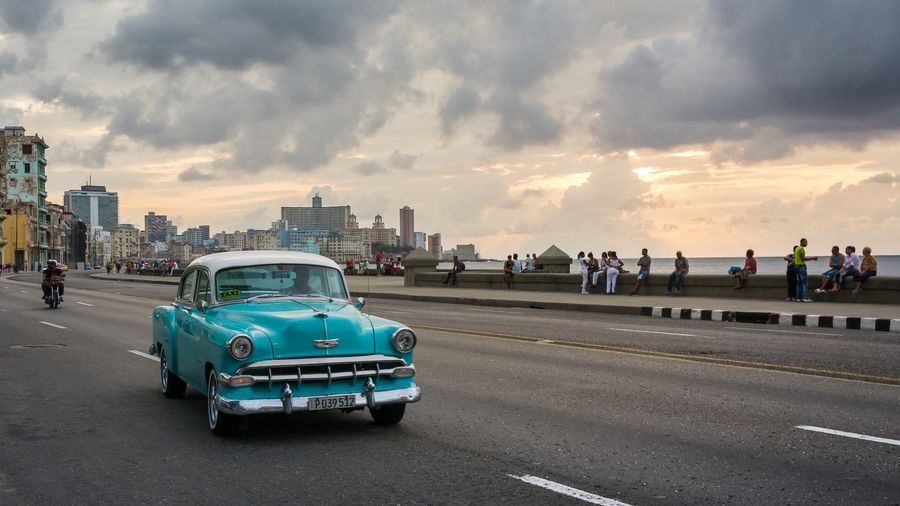
Getting around Havana runs on cash and conversation, not apps and tap cards. There is no metro and no Uber; instead you walk the compact colonial core, hail a classic-car taxi or a coco-taxi and agree the fare before boarding, or squeeze into a shared almendrón running a fixed route for a few pesos. Old Havana is best on foot, taxis cover the longer hops out to Vedado, and everything is paid in physical currency — so the first rule is to arrive with enough of it.
Havana rewards exploring on the ground precisely because it refuses to work the way other capitals do. The capital of Cuba has no underground railway, no rechargeable transit card, and no ride-hailing app a visitor can use. What it has instead is a layered, improvised transport culture — 1950s Chevrolets pressed into service as taxis, motorbike-powered rickshaws, shared cars that behave like buses — that is as much a part of the experience as the plazas themselves. The single most useful thing to grasp before your first full day in Havana is how you will pay, because the whole system turns on cash.
Why Havana runs on cash, not cards
Every ride in Havana is settled in physical money, and cards issued by US banks are useless anywhere in Cuba. Bring US dollars or euros for your entire stay, keep them in small denominations, and change some into Cuban pesos for local transport. There is no way to top up a balance or tap your way onto anything, so the cash you carry is the transport network you have access to.
Two currencies matter on the street. Tourist-facing rides — classic-car taxis, coco-taxis, the airport transfer — are quoted in US dollars (euros are widely accepted too). Local rides — the shared almendrones and municipal buses — run on Cuban pesos, so change a modest amount into pesos at an official cadeca (exchange house) or through your casa. Drivers almost never have change for a US$50 or US$100 note, and large euro notes are frequently refused over counterfeiting fears, so build up a stock of small bills before you need them. Budget a cash reserve for the whole trip: foreign-card ATMs are scarce and often empty, so there is no easy way to withdraw more once you arrive.
Getting into Havana from the airport
José Martí International Airport (HAV) sits about 15 km south of the centre, and a taxi is the only realistic way in — there is no train and no dependable public bus. Expect to pay roughly US$25–30 for the 25–40 minute drive to Old Havana or Vedado.
Arrange the ride rather than improvising it. Official taxis wait at a marked rank outside arrivals; agree the fare before you load your bags, since airport taxis are not metered. The smoother option after a long flight is to ask your casa particular (licensed homestay) host to send a trusted driver to meet you by name — you skip the queue and the negotiation entirely, and the price is settled in advance. Change just enough for the ride at the airport cadeca if you must, but its rate is poor; carry small US dollar bills so you are not handing a driver a note he cannot break.
Classic-car taxis and coco-taxis
The rides most visitors picture — a chrome-finned 1950s convertible along the seafront, or a bright-yellow coco-taxi buzzing between sights — are hailed on the street, and the fare is always negotiated before you get in. They are a pleasure and a photograph as much as a means of transport, priced accordingly.
The iconic experience is a classic American car cruising the Malecón, the eight-kilometre seafront where Havana's social life gathers at dusk. These are tourist rides, not bargains: a 30–60 minute convertible tour runs about US$20–40, and a straightforward point-to-point hop across the city typically US$5–15. Coco-taxis — the round, yellow, three-wheeled scooters — are cheaper at roughly US$2–5 for a short hop, open-sided and fun but strictly fair-weather. Whichever you flag down, settle the number out loud before boarding; a fare "agreed too loosely" is the most common way visitors get short-changed.
| Ride | Typical fare | Currency | Best for |
|---|---|---|---|
| Classic-car taxi (city hop) | US$5–15 | US dollars | Crossing town, luggage, after dark |
| Classic convertible tour | US$20–40 | US dollars | Sightseeing along the Malecón, 30–60 min |
| Coco-taxi | US$2–5 | US dollars | Short, fair-weather hops between sights |
| Modern metered taxi | US$5–15 | US dollars | A cheaper, plainer alternative to the classics |
Almendrones: how Havana actually moves
Locals get around in almendrones — shared vintage cars that run fixed routes along the main avenues like an informal bus line, charging a few Cuban pesos a seat. They are the authentic, cheapest way to cover the city, and reading their routes is the one genuine skill worth picking up.
An almendrón (the word nods to the "almond" shape of the old American sedans) follows a set corridor — along a main avenue through Centro Habana toward Vedado, say — picking up and dropping passengers anywhere along it. To ride one, stand on the right avenue, flag a car heading your direction, and call out your destination so the driver can confirm his route before you climb in; you pay a handful of pesos when you get out. The catch is the learning curve: routes are not posted anywhere, so ask your host or a local which corner to wait on and roughly what to pay. Get it right and you are moving through the city exactly as Habaneros do, for pocket change.
The HabanaBusTour and exploring on foot
For the outer sights without any haggling, the state-run HabanaBusTour hop-on-hop-off double-decker links the core to Vedado and the Plaza de la Revolución for a flat daily fare — but the historic centre itself is best covered on your own two feet. Walking is not a fallback in Old Havana; it is the point.
The HabanaBusTour is the simplest single fix for reaching the spread-out attractions. One open-top route (the T1) connects Parque Central, near El Capitolio, out through Vedado to the vast Plaza de la Revolución and back along the Malecón, all for a flat daily ticket bought on board — no fare negotiation required. It is slow and it is touristy, but it removes the single biggest friction of Havana transport.
For the centre, though, walk. The five colonial plazas of the Old Havana UNESCO district are linked by cobblestone streets closed to most traffic, and the whole ensemble is compact and flat. The Caribbean heat is the only real obstacle: start early, keep to the shaded side of the street, and duck into a museum or a café through the fierce midday hours. Adjacent sights are usually closer than the time it would take to negotiate a taxi to them.
Bicitaxis, bikes, and staying connected
Two more modes fill the gaps — pedal-powered bicitaxis for short central hops and rental bicycles for flat, wide Vedado — while staying connected takes a little planning, since Cuba's mobile data is limited and Google Maps will not route you door-to-door. Prepare for a city that does not assume you have a working phone.
Bicitaxis (pedal rickshaws) are handy for a slow, cheap trundle across the centre; agree a few dollars or pesos before setting off. Flat, leafy Vedado is genuinely pleasant to cycle, and several casas and shops rent bicycles by the day. Connectivity is the part to plan around: Uber and live transit routing simply do not work here, so download an offline map before you arrive. ETECSA, the state telecom, sells tourist SIM cards at its offices on presentation of your passport, but data allowances are small and metered — treat mobile data as a scarce backup, not a constant, and keep a printed city map in your day bag.
Timing your days and getting fares right
Havana rewards an early start and a firm hand on fares. Beat the midday heat with morning sightseeing, keep the walkable core for the hottest hours, and agree every price out loud before you move. A little rhythm and a few habits smooth over almost every transport wrinkle in the city.
The heat, not rush hour, shapes the Havana day. Sightseeing that involves walking — the plazas, the Malecón, the market stalls — belongs to the cooler morning and late afternoon; the blazing middle of the day is for a shaded lunch, a museum, or a slow classic-car cruise with the top down. On money and fares, a few habits go a long way:
- Agree the fare before boarding any taxi, coco-taxi, or bicitaxi — never after.
- Keep small bills in both dollars and pesos; drivers rarely make change for large notes.
- Use licensed rides and trusted drivers over jineteros touting unlicensed "tours" on the street.
- Ask your casa host to phone a known driver for set pickups, airport runs, or day trips.
- Carry an offline map and note your destination's cross-streets, since drivers navigate by landmark.
For a sense of what guided experiences cost alongside your transport, the Havana city guide lists typical tour prices, and the wider Cuba country guide sets out guide fees and the cash-economy essentials in more detail.
Why a local guide still helps
None of this is difficult after a day, but a local guide erases the learning curve completely — reading almendrón routes, knowing the fair fare for a given hop, and steering you past the touts. In a city with no app to fall back on, that lived knowledge is worth more than anywhere with a tap card.
A good Havana guide does what no map or algorithm can here: tells you which corner the almendrón to Vedado actually leaves from, what a convertible tour of the Malecón should really cost, and which driver to trust for a day trip out to Fusterlandia in Jaimanitas. Guides from the official Agencia San Cristóbal, run by the City Historian's Office, know the colonial core intimately; a casa host's recommended driver becomes your reliable wheels for the week. For a first visit, pairing a half-day guided orientation with a pocket of small bills is the fastest route to feeling like the city is yours to move through.
Related Guides
- Getting Around Buenos Aires: A Practical Transport Guide — how another great Latin American capital handles fares, metros, and airport transfers
- Getting Around Medellín: A Practical Transport Guide — tap cards, cable cars, and ride-hailing in a very differently wired city
Arrive with a stash of small US dollar bills and a handful of Cuban pesos, download an offline map, and Havana opens up at the pace of a walk and the cost of a few coins a ride. The colonial core is yours on foot, a classic car or coco-taxi covers the longer hops, an almendrón moves you like a local, and a trusted driver arranged through your host closes the loop after dark — leaving you free to explore from the plazas to the Malecón without ever wondering how you will get home.
Hero photograph of a classic American taxi on the Malecón in Havana by kuhnmi, licensed CC BY 2.0 via Wikimedia Commons.
Frequently Asked Questions
Does Uber work in Havana?
No. Uber, Bolt, and every international ride-hailing app are unavailable in Cuba, and there is no local equivalent that works reliably for visitors. You get around by hailing a classic-car taxi or a coco-taxi on the street and agreeing the fare before you set off, by riding a shared almendrón along a fixed route, or on foot. Ask your casa particular host to phone a trusted driver when you need a set pickup.
Do I need cash to get around Havana, and do US cards work?
Yes, transport is cash-only, and cards issued by US banks do not work anywhere in Cuba. Bring US dollars or euros in small denominations for your whole stay and change some into Cuban pesos for almendrones and local buses. Taxi drivers rarely carry change for large notes, so keep a stock of small bills for fares.
How much is a taxi from Havana airport to the city centre?
A taxi from José Martí International Airport (HAV) to Old Havana or Vedado runs roughly US$25–30 and takes 25–40 minutes depending on traffic. There is no train or reliable public bus from the airport, so arrange a taxi at the official rank or, better, have your casa host book a driver to meet you — that removes any haggling after a long flight.
What is an almendrón and how do I ride one?
An almendrón is a shared taxi — usually a vintage American car — that runs a fixed route along Havana's main avenues for a few Cuban pesos, the way a bus line would. Flag one down heading your direction, tell the driver your destination so he can confirm he is going that way, and pay in pesos when you get out. Routes take a little practice to read, so it helps to ask a local or your host which corner to wait on.
Is it better to walk or take taxis in Old Havana?
Walk. Old Havana and much of Centro Habana are compact, flat, and closed to through traffic in places, so the five colonial plazas are far quicker and more pleasant to reach on foot than by car. Save taxis for longer hops out to Vedado, the Plaza de la Revolución, or Fusterlandia, and for getting home after dark.