
Getting Around Buenos Aires: A Practical Transport Guide
How to move around Buenos Aires by Subte, colectivo, train, taxi, and bike — the SUBE card, fares in pesos, airport transfers, and timing tips for first-timers.
Read the full guideUpdated · 13 min read
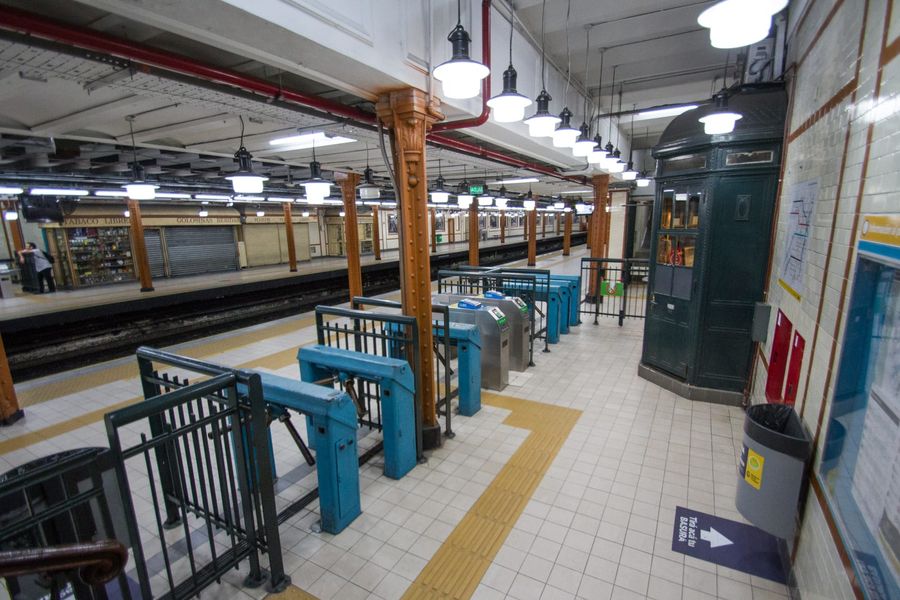
Getting around Buenos Aires starts with a SUBE card, the rechargeable pass for the Subte metro, every colectivo bus, and commuter trains. Rides cost a few hundred pesos, well under a dollar. Six colour-coded Subte lines cross the centre, colectivos reach everywhere else, and taxis cover the late-night gap after the metro closes at 11 PM.
Buenos Aires is enormous, flat, and surprisingly easy to cross once you understand its layers. The capital of Argentina sprawls across 48 barrios, but the neighbourhoods most visitors care about — Recoleta, Palermo, San Telmo, Microcentro — sit within a compact band that the city's century-old metro and its dense bus grid stitch together for the price of pocket change. The single most useful thing you can do before your first full day in Buenos Aires is sort out a transit card; almost everything else follows from there.
What is the SUBE card and do you need one?
The SUBE card is a rechargeable contactless card that pays for the Subte, every colectivo bus, and the commuter trains, and it is essentially non-negotiable since buses stopped taking coins years ago. Buy one for a small fixed cost at a kiosco, station booth, or airport terminal, and load it with pesos only.
The SUBE card is a rechargeable contactless card that pays for the Subte (metro), every colectivo (city bus), and the commuter trains. It is non-negotiable: colectivos stopped accepting coins years ago, and while you can now tap a foreign contactless bank card on the Subte and many buses, the SUBE fare is meaningfully cheaper than the card-tap or QR-code rate.
Buy one for a small fixed cost at a kiosco (the ubiquitous corner kiosks), at Subte station booths, or at one of the dedicated SUBE terminals in major stations and both airports. Load it with cash — pesos only — and you are set. A few hundred pesos covers several days of moderate travel. One card can pay for more than one passenger on a bus or at a turnstile, so couples and small groups can share a single SUBE in a pinch.
How does the Buenos Aires Subte work?
The Subte is the fastest way across the centre. Six colour-coded lines, lettered A through H, fan out mostly toward the western and northern barrios; Line A opened in 1913 as the Southern Hemisphere's first underground railway. Trains run roughly 5 AM to 11 PM, with a single flat fare and free transfers between lines.
The Subte is the fastest way to cross the centre. Six lines, lettered A through H and colour-coded, fan out mostly from the downtown core toward the western and northern barrios:
- Line A is the headline act for any transport enthusiast — opened in 1913, it was the first underground railway in the Southern Hemisphere and the Spanish-speaking world. Ride it through Plaza de Mayo and you are travelling a genuine piece of living history; the beautifully tiled Perú station pictured above preserves the original early-20th-century look.
- Lines B, D, and E radiate out toward Palermo, Belgrano, and the southern barrios respectively, while Line H runs north–south and is the easiest interchange for reaching Las Heras near the Recoleta Cemetery.
- Line C links the two big railway terminals, Retiro and Constitución, and is the spine that connects the others.
Trains run roughly from 5 AM until about 11 PM, slightly later on Friday and Saturday and reduced on Sundays and holidays. A single flat fare takes you anywhere on the network with free transfers between lines. The trade-off: the Subte mostly serves the centre and west, so it will not get you everywhere, and it gets genuinely packed at rush hour.
How do you use the colectivo buses?
Where the Subte stops, the colectivos take over, running hundreds of numbered lines to every corner of the city around the clock. The catch is a steep learning curve: route numbers have several branches, so tell the driver your destination before tapping your SUBE. The free BA Cómo Llego app plans exact journeys in real time.
Where the Subte stops, the colectivos take over. Buenos Aires runs one of the densest bus networks on the planet — hundreds of numbered lines that reach every corner of the city and run through the night. They are slightly cheaper than the Subte and, crucially, they fill the gaps the metro leaves, including the riverside barrios and the long avenues out to Palermo's parks.
The catch is the learning curve. The numbering system is opaque to newcomers, a single route number can have several branches (ramales) heading to different destinations, and fares vary slightly by distance — so tell the driver your destination or nearest cross-streets when you board and the machine will calculate the fare before you tap your SUBE. The fix for all of this is the free BA Cómo Llego app (also a website), the city government's official journey planner: type in where you are and where you want to go and it returns the exact bus, Subte, train, or walking combination, in real time. Google Maps also handles the city's transit reasonably well.
What about trains, bikes, and walking in Buenos Aires?
Two more options round out the picture. Commuter rail from Retiro and Constitución suits day trips, like the Tren de la Costa toward the Tigre Delta, and takes the SUBE card. The flat city makes Ecobici bike-share and walking a pleasure—barrios like San Telmo, Recoleta, and Palermo are best explored on foot.
Two more options round out the picture. The commuter rail lines running out of Retiro and Constitución are most useful for day trips — the Mitre line's Tren de la Costa direction toward the Tigre Delta is the classic excursion. They also take the SUBE card.
For short hops, the city's Ecobici bike-share is excellent and the terrain could not be friendlier: Buenos Aires is almost entirely flat, with a growing network of protected bicisendas along the major avenues. Registration is done through an app, and the system is free for a number of rides per day on weekdays, with modest charges beyond that. Cycling between Palermo's parks and the Recoleta and Retiro green spaces is one of the more pleasant ways to see the north of the city.
And do not underestimate walking. Barrios such as San Telmo, Recoleta, and Palermo are best explored on foot, and the distances between adjacent sights are often shorter than the time it takes to wait for a train. A Sunday wander down Defensa street to the San Telmo market needs no ticket at all.
When should you take a taxi or ride-hailing in Buenos Aires?
After the Subte shuts around 11 PM—right when milongas and dinners get going—taxis and apps become the sensible way home. The black-and-yellow metered taxis are plentiful and reliable; hail one showing its libre light or have a bar call a radio taxi. Ride-hailing apps let you pay by card and avoid language friction.
After the Subte shuts down around 11 PM — right when the milongas and dinner reservations are getting going — taxis and apps become the sensible way home. The city's black-and-yellow taxis are metered, plentiful, and reliable; hail one with its roof light lit (libre) or, better, have a restaurant or bar call a radio taxi for you. Round up the fare as a tip.
Ride-hailing apps operate widely and let you pay by card and avoid language friction over your destination — a real advantage late at night. Fares are reasonable by international standards thanks to the exchange rate. Whichever you choose, a typical cross-town night trip costs only a few dollars' equivalent.
How do you get from the airports into Buenos Aires?
Buenos Aires has two very different airports. Ezeiza (EZE), the international gateway, sits about 35 km southwest; budget 45 minutes to over an hour by official taxi, remis, app, or the fixed-price Manuel Tienda León shuttle. Aeroparque (AEP), the domestic airport, sits on the river just north of Palermo, a short taxi from central hotels.
Buenos Aires has two airports, and they are very different distances from the centre:
- Ezeiza (EZE), the main international gateway, sits about 35 km southwest of downtown. Budget 45 minutes to well over an hour depending on traffic. Your options are an official airport taxi or remis booked at the clearly marked counter inside arrivals, a ride-hailing app, or the fixed-price Manuel Tienda León shuttle bus to its central terminal near Retiro — the cheapest door-to-area option.
- Aeroparque (AEP), the domestic and regional airport, is far more convenient: it sits right on the river just north of Palermo, a short and inexpensive taxi or app ride from most central hotels.
A word of advice that applies to both: do not change your entire trip's cash at the airport, where rates are poor. Bring enough small bills to cover the ride into town and sort out better exchange in the city.
How much does transport cost, and what about the currency?
Public transport here is comically cheap for foreigners—individual Subte and bus rides cost well under a US dollar at the tourist exchange rate, so a week of heavy use barely registers. The wrinkle is Argentina's peso inflation: published figures go stale fast, so check the current fare when you load your SUBE with cash.
Public transport here is almost comically cheap for foreign visitors. Individual Subte and bus rides cost well under a US dollar at the tourist exchange rate, so even a week of heavy use barely registers against your budget. The complication is not the fares but Argentina's peso inflation: published numbers go stale quickly, so treat any specific figure — including the ones above — as approximate and check the current fare when you load your SUBE. Carry enough physical pesos to top the card up, since recharge points are cash-based.
For context on the wider cost of guided experiences, the Argentina country guide breaks down typical tour pricing, and most walking and tango tours assume you can reach the meeting point under your own steam.
How should you time your days in Buenos Aires?
Porteño rhythm is late. Rush hour swells the Subte and colectivos roughly 7:30-9:30 AM and 5:30-8 PM, with Lines B and D busiest. Because dinner starts at 9 or 10 PM, the gap between the Subte's 11 PM close and the all-night buses is exactly when you'll most want a taxi or app.
Porteño rhythm is late. Rush hour swells the Subte and the colectivos roughly from 7:30 to 9:30 in the morning and again from about 5:30 to 8 in the evening, with Lines B and D and the Retiro-bound services the most crowded. Because the city eats dinner at 9 or 10 PM and stays out past midnight, the late-evening transport gap between the Subte's 11 PM close and the all-night buses is exactly when you will most want a taxi or app. Plan sightseeing that depends on the metro for the middle of the day, save the riverside and park barrios for a bike or a walk, and keep a little SUBE credit in reserve so a closed station or a re-routed bus never strands you.
What local transport rules should you keep in mind?
A few habits smooth things over. Mind your belongings on crowded platforms and buses, especially around Retiro, Constitución, and Line B, where petty theft is the realistic risk. Have your destination written down for drivers, keep small bills for SUBE top-ups, and validate on both entry and exit or risk being overcharged.
- Mind your belongings on crowded platforms and buses, particularly around Retiro, Constitución, and on Line B — petty theft, not violence, is the realistic risk.
- Have your destination written down for bus drivers and older taxi drivers; cross-streets work better than landmarks.
- Keep small change and small bills for SUBE top-ups; large notes are awkward at kioscos.
- Validate on entry and exit where the system asks you to, or you may be overcharged.
Why does a local guide still help in Buenos Aires?
None of this is hard after a day, but a local guide compresses the learning curve to zero. A good walking-tour guide hands you the BA Cómo Llego logic, steers you onto the right ramal of a confusing bus line, and knows which Subte exit drops you closest to the door you actually want.
None of this is hard once you have done it for a day, but a local guide compresses the learning curve to zero. A good walking-tour guide will hand you the BA Cómo Llego logic, steer you onto the right ramal of a confusing bus line, and know which Subte exit drops you closest to the door you actually want — the difference between arriving at La Boca at the photogenic end of Caminito or three gritty blocks away. For a first visit, pairing a half-day guided orientation with a SUBE card in your pocket is the fastest route to feeling like the city is yours.
Related Guides
- Getting Around Tokyo: A Practical Transport Guide — how another great metro city handles tap cards, rush hour, and airport transfers
- Planning the Perfect Trip to Bariloche — logistics for the Patagonian lake district, a popular onward leg from Buenos Aires
Get the SUBE sorted on day one, download BA Cómo Llego, and the rest of Buenos Aires opens up at the cost of a few hundred pesos a ride. The Subte gets you across the centre, the colectivos cover everything it misses, and a late-night taxi closes the loop after the trains stop — leaving you free to keep porteño hours without ever worrying about how you'll get home.
Hero photograph of Perú station on Line A by CucombreLibre, licensed CC BY 2.0 via Wikimedia Commons.
Frequently Asked Questions
What is the SUBE card and do I need one in Buenos Aires?
SUBE is a rechargeable contactless card that pays for the Subte, every colectivo bus, and the commuter trains. You need it because buses no longer accept coins, and a SUBE fare is cheaper than paying with a contactless bank card. Buy one at a kiosk or station and top it up with cash.
How much does public transport cost in Buenos Aires?
A single Subte ride is a few hundred pesos and a colectivo ride is slightly less, both well under a dollar at the tourist exchange rate. Argentina's peso inflation means the exact figure changes often, so check the current fare when you load your SUBE card rather than relying on an old number.
Is the Buenos Aires Subte safe and easy to use?
The six Subte lines are colour-coded and lettered A to H, signage is clear, and trains run roughly from 5 AM to 11 PM. As with any busy metro, keep your phone and wallet secure on crowded platforms and carriages, especially on Line B and around Retiro.
How do I get from Ezeiza airport into the city?
Ezeiza (EZE) is about 35 km from the centre. An official airport taxi or remis booked at the arrivals counter, or a ride-hailing app, takes 45 minutes to over an hour depending on traffic. The Manuel Tienda León shuttle bus is a cheaper fixed-price alternative to a downtown terminal.