
Getting Around Chengdu: A Practical Transport Guide
How to move around Chengdu — the metro and Tianfu Tong card, buses, DiDi, bike-share, airport transfers from Shuangliu and Tianfu, plus timing and budget tips.
Read the full guideUpdated · 13 min read
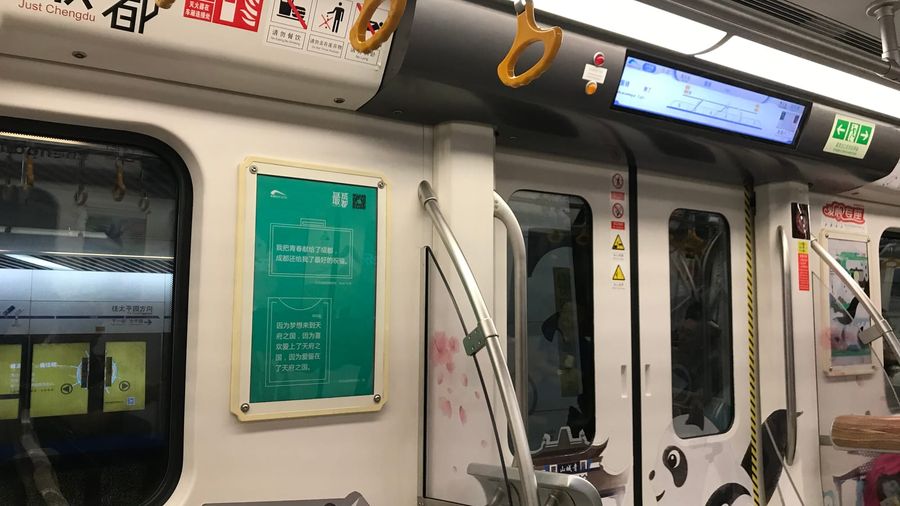
Getting around Chengdu comes down to one of China's largest metro networks, a rechargeable Tianfu Tong card (or a QR code in Alipay), and DiDi ride-hailing to close the gaps. The metro reaches almost every sight for a couple of yuan a trip, city buses fill in the edges, and the flat, tree-lined centre is a genuine pleasure to walk and cycle. Sort out mobile payment on day one and the whole city opens up cheaply.
Chengdu rewards visitors who slow down, but that does not mean getting around it is slow. The capital of Sichuan province — the gateway to giant pandas, numbing hotpot, and the colossal Leshan Giant Buddha — spreads across a wide, flat basin, and over the past fifteen years it has built one of the most extensive urban rail systems on the planet to knit that sprawl together. For a first-time visitor to Chengdu, the good news is that the pieces fit together logically and cost almost nothing. This guide walks through the metro, buses, taxis, cards, airport transfers, and the day-planning quirks that make the difference between a smooth trip and a frustrated one.
How does the Chengdu Metro work?
The metro is the backbone of getting around Chengdu — clean, frequent, air-conditioned, and by the mid-2020s spanning more than a dozen lines and over 500 kilometres of track, making it one of the largest systems in the world. Trains run roughly from 6:30 AM to 11 PM, fares are distance-based from ¥2, and Tianfu Square anchors the network where Line 1 and Line 2 cross beneath the city's central plaza.
Chengdu opened its first metro line in 2010 and has been building relentlessly ever since. The result is a network that reaches nearly everywhere a visitor wants to go. Line 1 runs north–south through the heart of the city and calls at Tianfu Square (Tianfu Guangchang), the giant central plaza that doubles as the system's principal interchange with Line 2, which cuts east–west. Between them these two lines cover the historic core, the shopping district around Chunxi Road, and the main railway stations.
A few practical points make the metro painless:
- Fares are distance-based, starting at ¥2 (about US$0.30) for short trips and climbing a yuan or two for longer cross-city journeys. You will rarely pay more than ¥7.
- Security screening is mandatory at every station entrance — bags go through a scanner and you may need to sip from any drink you carry. It is quick, but factor a couple of minutes into each trip.
- Signage and announcements are bilingual, lines are numbered and colour-coded, and station exits are lettered, so navigation is straightforward even without Chinese.
- Trains run roughly 6:30 AM to 11 PM; the last-train time is posted on platforms and varies slightly by line, so check it before a late night out.
The giant panda research base sits on the northern outskirts, and while a metro line runs out in that direction, the last stretch to the enclosures is best covered by a short bus or DiDi ride — worth planning ahead, since the pandas are most active shortly after the gates open.
What card or payment do you need?
The traditional answer is the Tianfu Tong card, Chengdu's rechargeable transit pass that taps you onto the metro and every bus at the standard fare. The modern answer is a QR code in Alipay or WeChat, which foreign visitors can now use after linking an international card. Set one of the two up on arrival and you never touch a ticket machine again.
For years the Tianfu Tong card was the essential tool: buy it at any metro station service window, load it with cash, and tap on. It still works perfectly and is the simplest option if you would rather not fiddle with a phone — one card can be shared by a couple or small group on the buses.
Increasingly, though, residents pay with a transit QR code inside Alipay or WeChat. Both apps have made it far easier for foreign travellers to link an overseas Visa or Mastercard, and once set up the QR code scans at metro gates and on bus readers alike. Whichever route you choose, the goal is the same — avoid single-ride paper tickets, which are slower and only sold at the metro. Keep a little credit in reserve so a top-up queue never strands you at a turnstile.
How do you use Chengdu's buses?
City buses reach the neighbourhoods and lanes the metro misses, run frequently, and cost a flat ¥2 with the same card or QR code. The catch is that route information and stop announcements are largely in Chinese, so lean on a mapping app to tell you which number to board and where to get off.
Chengdu's bus network is dense and cheap, charging a flat ¥2 on most routes regardless of distance. Buses are the natural complement to the metro: they thread through the older lanes, reach smaller temples and markets, and often drop you closer to a destination's door than the nearest station exit. Tap your Tianfu Tong card or scan your QR code as you board through the front.
The friction is language. Route maps at stops and the recorded next-stop announcements are mostly Chinese-only, and drivers rarely speak English. The fix is your phone: apps such as Google Maps, Amap (Gaode), or the metro-focused MetroMan Chengdu plan door-to-door journeys, tell you the exact bus number, and count down the stops so you know when to press the bell. For a nervous first-timer the metro is the confidence-builder; add buses once you have the rhythm of the city.
When should you take a taxi or DiDi?
Metered taxis are plentiful and cheap by international standards, but the smoother choice for most visitors is DiDi — China's dominant ride-hailing app — which removes the language barrier, shows the fare upfront, and lets you pay through the app. Reserve either for late nights after the metro stops, heavy-luggage trips, or the outer suburbs the rails do not reach.
Chengdu's street taxis are green-and-yellow, metered, and inexpensive, with flag-fall around ¥8–9 and a short cross-town hop rarely exceeding ¥30 (US$4). The complication is communication: few drivers read Latin script, so have your destination written in Chinese characters ready to show.
DiDi sidesteps all of that. It works much like Uber, displays the route and estimated fare before you commit, and handles payment in-app, so there is nothing to explain and no cash to fumble. DiDi's English-language interface and its integration inside Alipay make it the practical default for visitors. It is especially valuable for the trips public transport handles poorly — a late dinner after the trains stop, a hotel run with suitcases, or reaching a temple or teahouse tucked into the outer districts.
What about cycling and walking?
Chengdu is flat, and its centre is threaded with dockless share bikes you unlock by scanning a QR code — a cheap, pleasant way to cover the middle distances the metro overshoots. Many of the best sights cluster within an easy walk of one another, so plan clusters of attractions rather than hopping the metro between each stop.
The Sichuan basin is level ground, and Chengdu has embraced dockless bike-share on a huge scale. Bright bikes from operators such as Meituan and Hello sit on nearly every pavement; scan the QR code with the relevant app to unlock one, and a half-hour ride costs a yuan or two. For the flat, leafy central districts it is often faster than waiting for a bus.
Walking, though, is how you should experience the historic heart. The Wuhou Shrine, dedicated to the strategist Zhuge Liang, sits directly beside the lantern-lit lanes of Jinli Ancient Street — a single stroll takes in both. People's Park, the Kuanzhai Alley teahouse quarter, and the Chunxi Road shopping district are similarly clustered. Grouping nearby sights into walkable clusters, then using the metro or a bike to jump between clusters, is the efficient way to plan a Chengdu day.
How do you get to and from the airports?
Chengdu has two international airports. Shuangliu (CTU), about 16 km southwest, sits directly on metro Line 10, so a train into town is quick and cheap. The newer Tianfu (TFU), roughly 50 km southeast and opened in 2021, is linked to Chengdu South Railway Station by the fast Line 18, with airport shuttle buses and DiDi as alternatives.
Since 2021 Chengdu has operated two airports, and which one you use changes your arrival plan:
- Shuangliu International (CTU) is the older, closer field, about 16 km southwest of the centre. Metro Line 10 runs from its terminals, connecting to the wider network for a fare of just a few yuan — by far the easiest route in.
- Tianfu International (TFU) is the vast new hub about 50 km southeast, and it handles a growing share of long-haul flights. The express Line 18 whisks passengers to Chengdu South Railway Station in well under an hour; airport shuttle buses serve major districts, and a DiDi is the door-to-door option if you are laden with bags.
Confirm which airport your flight uses when you book — the two are on opposite sides of the metropolis, and turning up at the wrong one is a genuinely costly mistake.
How do you plan day trips beyond the city?
Chengdu is the launch pad for Sichuan's headline excursions, and most run on the high-speed rail network rather than the metro. High-speed trains reach Leshan in around an hour for the Giant Buddha, while other classic day trips fan out to Mount Qingcheng and the Dujiangyan irrigation works. For these, a booked guide or driver removes the ticketing and timing hassle.
The metro map ends at the city limits, but Chengdu's real reach is its high-speed rail. Bullet trains from the city's stations put a string of Sichuan icons within day-trip range: the Leshan Giant Buddha — the 71-metre Tang-dynasty statue carved into a riverside cliff — is roughly an hour away by high-speed train, and the ancient Dujiangyan irrigation system and the Taoist slopes of Mount Qingcheng are similarly quick to reach. Buy rail tickets in advance through the official 12306 platform or a booking app, and bring your passport, which serves as your ticket at the gates.
Because these trips combine a train, a local transfer, and timed entry, they are the moment many visitors find a guide most useful. A booked day-trip guide or private driver handles the ticket queue, the connection from the station to the site, and the return timing — the difference between a relaxed excursion and a stressful one.
How should you time your days in Chengdu?
Two rhythms shape a Chengdu transport day: rush hour and the overcast climate. The metro is tightest from about 7:30 to 9:30 AM and 5:30 to 7:30 PM, so aim sightseeing at the middle of the day. And because Chengdu is famously grey, treat any clear morning as a gift and spend it outdoors at the panda base or on a day trip.
Plan around the peaks. The metro and buses fill from roughly 7:30 to 9:30 in the morning and again from about 5:30 to 7:30 in the evening, with Line 1 and Line 2 through the centre the tightest squeeze. Slot your metro-dependent sightseeing into the calmer midday window, and keep the walkable central quarter for the rush-hour hours. Note too that national holidays — Chinese National Day in early October and Lunar New Year — bring huge domestic crowds to the pandas and the trains alike, so book excursions well ahead if you travel then.
The second rhythm is the sky. Chengdu sits in a basin that traps cloud, and it sees famously little sunshine, so a bright morning is worth reorganising your plans around: head straight for the panda enclosures at opening or set off early on a day trip while the light holds. Save the teahouses, covered markets, and hotpot halls for the grey afternoons that are the city's default.
Why does a local guide still help?
None of Chengdu's transport is hard once you have done it for a day, but a local guide erases the learning curve. A good walking-tour guide sets you up with mobile payment, steers you onto the right bus for the panda base, times the clear-weather outings, and knows which metro exit drops you closest to the door you actually want.
Chengdu is one of China's easier big cities to navigate, and after a day of tapping through metro gates it all feels routine. But the China country guide makes the case for a guide across the mainland — the language barrier is real once you step off the top tourist tracks, and a local smooths the friction. In Chengdu specifically, a guide will help you set up Alipay or a Tianfu Tong card, pick the fastest combination of metro and bus out to the pandas, time the day around the weather, and know which lettered station exit leaves you at the entrance to Jinli rather than a block away. The Chengdu city guide lists typical walking-tour and food-tour prices — group walking tours run about ¥150–280 (US$20–38) per person — and pairing a half-day guided orientation with mobile payment already loaded is the fastest way to feel at home.
Related Guides
- Getting Around Tokyo: A Practical Transport Guide — how another great Asian rail city handles tap cards, rush hour, and airport transfers
- Beijing Guided Tours — planning a guided visit to China's imperial capital, a common onward leg by high-speed rail
- Bangkok Temple Tours — navigating the transport culture of another sprawling, sight-packed Asian metropolis
Set up mobile payment or a Tianfu Tong card on your first morning, download a mapping app, and the rest of Chengdu unfolds for a couple of yuan a ride. The metro carries you across the city, buses and share bikes cover the lanes it misses, DiDi closes the late-night gap, and the high-speed rail lifts you out to the Giant Buddha and the pandas' wilder cousins — leaving you free to do what Chengdu does best, which is to take its time.
Hero photograph of a "Just Chengdu" panda-themed Line 10 metro train by MNXANL, licensed CC BY-SA 4.0 via Wikimedia Commons.
Frequently Asked Questions
Do I need a transport card to get around Chengdu?
You do not strictly need one, but it helps. The Tianfu Tong card taps you onto the metro and every city bus at the standard fare, and you can top it up with cash at any metro station. The alternative most residents now use is a QR code in Alipay or WeChat, which foreign visitors can set up after linking an international card.
How much does public transport cost in Chengdu?
Metro fares are distance-based and start at ¥2 (about US$0.30) for short hops, rising a couple of yuan for longer cross-city trips. Most city buses charge a flat ¥2. A day of heavy metro-and-bus sightseeing rarely tops ¥15–20 (US$2–3), which makes Chengdu one of China's cheapest big cities to travel around.
How do I get from Chengdu's airports into the city?
Chengdu has two airports. Shuangliu (CTU), about 16 km southwest of the centre, sits on metro Line 10 and is a straightforward ride into town. Tianfu (TFU), roughly 50 km southeast, is linked by the fast Line 18 to Chengdu South Railway Station, or by airport shuttle buses and DiDi ride-hailing.
Is the Chengdu Metro easy to use for non-Chinese speakers?
Yes. Stations and lines are numbered and colour-coded, signs and announcements are bilingual in Chinese and English, and apps such as MetroMan or Google Maps handle routing. The bigger friction is the airport-style security screening at every station entrance, so allow a few extra minutes.