
Spiritual Significance
Though best known today as a museum of Three Kingdoms history, Wuhou Shrine remains at heart a memorial temple — the Chinese word ci (祠) denotes an ancestral hall built for veneration, not mere display. For seventeen centuries pilgrims have come to burn incense before Zhuge Liang, whose reputation for wisdom, integrity, and unwavering loyalty elevated him to near-divine status in Chinese folk belief; students still leave offerings here praying for clarity of mind before exams. The shrine embodies two of the deepest virtues in Confucian moral thought — zhong (loyalty) and yi (righteousness) — made concrete in the unique pairing of ruler and minister under one roof, a deliberate statement that a subject's devotion could be honored alongside a king's. Liu Bei's Hall faces south in the imperial manner, while Zhuge Liang's rear hall keeps incense burning before his seated bronze figure holding the feather fan, an emblem of the calm strategist. At the rear stands Huiling, Liu Bei's tomb, treated as sacred ground and left unexcavated out of reverence. Couplets carved on the halls — most famously the Attributed Couplet urging rulers to govern with benevolence — turn the complex into a place of moral instruction as much as worship, where visitors come to pay respects rather than simply sightsee.
Visitor Etiquette
Wuhou Shrine is an active place of veneration as well as a tourist attraction, so a respectful bearing matters. Dress modestly — shoulders and knees covered is appreciated in the memorial halls, though there is no strict enforcement — and remove hats when standing before the statues of Liu Bei and Zhuge Liang. Speak quietly inside the halls; these are solemn spaces where local worshippers may be bowing or lighting incense, and loud tour commentary carries. Do not step on the raised wooden thresholds of the halls — an old Chinese custom holds that treading on them brings misfortune; step over them instead. Photography is fine in the courtyards and gardens, but flash and tripods are discouraged directly before the shrine figures, and you should never pose making light of the statues. If you wish to offer incense, packets are sold near the entrance; light an odd number of sticks, hold them at forehead height, bow, and place them in the communal burner rather than carrying lit incense into the halls. Treat Huiling, Liu Bei's tomb mound at the rear, as hallowed ground — stay on the path and do not climb the earthwork. Ceremonial gatherings occasionally close individual halls during the Qingming tomb-sweeping period in early April and around Lunar New Year, when incense offerings peak, so allow flexibility if you visit on those dates.
When to Visit
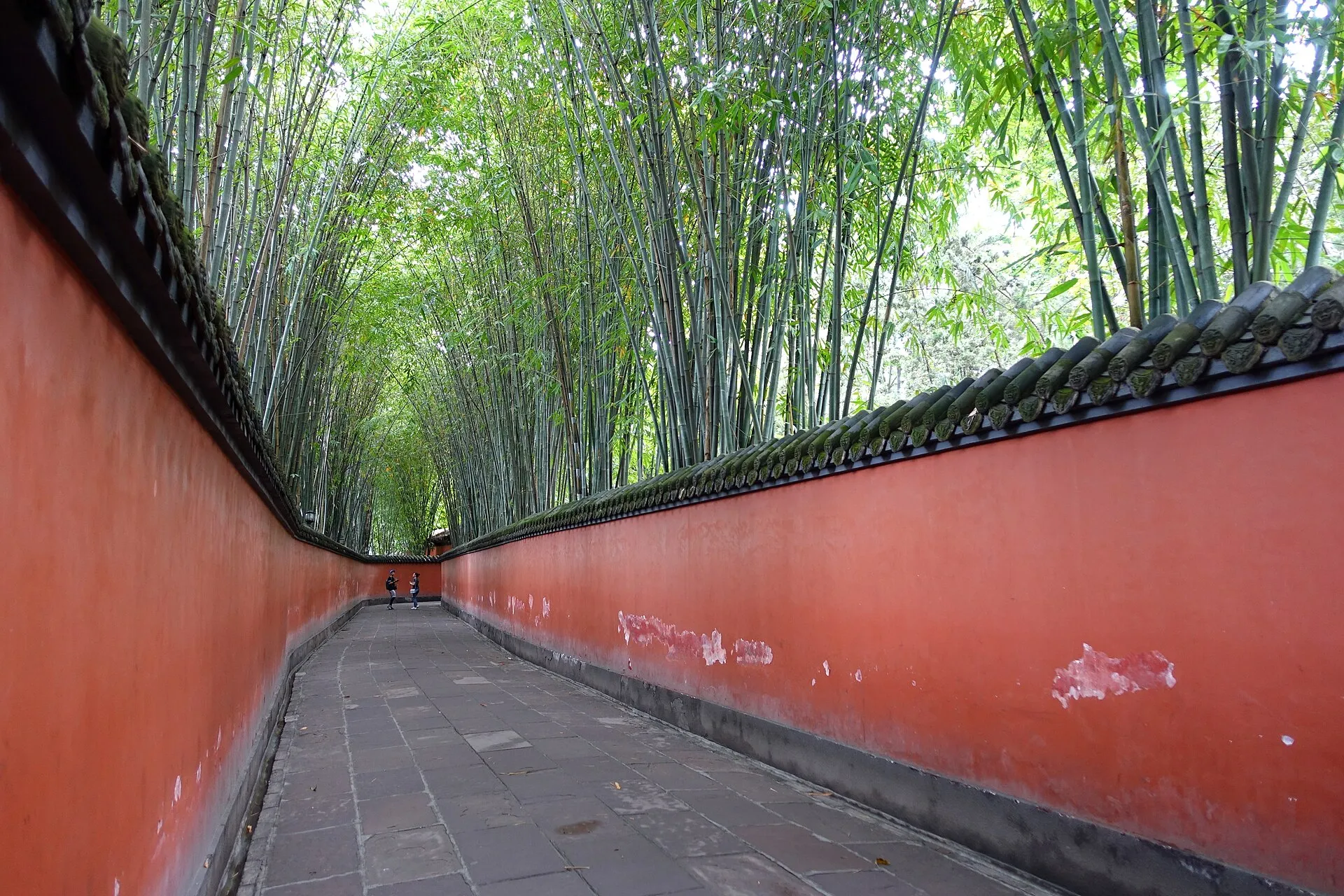
Summer hours (May - Oct): Daily 8:00 AM - 6:00 PM (last entry 5:30 PM). Winter hours (Nov - Apr): Daily 8:00 AM - 5:30 PM (last entry 5:00 PM). Best time to visit: Early morning on weekdays — by mid-morning the halls are packed with school groups and organized tours. Seasonal highlight: Late October and November, when the ginkgo trees lining the red wall corridor turn blazing gold against the crimson backdrop
Admission and Costs
Admission: ¥50 (includes the shrine complex, Liu Bei's tomb, and the garden areas). Children under 1.2m: Free. Audio guide: ¥20 (English version available — highly recommended, as most signage is Chinese only). Getting there: Metro Line 3 to Gaoshengqiao station (Exit D), then a 5-minute walk south along Wuhou Ci Dajie. Jinli Ancient Street: Free to enter, directly accessible from the shrine's east exit
Tips for Visitors
Read up on Three Kingdoms first: The shrine assumes familiarity with the characters and events — even a quick summary of the novel Romance of the Three Kingdoms will transform a confusing succession of statues into a gripping narrative. Hire a guide or rent the audio tour: English signage is minimal, and without context the statues and halls blur together — a good guide brings the political intrigue and battlefield drama to life. Exit through the east gate: This deposits you directly onto Jinli Ancient Street where you can sample Sichuan snacks like san da pao (glutinous rice balls) and bo bo ji (cold skewers in chili oil). Allow 2-3 hours: Rushing through in under an hour means missing the garden, the tomb, and the museum wing entirely. Visit on a rainy day: The covered corridors and indoor halls make this one of Chengdu's best wet-weather attractions, and the gardens look particularly atmospheric in mist
Frequently Asked Questions
What are the opening hours for Wuhou Shrine?
Summer hours (May - Oct): Daily 8:00 AM - 6:00 PM (last entry 5:30 PM). Winter hours (Nov - Apr): Daily 8:00 AM - 5:30 PM (last entry 5:00 PM).
What does admission to Wuhou Shrine cost?
Admission: ¥50 (includes the shrine complex, Liu Bei's tomb, and the garden areas). Children under 1.2m: Free. Audio guide: ¥20 (English version available — highly recommended, as most signage is Chinese only).
What should visitors know before visiting Wuhou Shrine?
Read up on Three Kingdoms first: The shrine assumes familiarity with the characters and events — even a quick summary of the novel Romance of the Three Kingdoms will transform a confusing succession of statues into a gripping narrative.