
Delhi First-Timer's Guide: How to Plan a First Visit
How to plan a first trip to Delhi — the Red Fort and Old Delhi, the Qutub Minar and Humayun's Tomb, India Gate and New Delhi.
Read the full guideUpdated · 9 min read
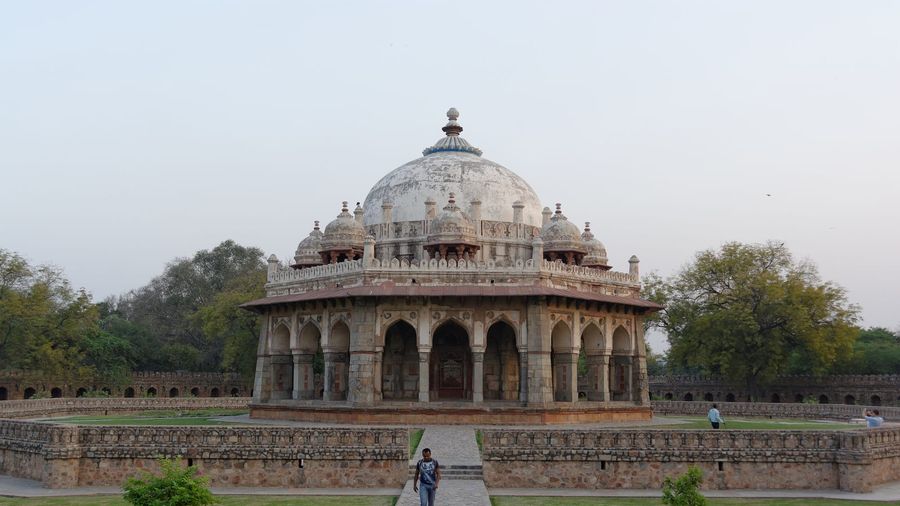
Delhi overwhelms first-timers because it is really two cities in one — the dense, medieval tangle of Old Delhi and the wide, imperial avenues of New Delhi. Plan it as two distinct days, add a third for the Qutub Minar and a slower pace, ride the excellent metro to dodge the traffic, and treat the capital as the natural launch point for the Golden Triangle to Agra and Jaipur.
Few cities hit a first-time visitor as hard as Delhi. It is loud, vast, and layered with a thousand years of empires, and the instinct to see everything at once is exactly what turns the experience into a blur. The key is to understand that Delhi splits cleanly into an old city and a new one, each with its own logic and pace, and to plan accordingly. This guide lays out how to divide the capital into manageable days, get around a city famous for its traffic, and use it as the gateway to the rest of India — so a first visit feels like an introduction rather than an assault.
Why is Delhi really two cities?
Delhi divides into Old Delhi, the crowded seventeenth-century Mughal capital of narrow lanes and bazaars, and New Delhi, the spacious imperial city the British laid out with broad avenues and monuments. The two demand different mindsets and shoes, and planning separate days for each is the single most useful decision a first-timer can make.
Understanding this split defuses most of Delhi's chaos. Old Delhi, or Shahjahanabad, was built by the Mughal emperor Shah Jahan and still runs on medieval geometry: impossibly narrow lanes, wholesale bazaars, spice markets, and a wall of noise, colour, and smell that is thrilling and exhausting in equal measure. New Delhi, planned by the British in the early twentieth century, is its opposite — wide ceremonial boulevards, roundabouts, colonial-era buildings, and green lawns around grand monuments. Trying to weave between the two in a single day means whiplash and wasted transit; giving each its own day lets you match your energy to the terrain. Wear closed shoes and travel light for Old Delhi's crush, and expect a calmer, more spread-out rhythm for the new city.
How should you spend a day in Old Delhi?
Anchor an Old Delhi day on the Red Fort, the vast Mughal sandstone citadel, then plunge into the surrounding Chandni Chowk bazaar and the Jama Masjid mosque. Go early, travel light, and eat your way through the street food — this is Delhi at its most intense and most rewarding, best done on foot or by cycle-rickshaw through the lanes.
Start at the Red Fort, the enormous red-sandstone fortress that was the seat of Mughal power for two centuries and remains the symbolic heart of the nation — the prime minister addresses the country from its ramparts each Independence Day. Allow a couple of hours for its palaces, halls, and gardens, arriving at opening to beat the heat and the crowds. From there, the medieval city unfolds: Chandni Chowk, the frenetic main bazaar, is best explored by cycle-rickshaw for the narrow lanes of silver, spices, saris, and street food, while the great Jama Masjid, India's largest mosque, sits a short walk away and offers a climb up its minaret for a view over the rooftops. Old Delhi is a full, sensory day; pace it, hydrate, and let a local guide or the rickshaw driver steer you through the tangle.
What are the essentials of New Delhi?
New Delhi's essentials are Humayun's Tomb, the elegant Mughal garden tomb that prefigured the Taj Mahal, and India Gate, the war memorial anchoring the ceremonial avenue of Rajpath. Together they show the imperial city at its grandest, and both sit in open, walkable settings that make a gentler counterpoint to Old Delhi.
New Delhi asks for a slower, more spacious day. Humayun's Tomb, the sixteenth-century mausoleum of a Mughal emperor, is the standout — a symmetrical, red-and-white garden tomb set in formal Persian-style gardens that served as the architectural dress rehearsal for the Taj Mahal a century later, and far less crowded than its famous descendant. From there, the ceremonial core of the capital runs along the wide avenue to India Gate, the 42-metre war memorial arch commemorating soldiers of the First World War, ringed by lawns where Delhi families gather in the evenings. Between and around these you can add the serene Lodhi Gardens, the Sikh temple of Gurudwara Bangla Sahib, or the government buildings of the Rajpath, all in the same unhurried, tree-lined register.
Is the Qutub Minar worth a half-day?
Yes. The Qutub Minar, a 73-metre twelfth-century victory tower of fluted red sandstone, is the finest early Islamic monument in India and the centrepiece of a wider complex of ruins in south Delhi. It rewards a relaxed half-day and pairs well with a slower third day or the nearby Mehrauli archaeological park.
The Qutub Minar deserves its own unhurried slot rather than being crammed onto a busy day. The soaring, intricately carved victory tower — the tallest brick minaret in the world — dates from the beginning of Muslim rule in India and stands amid a complex of early mosques, tombs, and the famous rustless Iron Pillar. It sits in the south of the city, away from the two main clusters, which makes it a natural anchor for a gentler third day. Combine it with the atmospheric ruins of the surrounding Mehrauli archaeological park, or use the afternoon to slow down, shop, or rest before onward travel. It is one of Delhi's most photogenic and least frantic major sights.
How do you get around Delhi?
The Delhi Metro is the answer to the city's punishing traffic — clean, cheap, air-conditioned, and extensive. Use it for longer crossings, ride-hailing apps for door-to-door trips, and auto-rickshaws for short hops, always agreeing the fare or insisting on the meter first. Avoid unregistered taxis and touts, especially at the airport and railway stations.
Delhi's traffic is legendary, and the metro is how you beat it. The network is modern, remarkably cheap, and reaches most tourist areas, so a rechargeable smart card bought on arrival will save you hours stuck in gridlock. For the last mile and for door-to-door convenience, ride-hailing apps like Uber and Ola are cheap, metered, and remove the fare-haggling friction; auto-rickshaws work well for short distances if you agree the price or insist on the meter before setting off. The main safety rules are about transport and touts: use prepaid or app-based rides rather than flagging unmarked cars, ignore anyone at the airport or station steering you to a "better" hotel or agency, and keep your bags and phone close in crowds. With those habits, the city is far more navigable than its reputation suggests.
Should you use Delhi as a Golden Triangle base?
Almost every first India trip does. Delhi links by fast train and good highway to Agra, home of the Taj Mahal, and to Jaipur, the pink city of Rajasthan, forming the classic Golden Triangle loop. Spend three days in Delhi, then give three to four more to Agra and Jaipur before returning to the capital to fly home.
Delhi is the front door to India's most popular circuit, and building your trip around that fact makes the logistics easy. The Golden Triangle strings the capital together with Agra — where the Taj Mahal is a two-hour express-train ride away — and Jaipur, the rose-walled Rajasthani capital of palaces and forts. A well-paced first visit spends three days getting to know Delhi, then loops out to Agra for the Taj and Agra Fort and on to Jaipur for a couple of days, before closing the triangle back in Delhi for the flight home. Fast Gatimaan and Shatabdi trains handle the legs comfortably, and many travellers hire a car and driver for the flexibility. Seeing Delhi first means you arrive at the Taj already fluent in Mughal history rather than meeting it cold.
Related Guides
- Visiting the Taj Mahal — the essential next stop on the Golden Triangle, planned in full
- Marrakech Medina & Souks Guide — navigating another intense old-city bazaar with confidence
- Cairo & Giza Pyramids Practical Guide — practical planning for a first trip to a dense, monument-rich capital
Delhi is not a city to conquer in a hurry; it is one to decode. Split it into its old and new halves, give the Qutub Minar and its ruins an unhurried slot, ride the metro past the traffic, and keep your wits about transport and touts, and the capital's chaos resolves into one of the most rewarding introductions to India anywhere. Then let it do its other job — launching you toward the Taj Mahal and the wider country beyond.
Frequently Asked Questions
How many days do you need in Delhi?
Three days is a solid first visit: one for Old Delhi around the Red Fort and Chandni Chowk, one for New Delhi's monuments and Humayun's Tomb, and one for the Qutub Minar and a slower pace or a day trip. Many travellers use Delhi as the launch point for the Golden Triangle with Agra and Jaipur, which adds three to four days.
Is Delhi safe for first-time visitors?
Delhi rewards ordinary big-city caution. Use registered taxis or ride-hailing apps rather than flagging down unmarked cars, keep valuables discreet, agree fares or use meters, and be firm but polite with touts around major sights and stations. Solo women travellers should take extra care after dark and favour prepaid or app-based transport.
What is the best way to get around Delhi?
The Delhi Metro is clean, cheap, air-conditioned, and the fastest way across the city, avoiding the notorious traffic. Pair it with ride-hailing apps for door-to-door trips and short auto-rickshaw hops for local distances. Agree the auto fare first or insist on the meter, and buy a rechargeable metro smart card on arrival.
Should I use Delhi as a base for the Golden Triangle?
Yes. Delhi is the standard starting point for India's Golden Triangle, linked by fast trains and good roads to Agra, home of the Taj Mahal, and Jaipur. A classic first India trip spends three days in Delhi, then loops through Agra and Jaipur over another three to four, returning to Delhi to fly home.