
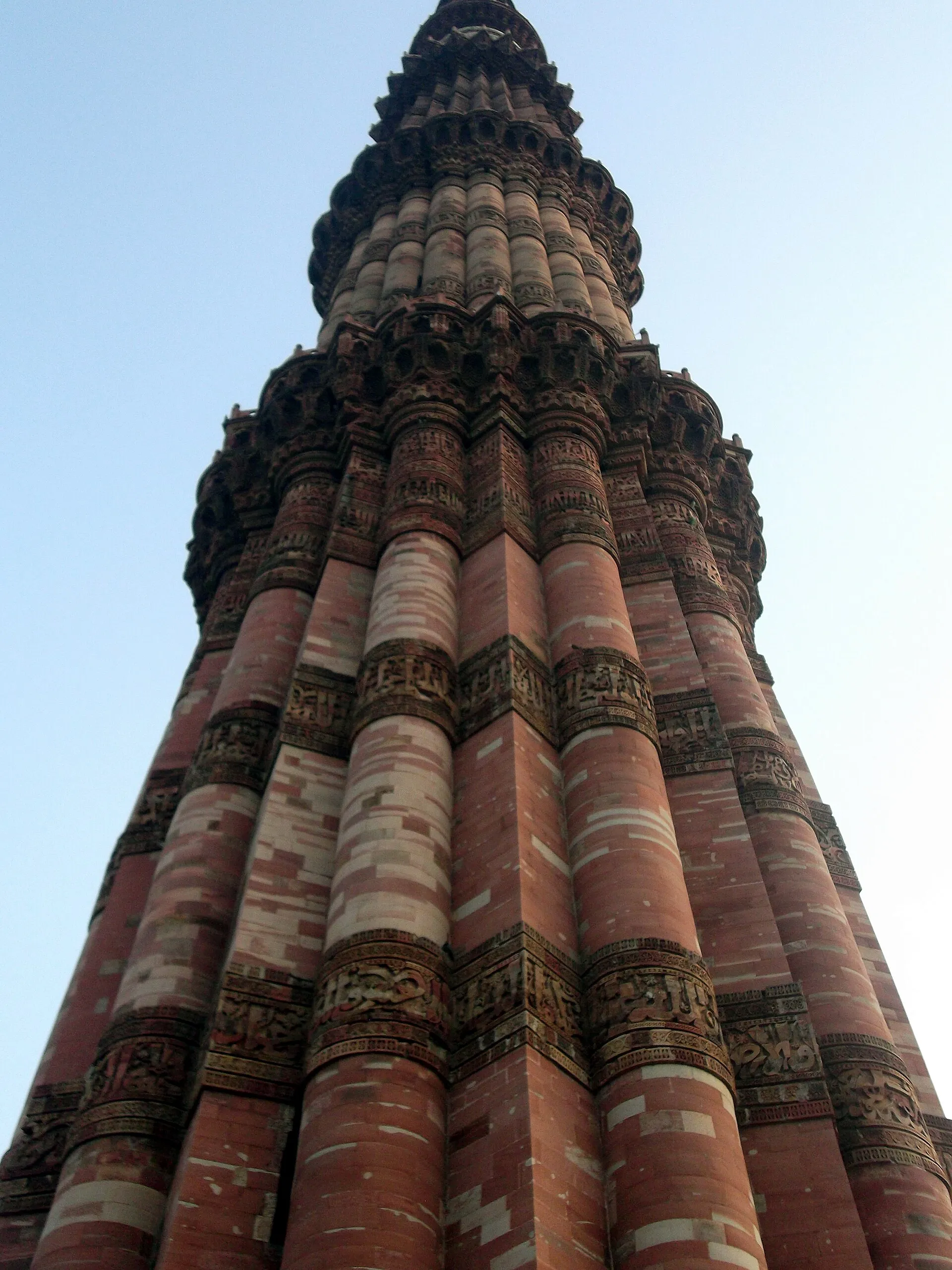
Architecture
Qutub Minar itself: five distinct storeys, each with projecting balconies, tapering from 14.3m diameter at the base to 2.7m at the top. The Iron Pillar: a 7-meter, 6-ton pillar of 98% wrought iron that has not rusted in 1,600 years, defying metallurgical expectations. Quwwat-ul-Islam Mosque: India's first mosque, built from the spoils of Hindu temples -- look for the elephant and lotus carvings repurposed into Islamic architecture. Alai Darwaza: a masterpiece gateway built in 1311, considered the first true Islamic dome in India. Alai Minar: the stump of a never-completed tower that Sultan Alauddin Khalji intended to be twice as tall as the Qutub. Tomb of Iltutmish: the second Sultan of Delhi's burial chamber with elaborate geometric carving.
Historical Significance
The Qutub Minar rises 72.5 meters from a complex of ruins in south Delhi, a tapering cylinder of red sandstone and marble that has dominated the skyline since 1193. Qutb-ud-din Aibak, the first Sultan of Delhi, began its construction to celebrate his victory over the last Hindu rulers, and three successive sultans continued building over 175 years. The result is a UNESCO World Heritage Site where each storey reflects a different ruler's architectural taste -- from the ornate Quranic calligraphy on the lower levels to the smoother marble of the upper tiers. A guide illuminates the complex's layered history far beyond the tower itself. The nearby Iron Pillar, cast in the 4th century, has resisted corrosion for over 1,600 years -- a metallurgical feat that modern scientists still study. The ruins of the Quwwat-ul-Islam Mosque incorporate pillars recycled from 27 demolished Hindu and Jain temples, with Hindu motifs still visible alongside Arabic inscriptions. Guides point out these deliberate juxtapositions and the unfinished Alai Minar, an abandoned attempt to build a tower twice the height of the Qutub.
When to Visit
Open: daily, 7:00 AM - 5:00 PM. No closures: open every day including public holidays. Best time: morning (7-9 AM) for soft light and minimal crowds. Note: climbing inside the tower has been permanently closed since a 1981 stampede.
Admission and Costs
Foreigners: ₹600 ($7.20). Indian nationals: ₹35. ASI guide: ₹500-1,000 for a 1-1.5 hour tour. Video camera: ₹25.
Tips for Visitors
The tower photographs beautifully against blue sky -- visit when air quality allows clear shots (October, February-March). Comfortable shoes are essential for walking on uneven stone surfaces. Combine with Mehrauli: the surrounding Mehrauli Archaeological Park has dozens more ruins free to explore. Metro accessible: Qutub Minar metro station (Yellow Line) is a short walk from the entrance. Allow 1-2 hours, as the complex is compact but rich in detail. Pair with Humayun's Tomb and India Gate for a full Delhi heritage day.
Frequently Asked Questions
During which months does Qutub Minar look its best?
October through March combines clear skies -- critical for photographing the 72.5-meter tower against blue -- with comfortable walking temperatures across the open Qutb complex. February and March air quality tends to be notably better than the smog-heavy December and January mornings. Avoid May through September when extreme heat and monsoon downpours make the exposed archaeological site difficult to enjoy.
When can visitors tour Qutub Minar?
Open: Daily, 7:00 AM – 5:00 PM. No closures: Open every day including public holidays. Best time: Morning (7–9 AM) for soft light and minimal crowds. Note: Climbing inside the tower has been permanently closed since a 1981 stampede
How much is the entrance fee for Qutub Minar?
Foreigners: ₹600 ($7.20). Indian nationals: ₹35. ASI guide: ₹500–1,000 for a 1–1.5 hour tour. Video camera: ₹25
What do guided tours of Qutub Minar include?
A guide decodes the Arabic inscriptions on the tower, explains the Iron Pillar's mysterious resistance to rust, and traces the layers of Hindu, Jain, and Islamic architecture in the mosque's repurposed temple columns.