
Cairo & the Giza Pyramids: A Practical Guide
Visiting the Giza pyramids from Cairo: tickets, an 8am start to beat heat and touts, ride-hailing, the Sphinx, and the new Grand Egyptian Museum.
Read the full guideUpdated · 11 min read
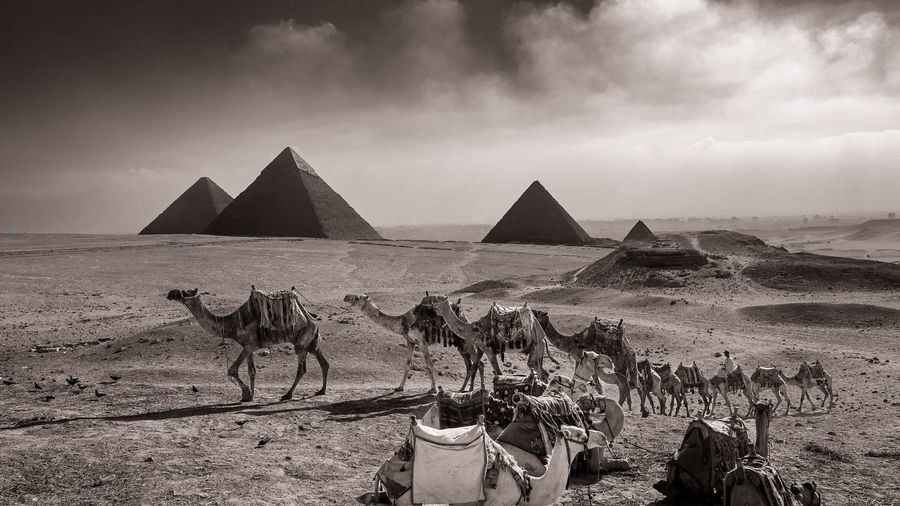
Visiting the Giza pyramids works best as a focused early morning. Arrive at the 8am opening to beat the heat and touts, buy a general plateau ticket to walk among all three pyramids and the Sphinx, and skip the cramped, extra-cost interiors. Reach Giza from Cairo by Uber or Careem, ideally with a licensed guide.
The pyramids of Giza are the only one of the seven wonders of the ancient world still standing, and they sit not in some remote desert but on the very edge of a city of more than twenty million people. That contrast — the 4,500-year-old tombs and the modern sprawl of Greater Cairo pressing right up to the plateau's fence — surprises every first-time visitor. The pyramids are also famous for being slightly trying to visit: the heat, the touts, and the logistics can fray nerves. This guide gathers our practical advice for visiting the pyramids of Giza — tickets, timing, transport, viewpoints, and how to enjoy the wonder rather than endure the hassle — in Egypt's capital region.
What will you see on the Giza plateau?
The Giza plateau holds three great pyramids plus smaller queens' tombs and temples. The Great Pyramid of Khufu, built around 2560 BC and once 146 metres tall, dominates; Khafre's looks taller on higher ground; Menkaure's completes the trio. A general ticket lets you walk among them, while going inside costs extra.
The Giza plateau holds three great pyramids and a scattering of smaller ones, queens' tombs, and temples. The Great Pyramid of Khufu is the largest, built around 2560 BC from over two million blocks of limestone and standing 146 metres tall when complete — the tallest structure made by human hands for nearly four thousand years. Beside it, the pyramid of Khafre looks taller because it stands on higher ground and keeps a cap of its original smooth casing stone at the top, and the smaller pyramid of Menkaure completes the trio.
A general plateau ticket lets you walk freely among them, and the scale only registers when you stand at the base of Khufu and crane upward. Going inside a pyramid costs a separate, pricier ticket; be warned that the interiors are steep, cramped, hot, airless, and essentially empty of decoration, so weigh it against the heat. Many visitors are happiest admiring the structures from outside and saving their energy for the rest of the plateau.
What is the Great Sphinx like up close?
The Great Sphinx crouches a short walk from the pyramids: a limestone lion with a human head, 73 metres long, carved from a single ridge of bedrock some 4,500 years ago and thought to represent the pharaoh Khafre. It is smaller than many expect and missing its nose, but genuinely thrilling in person.
A short walk from the pyramids crouches the Great Sphinx of Giza, the colossal limestone lion with a human head, 73 metres long and carved from a single ridge of bedrock. It is thought to represent the pharaoh Khafre and to have guarded his pyramid complex for some 4,500 years. The classic photograph lines the Sphinx up with a pyramid behind it, and the viewing terrace beside the valley temple is the spot for it. The Sphinx is smaller than many imagine and missing its nose and beard, but seeing it in the flesh — that enigmatic, weathered face staring east toward the rising sun — is a genuine thrill.
Which gate should you use, and where is the best view?
Giza has two entrances: the main gate on Al Haram Street beside the Sphinx and the historic Mena House, and the upper "panorama" gate off the desert road, where tour coaches usually stop. Whichever you use, the panorama point on the plateau's southern rim lines up the three great pyramids and their queens' pyramids in a single frame — the classic photograph — and is where most camel and horse rides gather.
The plateau has two ways in. The main gate sits at the eastern foot of the plateau on Al Haram (Pyramids) Street, beside the historic Mena House hotel and a short walk from the Sphinx; independent visitors arriving by ride-hail usually use it. The second is the upper entrance off the Fayoum desert road on the southwest side, which tour coaches favour and which drops you closer to the open desert behind the pyramids. Tickets are the same at either gate, so let your transport decide.
Wherever you enter, make time for the panorama point on the plateau's southern rim. From this slightly raised spot the three great pyramids and their smaller queens' pyramids stack into a single line — the shot that fills every postcard — and the desert opens out behind them, free of the city skyline. It is also where the camel and horse handlers congregate, so settle any ride price, in Egyptian pounds and in advance, before you mount. If you would rather see the plateau after dark, the nightly Sound and Light show projects a narrated history across the Sphinx and pyramids, with the commentary rotating through several languages over the week.
Should you combine the Solar Boat and Grand Egyptian Museum?
Yes. Beside the Great Pyramid, the Solar Boat Museum shows a 4,500-year-old cedar funerary boat over 40 metres long, reassembled from a thousand pieces. Two kilometres away, the new Grand Egyptian Museum, the world's largest, now houses the complete Tutankhamun treasures, making a combined pyramids-and-museum day the natural way to visit.
Beside the Great Pyramid, the Solar Boat Museum displays one of archaeology's most remarkable finds: a 4,500-year-old cedar funerary boat, more than 40 metres long, discovered dismantled in a sealed pit at the pyramid's foot and painstakingly reassembled from over a thousand pieces. It was built to carry the king's spirit across the heavens. Just a couple of kilometres away, the long-awaited Grand Egyptian Museum has opened on the edge of the plateau, the largest archaeological museum in the world, and it now houses the complete treasures of Tutankhamun for the first time — making a combined pyramids-and-museum day the natural way to structure a visit.
How do you handle the heat and the touts at Giza?
Two things shape a Giza visit. The shadeless plateau turns punishing by late morning, especially May to September when it tops 40°C, so arrive at the 8am opening with water, hat, and sunscreen. For the persistent camel-handlers and souvenir touts, stay calm, say 'la, shukran', and agree every price in advance.
Two things shape a Giza visit more than any ticket. The first is the heat: the plateau is almost entirely shadeless, and from late morning it is punishing, particularly from May to September when temperatures soar past 40°C. Arrive at opening around 8am for cool air, gentle light, and far fewer people; bring water, a hat, and sunscreen, and treat the visit as a focused morning rather than an all-day marathon.
The second is the touts. Giza is notorious for persistent camel- and horse-handlers, souvenir sellers, and self-appointed "guides" who attach themselves to visitors, press for tips, and run small scams (the camel that's cheap to mount and expensive to dismount is the classic). The handling is the same as in any busy bazaar: a calm, firm "la, shukran" (no, thank you), no eye contact with unsolicited offers, and agree every price in writing before any service. Hiring a real licensed guide is the best shield — it makes you a far less appealing target and removes the guesswork.
How do you get from Cairo to Giza?
Giza sits on Greater Cairo's edge, roughly 13 to 20 kilometres from the central districts, but the city's notorious traffic stretches the trip to 45 minutes or an hour. A ride-hailing app like Uber or Careem is the easiest, most transparent option; arrange your return in advance, since pickups at the gates can be chaotic.
Giza is part of Greater Cairo, roughly 13 to 20 kilometres from the central districts, but the city's famous traffic means the journey can take 45 minutes to an hour. The easiest and most transparent option is a ride-hailing app — Uber and Careem both operate widely and spare you the taxi negotiation. Arrange your return ride in advance, as pickups at the pyramid gates can be chaotic. If you are also seeing central Cairo's other landmarks — the medieval Khan el-Khalili bazaar, the Saladin Citadel, and the Egyptian Museum on Tahrir Square — factor traffic generously into every hop and avoid crossing the city at rush hour.
What should you wear and bring to Giza?
Dress for sun and modesty: lightweight, loose clothing that covers shoulders and knees keeps you cooler and respects local norms, and closed shoes handle the plateau's sand better than sandals. Carry small Egyptian-pound banknotes for tips and toilets, plenty of water, and a power bank for a camera-heavy morning.
Dress for sun and modesty: lightweight, loose, shoulder-and-knee-covering clothing keeps you cooler and respects local norms, and closed shoes handle the sand and rubble of the plateau better than sandals. Carry small banknotes for tips, toilets, and minor purchases, plenty of water, and a power bank for the camera-heavy day. Cash in Egyptian pounds is essential for the small transactions; cards work at the larger ticket offices and the new museum.
Why does a guide matter on the Giza plateau?
The plateau carries almost no interpretive signage, yet every visitor arrives asking how and by whom the pyramids were built. A licensed Egyptologist answers those questions, manages the touts, paces the morning around the heat, lines up the best Sphinx photos, and folds in the Grand Egyptian Museum. Book through a reputable agency, never at the gate.
The pyramids are the strongest argument for an Egyptologist guide of anywhere in the country. The plateau carries almost no interpretive signage, and the questions every visitor arrives with — how were they built, who built them, what was inside — are exactly what a trained guide is there to answer, drawing on a field that still debates the details. Just as importantly, a licensed guide manages the touts, paces the morning around the heat, knows which photo spots line up the Sphinx and the pyramids, and folds the new museum into the day. Book through a reputable agency rather than accepting offers at the gate, where the "guides" who approach you are part of the hassle you came to avoid. With the right person beside you, Giza shifts from a sweaty gauntlet to one of the most extraordinary mornings in travel.
Related Guides
- Marrakech Medina & Souks Guide — handling touts and bargaining calmly in another North African city
- Visiting the Taj Mahal — timing, tickets, and crowd sense at another wonder of the world
- Cape Town First-Timer's Guide — planning a wider African itinerary down the continent
The Giza pyramids deliver on every expectation if you meet them on the right terms: go at opening, keep the visit to a focused morning, handle the touts with calm rather than irritation, and bring a guide who can tell you how four-and-a-half thousand years of history piles up at the edge of a modern megacity. Pair the plateau with the Grand Egyptian Museum, and you have one of the great days in all of travel.
Frequently Asked Questions
How much does it cost to enter the Giza pyramids?
A general plateau ticket covers the site and the right to walk among all three pyramids and the Sphinx; going inside a pyramid costs extra, with the Great Pyramid of Khufu carrying the highest separate fee and the smaller pyramids cheaper. Prices rise periodically, so check current rates, and note the interiors are cramped, hot, and largely bare — many visitors skip them and don't regret it.
What is the best time of day to visit the pyramids?
Arrive at opening, around 8am, for the coolest air, the softest light, and the thinnest crowds and touts. The plateau is almost shadeless and brutally hot by midday, especially in summer, so a couple of focused morning hours beat a long sweaty slog. Late afternoon before closing is the second-best window and good for photography.
How do you get from Cairo to the Giza pyramids?
Giza sits on the southwestern edge of greater Cairo, about 13 to 20 kilometres from the centre depending on your hotel. Ride-hailing apps like Uber and Careem are the easiest and most predictable way and avoid taxi haggling. Traffic is heavy, so allow 45 minutes to an hour, and arrange your return in advance as ride pickups at the gates can be awkward.
Do I need a guide for the pyramids?
A licensed Egyptologist guide transforms the visit — the plateau has little signage, the history spans the Old Kingdom and the riddle of how the pyramids were built, and a guide also shields you from the persistent camel-ride and souvenir touts. Book through a reputable agency rather than accepting offers at the gate, where unofficial 'guides' are part of the hassle.
Where is the best place to photograph all the pyramids together?
Head to the panorama point on the plateau's southern rim, reached along the interior road or by camel or horse. From this slightly raised spot the three great pyramids and the smaller queens' pyramids line up in a single frame with open desert behind them — the classic Giza postcard view. Aim for early morning or late afternoon, when low light rakes across the stone and the crowds are thinnest.