
Walking Route
Local Life
Away from the ruins, Cimiez is a quiet, well-heeled residential quarter of Belle Époque villas, converted grand hotels, and shaded avenues where Niçois walk their dogs and jog between the olive trees. The monastery gardens are a genuine neighbourhood space — locals come to read on the benches, photograph the roses, and take in the panorama over the rooftops to the sea, not just to tick off a sight.
On summer evenings families spread blankets on the lawns around the arena where the jazz festival once played, and the Lenten and Assumption observances still draw worshippers to the Franciscan church. The absence of the nightlife and souvenir trade that fills Vieux Nice and the Cours Saleya market is exactly the point: Cimiez is where Nice goes to slow down, and a visit works best at that pace.
Walking Routes
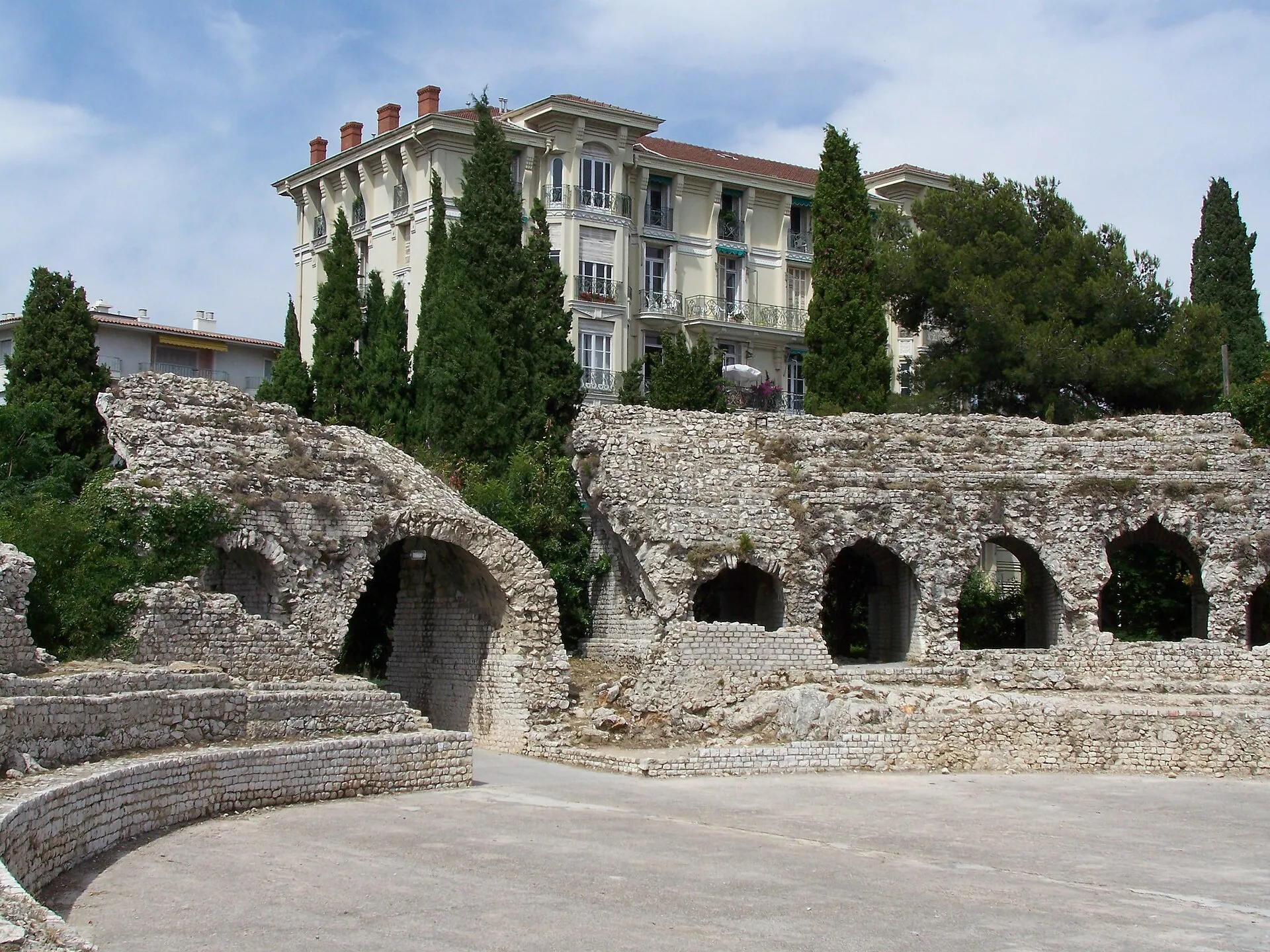
A natural loop links the hill's highlights in a couple of unhurried hours. Begin at the Arènes de Cimiez, the compact Roman amphitheatre that once seated around 4,000, then cross to the Roman thermal baths, three ruined complexes whose walls and hypocausts still trace the shape of Cemenelum. Step into the ochre Villa des Arènes for the Matisse Museum, and the adjacent Musée d'archéologie for the mosaics and artefacts dug from the ruins.
Walk on to the Franciscan monastery, whose church holds Louis Bréa's altarpieces, and linger in its rose gardens for the view over the city toward Castle Hill and the sea. Finish in the Cimiez cemetery, where Henri Matisse and Raoul Dufy rest among the olive trees, before descending past the Belle Époque Hôtel Régina that Queen Victoria made famous.
Cimiez timeline
- 1st c. AD
Cemenelum, capital of the Maritime Alps
Rome developed the hilltop town of Cemenelum as capital of the province of Alpes Maritimae, a rival to the Greek-founded port of Nikaia below; at its height it held perhaps 20,000 people, served by an amphitheatre and three sets of thermal baths.
- 4th–5th c.
Decline and an early bishopric
As the Roman world fractured, Cemenelum faded, briefly held a bishopric, and was gradually abandoned while the coastal settlement that became Nice grew — leaving the arena and baths to centuries of slow ruin.
-
Franciscans take over the monastery
Franciscan friars settled the hilltop monastery of Notre-Dame-de-l'Assomption, which still guards three paintings by the Niçard Primitive master Louis Bréa and looks out over the gardens and the sea.
- c. 1670s
The Villa des Arènes is built
A Genoese noble family raised the ochre-red villa beside the Roman ruins; three centuries later it would become the Matisse Museum, giving Cimiez its signature silhouette against the olive trees.
-
Queen Victoria and the Régina
After earlier winters on the hill, Queen Victoria's visits spurred the opening of the vast Belle Époque Excelsior Hôtel Régina, built to receive her and the European elite who made Cimiez a fashionable winter resort.
-
Matisse is buried at Cimiez
Henri Matisse, who had lived in an apartment inside the former Régina, died in Nice and was buried in the Cimiez cemetery beside the monastery, cementing the hill's bond with modern art.
-
The Matisse Museum opens
The city installed its Matisse collection in the Villa des Arènes, turning the 17th-century house between the arena and the baths into one of Nice's most visited museums.
-
The jazz festival leaves the hill
After decades of July concerts in the arena and gardens, the Nice Jazz Festival relocated to Place Masséna and the Théâtre de Verdure downtown, returning the Jardins de Cimiez to quiet picnics and strolls.
When to Visit
Morning gives the best light on the Roman arena and baths and the coolest air for the shadeless archaeological site — start there before the midday glare. The Matisse Museum and the adjacent Musée d'archéologie de Nice-Cimiez open from mid-morning and are closed on Tuesday, so avoid planning the indoor half of the visit for that day.
The monastery church and its gardens are at their best in late May, when the rose pergolas bloom among the olive trees, and in the soft light of late afternoon. Allow 3-4 hours for a full circuit of ruins, museums, monastery, and cemetery; a focused visit to just the arena and the Matisse Museum takes about 90 minutes. July and August stay hot and crowded at the exposed ruins, so shift the day earlier and keep the shaded monastery garden for the afternoon.
Admission and Costs
Most of Cimiez is free: the Roman arena, the ruined thermal baths seen from the park paths, the Franciscan monastery church, its celebrated gardens, and the hillside cemetery all cost nothing to visit. The Matisse Museum and the neighbouring archaeology museum charge admission (around €10 full price, with reductions), and a Nice city museums pass covering several municipal sites over a few days is the economical choice if you plan more than one.
The national Marc Chagall Museum at the foot of the hill charges separately (around €8-10). A small-group guided walk of the quarter typically runs €15-25 per person; a private guide for 2-3 hours is €130-200.
The Case for a Guide
Cimiez is a hill where almost nothing is labelled in the way a first-time visitor needs, so a knowledgeable local guide turns a pleasant stroll into a coherent story that spans Rome, the Franciscans, Belle Époque royalty, and modern art:
- The Roman town, reconstructed: the arena and the three bath complexes are fragmentary and sparsely signed — a guide rebuilds Cemenelum in your mind's eye, explaining how the province was governed, how the baths worked, and what the museum's mosaics and ceramics reveal about daily life.
- Reading the Matisse connection: beyond the Matisse Museum's walls, a guide traces where the artist actually lived on the hill, why the Riviera light mattered to his late cut-outs, and the path to his grave in the cemetery.
- The monastery's hidden art: the Bréa paintings inside Notre-Dame-de-l'Assomption and the layout of one of France's oldest gardens repay the context a guide provides.
- The Belle Époque layer: the story of Queen Victoria, the Régina, and the winter-resort boom is invisible in the stone unless someone points out the villas and hotels it left behind.
Tips for Visitors
Ride up, walk down: take the number 5 bus from the centre to the Arènes or monastery stop, then enjoy the gentle downhill walk back toward Vieux Nice rather than climbing the steep slope on foot. Combine the two hilltop museums: the Matisse Museum and the archaeology museum sit metres apart beside the arena, and a city pass makes visiting both cheaper.
Bring a picnic: the gardens around the arena and the monastery terraces are made for lunch with a view. Wear sun protection: the Roman ruins have almost no shade, so a hat and water matter on summer mornings. Check museum days: both museums close on Tuesday. Pair with modern art: budget an extra hour for the Marc Chagall Museum on the way up or down, as it lies on the lower slope.
Frequently Asked Questions
What is the best time of year to visit Cimiez?
May is the standout month, when the rose garden beside the Franciscan monastery reaches full bloom among the ancient olive groves and the hillside is at its most fragrant and photogenic. April to June and September bring the most comfortable temperatures for walking the open-air Roman arena and baths, which have almost no shade.
July and August are hot and glaring at the exposed ruins around midday, so plan the archaeological site for the morning and save the shaded monastery gardens and the air-conditioned Matisse Museum for the afternoon. Winter is quiet but mild, and the sweeping view over Nice and the sea stays clear on bright days.
How do I get up to Cimiez from the centre of Nice?
Cimiez sits on a hill about 2 km north of the old town, too far to be an obvious walk uphill but easy by bus. The hillside is served by the Lignes d'Azur number 5 bus, which climbs from near the city centre to the Arènes / Musée Matisse and monastery stops in roughly 15-20 minutes.
Tram Line 1 does not reach Cimiez directly, so most visitors ride the bus up and then enjoy the gentle downhill walk back toward the centre afterwards. A taxi or rideshare from the Promenade area takes about 10 minutes.
How much does it cost to visit Cimiez?
The outdoor Roman arena, the ruined thermal baths seen from the park paths, the Franciscan monastery church, its celebrated gardens, and the Cimiez cemetery are all free to wander. The Matisse Museum and the adjacent Musée d'archéologie de Nice-Cimiez charge admission (around €10 full price), and a Nice city museums pass covering several municipal sites over a few days is the economical option if you plan to visit more than one.
The national Marc Chagall Museum at the foot of the hill charges separately (around €8-10). A small-group guided walk of the quarter typically runs €15-25 per person, and a private guide for 2-3 hours €130-200.
Was the Nice Jazz Festival still held in the Cimiez gardens?
Not any more. For decades the Grande Parade du Jazz and later the Nice Jazz Festival filled the Roman arena and the Jardins de Cimiez with open-air concerts every July, and the gardens remain closely associated with that era.
Since 2011, however, the festival has moved down into the city centre, splitting its stages between Place Masséna and the Théâtre de Verdure near the Promenade. The Cimiez gardens are once again a calm place for a picnic in summer rather than a concert ground, so check the festival's current venues before planning an evening around the hill.
Why do art lovers make the trip up to Cimiez?
Cimiez is where Henri Matisse spent his final years and chose to be buried, which gives the hill a particular pull for anyone following his work across Nice. The Matisse Museum occupies the ochre-red 17th-century Villa des Arènes beside the Roman ruins and holds one of the world's largest collections of his paintings, drawings, cut-outs, and personal objects.
Matisse and the painter Raoul Dufy both lie in the cemetery beside the monastery. The quarter pairs naturally with the nearby Marc Chagall Museum at the foot of the hill for a full morning of modern art.