
Walking Route
Local Life
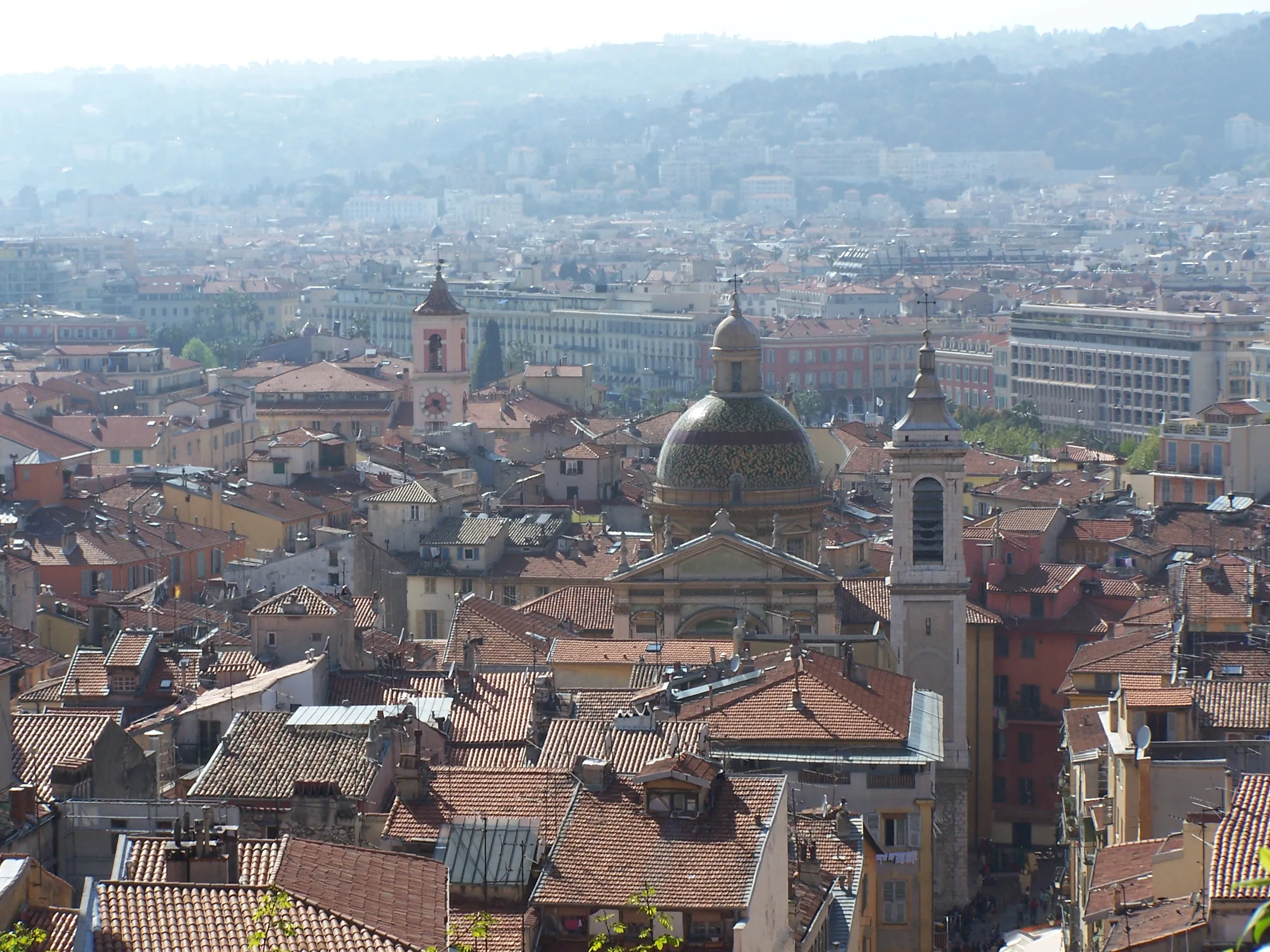
The Cours Saleya carries daily life — flowers and food Tuesday to Sunday, closed Monday for antiques. Cathédrale Sainte-Réparate anchors Place Rossetti, the square everyone meets at over a Fenocchio gelato, while the Chapelle de la Miséricorde hides one of the region's finest Baroque interiors a few steps away.
Kitchens here still turn out the Niçois canon — socca, pissaladière, and pan bagnat — and neighborhood life plays out beneath lines of laundry strung across lanes barely wide enough for the light, past olive-oil and Provençal produce shops that have changed little in generations.
Walking Routes
Old Town Nice rewards slow exploration on foot. A natural loop starts at the western Cours Saleya market, ducks into the Baroque Chapelle de la Miséricorde, then threads north up Rue de la Préfecture and Rue Droite — past the Palais Lascaris — to Place Rossetti and the cathedral, before winding back toward the foot of the castle hill. The interactive route below marks the key stops; local guides know the hidden courtyards, Renaissance staircases, and vantage points between them that turn a short walk into the quarter's full story.
Old Town Nice timeline
-
Nice turns to Savoy
In the Dedition of 1388 the town and county of Nice broke away from Provence and placed themselves under the House of Savoy. For nearly five centuries that follows, Nice looks east to Turin rather than west to Paris, and the old town's architecture, dialect, and food all take their Savoyard-Italian stamp from this period.
- 1650-1699
Baroque Sainte-Réparate rises
The Cathédrale Sainte-Réparate on Place Rossetti is built over the second half of the 17th century, dedicated to the teenage martyr who is Nice's patron saint. Its tiled dome and ornate interior set the tone for the Genoese-Baroque chapels and palaces that fill the quarter.
- 17th century
Palais Lascaris is built
The aristocratic Lascaris-Vintimille family raises a Genoese-Baroque palace on Rue Droite, with a monumental staircase and frescoed ceilings. Today it houses a celebrated collection of historic musical instruments and is one of the few old-town interiors open to visitors.
-
Nice joins France
After the Treaty of Turin and an April plebiscite, the County of Nice is transferred from Savoy to France. The old town keeps its Italian character even as the new French city expands westward along the sea, leaving Vieux Nice as the historic core.
When to Visit
The streets themselves are always open. The Cours Saleya market sets the rhythm: flowers and produce Tuesday–Sunday, 6:00 AM–1:30 PM, and an antiques and brocante market on Monday instead. Come before 9:00 AM for the market at its freshest and the lanes at their emptiest, then return in the evening, when the ochre façades glow and the terraces around Place Rossetti fill. Expect a genuine midday lull: many family-run shops close between roughly noon and 3:00 PM.
Admission and Costs
Wandering Vieux Nice is free, and its Baroque churches — Cathédrale Sainte-Réparate and the Chapelle de la Miséricorde on the Cours Saleya — are free to enter (donations welcome). A portion of socca runs €5-7 ($6-8), a scoop at the Fenocchio gelateria on Place Rossetti about €3 ($3.50), and a trattoria meal €15-30 ($16-33) per person. A two-hour guided walk of the old town is typically €100-180 ($110-195) for a small group.
The Case for a Guide
The old town hides most of its best stories behind plain doors, and a local guide is what gets you through them. Architecture: a guide reads the Genoese-Baroque façades, the Palais Lascaris staircase, and the trompe-l'oeil chapel ceilings that casual visitors miss.
History: the Savoyard centuries and the 1860 handover to France explain why Vieux Nice feels Italian — context no plaque provides. Food: guides steer you to the honest socca and pissaladière rather than the terrace traps. Language: many older vendors still answer in French or Niçois, and a guide bridges the gap.
Tips for Visitors
Plan to get lost: the maze of alleys is the point, and the best courtyards and Savoyard staircases sit behind unmarked doors. Try socca fresh from the pan at Chez Pipo or a market stall, and eat on quieter streets such as Rue Pairolière rather than the Cours for better value.
Arrive at the market by 9:00 AM for the widest selection, carry a little cash for vendors, and wear flat shoes for the cobbles. The Opéra-Vieille Ville stop on tram Line 1 drops you at the western edge, and remember the midday 12–3 PM shop closures when planning errands.
Frequently Asked Questions
When should visitors plan a trip to Old Town Nice?
May through September brings the full Riviera atmosphere, with restaurant tables spilling into the narrow lanes, the Cours Saleya flower market overflowing with color, and warm evenings made for socca straight from a wood-fired oven.
The Nice Carnival, held over two weeks in February, is the quarter's most festive stretch, and its flower-battle parades pass close to the old town. From November through March the lanes are mild by northern-European standards, far quieter, and far more local once the summer cruise ships have gone — the trade-off is shorter restaurant hours and a smaller market.
What time of day is best for exploring Old Town Nice?
Come early for the Cours Saleya market, which runs Tuesday to Sunday from 6:00 AM to about 1:30 PM; arriving before 9:00 AM gets you the freshest produce, the softest light for photos, and lanes you can actually move through. Mid-afternoon is the quarter's siesta, when many shops shutter between roughly noon and 3:00 PM. Return at dusk, when the ochre façades glow and the restaurant terraces around Place Rossetti fill up. On Monday the Cours hosts an antiques and brocante market instead of flowers and produce.
How much should visitors budget for Old Town Nice?
Wandering the old town costs nothing, and the Baroque churches — Cathédrale Sainte-Réparate and the Chapelle de la Miséricorde among them — are free to enter, though donations are welcome. A portion of socca from a market stall or from Chez Pipo runs about €5-7 ($6-8), a scoop at the Fenocchio gelateria on Place Rossetti about €3 ($3.50), and a sit-down meal in a trattoria €15-30 ($16-33) per person. A two-hour guided walk of Vieux Nice typically costs €100-180 ($110-195) for a small group.
What practical tips make the most of a visit to Old Town Nice?
Treat getting lost as the plan — the maze of alleys is the attraction, and the best courtyards and Savoyard staircases hide behind unmarked doorways. Try the Niçois specialties: socca, pissaladière, and pan bagnat, ideally from a stall rather than a tourist terrace.
Eat away from the Cours Saleya on quieter streets such as Rue Pairolière for better value, carry a little cash for market vendors, and wear flat shoes — the lanes are cobbled and often slick. The nearest tram stop, Opéra-Vieille Ville on Line 1, leaves you at the western edge.