
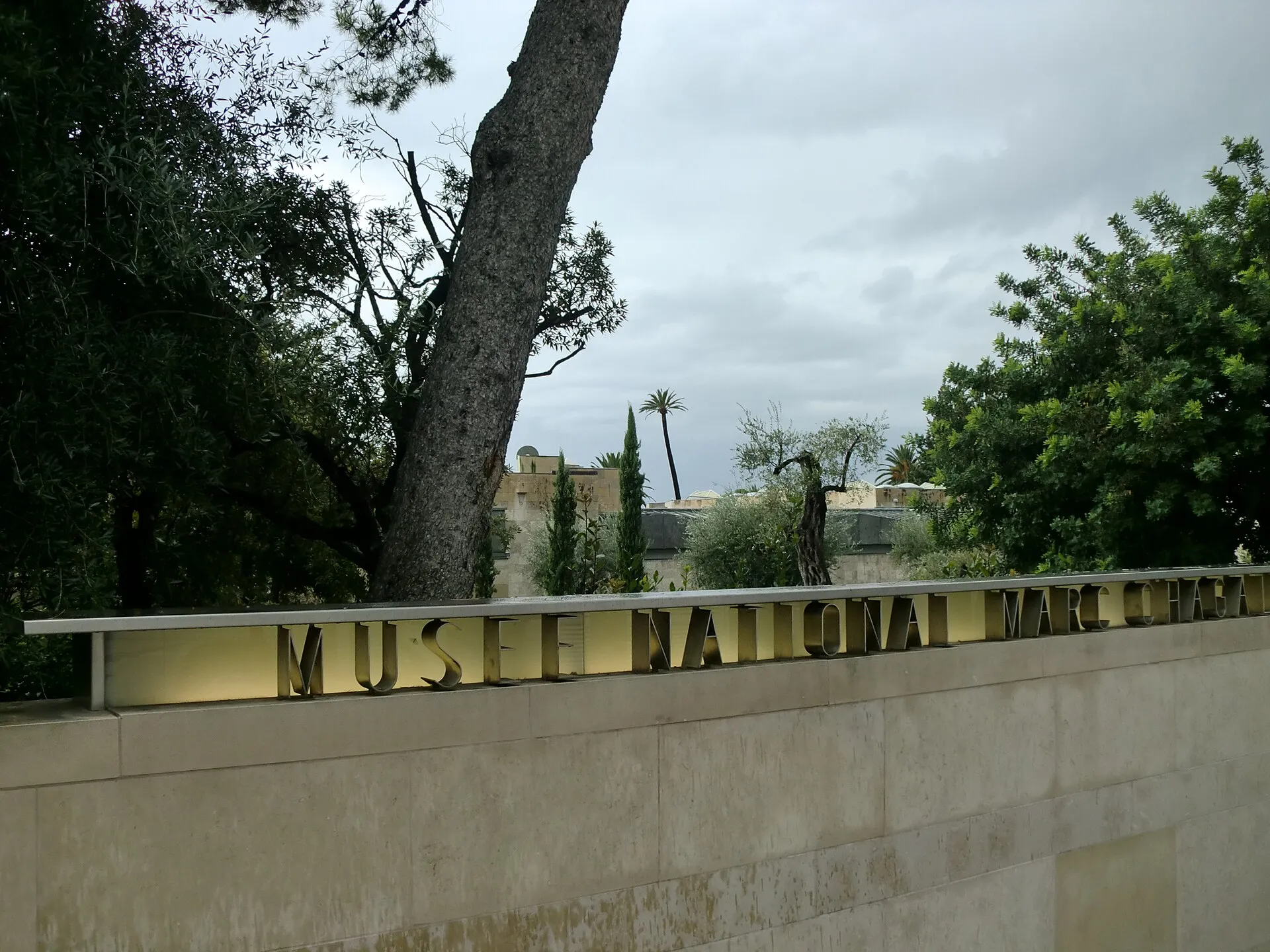
Guided Tours
Biblical narratives: A guide traces the Genesis and Exodus scenes across the twelve main canvases so the imagery becomes legible. Jewish symbolism: Decoding Chagall's fiddlers, menorahs and floating figures as memories of Hasidic Vitebsk. Song of Songs: Why the five red paintings hang apart, and how Chagall turned scripture into a love poem for Valentina. Beyond paint: How the Creation stained glass, the Elijah mosaic and the painted harpsichord extend the cycle into glass, stone and music. Artistic context: Chagall's journey from Russia through Paris to the light of Nice. Architectural intent: How André Hermant's plain pavilion and top lighting were designed to serve the paintings — best understood alongside the nearby Matisse Museum.
Collections Highlights
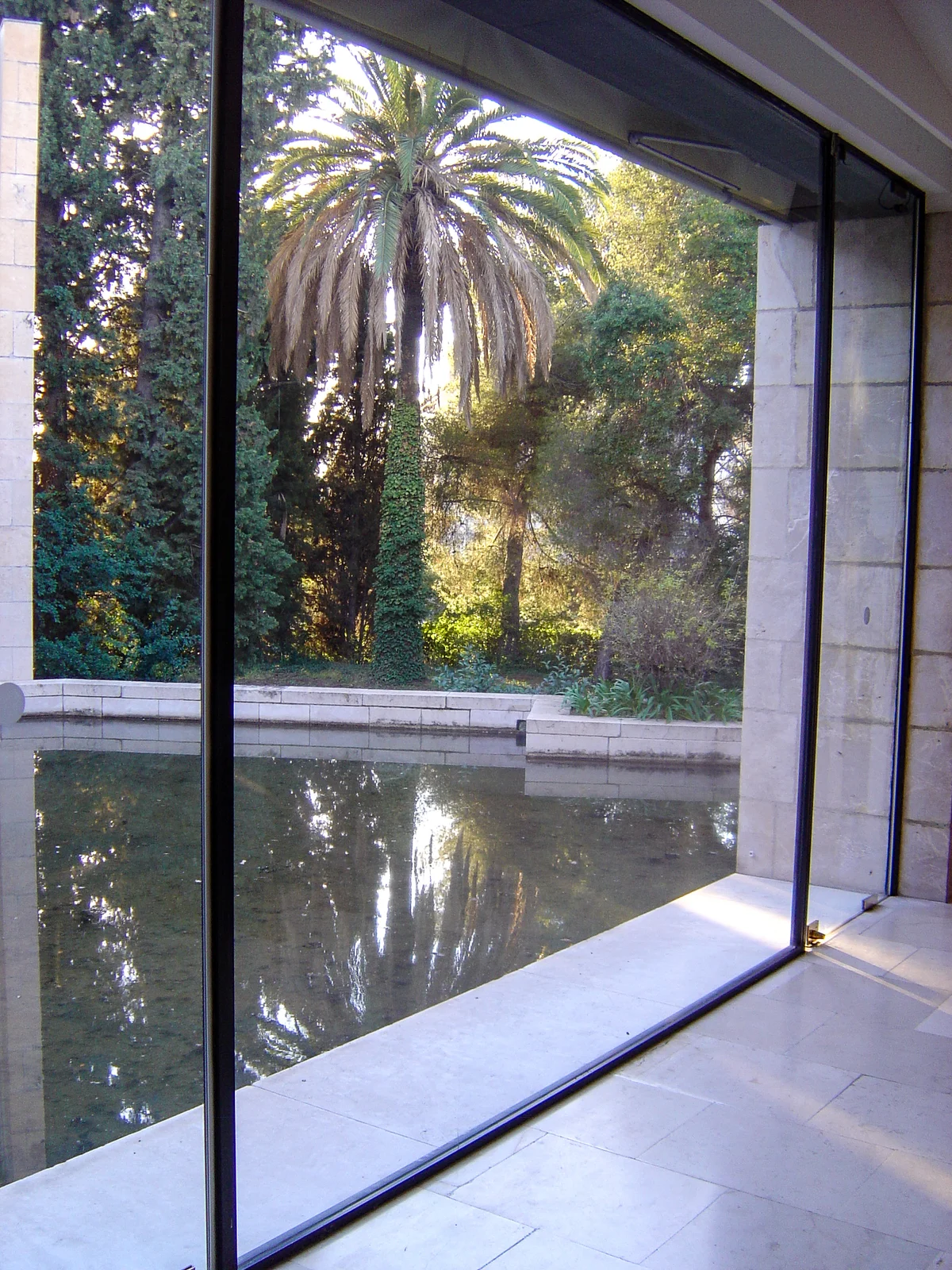
Biblical Message hall - Twelve monumental canvases on Genesis and Exodus, top-lit so their colour glows. Song of Songs room - Five passionate red-toned paintings hung in a dedicated space, dedicated to Chagall's wife Valentina. Creation stained glass - Three deep-blue windows on the creation of the world, filling the concert auditorium with coloured light. Elijah mosaic - The prophet on his fiery chariot, set outside and mirrored in a still reflecting pool. Painted harpsichord and tapestry - Decorative works Chagall made for the museum itself. Preparatory works
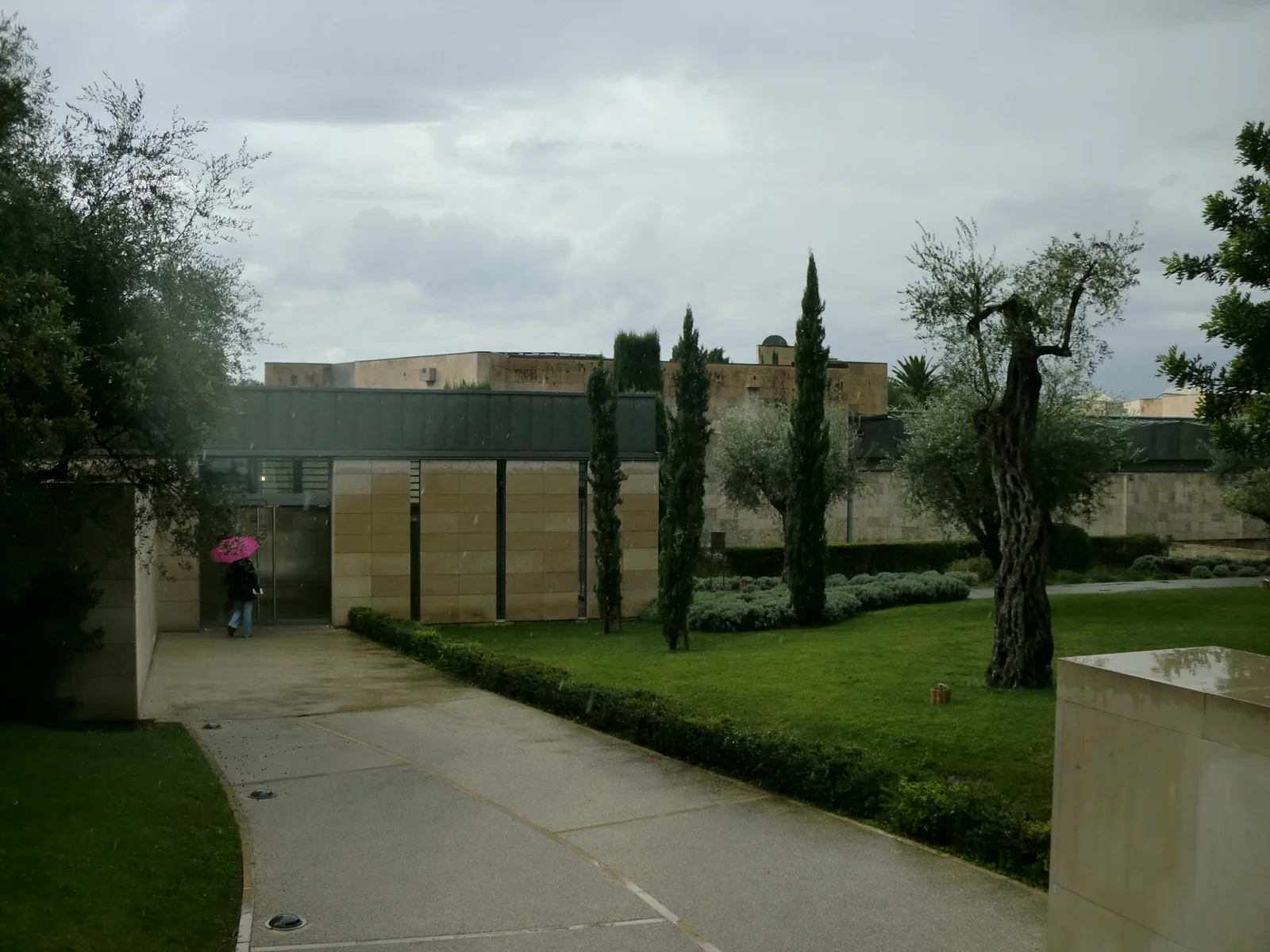
- Gouaches, drawings, pastels and engravings that reveal how the Biblical Message evolved. Concert auditorium - A hall for chamber music conceived as part of the museum. Mediterranean gardens - Olive, cypress and lentisk framing the low stone pavilion
Marc Chagall National Museum timeline
-
Chagall born in Vitebsk
Born in a Hasidic Jewish family in present-day Belarus, Chagall carried the shtetl's imagery into his art for life.
- 1954-1967
Biblical Message painted
Over more than a decade Chagall painted the 17 large canvases that would become the museum's core.
-
Cycle given to France
Chagall and his wife Valentina donated the Biblical Message to the French state, on condition it stay together.
- 7 July 1973
Museum opens
Inaugurated on Chagall's 86th birthday, it was the first French national museum devoted to a living artist.
-
Chagall dies at 97
The artist died at Saint-Paul-de-Vence, an hour inland, having shaped the museum during his own lifetime.
Marc Chagall National Museum in Pictures
When to Visit
Open Wednesday-Monday, 10:00 AM - 6:00 PM from May to October, closing at 5:00 PM from November to April; closed Tuesdays, plus January 1, May 1 and December 25. Afternoons give the richest raking light through the Biblical Message hall, while the first hour after opening is the quietest for the intimate Song of Songs room. The auditorium occasionally hosts chamber-music concerts beneath the Creation windows, and national-museum hours can shift with the season, so confirm the day's schedule on the official museum site before you set out.
Admission and Costs
Full ticket: €10 (about $11). Under 18: Free. As a French national museum, entry is free for everyone on the first Sunday of the month. Audio guide: €3 ($3). Guided tour: €15-25 ($16-27) per person. Private guide: €150-220 ($165-240) for a 1.5-2 hour visit. Prices rise a little during temporary exhibitions, and a single ticket covers both the permanent collection and any show on view — check current rates on the official site.
The Case for a Guide
Chagall's Biblical paintings can read as simply beautiful — floating lovers, glowing colour, animals in the sky — until a guide unlocks the layers of scripture, memory and symbol packed into each canvas, which is why this museum repays commentary more than most.
- Reading the scenes: A guide walks you through the Genesis and Exodus stories the twelve main canvases depict, so the crowded, dreamlike compositions resolve into the Creation, the Sacrifice of Isaac, and the giving of the Law.
- Jewish and Hasidic roots: Chagall grew up in a Hasidic community in Vitebsk; a guide decodes the recurring fiddlers, candlesticks and airborne figures as memories of that lost shtetl world woven into the biblical subjects.
- Colour as meaning: Why the Song of Songs room is drenched in red, why blue dominates the Creation windows — a guide explains how Chagall used colour itself to carry emotion and the sacred.
- A total work: The paintings, the stained glass, the Elijah mosaic, the harpsichord and even the garden were conceived together; a guide shows how Chagall designed the whole building as one experience.
- Cimiez in one thread: A guide sequences the museum with the Matisse Museum and the Roman Cimiez ruins so the hilltop reads as a single itinerary rather than three separate stops.
Tips for Visitors
Getting there: bus 15 runs from the centre of Nice to the Musée Chagall stop, a short walk below the entrance; a taxi from the seafront takes about ten minutes. Allow 1.5-2 hours — the museum is compact but rewards slow looking. It sits a 15-minute walk uphill to the Matisse Museum, so the two pair naturally with the free Roman ruins and rose garden of Cimiez. Photography without flash is allowed. The shop carries an excellent range of Chagall prints and books, and a pleasant garden café makes a good pause among the olive trees before you head back down toward Old Town.
Frequently Asked Questions
What are the opening hours of Marc Chagall National Museum?
The museum opens Wednesday-Monday, 10:00 AM - 6:00 PM from May to October and 10:00 AM - 5:00 PM from November to April. It closes on Tuesdays and on January 1, May 1 and December 25. Afternoons bring the warmest light through the Biblical Message room; confirm the day's hours on the official musee-chagall.fr site, especially around concerts in the auditorium.
What does admission to Marc Chagall National Museum cost?
The full ticket is around €10 (about $11), free for under-18s and, as a French national museum, free for everyone on the first Sunday of the month. An audio guide is roughly €3 ($3), a group guided tour €15-25 ($16-27) per person, and a private guide €150-220 ($165-240) for a 1.5-2 hour visit. Rates rise slightly during temporary exhibitions, so check current prices on the official site.
What practical tips should visitors know before going to Marc Chagall National Museum?
Bus 15 links the city centre with the Musée Chagall stop, a short walk below the entrance. Allow 1.5-2 hours - the museum is compact but rewards slow looking. It sits a 15-minute walk downhill from the Matisse Museum, so the two pair naturally with the Roman ruins of Cimiez. Photography without flash is permitted, and the shop carries an excellent range of Chagall prints and books.
What is the Biblical Message cycle at the heart of the museum?
The Biblical Message (Message Biblique) is a suite of 17 large canvases Chagall painted between the mid-1950s and 1967, then gave to the French state in 1966 so a museum could be built to keep them together. Twelve paintings illustrate Genesis and Exodus in a top-lit main hall, while five deep-red canvases devoted to the Song of Songs hang in their own dedicated room.
Which works beyond the paintings should you not miss?
Look up in the auditorium for the three blue stained-glass windows on the Creation of the World, then find the mosaic of the prophet Elijah on his fiery chariot mirrored in the reflecting pool outside. Chagall also decorated a harpsichord and designed a tapestry for the museum, and the galleries hold his gouaches, sketches and engravings that trace how the Biblical Message took shape.