
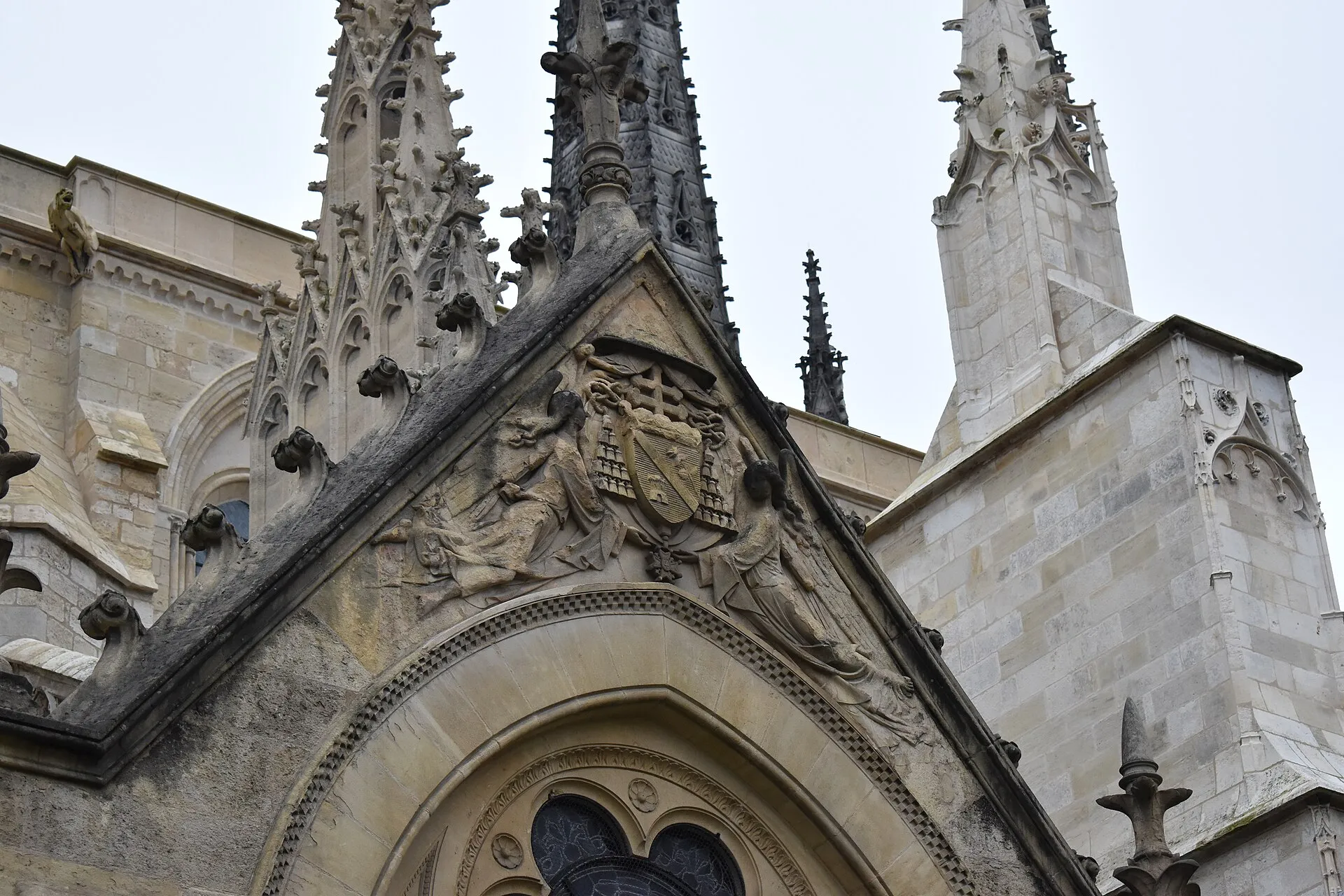
Spiritual Significance
The ground beneath Cathédrale Saint-André has been a place of Christian worship since at least the 4th century, making it one of the oldest continuously sacred sites in southwestern France. The cathedral served as a principal stage on the Via Turonensis — the most westerly of the four great routes converging on Santiago de Compostela — and countless medieval pilgrims received blessings here before pressing south toward the Pyrenees. In 1137, the young Eleanor of Aquitaine married the future Louis VII of France within these walls, a political union that reshaped the map of Europe; when Eleanor later wed Henry II of England, her former marriage to a French king sowed the seeds of Anglo-French rivalry that would endure for centuries. The cathedral holds the Trésor de Bordeaux, a collection of sacred relics and liturgical objects accumulated over more than a millennium of unbroken religious life. Above all, it has served as the seat of the Archbishop of Bordeaux for nearly 1,700 years, a continuity of pastoral authority that no political upheaval — not the Revolution, not two World Wars — has managed to sever. For believers and non-believers alike, that unbroken thread of devotion is the cathedral's most profound inheritance.
Visitor Etiquette
Cathédrale Saint-André is an active Catholic parish, and visitors are expected to dress modestly: shoulders and knees must be covered for both men and women. Photography is permitted throughout the nave and ambulatory in general, but must cease entirely during Mass — Sunday services begin at 10:30 AM, and if you arrive while a service is in progress, wait quietly at the rear or return afterward. Inside the cathedral, keep your voice low and silence your phone out of respect for worshippers and for those in quiet contemplation. The Tour Pey-Berland bell tower is a separate monument with its own entrance and ticket (€6); it is not part of the cathedral interior and is visited independently. Avoid pointing or gesturing toward the altar, and do not touch the sculptures or furnishings. The active parish community welcomes respectful visitors, so observe the same courtesies you would in any place of living worship.
When to Visit
Cathedral: Monday-Saturday 10:00-18:00, Sunday 14:00-18:00. Tour Pey-Berland: Daily 10:00-13:15 and 14:00-18:00 (summer until 19:00). Best time: Morning light illuminates the stained glass beautifully. Mass times: Sunday 10:30 AM (French), check for organ concerts
Admission and Costs
Cathedral entry: Free. Tour Pey-Berland: \u20AC6 (231 steps to the top). Guided tour: \u20AC12-20 per person. Private guide: \u20AC100-150 for 1-1.5 hours. Combined tickets available with other Bordeaux monuments
Tips for Visitors
Dress respectfully: Religious site - cover shoulders and knees. Tower stamina: 231 steps to top of Pey-Berland, no elevator. Photography: Allowed without flash inside cathedral. Combine with wine: Nearby wine bars perfect for post-visit tasting, or ride tram Line B north to the Cité du Vin wine museum. Riverside detour: A short walk east reaches the Place de la Bourse and its water mirror on the quays. Tram access: Line A or B to Hôtel de Ville
Frequently Asked Questions
What season is best for visiting Cathédrale Saint-André?
April through October offers the most comfortable conditions for climbing the 231 steps of the Tour Pey-Berland and lingering in the surrounding Pey-Berland square. Summer months fill the cathedral's stained glass with intense afternoon light, creating a spectacular interior display. The quieter winter months from November through February allow for more contemplative visits and shorter queues at the tower, though reduced daylight limits the stained glass illumination.
What are the opening hours of Cathédrale Saint-André?
Cathedral: Monday-Saturday 10:00-18:00, Sunday 14:00-18:00. Tour Pey-Berland: Daily 10:00-13:15 and 14:00-18:00 (summer until 19:00). Best time: Morning light illuminates the stained glass beautifully. Mass times: Sunday 10:30 AM.
How much does it cost to visit Cathédrale Saint-André?
Cathedral entry: Free. Tour Pey-Berland: €6 (231 steps to the top). Guided tour: €12-20 per person. Private guide: €100-150 for 1-1.5 hours. Combined tickets available with other Bordeaux monuments.
What should visitors know about dress code and the tower climb at Cathédrale Saint-André?
Dress respectfully as it is a religious site — cover shoulders and knees. The Tour Pey-Berland has 231 steps to the top with no elevator. Photography is allowed without flash inside the cathedral.