
Spiritual Significance
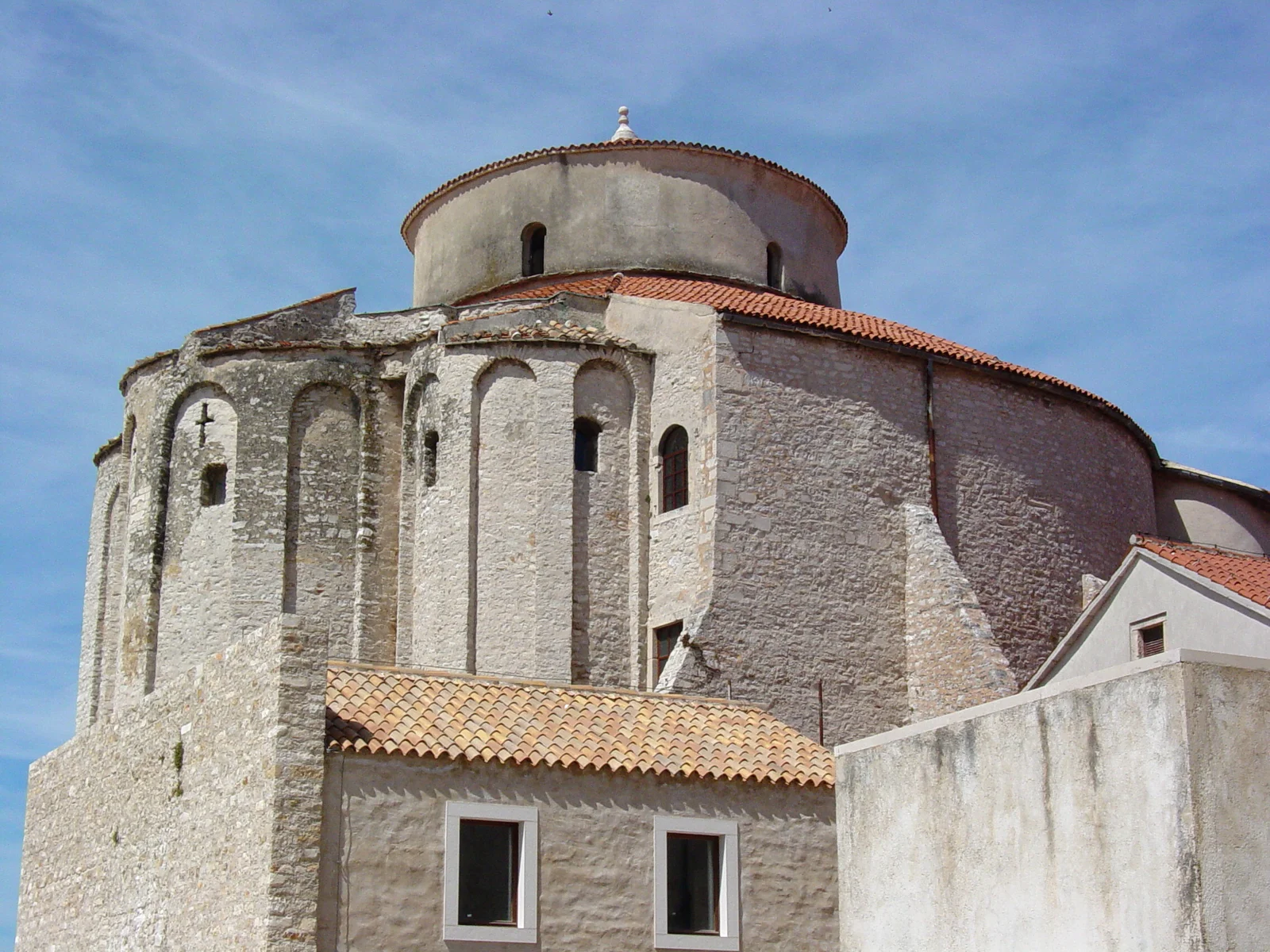
Though it no longer holds services, St Donatus carries deep religious meaning as the ceremonial and episcopal heart of early-medieval Zadar. It was built beside the archbishop's palace as the city's principal court chapel during the period when the Dalmatian coast sat at the meeting point of the Frankish west and the Byzantine east, and its very form — a Carolingian-style rotunda in a formerly Byzantine town — is a piece of religious politics set in stone. The relics and altars it once housed made it central to the veneration of the city's patron saints, and its dedication to the Holy Trinity placed it among the most important churches in the region. For over a millennium it embodied the continuity of Christian worship on a site the Romans had used for their own temples, and even now, stripped of its liturgical role, it remains a pilgrimage of a different kind — a place travellers climb through to touch the layered faith and history of the eastern Adriatic.
Visitor Etiquette
St Donatus is visited today as a monument and concert hall rather than an active church, so ordinary museum manners apply: buy a ticket, keep voices low so others can appreciate the acoustics, and follow any staff instructions about which areas and stairs are open. Photography for personal use is normally permitted, but tripods, flash, and filming may be restricted, and photography is not appropriate while a concert or rehearsal is underway. During the summer Musical Evenings festival the building becomes a performance space — arrive on time, silence phones completely, and remain seated between pieces, as the natural reverberation means even small noises carry through the whole rotunda. Because the floor is uneven original stone and the gallery stairs are steep and narrow, wear stable shoes and take care underfoot, particularly with children.
When to Visit
The church is generally open to visitors daily through the main season, with longer hours in summer and reduced opening — sometimes only mornings — in winter, so confirm current times locally before a special trip. Allow 20 to 30 minutes for the interior, longer if you want to climb to the gallery for the view down into the nave. Late spring and early autumn are the most rewarding times to come: the light through the small windows is soft, the old town is quieter than in peak August, and the temperature inside the thick-walled cylinder stays pleasant. If you are visiting for a summer concert, arrive well before the announced start to find a seat, as the festival evenings fill the limited floor space quickly.
Admission and Costs
Admission is a modest entrance ticket, generally in the region of €5 (US$5) for adults with reductions for students and children; confirm the current price and any combined ticket with the Cathedral bell tower at the door, as these are adjusted seasonally. The surrounding Roman Forum it stands on is open-air and free, so you only pay to step inside the rotunda itself. Concert tickets for the summer Musical Evenings in St Donatus are sold separately and priced per performance. A licensed old-town guide is an optional extra — ask for a quote covering the meeting point, duration, and whether the St Donatus admission is included, rather than assuming the tour fee replaces the entrance ticket.
The Case for a Guide
You can appreciate the rotunda's scale on your own, but a knowledgeable guide unlocks the layers most visitors walk straight past. The building only makes full sense alongside the Roman Forum beneath it, and a guide can show you exactly which stones were recycled and why.
- Spot the spolia: a guide points out the specific Roman columns, capitals, and inscriptions reused in the foundations, which are easy to miss without knowing where to look.
- Read the architecture: understand how the Carolingian rotunda plan reached Dalmatia and how it compares with models like Ravenna's San Vitale.
- Place it in history: hear how Zadar sat between the Frankish and Byzantine worlds, and why a bishop built a round court chapel here around 810 CE.
- Time the acoustics: guides who know the summer concert schedule can help you plan a visit that includes hearing the space used as it was meant to be.
Tips for Visitors
Go inside rather than only photographing the exterior: the interior volume — a bare stone cylinder rising to the roof — is the whole point, and no photo of the outside conveys the acoustics or the sense of scale. Look low, at the base of the walls and columns, to spot the reused Roman blocks and inscriptions carried up from the Forum. If you can, climb to the upper gallery for the view straight down the nave. Try to coincide with a summer concert of the Musical Evenings in St Donatus festival, when the space is used exactly as its acoustics intended. Pair the visit with the adjacent Roman Forum and a short walk to the Sea Organ for sunset to see the old and new faces of the city in one afternoon.
Frequently Asked Questions
Why is the Church of St Donatus round instead of a normal cross shape?
It belongs to a small family of centrally-planned rotunda churches built across early-medieval Europe under Carolingian influence, where a tall circular nave ringed by an ambulatory and an upper gallery replaced the long rectangular basilica plan most churches use. The design descends ultimately from late-Roman and Byzantine models such as Ravenna's San Vitale, and it suited a bishop's private palace chapel — which is what St Donatus originally was, standing beside the archbishop's complex on the Roman Forum. Its 27-metre cylinder is the tallest and best-preserved building of its type on the eastern Adriatic, which is why it has become the emblem of Zadar.
Is the Church of St Donatus still used for religious services?
No. The church was deconsecrated at the end of the 18th century and spent much of the 1800s serving mundane military and storage purposes before its historic value was recognised and it was restored as a monument. Today it functions as an exhibition space and, above all, a concert venue rather than a working parish church — regular Mass in Zadar's old town is held instead at the nearby Cathedral of St Anastasia. Visitors buy a ticket and explore it as a piece of architecture and archaeology, so ordinary sightseeing behaviour is entirely appropriate here in a way it would not be inside an active church.
What is the connection between St Donatus and the Roman Forum underneath it?
The church was literally built out of the Forum. Around 810 CE its builders quarried columns, capitals, and dressed blocks straight from the abandoned Roman public square and set them into the new foundations — a common medieval practice called spolia, or reuse of older worked stone. Step inside and you can see ancient column drums and altar fragments incorporated into the base of the rotunda, and the church still stands directly on the Forum's original paving. The two monuments are inseparable: see the Roman Forum first to understand where St Donatus's building material came from.
When can you hear music inside the Church of St Donatus?
The church hosts Musical Evenings in St Donatus (Glazbene večeri u sv. Donatu), an early-music festival founded in 1961 and staged inside the rotunda each summer, typically across July and August. The programme favours medieval, Renaissance, and Baroque works played on period instruments precisely because the bare stone cylinder produces a long, even natural reverberation that flatters unamplified voices and strings. Marquee concerts sell out, so book ahead; outside festival dates the interior can still be visited by day as an exhibition space.