
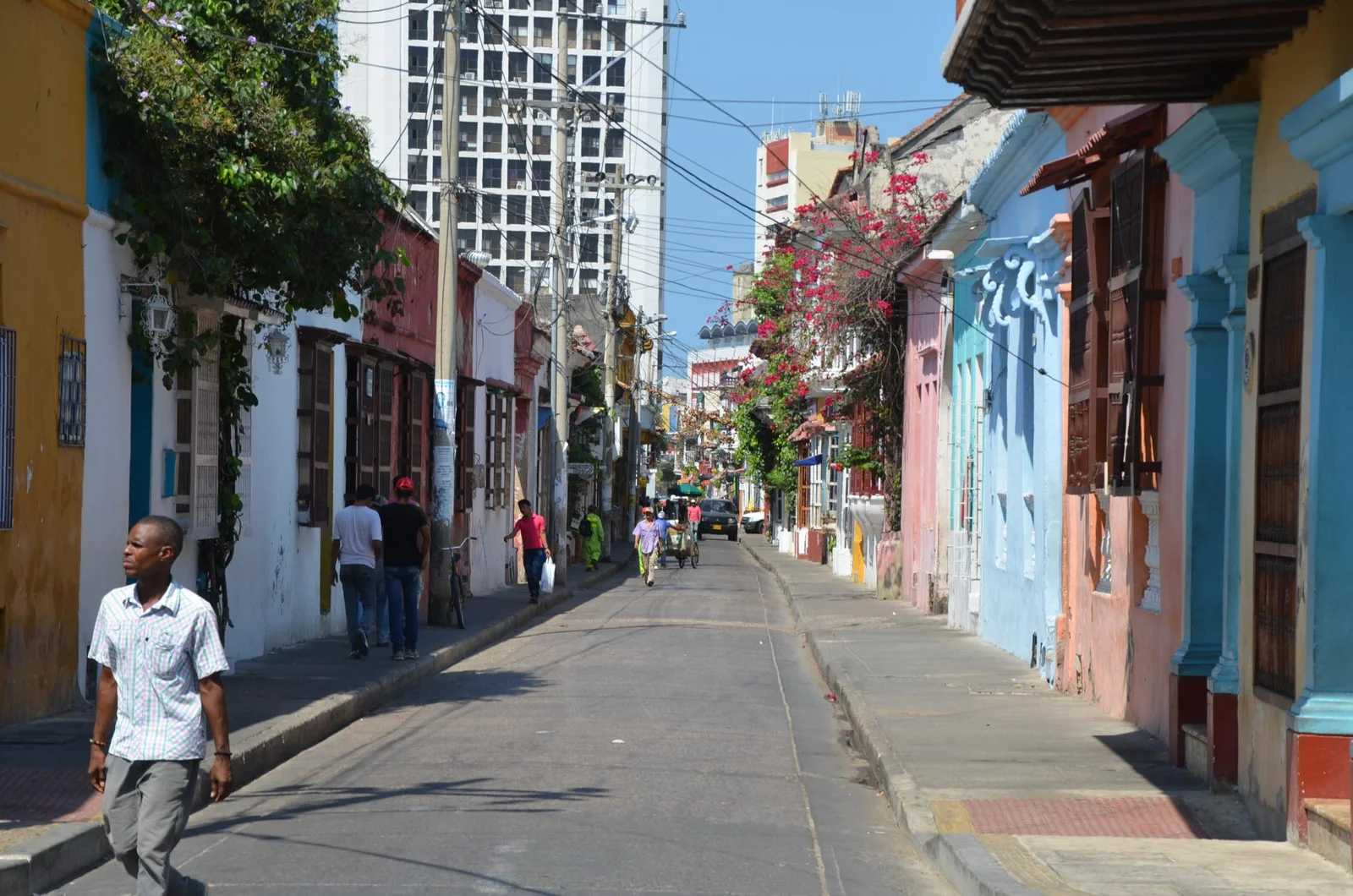
Walking Route
Walking Routes
Getsemaní is small enough to cross in fifteen minutes, but its pleasures are in the detail, so wander slowly and let the lanes pull you in.
- Plaza de la Santísima Trinidad — The barrio's living room, anchored by its 17th-century church and the Pedro Romero statue; by night it fills with dancers, domino players, and street-food carts
- Calle de la Sierpe and Callejón Angosto — The most photographed lanes, canopied with hanging umbrellas and flags and lined wall-to-wall with murals
- Calle de la Media Luna — The barrio's backpacker artery and nightlife spine, leading to Café Havana, the legendary salsa and son bar where live bands play most nights
- Plazuela del Pozo — A quieter square named for a colonial-era well, good for a fresh jugo away from the crowds
- Parque del Centenario — The leafy park at the edge of the barrio where sloths, monkeys, and iguanas live in the trees beside the Torre del Reloj
Local Life
Domino games unfold nightly on Plaza de la Santísima Trinidad's stone benches while champeta bass lines — the Afro-Colombian sound born on Cartagena's Caribbean coast — spill from open doorways along Calle de la Sierpe. Morning regulars line up at corner fritanga stands for arepas de huevo and fresh jugo de corozo, and elderly women still sell homemade cocadas from trays balanced on their heads.
On Callejón Angosto, barbershops double as informal gathering spots where neighbors trade gossip in the Afro-Caribbean Spanish cadence unique to this barrio, and come November the whole quarter turns out for the Fiestas de la Independencia, when cabildos, papier-mâché figures, and sound systems reclaim the streets.
Getsemaní timeline
-
Cartagena founded
As the fortified port grew, Getsemaní took shape just outside the walls as the arrabal of artisans, dockworkers, and free and enslaved Afro-descendants.
- 17th c.
Santísima Trinidad rises
The whitewashed Church of the Holy Trinity and the plaza before it become the social and spiritual heart of the working barrio.
-
Cradle of independence
On 11 November, the artisan Pedro Romero and the Lanceros de Getsemaní rallied in the plaza and helped force Cartagena to declare absolute independence from Spain.
- 20th c.
The public-market years
For decades the Mercado Público on the Getsemaní waterfront was the city's commercial hub, until it moved to Bazurto in the late 1970s and the Centro de Convenciones replaced it.
-
UNESCO World Heritage
Getsemaní is protected within Cartagena's inscribed port, fortresses, and group of monuments.
- 2010s
Mural renaissance
Street art, music, and tourism turn the barrio into Cartagena's creative quarter — and accelerate a gentrification that is pricing out longtime residents.
When to Visit
Getsemaní's open lanes never close, but the barrio changes character by the hour, so time your wander deliberately.
- Morning (8–11 AM) — The coolest, quietest window for photographing street art; morning light rakes across the east-facing walls of Calle de la Sierpe and Callejón Angosto while shopkeepers are only just rolling up their shutters
- Midday (11 AM–4 PM) — Hot and largely shadeless; duck into a café or the shade of Plaza de la Santísima Trinidad
- Golden hour (5:30–6:30 PM) — The best time to shoot the plaza as the church façade warms and the square begins to fill
- Evening (after 7 PM) — The plaza becomes the neighborhood's living room, with champeta and salsa spilling from doorways and street-food carts lighting up
- Nightlife (Thu–Sat, after 10 PM) — Café Havana and the rooftop bars along Calle de la Media Luna hit their stride
Admission and Costs
Getsemaní itself is free to wander — the costs are optional tours, music, and food.
- Self-guided walk: Free
- Group street-art or history walking tour: COP 50,000–100,000 ($12–25) per person, about 2 hours
- Food and culture tour: COP 100,000–180,000 ($25–45) per person
- Private guide: COP 150,000–300,000 ($37–75) for a 2–3 hour tour
- Café Havana cover charge: COP 20,000–40,000 ($5–10), cash only at the door
- Street food: An arepa de huevo or empanada runs COP 3,000–6,000 (under $1.50); a fresh jugo about COP 5,000–8,000 ($1.25–2)
The Case for a Guide
Getsemaní rewards a self-guided wander, but much of what makes it extraordinary — who painted which wall, and why — is invisible without local context. A resident guide turns a pretty street into a readable one.
- Decoding the murals — A guide explains which works are by local artists reclaiming their walls and which arrived with tourism money, and unpacks recurring motifs of Afro-Colombian pride, champeta culture, and political resistance
- The independence story on the ground — Standing in Plaza de la Santísima Trinidad, a guide places Pedro Romero and the Lanceros de Getsemaní exactly where the 1811 uprising began and connects the barrio to Cartagena's wider revolt
- Gentrification, honestly — A local can show how boutique hotels and rising rents are displacing families, and point you to businesses still owned by longtime residents
- Champeta and the night — Guides know which doorway sound systems and which Café Havana nights are worth your time, and how to join the dancing without stepping on toes
- Eating like a local — From arepas de huevo to cocadas and jugo de corozo, a guide steers you to the stands residents actually queue at
Tips for Visitors
- Support the barrio, not the chains — Getsemaní is gentrifying fast; spend at family fritanga stands, corner tiendas, and resident-owned shops rather than imported franchises
- Respect a living neighborhood — people still live behind these famous doors, so keep noise down in the side streets and always ask before photographing residents or their homes
- Mind the evenings — the main plazas and Calle de la Media Luna are lively and well-populated, but stick to busy streets after dark and keep phones and cameras discreet in the quieter lanes
- Pair it with the old town — the walled city is a five-minute walk through the Torre del Reloj gate
- Dress for the heat — Cartagena hovers around 32°C (90°F); carry water and wear comfortable shoes for the uneven cobbles
- Bring some cash — many fritanga stands, the tinto sellers working the domino tables, and Café Havana's door are cash-only
Frequently Asked Questions
What is the history behind Getsemaní?
Getsemaní began as Cartagena's arrabal — the working barrio outside the walls where free and enslaved Afro-descendants, artisans, and fishermen lived. It is remembered as the cradle of the city's independence: on 11 November 1811, Pedro Romero and the Lanceros de Getsemaní rallied in Plaza de la Santísima Trinidad and helped force Cartagena to break from Spain. The barrio later housed the city's main public market and, in the 2010s, reinvented itself as Cartagena's street-art and nightlife quarter.
When is the best time of year to visit Getsemaní?
The December–April dry season brings Caribbean trade winds that make the shadeless lanes bearable and the evening plaza gatherings their liveliest; January through March are the pick of the year. September and October, the heart of the rainy season, see afternoon storms that empty the streets and streak the murals, though hotel prices fall and the barrio feels more local. Time a visit for early November to catch the Fiestas de la Independencia.
What is the best time of day to explore Getsemaní?
Come in the morning (8–11 AM) for cool, quiet lanes and the best light on the east-facing murals of Calle de la Sierpe and Callejón Angosto. Return at golden hour to photograph Plaza de la Santísima Trinidad, then stay after 7 PM, when the square fills with champeta dancers, domino games, and food carts. Nightlife on Calle de la Media Luna peaks Thursday to Saturday after 10 PM.
How much should visitors budget for Getsemaní?
Wandering the barrio is free. A group street-art or history walk runs COP 50,000–100,000 ($12–25) per person, a food tour COP 100,000–180,000 ($25–45), and a private guide COP 150,000–300,000 ($37–75) for 2–3 hours. Budget a COP 20,000–40,000 ($5–10) cover for live music at Café Havana, and a few thousand pesos for street snacks. Carry cash — many stands and the Café Havana door are cash-only.
Is Getsemaní safe, and how should visitors treat the barrio?
Getsemaní is lively and well-visited, but it remains a residential barrio, so use common sense: stick to busy streets and the main plazas after dark, keep cameras discreet in the quiet lanes, and ask before photographing residents. Because gentrification is displacing longtime families, the most respectful thing visitors can do is spend at resident-owned stands and shops rather than chains.