
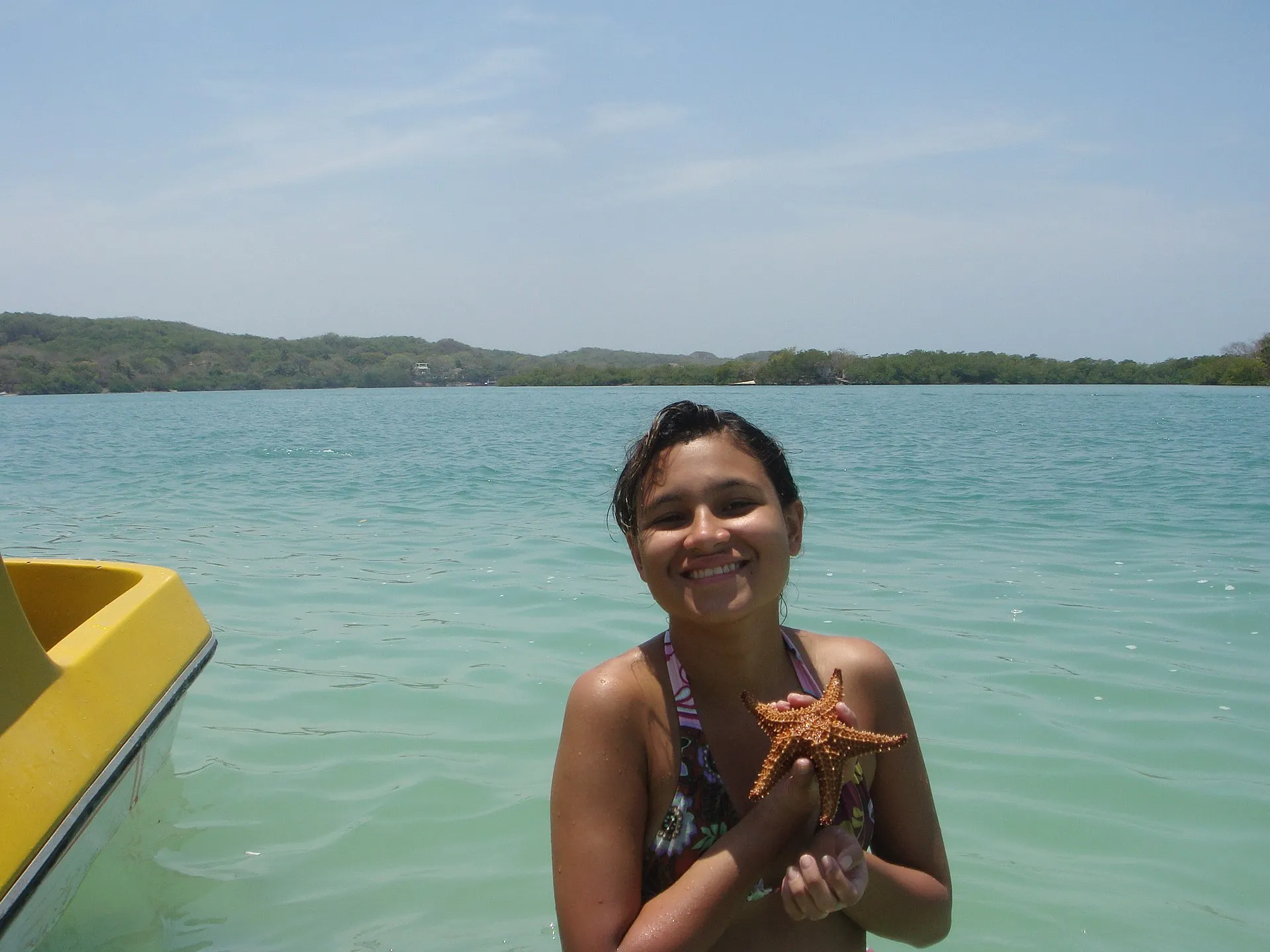
Observation Spots
Formation
The Rosario Islands are a living coral archipelago rather than fragments of a sunken mountain range. They sit on the shallow continental shelf off Cartagena, where the seabed stays warm, clear and shallow enough for reef-building corals to thrive. Over thousands of years those corals grew upward and outward, and their cemented skeletons, together with wind-blown marine sand, built the low cays that now break the surface — which is why the islands rise barely a few metres above the water and have no hills, rivers or springs.
That geology explains what visitors actually see. The absence of any river mouth nearby means almost no silt reaches the reef, so the water stays unusually clear for snorkelling. The fine, pale sand underfoot is ground-up coral and shell, not eroded rock, which is why it reflects the light into that bright turquoise.
And the enclosed lagoons that make the islands feel so sheltered are old reef basins, rimmed by living coral and fringed with red mangrove whose submerged roots trap sediment and nurse young fish — the same roots that make the archipelago so fragile and so strictly protected.
Trails
There are no hiking trails here in the usual sense; the archipelago is explored on and under the water, and a good day strings several distinct stops together.
- Reef snorkelling is the centrepiece — boats anchor over shallow coral gardens where sergeant majors, parrotfish and sea fans are visible a metre or two below the surface, and the clear, silt-free water makes even a beginner's first snorkel rewarding.
- The enclosed lagoons off Isla Grande are calm, waist-to-chest-deep pools of warm turquoise ringed by coral and mangrove, ideal for swimming and floating without current.
- Mangrove kayaking threads through tunnels of red mangrove where the roots shelter juvenile snapper and the water goes glassy and still.
- The Oceanario on San Martín de Pajarales is a long-running marine park with dolphins, sharks and rays, an easy add-on for families breaking up a day in the sun.
- A seafood lunch on the sand — grilled fish, coconut rice and patacones served at an island beach club — is built into most group tours and is as much a part of the day as the snorkelling.
Wildlife
The archipelago's reefs shelter more than 50 hard and soft coral species, including elkhorn, staghorn and massive brain-coral formations, the foundation of everything else that lives here. Snorkellers routinely spot sergeant majors, blue tangs, parrotfish and the occasional barracuda in the shallows, while hawksbill and green sea turtles graze the seagrass beds between the islands. The red-mangrove channels act as nurseries for juvenile snapper and spiny lobster, and overhead brown pelicans and magnificent frigatebirds patrol the reef edge, folding into dives for fish.
After dark, Isla Grande's Laguna Encantada reveals the archipelago's strangest residents: blooms of bioluminescent plankton that flash pale blue when the water is disturbed, so a night paddle or swim leaves glowing trails behind every stroke. The whole web — coral, turtles, mangrove and plankton — is why the waters carry national-park protection and why reef-safe sunscreen and a hands-off approach to the coral are not optional courtesies but rules.
When to Visit
Group boats leave the Muelle de la Bodeguita in Cartagena between 8 and 9 AM and return by 3 to 4 PM, making this a full-day outing rather than a quick morning hop. A fast lancha reaches the islands in about 45 minutes to an hour; the slower cruise boats that add a Playa Blanca stop take closer to 90 minutes each way.
The best stretch of the year runs December through April, when the dry-season seas are calmest and the water clearest for snorkelling. The second half of the year brings choppier crossings, and October and November — the wettest months — can mean a rough ride and reduced visibility over the reef, so build in weather flexibility if you travel then and aim for an early departure before the afternoon wind picks up.
Admission and Costs
- Shared group boat: COP 150,000–200,000 ($37–50), usually including a seafood lunch at an island beach club.
- Private lancha charter: COP 800,000–1,500,000 ($200–375) for up to roughly ten people, which buys the flexibility to skip the crowds and reach quieter islands.
- National-park and dock tax: about COP 20,000 ($5), collected at the pier or on arrival.
- Snorkelling gear rental: COP 30,000–50,000 ($7.50–12).
- Oceanario entry (optional): about COP 45,000 ($11) on San Martín de Pajarales.
Most islands have no ATMs or card terminals, so bring enough cash in Colombian pesos for the day, including the park tax, drinks and any beach-club loungers you rent.
The Case for a Guide
The Rosario Islands are easy to visit on a cheap group ticket, but a good operator or private guide changes the day in ways that matter — for your safety, your wallet and the reef.
- Honest logistics: Guides book reputable, well-maintained boats and steer you away from the dock touts at the pier who oversell crowded or underequipped lanchas; the difference shows most on a choppy crossing.
- Reading the reef: A snorkelling guide knows which anchorages have intact coral that day, points out turtles and the difference between brain and elkhorn coral, and keeps the group off the fragile, protected formations.
- A tailored route: Chartering privately lets a guide balance the day between the Oceanario, the quiet lagoons off Isla Grande and a beach stop, instead of the fixed loop a group boat runs.
- Protecting the park: The best guides enforce the national-park rules — reef-safe sunscreen, no touching or standing on coral, no feeding the fish — so the archipelago survives the volume of day-trippers it now receives.
Tips for Visitors
- Book through your hotel or a licensed operator, not the touts working the dock — reputable boats are safer, better maintained and clearer about what the price includes.
- Bring cash in pesos. Most islands have no ATMs, and you will need it for the park tax, lunch, gear and drinks.
- Pack reef-safe, biodegradable sunscreen. The coral is protected and fragile, and ordinary sunscreen harms it; apply it before you snorkel, not in the water.
- Take seasickness medication beforehand if you are sensitive — the open-water crossing can be rough in the second half of the year.
- Choose your boat for your day: a fast group lancha maximises reef time, while a private charter is worth it if you want to reach quieter islands or linger at a particular lagoon.
- Consider an overnight at an Isla Grande eco-lodge to see the bioluminescent Laguna Encantada and have the beaches to yourself once the day boats leave.
Frequently Asked Questions
Where do boats to the Rosario Islands leave from, and how long is the crossing?
Most island boats leave from the Muelle de la Bodeguita, the tourist pier beside the walled city near the Torre del Reloj, with group departures clustered between 8 and 9 AM and the full-day return reaching Cartagena by 3 to 4 PM. A fast lancha covers the roughly 45 kilometres in about 45 minutes to an hour, while the slower catamaran-style cruise boats that fold in a stop at Playa Blanca can take closer to 90 minutes each way.
When is the best time of year to visit the Rosario Islands?
The dry season from December to April brings the calmest seas and the clearest water for snorkelling, which is why those are the peak months. Seas get choppier through the second half of the year, and October and November coincide with the wettest stretch, when the crossing can be rough and visibility over the reef drops. If you are prone to seasickness, favour a morning departure in the dry season and take medication before boarding.
How much does a Rosario Islands day trip cost?
A seat on a shared group boat usually runs COP 150,000 to 200,000 ($37 to $50), often with a seafood lunch included, while chartering a private lancha for up to about ten people costs COP 800,000 to 1,500,000 ($200 to $375).
On top of the boat you pay a national-park and dock tax of roughly COP 20,000 ($5), and optional extras such as snorkelling gear (COP 30,000 to 50,000 / $7.50 to $12) or entry to the Oceanario (about COP 45,000 / $11). Bring cash, as most islands have no card terminals or ATMs.
What is there to do on the Rosario Islands besides lie on the beach?
The archipelago is built around its reef, so the headline activity is snorkelling or diving over the coral, but there is more range than a single beach day suggests. You can kayak the red-mangrove channels, visit the Oceanario marine park on San Martín de Pajarales, swim in the enclosed turquoise lagoons off Isla Grande, and, on a night stay, paddle the bioluminescent Laguna Encantada, where disturbed plankton glow in the dark water. Several islands also run eco-lodges for travellers who want to stay beyond the day-trip crowds.