
Observation Spots
Activities
Kunming Lake: A vast, largely man-made lake covering about three-quarters of the grounds and modeled partly on West Lake in Hangzhou, offering pedal and dragon boats in summer and open-air ice skating in winter. Longevity Hill: Climb through layered temples and pavilions to the Tower of Buddhist Incense for panoramic views over the lake and distant skyline. Long Corridor: A 728-meter covered walkway — the longest painted corridor in the world — decorated with over 14,000 individual hand-painted scenes depicting myths, landscapes, and historical episodes. Marble Boat: Empress Cixi's infamous stone-and-wood pleasure vessel, rebuilt in 1893 with diverted naval funds, sits permanently docked at the lake's northwest shore. Seventeen-Arch Bridge: A graceful 150-meter stone bridge adorned with 544 carved lions, each with a unique expression, connecting the eastern shore to South Lake Island. Suzhou Street: A reconstructed canal-side shopping street on the Back Lake where Qing courtiers played at being commoners, now housing craft workshops and teahouses.
Seasonal Highlights
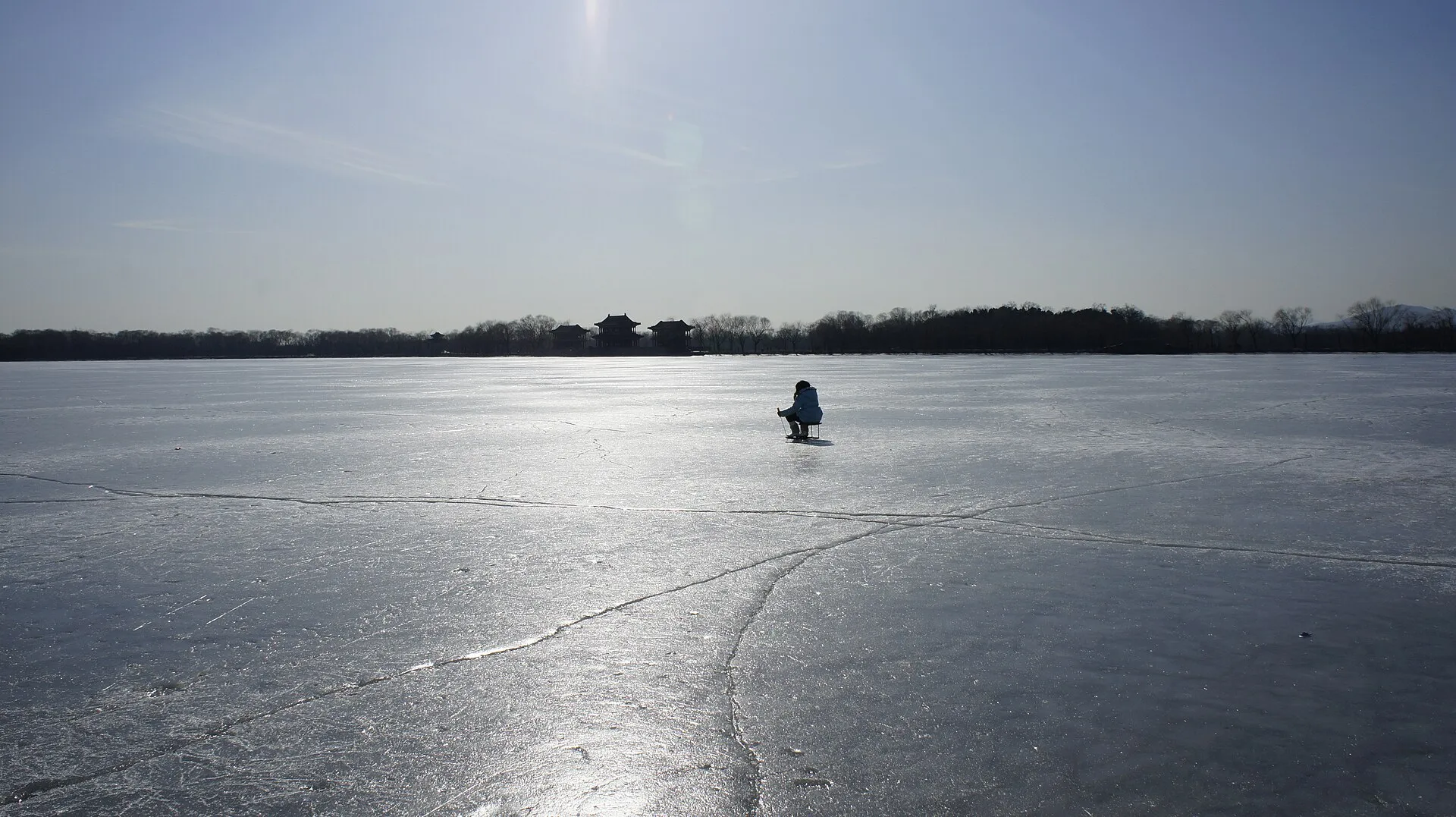
Lotus flowers carpet the shallows of Kunming Lake from late June through August, filling the air with fragrance and framing the Seventeen-Arch Bridge in pink and green. Autumn brings the clearest skies Beijing offers, making the Long Corridor's painted panels and the distant Western Hills sharper in photographs while golden willows line the western causeway. From December through February, the frozen lake opens for ice skating — a tradition dating to the Qing court's ice-harvesting — and bare willows dusted with snow give the palace grounds a monochrome elegance, though many lakeside facilities close and the park's hours shorten.
Summer Palace timeline
-
Qianlong founds the Garden of Clear Ripples
Emperor Qianlong ordered the garden built to mark his mother's 60th birthday, enlarging a Yuan-dynasty reservoir into Kunming Lake and raising Longevity Hill from the spoil. It was first named Qīngyī Yuán, the Garden of Clear Ripples.
-
Destroyed in the Second Opium War
Anglo-French forces looted and burned the garden alongside the neighbouring Old Summer Palace, leaving Longevity Hill's pavilions in ruins.
-
Cixi rebuilds and renames it Yíhé Yuán
Empress Dowager Cixi reconstructed the garden, reportedly drawing on funds earmarked for the imperial navy, and renamed it Yíhé Yuán, the Garden of Nurtured Harmony.
-
Sacked by the Eight-Nation Alliance
Foreign troops occupying Beijing during the Boxer Rebellion damaged and looted the halls again; Cixi financed a further restoration on her return in 1902.
-
Opened to the public as a park
After the fall of the Qing dynasty, the former imperial retreat was opened to ordinary Beijingers as a public park.
-
Inscribed as a UNESCO World Heritage Site
UNESCO listed the Summer Palace as a masterpiece of Chinese landscape garden design that harmonises artificial and natural features on a monumental scale.
When to Visit
Open: Daily, year-round with no weekly closure. Summer hours (Apr 1 - Oct 31): Park gates 6:30 AM - 6:00 PM, interior halls 8:30 AM - 5:00 PM. Winter hours (Nov 1 - Mar 31): Park gates 7:00 AM - 5:00 PM, interior halls 9:00 AM - 4:00 PM. Best: Early mornings on weekdays in spring or autumn when mist drifts off Kunming Lake and crowds are thinnest. Avoid: National holidays — especially the first week of October's Golden Week and early May — plus summer weekends, when the Long Corridor becomes a single-file shuffle and boat queues stretch past an hour.
Admission and Costs
Park-only ticket: ¥30 ($4) peak season (Apr-Oct) / ¥20 ($3) off-season (Nov-Mar). Through ticket (all halls and gardens, covering the Tower of Buddhist Incense, Suzhou Street, and Wenchang Gallery): ¥60 ($8) peak / ¥50 ($7) off-season. Suzhou Street separate ticket: ¥10 ($1.50). Dragon boat ride across Kunming Lake: ¥60-¥120 ($8-$17) depending on vessel. Audio guide rental: ¥40 ($6) with deposit (available in English). Bring your passport — foreign visitors must show ID to buy tickets, and same-day online booking is required in peak periods when daily entry is capped.
The Case for a Guide
Much of what makes the Summer Palace remarkable is coded rather than obvious, and a licensed local guide is what turns a pleasant lakeside walk into a reading of imperial power. The Long Corridor's beams illustrate specific scenes from classics such as Journey to the West, the Marble Boat is a barbed monument to naval funds spent on pleasure, and every pavilion on Longevity Hill is positioned to "borrow" a distant view of the Western Hills — a composition technique called jièjǐng. A guide unpacks the rivalry between Emperor Qianlong and Empress Dowager Cixi, points out which halls were staged to impress foreign diplomats, and explains the water-and-hill feng shui behind the layout.
A guide also helps you read the harder history on the ground: the Hall of Jade Ripples, where the Guangxu Emperor was placed under effective house arrest after the failed reforms of 1898, and the scars of the 1860 and 1900 sackings that shaped what stands today. Practically, a guide saves time across the 290-hectare grounds — choosing the right gate, timing the dragon-boat crossing to skip the longest walks, and interpreting signage that thins out in the quieter western gardens. Expect roughly ¥300-¥600 ($40-$85) for a half-day private guide, often combined with a Forbidden City or Temple of Heaven visit on the same day.
Tips for Visitors
Start from the North Palace Gate: Most tour buses drop visitors at the East Gate, so entering from the north lets you explore Suzhou Street and descend Longevity Hill toward the lake before the crowds arrive. Budget half a day: The grounds are vast and hilly; rushing through in two hours means missing the quieter western causeways and back gardens. Bring sun protection: The lakeside paths offer little shade, and the stone surfaces reflect heat aggressively in summer months. Try the ferry: Riding a dragon boat across Kunming Lake provides the best vantage of Longevity Hill and saves tired legs on the return. Getting there: Beijing Subway Line 4 stops at Beigongmen (北宫门) beside the North Palace Gate and at Xiyuan (西苑) near the East Palace Gate, making the metro faster and cheaper than a taxi through northwest Beijing's traffic; the same line's Yuanmingyuan stop serves the ruined Old Summer Palace next door if you want to see both. Winter charm: Visiting between December and February means fewer tourists, frozen-lake skating, and a stark beauty that photographs beautifully against bare willows — but confirm which halls stay open, as several close in the off-season.
Frequently Asked Questions
What season showcases the Summer Palace at its finest?
May and September-October frame Kunming Lake with lotus blooms or golden willows under the clearest skies Beijing offers, making these the prime months for photography and boat rides. The palace was designed as a summer retreat, so winter reveals a quieter, starker beauty — the frozen lake once used for ice-harvesting creates ethereal landscapes, but many lakeside facilities close and the park's hours shorten significantly.
What are the opening hours for the Summer Palace?
Open: Daily, year-round with no weekly closure. Summer hours (Apr 1 - Oct 31): Park gates 6:30 AM - 6:00 PM, interior halls 8:30 AM - 5:00 PM. Winter hours (Nov 1 - Mar 31): Park gates 7:00 AM - 5:00 PM, interior halls 9:00 AM - 4:00 PM.
Is Summer Palace free to enter?
Park-only ticket: ¥30 peak season (Apr-Oct) / ¥20 off-season (Nov-Mar). Through ticket (all halls and gardens): ¥60 peak / ¥50 off-season. Suzhou Street separate ticket: ¥10. Dragon boat ride on Kunming Lake: ¥60-¥120 depending on vessel.
What practical tip helps visitors avoid the crowds at Summer Palace?
Start from the North Palace Gate: Most tour buses drop visitors at the East Gate, so entering from the north lets you explore Suzhou Street and Longevity Hill before the crowds arrive.
How long do I need, and how does it differ from Old Summer Palace?
Allow at least half a day (three to four hours) to walk Longevity Hill, the Long Corridor, and the Kunming Lake shoreline without rushing; a full day lets you add Suzhou Street and the quieter western causeways. Do not confuse it with the Old Summer Palace (Yuánmíng Yuán), a separate site about 1 km east that was burned by Anglo-French troops in 1860 and left as evocative ruins — the Summer Palace (Yíhé Yuán) is the rebuilt, intact garden most travellers mean.