
Spiritual Significance
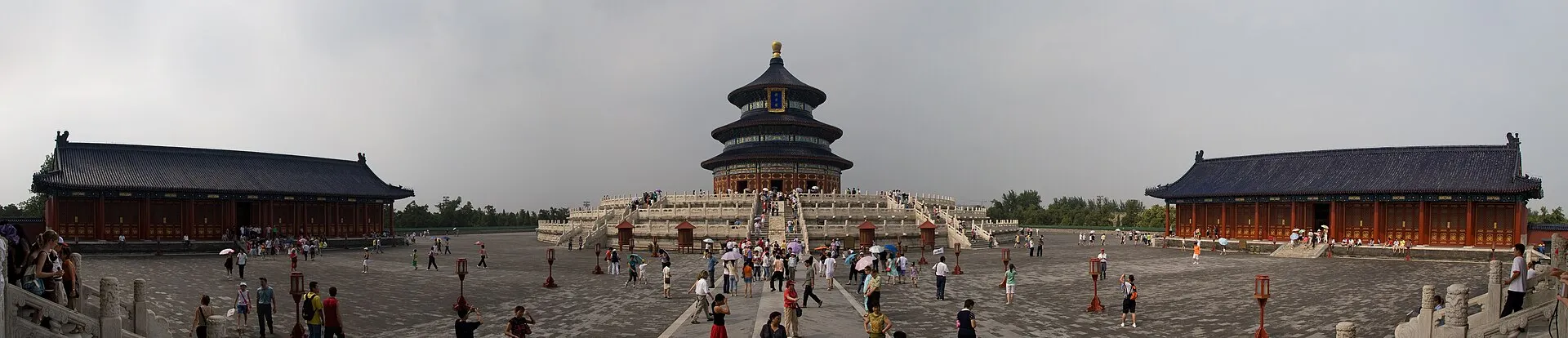
Hall of Prayer for Good Harvests: The triple-gabled circular hall with its deep blue tiles is China's most recognizable religious structure. Echo Wall: A perfectly curved wall that transmits whispers from one end to the other across 65 meters. Circular Mound Altar: An open-air stone platform where standing at the center creates an eerie acoustic amplification of your own voice. Morning exercises: Witnessing hundreds of Beijing residents practicing tai chi, sword forms, and ballroom dancing at dawn. Nine-Dragon Cypress: A 500-year-old tree whose gnarled trunk appears to contain intertwined dragon bodies. Long Corridor musicians: Amateur musicians and opera singers gather daily in the covered walkway for spontaneous performances
When to Visit
Park grounds: Daily 6:00 AM - 9:00 PM (summer) / 6:30 AM - 8:00 PM (winter). Ceremonial buildings: 8:00 AM - 5:30 PM (summer) / 8:00 AM - 5:00 PM (winter). Best: 6:00 - 8:00 AM when locals fill the park with morning exercises and music. Avoid: Midday in summer when heat and crowds peak simultaneously
Admission and Costs
Park-only ticket: ¥15. Combination ticket (all buildings): ¥34 (peak) / ¥28 (off-season). Audio guide: ¥15 (available in English). Free mornings: The park grounds are free before 7:00 AM for exercisers
The Case for a Guide
The Temple of Heaven's circular geometry and acoustic engineering encode a cosmological worldview that requires explanation to fully appreciate — and the surrounding park's morning ritual of locals practicing Tai Chi, opera, and calligraphy is itself a living tradition a guide contextualizes brilliantly.
- Acoustic whispering wall physics: The circular Enclosure wall around the Imperial Vault of Heaven is 65 meters in diameter and constructed with such precision that a whisper at one point travels clearly to the antipodal point 65 meters away; a guide demonstrates the exact speaking position and explains the specific masonry technique that makes the wall function as a curved acoustic reflector.
- Emperor's annual Heaven prayer ritual: Each winter solstice, the emperor spent three days fasting in the Fasting Palace before ascending to the Circular Mound Altar to pray for a good harvest; a guide explains the elaborate ritual protocol — the specific prayers, musical accompaniment, animal sacrifices, and exact positions on the altar — and why the emperor's cosmic intermediary role made this ceremony the most politically significant act of the entire year.
- Triple Sound Stones mathematical echo: The three stone slabs at the center of the Circular Mound Altar produce one, two, and three distinct echoes respectively from a single clap; a guide explains the mathematical relationship between the stone positions and the surrounding wall, and why this acoustic effect was interpreted as Heaven responding to the emperor's prayers.
- Calendar Stone agricultural timing system: The number of balustrades, steps, and terraces throughout the complex encode the 365-day solar calendar, the 24 solar terms of the Chinese agricultural calendar, and the 12-month lunar cycle; a guide points out the specific number sequences and explains how the entire complex functioned as a cosmic calendar in stone.
- Morning Tai Chi and local tradition: The park opens at 6 AM and fills with Beijing residents practicing Tai Chi, sword dancing, erhu playing, and ballroom dancing in designated areas; a guide introduces the morning community and explains which forms of exercise have been practiced here for centuries versus more recent social traditions, transforming what looks like tourism backdrop into genuine living culture.
Tips for Visitors
Come early for local life: The park before 8 AM is a living showcase of Beijing's community culture
- don't skip it for the buildings. Buy the combo ticket: The ¥34 combination ticket covers all three ceremonial buildings and is far better value than separate entries. Enter from the south: Starting at the south gate and walking north follows the emperor's original ceremonial route. Allow 2-3 hours: The park is enormous - rushing through means missing the acoustic phenomena and garden details. Combine with Pearl Market: The Hongqiao Pearl Market is just across the street from the east gate for afternoon shopping
Frequently Asked Questions
When is the best time of year to experience the Temple of Heaven?
May and September-October bring crisp, clear mornings when the park fills with hundreds of locals practicing tai chi, flying kites, and singing opera — the living cultural spectacle that many visitors find more memorable than the architecture itself. The Hall of Prayer for Good Harvests photographs best under the deep blue autumn sky, while summer's heat and humidity make the expansive park grounds tiring, and winter mornings can be beautiful but bitterly cold on the exposed ceremonial platforms.
What are the sightseeing hours at Temple of Heaven?
Park grounds: Daily 6:00 AM - 9:00 PM (summer) / 6:30 AM - 8:00 PM (winter). Ceremonial buildings: 8:00 AM - 5:30 PM (summer) / 8:00 AM - 5:00 PM (winter). Best: 6:00 - 8:00 AM when locals fill the park with morning exercises and music.
Are there any costs associated with visiting Temple of Heaven?
Park-only ticket: ¥15. Combination ticket (all buildings): ¥34 (peak) / ¥28 (off-season). Audio guide: ¥15 (available in English). Free mornings: The park grounds are free before 7:00 AM for exercisers
What is the single most important tip for visiting the Temple of Heaven?
Come early for local life: The park before 8 AM is a living showcase of Beijing's community culture - don't skip it for the buildings.